A 2 minute assessment to get a personalized mental health or alcohol recovery plan.

Low dose naltrexone and the naltrexone prescribed for drinking share a molecule and a name. The dose, the target, and the evidence behind them are not the same thing.
What You'll Discover:
• What low dose naltrexone is and which conditions it gets prescribed for off-label.
• Why 50mg is the dose that carries FDA approval for alcohol use disorder.
• The proposed mechanisms behind low dose naltrexone and how they differ.
• What actually happens if someone takes low dose naltrexone hoping to drink less.
• Why the dose is a clinician decision rather than a dial you turn on your own.
Low dose naltrexone and naltrexone for alcohol come from the same molecule. That is roughly where the similarity stops.
One is a compounded formulation given at about a tenth of the standard strength, prescribed off-label for pain and inflammatory conditions. The other is a 50mg tablet with more than thirty years of FDA approval behind it for alcohol use disorder.
Confusing the two is common. It is also worth sorting out, because the wrong dose for your goal is functionally the wrong medication.
Same Molecule, Two Very Different Medications
Naltrexone is an opioid antagonist. It settles onto opioid receptors and occupies them without switching them on.
That one property is why the same molecule ended up in two unrelated corners of medicine. How long the receptors stay occupied, and how completely, changes what the medication does.
At 50mg, the blockade holds steady for most of a day. That sustained occupancy is what interrupts the reward loop behind drinking, and it is the mechanism we walk through in our explainer on what naltrexone is and how it works.
At 1.5 to 4.5 mg, the blockade is brief and partial. Researchers think that brevity is the entire point, and that what the body does in response to a short interruption is where the effect comes from.
So the dose is not a volume knob on one effect. It is closer to a switch between two.
What Low Dose Naltrexone Actually Is
Low dose naltrexone, usually shortened to LDN, means naltrexone prescribed at roughly 0.5 to 6 mg a day. Most clinical work uses 4.5 mg as the target, with titration that commonly starts at 1.5 mg and steps up every week or two.
It is prescribed off-label. That means a clinician is using it for something the FDA has not reviewed and approved it to treat, which is legal, ordinary, and done constantly across medicine.
The conditions with the most attention behind them are fibromyalgia and other chronic pain states, plus a set of autoimmune and inflammatory conditions. Crohn's disease and multiple sclerosis come up often in the research literature.
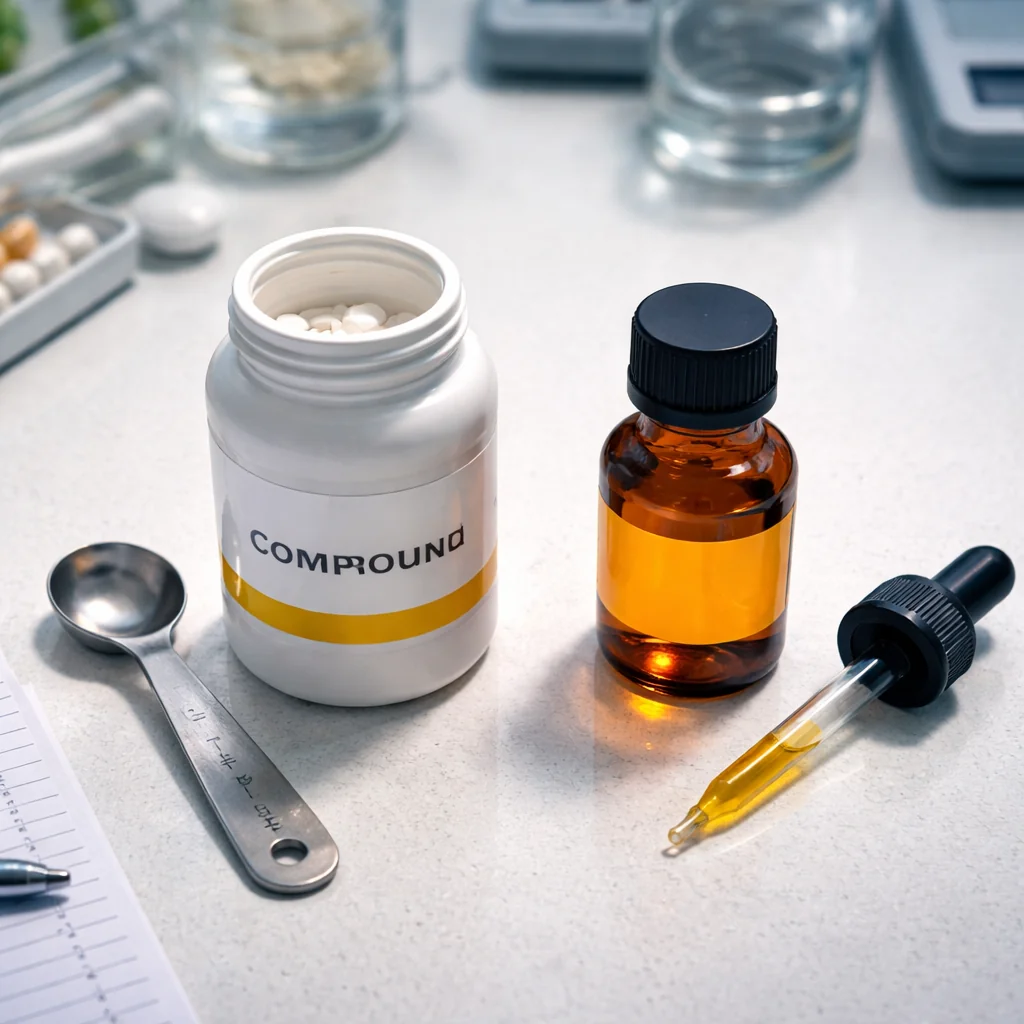
Commercial naltrexone tablets are manufactured at much higher strengths. Low dose naltrexone has to come from a compounding pharmacy that can formulate the smaller amount accurately.
That is why it is not something you pick up off a standard formulary.
The evidence is both genuinely interesting and genuinely thin. A systematic review and meta-analysis of low dose naltrexone in fibromyalgia found signals of benefit for pain while being candid about small sample sizes and study quality.
None of that research concerns drinking. Not a single trial in the low dose literature was designed to measure alcohol consumption.
What Naltrexone for Alcohol Actually Is
The naltrexone used for alcohol is a 50mg oral tablet. The FDA approved it for alcohol use disorder in 1994, and 50mg per day remains the recommended dose for that indication.
The research base here is a different order of magnitude. Naltrexone for drinking has been tested across scores of randomized trials and multiple pooled analyses.
The effects show up consistently in two places: whether people return to heavy drinking, and how many heavy drinking days they log.
It is also more flexible than most people expect. Some take it every day so the medication is always in their system.
Others take it about an hour before a situation where drinking is likely. That targeted approach is covered in our guide to using naltrexone to stop alcohol cravings.
The 50mg figure is not a round number someone picked for convenience. It is where the trials were run and where the effect was measured, which is why our piece on the best naltrexone dose for alcohol keeps circling back to it.
Some people start at 25mg to ease into it. Some end up higher. The 50mg mark is the anchor everything else moves around.
The Proposed Mechanisms Are Not the Same
This is the part most explainers skip, and it is the part that makes the dose difference make sense.
At 50mg, naltrexone blocks mu-opioid receptors steadily and thoroughly. Alcohol triggers an endorphin release that lands on those receptors and produces the warm, pleasurable lift that makes the second drink feel obvious.
With the receptors occupied, that lift is blunted. Drink over enough weeks with the medication in your system and the learned association between alcohol and reward starts to fade. The pull weakens because the payoff stopped arriving.
Low dose naltrexone is thought to work along entirely different lines. Reviews of low dose naltrexone in chronic pain describe two proposed mechanisms, and both deserve careful wording.
The first is transient opioid receptor blockade. A brief, partial blockade is thought to prompt a compensatory rise in the body's own endorphin and enkephalin signaling once the medication clears the system.
The second is glial modulation. At low concentrations naltrexone appears to interact with toll-like receptor 4 on microglia, the immune cells of the central nervous system, which may quiet the inflammatory signaling that keeps chronic pain running.
Both are proposals, not settled facts. Much of the support comes from laboratory and animal work, and human studies have not confirmed these mechanisms with biomarkers or imaging. That is an accurate description of where the science currently sits.
The practical point holds either way. A sustained receptor blockade and a deliberately brief one are not two intensities of one effect. They are two different effects, and only one of them has been studied for drinking.
Low Dose Naltrexone vs Naltrexone for Alcohol at a Glance
What Happens If You Take Low Dose Naltrexone Hoping to Drink Less
The honest answer is that most people notice nothing useful on the drinking front.
At 1.5 to 4.5 mg the opioid receptor blockade is brief and incomplete by design. It is very unlikely to deliver the steady blockade that dulls alcohol's reward signal across an evening.
That sets up a specific and avoidable outcome. Someone tries low dose naltrexone, feels no change in cravings, and concludes naltrexone does not work for them.
The medication was never tested at that dose for that purpose. The conclusion is reasonable and the premise is wrong, which is the worst combination for anyone trying to get help.
There is a second version of this that matters just as much. Someone already holding a low dose prescription for pain assumes the drinking side is covered and never raises it with a clinician.
Months pass. Nothing changes. Meanwhile the dose with thirty years of trial evidence behind it has never been on the table.
Neither of these is a personal failure. They are the predictable result of two treatments sharing a name in a field where almost nobody explains the difference.
Where the Confusion Comes From
The overlap is not anyone's fault. Low dose naltrexone has a devoted online following built around pain and autoimmune conditions, and the abbreviation LDN gets used constantly without the dose attached.
Meanwhile naltrexone for drinking is often described simply as naltrexone, with no number next to it either. Two communities talking about the same word, neither one saying the milligrams out loud.
Add in the fact that both are inexpensive, both are generic, and both get described as surprisingly underused, and the wires cross easily.
The fix is small. Whenever you see naltrexone mentioned, look for the dose before you decide what is being discussed.
Why the Dose Is a Clinician Decision
Naltrexone dosing is not something to adjust based on how a week went. There are real inputs a prescriber has to weigh, and most of them are invisible from the outside.
Liver function is one, because naltrexone is metabolized by the liver. Current opioid use is another, and that one is absolute, since starting naltrexone with opioids in your system can bring on withdrawal.
Other medications matter too. Naltrexone's metabolic pathway suggests it does not carry many significant interactions, though formal interaction studies are limited.
That gap is exactly why your full medication list belongs in front of a prescriber rather than in a search bar. We go through this in our overview of naltrexone drug interactions.
Age, kidney function, and how much you have actually been drinking all shape the starting point. Some people begin at 25mg and move up once their body has settled.
None of that is guesswork you should be doing at home with a pill cutter.
If You Are Already Taking Low Dose Naltrexone for Something Else
Do not stop it, change it, or add a second dose on top of it on your own.
If you take low dose naltrexone for pain and you also want help with drinking, that is a conversation with a clinician who can hold both goals at once.
Running two doses of the same molecule for two different purposes is not something to improvise.
There is nothing awkward about raising it. Plenty of people arrive at that conversation after months of quietly assuming they were already covered.
The prescriber managing your pain and the prescriber thinking about your drinking both need the full picture. That is true even when they are the same person.
What Getting the Right Dose Actually Looks Like
Good naltrexone care for alcohol starts with a real review rather than a checkbox. A clinician looks at your health history, your current medications, your liver, and what you actually want out of this.
Wanting to cut back is a legitimate goal. So is stopping entirely. The dose conversation looks different depending on which one you are after, and both answers are treated as valid.
Most people start at 50mg daily. Early side effects like nausea, headache, or a bit of fatigue are usually mild and tend to settle within the first week or two.
After that it comes down to consistency and honest feedback. Most people notice a shift in cravings within two to four weeks, and when nothing has moved by then, the dose and the timing get revisited rather than abandoned.
That loop is the whole value of physician-guided care. Choose Your Horizon is an integrated solution built around it, pairing clinical, neurological, and behavioral science with a prescriber who adjusts as your results come in.
It runs entirely online across 49 states, which removes most of the friction that keeps people from asking the question at all.
Putting It Together
Low dose naltrexone and naltrexone for alcohol are one molecule doing two unrelated jobs at two very different doses.
Low dose naltrexone sits at 1.5 to 4.5 mg, comes from a compounding pharmacy, and is used off-label for pain and inflammatory conditions. Its mechanisms are proposed rather than proven, and none of its evidence base touches drinking.
Naltrexone for alcohol sits at 50mg, has carried FDA approval for alcohol use disorder since 1994, and rests on a large stack of randomized trials.
If you have been on the low dose and wondering why your drinking has not budged, you now have your answer. And if you have been holding off on asking about the other dose because you assumed you already tried it, that is worth reopening.
You do not need to be at a crisis point to have that conversation. Wanting fewer drinks in your week is reason enough.
Frequently Asked Questions
Is low dose naltrexone the same drug as naltrexone for alcohol?
It is the same molecule at a very different dose. Low dose naltrexone is typically 1.5 to 4.5 mg from a compounding pharmacy, while the alcohol dose is a 50mg tablet.
Can low dose naltrexone reduce alcohol cravings?
It has not been studied or approved for that, and most people see no craving benefit at that dose. The blockade at 1.5 to 4.5 mg is too brief to blunt alcohol's reward signal the way 50mg does.
Why does low dose naltrexone need a compounding pharmacy?
Commercial naltrexone tablets are manufactured at much higher strengths. A compounding pharmacy can formulate the smaller doses accurately and allow gradual titration.
Can you take low dose naltrexone and naltrexone for alcohol at the same time?
That is not something to arrange on your own. Bring both goals to a clinician who can look at the whole picture and decide what makes sense for you.
How long does naltrexone take to work for drinking?
Most people notice a change in cravings within two to four weeks of consistent use. If nothing has shifted by then, the dose and timing are worth revisiting with your prescriber.
Is low dose naltrexone safer than the 50mg dose?
Lower doses generally mean fewer side effects, but safety depends on your health history either way. Both doses require a prescriber who has reviewed your liver function, your medications, and any opioid use.
Find out whether naltrexone at the dose actually studied for drinking is a fit for you. Take the Alcohol Use Assessment and a physician will review your history and recommend a dose from there.