A 2 minute assessment to get a personalized mental health or alcohol recovery plan.

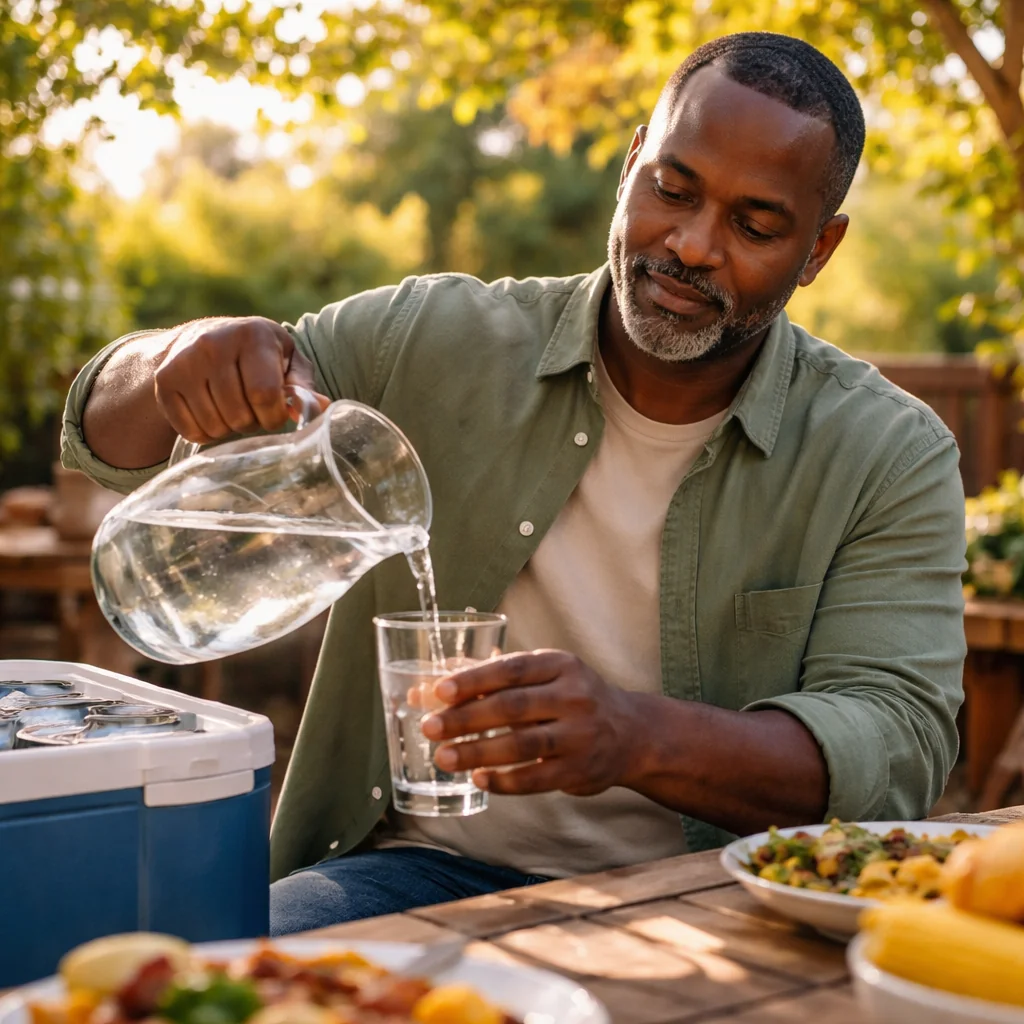
Summer drinking creeps up on almost everyone, and it is not a coincidence. Heat, cues, loosened routines, and a packed social calendar all push in the same direction. Here is the mechanism, piece by piece.
What You'll Discover:
• The research showing summer drinking spikes are real, not imagined.
• Why heat and dehydration make alcohol cravings feel stronger.
• How patios, BBQs, and coolers quietly became drinking cues.
• What loosened routines and longer days do to your usual limits.
• A trigger-by-trigger table of easy counters.
• Where to go if you want a full summer reset.
Somewhere around late June it hits you. The recycling bin is fuller, the wine is going faster, and a beer has attached itself to every sunny afternoon.
It is not your imagination and it is not a personal failing. Summer stacks four separate drinking accelerants on top of each other, and most people never notice the stacking.
Understanding the mechanism is worth your time, because each driver has a specific counter. Vague willpower loses to summer. Targeted counters do not.
The Summer Spike Is Real
Researchers have measured this. A study that tracked young adults' drinking month by month found that drinks per week and peak drinking amounts were elevated in the summer months, alongside December's holiday spike.
The pattern shows up in hospitals too. A study of hospital admissions for alcohol-related hepatitis found seasonal swings, with heavy drinking concentrated in the warmer months.
So the feeling that summer rewrites your habits has data behind it. The more useful question is what exactly does the rewriting, and it turns out to be four things working together.
Heat and Thirst: The Cold Beer Illusion
Start with the body. On a 90-degree day you are sweating steadily, your fluid needs jump, and your brain sends one loud signal: get something cold to drink.
A cold beer answers that signal beautifully for about ten minutes. Then it starts working against you.
Alcohol is a diuretic. It suppresses the hormone that tells your kidneys to hold onto water, so you lose more fluid than the drink gave you.
The National Institute on Alcohol Abuse and Alcoholism warns every summer that drinking in the heat compounds sweating and fluid loss, raising the risk of dehydration and heat stroke.
The Centers for Disease Control and Prevention says the same thing in its heat illness prevention guidance. In serious heat, drink plenty of water and skip the alcohol, because it drains fluid you need.
Here is the sneaky part for cravings. Mild dehydration feels a lot like wanting a drink. Dry mouth, low energy, restlessness.
If your last drink was alcohol, your brain files the next thirst signal under "another one of those." You end up in a loop where each beer creates the thirst that seems to call for the next beer.
The counter is almost embarrassingly simple. Sixteen ounces of water first, every time, then decide if you still want the drink. Half the time the craving was thirst wearing a costume.
A steady rhythm helps at longer events. One glass of water between every alcoholic drink keeps your fluid balance ahead of the heat and cuts your total consumption roughly in half without any visible effort.
It also softens the next morning considerably, since much of a summer hangover is dehydration with a headache attached.
Summer Is a Season of Cues
Your brain learns by association, and it has had years of summers to study. Charcoal smoke, a patio umbrella, the crack of a cooler lid, the first hot Friday of June.
Each of these has been paired with alcohol dozens or hundreds of times. Pair a cue with a reward often enough and the cue alone triggers anticipation, which you experience as a craving that seems to come from nowhere.
This is why the urge hits before you have consciously decided anything. You smell a grill and your brain has already poured.
Think about the last cookout you attended. Odds are a drink was in your hand within five minutes of arriving, and you have no memory of deciding to get one. That is a cue doing your choosing for you.
Winter keeps most of these cues in storage. Summer deploys all of them at once, daily, for three months. That density of cues, not weakness, is why your "just on weekends" rule quietly dissolves in July.
Cue-driven cravings respond to two things. Changing the environment, like showing up with a cold non-alcoholic option already in hand. And weakening the association itself, which we will come back to at the end.
Loosened Routines and Longer Days
Routines are load-bearing walls for drinking limits. Summer knocks several of them down at once.
Kids are out of school. Fridays end early. Vacations interrupt the gym schedule, dinner times drift, and bedtimes follow the late sunsets.
When the structure that normally says "this is a Tuesday, Tuesdays are not drinking days" goes quiet, every day starts to feel a little like Saturday.
The permission you used to grant only on weekends starts covering Thursday patios and Sunday afternoons.
That weekend logic is its own machine, and it runs hotter in summer. We break down the pattern in our article on why you crave alcohol on weekends.
Daylight matters too. When it is light until 9pm, the social window after work doubles. There is simply more evening to fill, and a drink is the default filler our culture hands you.
The counter here is not rebuilding your whole winter routine. It is keeping one or two anchor habits running through the summer, like a morning workout or two named alcohol-free weekdays. A little structure holds a surprising amount of line.
The Calendar Effect: Social Density
Now add the calendar. Weddings, reunions, graduations, block parties, holiday weekends. From Memorial Day through Labor Day, occasions arrive back to back.
Each event on its own is fine. The problem is density. When there is a "special occasion" every four days, special-occasion drinking becomes your regular drinking without a single rule ever being broken.
Social settings also add the oldest accelerant of all, other people drinking. Rounds move at the pace of the fastest drinker, and a full cooler removes even the small friction of getting up to pour.
Two counters work well here. Decide your number before you arrive, out loud to yourself or a partner. And claim a drink early, any drink, because a glass in your hand answers the "can I get you something" question before it is asked.
It also helps to stop treating every invitation as mandatory. Skipping one gathering a month is invisible to everyone else and gives your week a built-in recovery day.
Every Summer Trigger Has a Counter
Here is the whole mechanism in one view:
None of these counters require announcing anything or becoming the person who left the party early. They work quietly, which is usually what people want in a season built on ease.
Vacations, Airports, and the "Doesn't Count Here" Effect
Travel deserves its own mention because it compresses every driver into one week. No routine, constant cues, permanent vacation permission, and a drink offered at every turn.
Many people also notice the drinking starts before the trip does, at the airport bar at 10am, where normal time rules are suspended. We wrote about that strange zone in our piece on flying and drinking.
The fix is not white-knuckling through your trip. It is a handful of light structures, like alcohol-free days built around activities you actually want to do. Our guide on how to drink less on vacation lays out the full playbook.
One reframe helps more than any tactic. Vacation drinking counts, because your body does not know it is on vacation. The liver processes a beachside margarita exactly like a Tuesday one.
The good news runs the other way too. Every alcohol-free vacation morning pays out immediately, in earlier starts, better light, and the kind of energy that makes a trip feel longer than it was.
If You Want a Full Reset This Summer
Everything above treats summer drinking as a set of situational pushes, and for most people that is exactly what it is. Counter the pushes and the season gets lighter.
Some people want more than counters, though. If you are aiming for an alcohol-free season, our sober summer guide is the step-by-step version, from Memorial Day through Labor Day.
And if the cravings themselves feel louder than the situations, there is a tool built for exactly that. Naltrexone, a once-daily 50mg tablet, blocks the endorphin reward that alcohol delivers, which is what those summer cues are firing for.
With the reward blunted, the patio can stay a patio and the grill can stay a grill. Over weeks, the associations lose their charge, and many people find one drink no longer demands a second.
Choose Your Horizon prescribes naltrexone through licensed physicians as part of an integrated solution grounded in clinical, neurological, and behavioral science.
It is 100 percent online, discreet, and works whether your goal is drinking less or stopping entirely.
Warning Signs the Summer Drift Is Becoming a Pattern
Most summer spikes recede with the season. A few take root, and it helps to know the difference early.
Watch for weekday drinking that no longer feels like an exception. Watch for daytime drinking that starts before noon at every gathering, not just the occasional holiday.
Notice the mornings too. If hangovers or foggy starts are stacking up week after week, the season has stopped being the explanation and started being the excuse.
The simplest test costs nothing. Count your drinks honestly for one week in August, then compare it to what you remember of February. A gap of a few drinks is summer. A gap that startles you is information worth acting on.
None of this requires a label or a crisis. It just requires noticing while the pattern is still young, because young patterns are far easier to redirect.
The Bottom Line on Summer Drinking
You drink more in summer because summer is engineered for it. Heat dresses thirst up as craving, cues fire daily, routines loosen, days stretch, and the calendar delivers an occasion every few days.
Seen clearly, none of that is mysterious, and each piece has a counter. Water first, a drink in hand, two protected weekdays, a number set before the party.
If the season still feels heavier than that, help exists that fits inside a normal life. Asking the question in August beats regretting the answer in September.
One more thing worth naming before the next heat wave. Enjoying summer and drinking less are not opposites.
The best parts of the season, the light, the water, the long dinners outside, are all still there when the glass is smaller. If anything, they get sharper.
Frequently Asked Questions
Why do I crave alcohol more when it is hot?
Heat increases sweating and fluid loss, and mild dehydration feels similar to a drink craving. Cold alcohol also delivers instant relief that your brain remembers. Drinking water first usually shrinks the craving within minutes.
Is it normal to drink more in summer than winter?
Yes, seasonal research shows drinks per week and peak drinking rise in the summer months for many people. Normal does not mean ideal, but the pattern itself is well documented.
Does alcohol dehydrate you faster in the heat?
It does. Alcohol is a diuretic, so it increases fluid loss on top of sweating. The CDC recommends water over alcohol during extreme heat for exactly this reason.
How can I drink less at BBQs and pool parties?
Arrive with a cold alcohol-free drink already in hand, decide your number before you show up, and alternate every alcoholic drink with water. Those three moves cover most situations without any announcements.
Do summer drinking habits fade on their own in the fall?
Sometimes, but a three-month pattern can outlast the season, since the habit loop does not check the calendar. If September arrives and the pace holds, that is a good moment to reset on purpose.
Can naltrexone help with summer drinking?
Yes. Naltrexone blocks the reward that summer cues are triggering, which weakens cravings over time. An online assessment can tell you whether it is a fit for your situation.
Find out whether your summer pattern would respond to real support. Take the free online Alcohol Use Assessment to see if naltrexone with Choose Your Horizon fits your goals.