



What You'll Discover:
- What research says about sleep, blood pressure, and liver enzymes around day 10.
- How hydration, skin, mood, and appetite tend to shift at the 1.5 week mark.
- Which benefits you can measure now and which usually take a month or more.
- A side-by-side look at day 10 versus 30 days and beyond.
- What to do, kindly and practically, if you drink on day 11.
Ten days in, the first-week drama is usually behind you. The shakes and sweats have faded, the worst nights of sleep are a memory, and many people notice they feel more like themselves than they have in a while.
At the same time, day 10 can feel like a strange middle. The early "wow, I feel great" moments may have settled down, and some benefits you've read about haven't shown up yet.
So, let's be honest about what's measurable at roughly 1.5 weeks, what still takes time, and why both are worth knowing.
A Quick Safety Note
If you were a heavy daily drinker, the riskiest part of withdrawal is usually behind you by day 10.
The StatPearls clinical review of alcohol withdrawal syndrome notes that withdrawal seizures typically happen within 8 to 48 hours, and delirium can appear up to 3 to 5 days after stopping.
Some symptoms, especially poor sleep, anxiety, and low mood, can linger well past that. If anything is getting worse instead of better, or you feel confused or unwell, check in with a clinician.
And if you're reading this before you've stopped, and you drink heavily every day, talk to a clinician first. Stopping suddenly or tapering on your own isn't safe for everyone.
What Ten Days Can and Can't Show
Here's the short answer. Ten days is enough for changes you can feel, like better sleep, steadier energy, and a calmer mood. It's often enough for changes you can see, like less puffiness and more color in your face.
What ten days usually isn't enough for is the full version of the slower changes, like liver enzymes settling all the way back to normal, a meaningful shift in weight, or a big drop in blood pressure for people who started high.
Those changes are often already underway. They just take longer to show up on a scale, a blood pressure cuff, or a lab report. That's not a sign that nothing is happening. It's a sign that some systems heal on a longer clock.
Sleep at Day 10: Better, but Still Rebuilding
Sleep is often the first thing people mention at day 10. Falling asleep is easier, mornings are less groggy, and the 3 a.m. wake-ups that were common in the first week are often less frequent.
Alcohol can make you fall asleep faster, but it breaks up sleep in the second half of the night. It also suppresses REM sleep, the stage tied to dreaming and emotional processing.
When you stop, REM sleep tends to rebound, which is why vivid dreams are so common in the first couple of weeks.
By day 10, that rebound is often starting to even out. Deeper, more restorative sleep usually takes longer to rebuild, especially after years of heavy drinking.
A review of alcohol dependence and insomnia in Alcoholism: Clinical and Experimental Research found that sleep problems are widespread in people who drink heavily and that sleep and drinking affect each other in both directions.
In plain terms, if your sleep at day 10 is better but not perfect, that's exactly what the research would predict. Keep protecting it with a steady wake-up time, morning light, and caffeine only before noon.
Blood Pressure: Often Moving in the Right Direction
Alcohol raises blood pressure, and cutting back lowers it. The bigger question is how fast.
In a study of 42 men who were heavy drinkers, 24-hour blood pressure monitoring after one month of abstinence showed significant drops in both blood pressure and heart rate. The share who met the criteria for high blood pressure fell from 42% to 12%.
Smaller hospital-based studies have seen blood pressure start to come down within the first several days of stopping. So, by day 10 there's a good chance your numbers are already moving.
If you have a home cuff, day 10 is a nice time to take a few readings. Just keep in mind that the full effect often takes several weeks, and that blood pressure medication should never be changed without your clinician.
Liver Enzymes: Healing Starts Early, Lab Tests Lag Behind
The liver starts getting a break the moment alcohol stops. Fat buildup from regular drinking can begin to ease within the first weeks, and inflammation starts to settle.
Lab tests, though, run on a slower clock. GGT, one of the liver enzymes most closely linked to drinking, has a long half-life and is commonly described as taking roughly two to six weeks of abstinence to return to the normal range.
That means a blood test at day 10 may still show some elevation, even though your liver is already recovering. If you're planning a liver panel to see your progress, waiting until the 4 to 6 week mark usually gives a clearer picture.
Hydration and Skin: The Changes You Can See
Alcohol is a diuretic, which means it makes you lose more fluid than you take in. After ten days without it, most people are better hydrated, especially if they've been drinking water instead.
That often shows up in the mirror. Many people notice less puffiness around the eyes, less redness in the cheeks, and skin that looks a bit brighter. Better sleep helps here too, since your skin does a lot of its repair overnight.
These changes are usually gradual and vary a lot from person to person. Still, day 10 is often when friends start saying "you look well" without quite knowing why.
Mood and Focus: Steadier Days
The jittery anxiety of the first few days has usually eased by day 10. In its place, many people describe a steadier baseline, with fewer sharp highs and lows.
Focus often improves too. Without hangovers or the afternoon slump that follows a short night, it's easier to stay on task and remember details.
Not everyone feels upbeat at day 10, and that's okay. A flat or slightly gray mood is common in the first few weeks as the brain's reward system recalibrates.
If low mood is heavy or doesn't lift, talk to a clinician. If you ever have thoughts of self-harm, call or text 988.
Appetite and Weight: Early Shifts, Slow Numbers
Appetite usually settles by day 10. Some people eat less because they're no longer reaching for late-night snacks after a few drinks. Others notice a sweet tooth, since many drinks carry a lot of sugar.
Weight changes at this point are usually small and partly water.
A one-month study of moderate-to-heavy drinkers who stopped drinking, described below, found an average weight drop of about 1.5%. That's real, but it's not dramatic, and it took a full month.
So, if the scale hasn't moved much at day 10, that's normal. The bigger wins right now are energy, sleep, and the habits you're building.
What Changes by Day 10 vs What Usually Takes 30+ Days
The clearest picture of the one-month mark comes from a study of short-term abstinence in moderate-to-heavy drinkers published in BMJ Open.
People who stopped drinking for a month saw insulin resistance fall by about 26% and blood pressure by around 6% to 7%.
They also lost about 1.5% of their body weight, and the people who kept drinking saw no such changes. The study was observational, so it shows strong associations rather than proof, but it's a useful benchmark.
| Area | Often noticeable by day 10 | Usually takes 30+ days |
|---|---|---|
| Sleep | Easier to fall asleep, fewer early wake-ups | Deeper, more restorative sleep for many |
| Blood pressure | Readings often starting to drop | Larger, steadier drops on 24-hour monitoring |
| Liver labs | Healing underway, labs may still be elevated | GGT and other enzymes closer to normal |
| Skin and hydration | Less puffiness, brighter look | More even tone and texture |
| Weight and blood sugar | Small shifts, mostly water | Measurable drops in weight and insulin resistance |
If you want to see what the full month can look like, our post on 30 days no alcohol before and after walks through it.
Where Day 10 Sits on the Bigger Timeline
If you've been following along since the first week, you've already crossed a lot of ground. Our post on 7 days no alcohol covers the first big milestone, and day 10 builds on it.
The next marker many people look forward to is two weeks. That's often when sleep feels noticeably more solid and energy is more consistent through the day. We cover it in our post on two weeks no alcohol.
For the long view, from the first day to the first year, our alcohol recovery timeline shows how the benefits stack up over months.
What If You Drink on Day 11
First, take a breath. A drink on day 11 doesn't erase the last ten days. Your sleep, your blood pressure, and your liver all got a real break, and that counts.
Second, it helps to remember that quitting and drinking less are both valid goals.
For some people, ten days off is the reset they wanted before drinking more mindfully. For others, the goal is to stay alcohol-free, and a drink is a moment to learn from.
Whichever describes you, a few things make day 11 go better:
- Expect alcohol to hit harder than before. After a break, many people feel the effects sooner.
- Eat first, set a number before you start, and alternate with water.
- Don't drive, and plan your ride home in advance.
- Notice what led to the drink, whether it was a time of day, a person, a feeling, or a celebration.
That last point is the most useful. A drink on day 11 is information. It tells you which situations are hardest, so you can plan for them next time.
One safety note. If drinking turns into several days of heavy drinking again and you then stop, withdrawal symptoms can come back. If that happens, talk to a clinician before stopping again.
How to Make the Next Ten Days Easier
The first ten days are often about willpower and getting through symptoms. The next ten are more about building routines that make not drinking feel normal.
Look at your calendar for the coming week and circle the moments that used to involve alcohol. A work dinner, a game night, a long Friday. For each one, decide in advance what you'll drink and how you'll handle an offer.
It also helps to give your evenings a new anchor. A walk after dinner, a class, a standing call with a friend, or a hobby you dropped years ago can fill the space that drinking used to take up.
Finally, keep tracking how you feel. Sleep, mood, energy, and money saved are all easy to log in a notes app. On a hard day, that record is proof that the last ten days were worth it.
Where Naltrexone Fits
By day 10, cravings are usually less about your body and more about cues like Friday nights, stressful days, and social plans. That's where some extra support can help, especially if your goal is to drink less rather than stop.
Oral naltrexone (50 mg once a day) has been FDA-approved for alcohol dependence since 1994. It blocks opioid receptors involved in alcohol's reward, which tends to make drinking feel less rewarding and cravings less intense.
It isn't for everyone. It can't be taken with opioids, and a clinician will review your health history and liver function first.
Ten Days of Real Progress
Ten days without alcohol is a genuine milestone. Sleep is improving, mood is steadier, blood pressure is often starting to fall, and many people look and feel noticeably fresher.
Some changes, like liver lab results, weight, and blood sugar, usually need a month or more to show up clearly. That doesn't make day 10 any less meaningful. It just means the best is still ahead.
Whether you're aiming to quit or to drink less, you've already learned a lot about your habits. Support from a clinician or coach can make the next ten days easier still.
Frequently Asked Questions
What happens after 10 days of no alcohol?
Most people sleep better, feel more energetic, and have a steadier mood. Blood pressure often starts to drop and skin may look brighter, while liver labs, weight, and blood sugar usually take a few more weeks to change clearly.
Can your liver heal in 10 days?
Healing starts within days, and fat buildup from regular drinking can begin to ease. Liver enzymes such as GGT often take several weeks to return to normal, so labs at day 10 may still be elevated.
Will I lose weight after 10 days without alcohol?
Maybe a little, but much of it is water. In one month-long study, people who stopped drinking lost about 1.5% of their body weight on average.
Is it okay to drink again after a 10-day break?
That depends on your goals and health. Moderation and quitting are both valid. If you drink, expect it to hit harder, set a limit beforehand, and notice what led you to the drink.
Why is my sleep still not great after 10 days?
Deep, restorative sleep often takes several weeks to rebuild, especially after years of drinking. Steady wake-up times, morning light, and less caffeine all help.
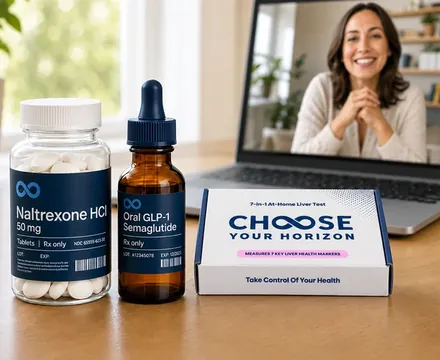
Choose Your Horizon's integrated solution pairs physician-guided naltrexone with coaching and tracking, built on clinical, neurological, and behavioral science, for people who want to drink less or quit.
It's private, online, and available in all 50 states. Take the online Alcohol Use Assessment to see if it's a good fit for you.
A private, physician-led plan to drink less or quit.
Medication, coaching and support from home. A short assessment is the first step.
Start Assessment