A 2 minute assessment to get a personalized mental health or alcohol recovery plan.

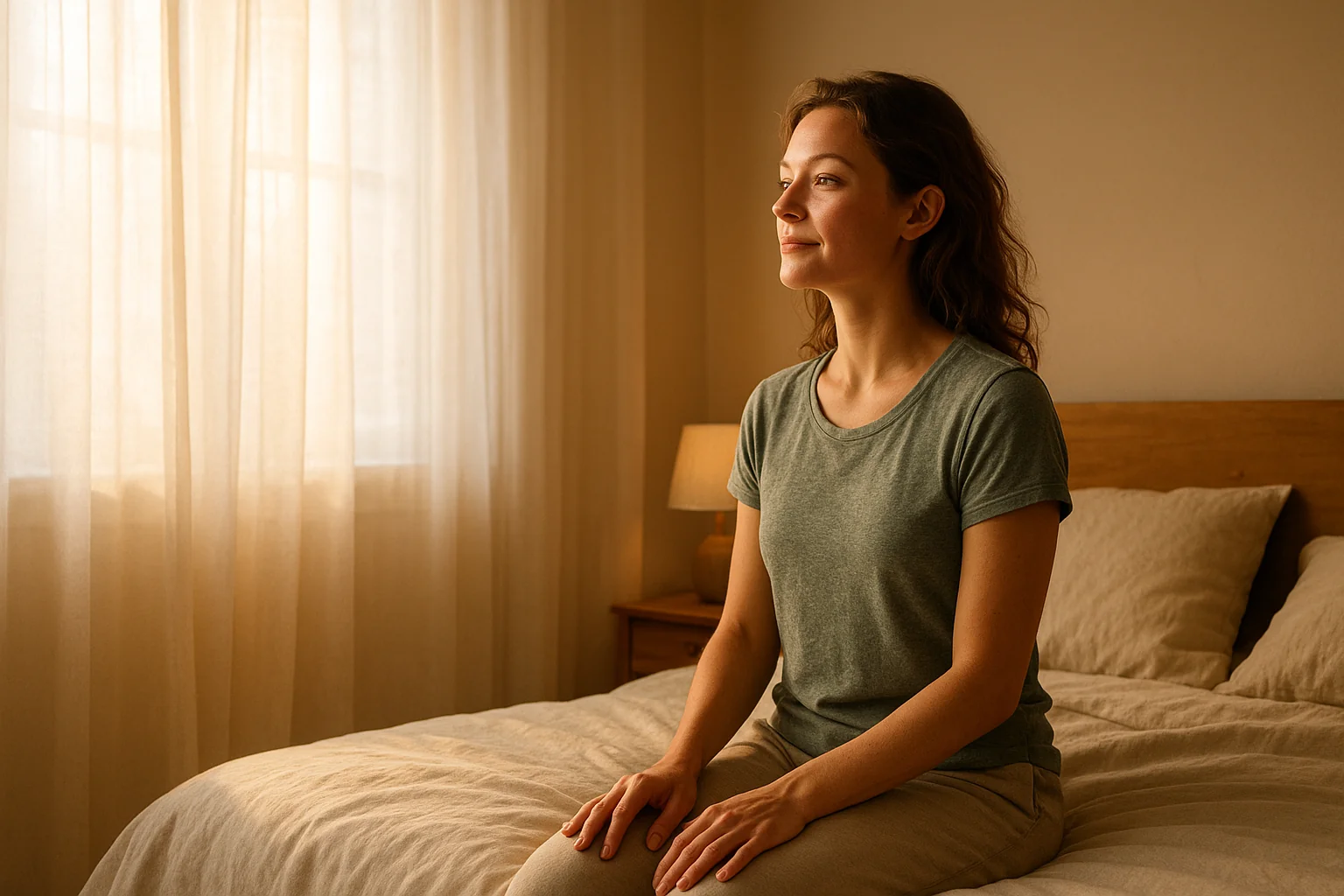
One month without alcohol produces measurable changes across your face, body, sleep, and mood. Here is what to expect.
What You'll Learn:
• What regular drinking does to your face, body, and mind
• The specific physical and mental changes at 30 days
• The science and lab numbers behind the transformation
• A week-by-week breakdown of what people typically experience
• How to actually make it to day 30
If you are searching for "30 days no alcohol before and after," you probably want to see proof. You want to know what actually changes in a month without drinking. Not vague promises, but specific, visible, tangible results.
The short answer is yes, and the changes are often more dramatic than people expect. Thirty days without alcohol is enough time for your face, body, sleep, energy, and mood to shift in ways that are not just measurable on lab work but visible in the mirror and noticeable to the people around you.
This article walks through the full before-and-after picture: what regular drinking does to you, what one month of change undoes, and what the science says about the transformation happening inside your body.
This is educational content and not a substitute for medical advice. If you have concerns about your drinking or your health, please speak with a healthcare provider.
The "Before" Picture: What Regular Drinking Does to You
Before the transformation makes sense, it helps to be honest about the starting point. If you have been drinking regularly, whether that means a few glasses of wine most nights, weekend binges, or daily beers, your body has been adapting to alcohol in ways you may not fully recognize because they crept in gradually.
Your face tells the story first. Chronic alcohol use causes facial puffiness through a combination of dehydration, fluid retention, and systemic inflammation. The cheeks swell, the jawline softens, and the area around the eyes looks perpetually swollen.
Skin becomes dull, dry, and sallow because alcohol depletes the vitamins responsible for cell turnover and collagen production. Redness spreads across the nose and cheeks from repeated vasodilation. Dark circles deepen because alcohol fragments your sleep architecture, robbing you of the restorative rest your skin needs to repair itself overnight.
According to the National Institute on Alcohol Abuse and Alcoholism, these effects compound across virtually every organ system. The face, with its thin skin and dense vascular network, shows the damage early.
Your body carries the weight, literally. Alcohol contains roughly 7 calories per gram, nearly as calorie-dense as pure fat. Those calories come with zero nutritional value.
A nightly habit of two to three drinks can add 300 to 600 empty calories per day. Over months, that translates to gradual, persistent weight gain concentrated in the midsection and face.
Digestion suffers too. Alcohol irritates the stomach lining, disrupts the gut microbiome, and impairs nutrient absorption. Energy levels stay chronically low because your body is diverting resources to metabolize a toxin instead of fueling normal function.
Your mind and mood take a quieter hit. Anxiety worsens because alcohol disrupts GABA and serotonin pathways, the neurotransmitter systems that regulate calm and mood. Many people drink to take the edge off anxiety, not realizing that alcohol is creating the very edge they are trying to smooth.
Brain fog becomes the new normal. Emotional reactions feel disproportionate. The "morning dread" after a night of drinking becomes a familiar companion.
For a deeper look at the full scope of what alcohol does before you quit, our guide to what happens when you stop drinking alcohol for a month covers the complete picture.
That is the "before." Now for the part you came here for.
The "After" Picture: What 30 Days Without Alcohol Looks Like
Your Face at 30 Days
The facial transformation is often the most immediately visible change. Other people notice it first. By day 30, the chronic puffiness has resolved. The bloating around the eyes and jawline that had become your baseline deflates, and the natural contours of your face re-emerge.
Your jawline looks sharper. Your cheekbones are more defined. The overall shape of your face looks like it belongs to a younger, healthier version of you.
Skin clarity improves significantly. The dull, grayish undertone that develops with regular drinking gives way to warmer, more even-toned skin. Redness and blotchiness fade as blood vessels return to their normal state.
Hydration improves from the inside out, so skin looks plumper and more resilient rather than dry and papery. Dark circles lighten as sleep quality stabilizes, and your eyes look brighter and more alert. Our article on physical changes when you stop drinking details the full spectrum of visible improvements beyond just the face.
Many people report that friends, coworkers, or family members comment on how "healthy" or "rested" they look without knowing the reason. The face is the most public part of your body, and the change at 30 days is often striking enough to prompt unsolicited compliments.
Your Body at 30 Days
Weight loss at the 30-day mark varies, but it is common. Eliminating two to three drinks per night saves roughly 300 to 600 calories daily. That translates to approximately 9,000 to 18,000 fewer calories over a month. For many people, that means losing 3 to 7 pounds without changing anything else about their diet or exercise.
Clothes fit differently. The midsection feels less bloated. The general sense of physical heaviness that accompanies regular drinking lifts.
Digestion normalizes. The stomach lining begins to heal, gut microbiome diversity improves, and the bloating, acid reflux, and irregular bowel habits that alcohol caused start to resolve.
Energy levels climb as your body stops spending metabolic resources processing ethanol and starts directing them toward normal function. Many people describe feeling physically lighter, more capable, and more willing to be active.
Your Sleep at 30 Days
Sleep is one of the most transformative changes, and it affects everything else. Alcohol suppresses REM sleep, the phase critical for memory consolidation, emotional processing, and cognitive restoration. Even though alcohol can make you fall asleep faster, the sleep it produces is fragmented and shallow.
Research published through the National Institutes of Health confirms that alcohol disrupts sleep architecture in dose-dependent fashion and that these disruptions persist as long as drinking continues.
By day 30, sleep architecture has largely repaired itself. REM sleep rebounds to normal levels. People report falling asleep naturally, staying asleep through the night, and waking up feeling genuinely rested, sometimes for the first time in years.
The downstream effects of better sleep ripple into every other area: clearer thinking, more stable mood, better physical recovery, and higher daytime energy.
Your Mind and Mood at 30 Days
The mental and emotional shift at 30 days is often described as a fog lifting. Cognitive clarity improves noticeably. Tasks at work feel less effortful. Memory sharpens. The ability to focus for sustained periods returns.
Anxiety decreases as GABA and serotonin systems recalibrate without alcohol's interference. The morning dread disappears entirely. Mood becomes more stable and predictable. You still feel the full range of emotions, but they feel proportionate rather than amplified. Many people describe a quiet sense of calm that they had forgotten was possible.
According to the NIAAA, alcohol-induced anxiety and depressive symptoms often begin improving within weeks of reduced consumption.
What the Science Says: The Numbers Behind the Transformation
The before-and-after changes are not just subjective impressions. They are backed by measurable biological shifts that happen within 30 days.
Liver enzyme normalization. The liver enzymes AST and ALT, which become elevated with regular drinking as a sign of liver stress, begin dropping within days of stopping alcohol.
A study published in the Annals of Hepathology found that participants who abstained from alcohol for one month showed significant reductions in liver fat and normalization of liver enzyme levels. For people without advanced liver disease, these markers often return to normal ranges within 30 days.
Blood pressure reduction. Alcohol raises blood pressure in a dose-dependent manner. Eliminating it for a month typically produces a measurable drop of 3 to 7 mmHg in systolic blood pressure. For someone with borderline or mildly elevated levels, that reduction alone can be clinically significant.
Sleep architecture repair. The suppression of REM sleep reverses within two to three weeks of stopping alcohol. By day 30, total sleep quality scores on standardized measures show meaningful improvement. The percentage of time spent in deep, restorative sleep increases, and the number of nighttime awakenings decreases.
Caloric deficit and weight. The math is straightforward. Removing 300 to 600 daily alcohol calories over 30 days creates a deficit of 9,000 to 18,000 calories.
That is roughly equivalent to 2.5 to 5 pounds of fat loss from caloric reduction alone. Add in improved metabolism, reduced inflammation, and better insulin sensitivity, and the total weight change often exceeds what the calorie math alone would predict.
Inflammation markers. C-reactive protein (CRP), a key marker of systemic inflammation, drops measurably within weeks of stopping alcohol. Lower systemic inflammation contributes to virtually every other improvement on this list. The Centers for Disease Control and Prevention notes that reducing alcohol use is one of the most impactful steps a person can take for overall health.
The Transformations People Describe
Since we cannot publish before-and-after photos, here is what the transformation actually looks and feels like based on the consistent patterns people report.
Week 1 is often the hardest. Sleep may be disrupted, cravings are present, and the benefits have not yet become visible. Many people feel worse before they feel better. The body is recalibrating, and that process is uncomfortable.
Week 2 is when the first signs appear. Puffiness in the face begins to decrease. Morning energy improves. The afternoon slump that had become routine starts to lift. Sleep is still adjusting but trending in the right direction. For a detailed look at this window, our article on two weeks no alcohol covers what to expect.
Week 3 is when other people start to notice. The face looks visibly different. Clothes feel slightly looser. Energy is noticeably higher. The mental fog has cleared enough that you find yourself thinking, "Is this what normal feels like?"
Week 4 is the payoff. You look in the mirror and see someone who looks healthier, more rested, and more like yourself. Your skin has a warmth and clarity it did not have a month ago. Your eyes are brighter. Your jawline is sharper.
You have lost a few pounds without dieting. You sleep through the night and wake up without an alarm feeling genuinely rested. Your anxiety is lower, your thinking is clearer, and your mood is more stable.
How to Actually Make It to 30 Days
Knowing what awaits you at day 30 is motivating. But the first week and the cravings that come with it can feel like a wall. Here are strategies that help.
Tell someone. Accountability matters more than willpower. Letting a friend, partner, or family member know what you are doing creates external support and makes it harder to quietly abandon the effort.
Replace the ritual, not just the drink. Much of the pull of alcohol is habitual, not chemical. If you always drink wine while cooking dinner, replace it with sparkling water or a non-alcoholic alternative. The ritual stays. The alcohol goes.
Expect the hard nights and plan for them. Days 3 through 7 are typically the most challenging. Have a plan: a walk, a phone call, a show you have been meaning to watch. Cravings peak and pass within 15 to 20 minutes. You do not need to outrun them. You just need to outlast them.
Consider medication support. Naltrexone is an FDA-approved medication that reduces alcohol cravings by blocking the endorphin reward that drinking produces. It does not make you feel sick if you drink, and it does not require you to quit cold turkey.
It simply makes alcohol less appealing, which can make the difference between white-knuckling through the first week and moving through it with manageable discomfort.
Be compassionate with yourself. If you slip on day 12, you have not failed. Twelve days of reduced liver stress, better sleep, and lower inflammation do not disappear because of one night. What matters is what you do on day 13.
Your 30-Day Transformation Starts Now
The before-and-after of 30 days without alcohol is not a gimmick. It is a well-documented, biologically predictable transformation that touches your face, body, sleep, energy, mood, and mental clarity.
The "before" is the accumulation of what alcohol does to your body over time: the puffiness, the dull skin, the restless sleep, the background anxiety, the brain fog. The "after" is what your body does when you give it 30 days to heal: a sharper jawline, clearer skin, deep sleep, stable mood, and mental sharpness.
You do not need to be in crisis to deserve that transformation. You do not need to label yourself. You just need to be curious about what is on the other side of a month.
If you are ready to start and want support that goes beyond willpower, you can take a free online Alcohol Use Assessment to explore whether naltrexone could help you change your relationship with alcohol on your own terms. It is quick, private, and there is no obligation.