

What You'll Discover:
- Why Friendsgiving can feel harder than family Thanksgiving when you're cutting back.
- What to sort out before you walk in the door.
- A moment-by-moment game plan for the night.
- How to host an alcohol-light or alcohol-free Friendsgiving people love.
- Short, easy scripts for when someone hands you a glass.
- What to do the morning after, including if the night didn't go to plan.
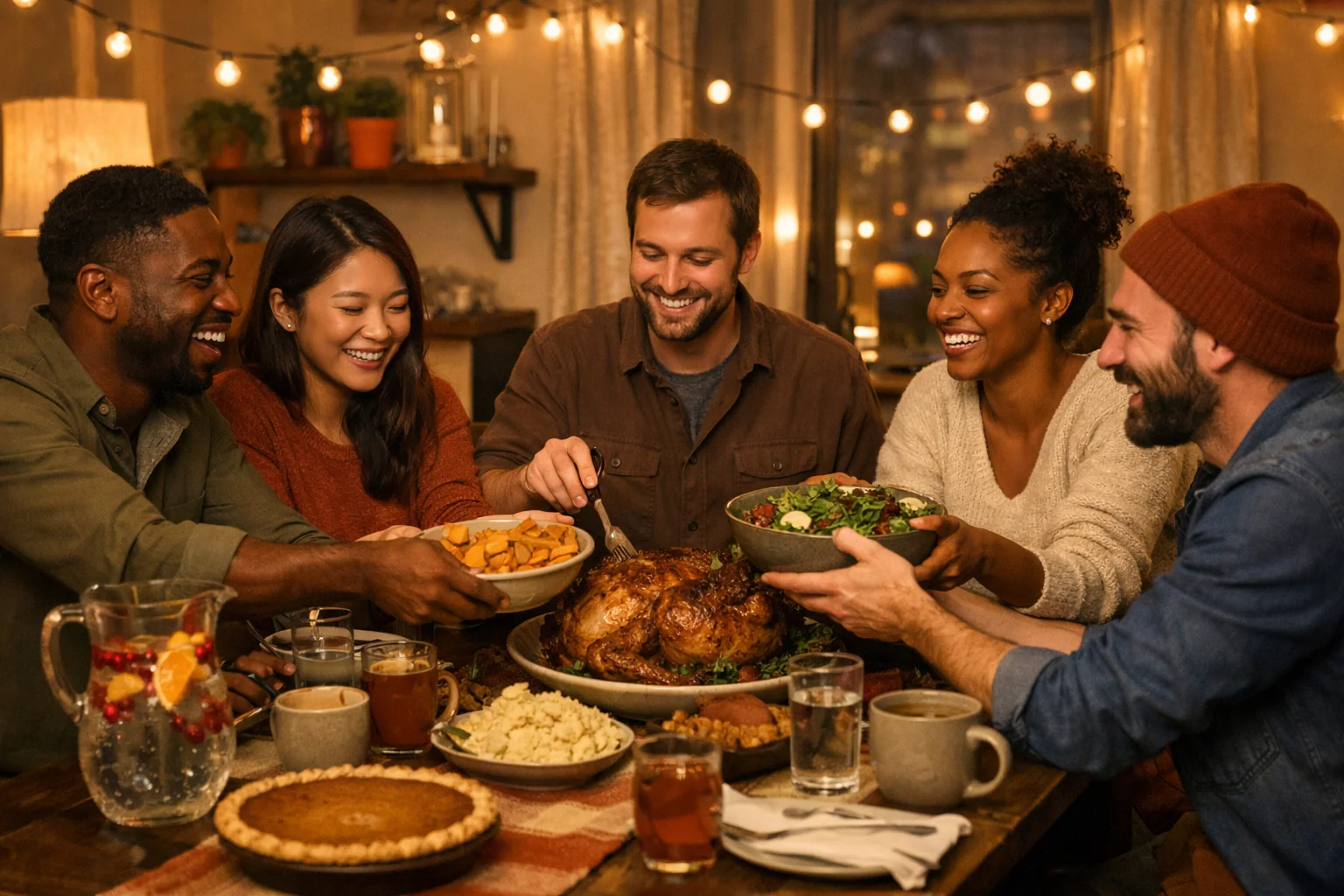
Friendsgiving is the holiday you get to pick yourself. Your people, your playlist, a table full of mismatched dishes, and nobody asking when you plan to settle down.
It's also, for a lot of friend groups, the most wine-forward night of the year. Everyone brings a bottle, the host opens a few more, and by 11 p.m. somebody is lining up shots.
If you're drinking less this year, or not drinking at all, that can feel like a lot. The good news is that you have more control over Friendsgiving than almost any other holiday event.
You're also in good company. Gallup's August 2026 poll found that 54% of U.S. adults say they drink alcohol, matching the record low in a trend that goes back to 1939.
The same poll found that 17% of adults picked a non-alcoholic beer, wine, or spirit over an alcoholic drink in the past year. The person holding a cider isn't an outlier anymore.
Why Friendsgiving Can Be Harder Than Family Thanksgiving
Family Thanksgiving comes with built-in structure. There's a set mealtime, older relatives, kids underfoot, and an obvious moment when the evening winds down.
If family dinner is the gathering you're dreading most, our guide to a sober Thanksgiving covers the relatives, the football, and the leftovers-and-wine evening. Friendsgiving strips most of that structure away.
Your Friends Set the Pace
With family, you might be one of the lighter drinkers in the room. With friends your own age, the pace usually gets set by whoever is drinking the most. And people match the people around them more than they realize.
A study on social imitation of alcohol consumption found that young adults drank more like their drinking partner when they expected that partner to judge them later.
The effect was strongest when participants weren't sure they'd been accepted. That's a pretty accurate description of Friendsgiving: a room full of people you like, who you want to like you back.
BYOB Means There's Always Another Bottle Open
At a potluck, a bottle of wine is the easiest thing to bring. So most guests bring one.
That often means more alcohol in the room than anyone would buy for themselves, all of it open and within arm's reach.
Late Nights and No Easy Exit
Family dinners usually end with pie and a drive home. Friendsgivings roll into board games, drinking games, and a "one more round" that starts somewhere around midnight.
There's also no built-in excuse to leave. Nobody needs to get Grandma home. Leaving a friend's party early can feel more noticeable than leaving a family one.
Celebrations Are a Known Pressure Point
A review of Marlatt's relapse prevention model lists positive emotional states, like celebrations, among the high-risk situations that can derail a drinking goal.
The same review found that social pressure, including simply being around other people who are drinking, contributed to more than 20% of the relapse episodes in Marlatt's research.
The National Institute on Alcohol Abuse and Alcoholism (NIAAA) makes a similar point in its holiday fact sheet. The holidays are a time when some people are more likely to drink beyond their limits than at other times of the year.
None of this is a character flaw. A warm, loud room full of open bottles makes any goal harder to keep, whether that goal is two drinks or zero. Planning for it is just smart.
Pick Your Goal Before You Pick Your Outfit
Decide what you want the night to look like before you arrive, and be specific. "Two glasses of wine, both with dinner" works. "Nothing alcoholic tonight" works. "I'll take it easy" usually disappears by the second toast.
Moderation is a valid goal. So is not drinking at all. Pick the one that fits your life right now, and know that you can change it next month.
If you're moderating, it helps to know where the line sits. The CDC's excessive drinking data defines binge drinking as four or more drinks for women and five or more for men on one occasion.
About 17% of U.S. adults binge drink, and the CDC notes that most of them are not dependent on alcohol. So this isn't about labels. A long Friendsgiving is just the kind of night where "a few glasses" turns into five.
Plan Before You Walk In the Door
Most of the work happens before the party starts. A few small decisions in the afternoon make the whole evening easier.
Bring a Drink You Actually Want
Bring something you're excited to drink, not a sad can of plain seltzer. Good non-alcoholic beer, alcohol-removed sparkling wine, a craft soda, or a pitcher of mocktail all count.
It doubles as your potluck contribution. For ideas, our guide to non-alcoholic cocktails and mocktails has recipes that hold their own on a holiday table.
A drink in your hand matters more than it seems. People rarely top up someone who's already holding a full glass.
Eat Early and Keep Eating
If you plan to have a drink or two, food is your friend. According to that same NIAAA fact sheet, food can slow the absorption of alcohol and reduce the peak level of alcohol in the body by about one-third.
So get there in time for appetizers. Arriving hungry to a room full of open wine is the fastest way to finish a glass before you notice.
Get Ahead of the "Just One" Friend
Every group has one. The friend who means well, says "come on, just one," and fills your glass while you're mid-sentence.
Text them before the party. "Hey, I'm not drinking this month, would love it if you didn't make it a thing." Most friends are glad to be asked, and it turns your biggest pressure point into your backup.
NIAAA's director recommends this exact move in his tips for an alcohol-free month: let friends and family know about your plan.
Your Ride, Your Exit Time
Drive yourself, or have a rideshare app ready to go. If you're carpooling, ride with the friend who always leaves first. Having your own way home is the best exit plan there is.
Then pick a leave time before you go. For many people, the first three hours are the best part: appetizers, dinner, dessert, and a game or two.
When the conversation starts looping and the shots come out, that's your natural stopping point.
Your Friendsgiving Game Plan, Moment by Moment
Most of the evening takes care of itself. Plans usually slip at a handful of predictable moments, so plan for those.
| Moment | What usually happens | What you can do instead |
|---|---|---|
| Arrival | The host hands you a glass of wine before your coat is off | Walk in holding your own drink, or ask for "something fizzy first" |
| The dinner toast | Everyone raises a glass of wine | Toast with whatever is in your glass. Nobody checks |
| Refills at the table | Bottles travel around and glasses get topped up | Keep your glass full of sparkling water and pass the bottle along |
| Games and the late-night round | Drinking games start and someone lines up shots | Be the scorekeeper or DJ, or make it your cue to head out |
| Leaving | "Stay for one more" turns into another hour | Leave at your planned time with a plate of leftovers |
Hosting an Alcohol-Light or Alcohol-Free Friendsgiving
Hosting gives you the most control of all. You choose the menu, the drinks, the activities, and the end time. And you don't need to announce anything.
Our full guide on how to host a party without alcohol goes deeper. Here's the Friendsgiving version.
A Drinks Station Worth Crowding Around
Set up a drinks corner that looks as good as any bar. Sparkling water, apple cider, ginger beer, non-alcoholic beer, and an alcohol-removed sparkling wine cover most tastes.
Add ice, a few nice glasses, and garnishes like rosemary, fresh cranberries, orange slices, and cinnamon sticks. When the drinks look festive, nobody asks where the wine went.
One Signature Mocktail
Give the night one signature drink and a fun name. Here's an easy one that serves about 10 people.
Cranberry Cider Spritz: Mix 4 cups of apple cider, 2 cups of unsweetened cranberry juice, the juice of 2 limes, and a few thin slices of fresh ginger in a pitcher. Chill for an hour.
Pour it over ice, top with ginger beer or sparkling water, and garnish with a rosemary sprig and a few cranberries. It's tart, a little spicy, and looks great in photos.
Let the Food Lead
Friendsgiving is a food holiday first. Put appetizers out the moment guests arrive, serve dinner on time, and make dessert an event.
Food gives people something to do with their hands and something to talk about. A pie contest does more for the mood than a third bottle of red.
What to Put in the Invite
At a potluck, the invite sets the tone. Instead of "BYOB," try "Bring a dish or a fun drink to share. Non-alcoholic picks welcome." Most people will follow your lead.
For a fully alcohol-free night, say so warmly and early: "We're doing a dry Friendsgiving this year. Bring your favorite non-alcoholic drink."
That lines up with the NIAAA director's advice to make sure alcohol-free drinks are on hand at parties and gatherings.
If someone brings wine anyway, thank them and set it on a side table. Alcohol-light means it's there, but it isn't the centerpiece.
Activities That Aren't Drinking Games
Give people something to do after dinner so the evening doesn't default to refills:
- A pie bake-off with paper ballots.
- A gratitude jar where everyone reads one anonymous note aloud.
- Charades or a big group board game.
- A short walk around the block between dinner and dessert.
Set a soft end time on the invite, like 6 to 10 p.m. It keeps the late-night round from becoming the main event.
What to Say: Short, Unapologetic Scripts
You don't owe anyone a reason, and the shorter your answer, the faster the conversation moves on. The NIAAA director suggests having a polite, assertive "no, thanks" ready before anyone offers you a drink.
A few that work well at Friendsgiving:
- "I'm good, thanks. This cider is great."
- "Not tonight. I'm driving."
- "I'm taking a break. Feeling great so far."
- "I'm at my two. Switching to the fizzy stuff."
- "Seriously, I'm good. Tell me about your trip."
If someone pushes, repeat the same line in the same friendly tone, then change the subject. Our guide on how to say no to a drink has more options for the persistent friend.
If someone asks why, share as much or as little as you like. "I sleep better" is a complete answer. So is "I just feel better without it."
The Morning After: Group Chat, Photos, and How You Feel
The morning after feels different when you had little or nothing to drink. You remember the whole night, and you might have the best photos.
The Group Chat
The chat will light up with photos, hangover jokes, and "who took my casserole dish." Join in. You don't need to post anything about not drinking.
If someone jokes that you were "the responsible one," a simple "Best night. That stuffing was unreal" is all it takes. Your drink choices aren't the story of the night. The friendship is.
Sparkling water looks exactly like white wine in photos. If you'd rather skip the glass-in-hand shots, offer to be the photographer.
Check In With Yourself
Take a minute in the morning to notice how you feel: your sleep, your energy, your mood. That's useful information.
Plenty of people find that a lighter Friendsgiving is the moment they realize how much better the next day can feel.
If the Night Didn't Go to Plan
Maybe you had four glasses when you meant to have two, or a drink when you planned on none. It happens, and it doesn't erase your progress.
The Marlatt review describes something called the abstinence violation effect. After a slip, guilt and a sense of failure can make it more likely that one extra drink turns into a longer stretch of heavier drinking.
The same review explains that people do better when they treat a slip as a mistake to learn from, not as proof of weak willpower. A slip is a signal that the plan needs a tweak, not that you should give up.
Here's a simple next-day plan:
- Drink water, eat a real breakfast, and rest.
- Look at the table above and find the moment where the plan slipped.
- Change one thing for next time, like leaving an hour earlier or bringing your own drink.
- Get back to your goal today, not "after the holidays."
All that said, if plans keep slipping at gatherings, or the pull to keep drinking feels louder than you want it to, that's worth paying attention to. Support can make this a lot easier than going it alone.
Where Naltrexone Fits
For some people, a good plan is enough. For others, the pull of the "one more" moment stays strong no matter how well they prepare.
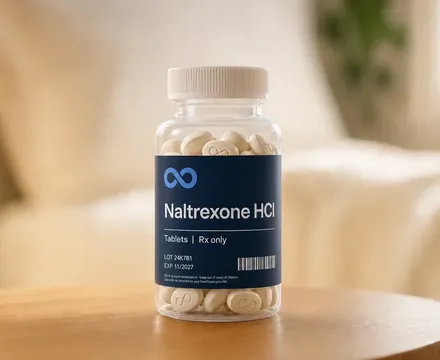
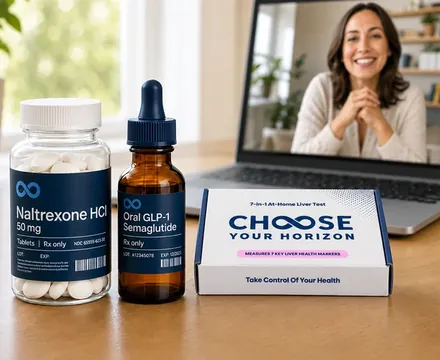
Naltrexone is an oral medication, typically 50 mg, that has been FDA-approved for alcohol use disorder since 1994.
It blocks the opioid receptors behind alcohol's rewarding buzz. So drinking feels less rewarding, and the urge for another round tends to quiet down.
Some people take it daily. Others take it about an hour before a social event where they expect to drink. A physician helps you decide which fits your goal.
Choose Your Horizon pairs physician-guided naltrexone with coaching and tracking in one integrated solution, built on clinical, neurological, and behavioral science.
It works whether you want to drink less or quit, and it's available in all 50 states.
Make This Friendsgiving Yours
Friendsgiving can be trickier than family Thanksgiving when you're cutting back. Your friends set the pace, the bottles keep coming, and there's no built-in exit.
The answer is a plan. Pick a clear goal, bring a drink you love, eat early, get ahead of the "just one" friend, and know your exit time. Hosts, let the food lead.
If the night goes sideways, treat it as information, not failure. And if you'd like more support with drinking less or quitting, reaching out is a smart, completely normal step.
Frequently Asked Questions
How do I tell my friends I'm not drinking at Friendsgiving?
Keep it short and casual. A text before the party works well, and "I'm taking a break" or "I'm driving" is plenty on the night.
What should I bring to Friendsgiving if I'm not drinking?
A non-alcoholic drink you genuinely enjoy, like a craft non-alcoholic beer or a pitcher of mocktail. It counts as your potluck dish and gives you something to hold all night.
Is it rude to host an alcohol-free Friendsgiving?
Not at all. It's your party, and great drinks without alcohol are easy to make. Mention it warmly in the invite and keep the food, music, and activities strong.
What are good mocktails for Friendsgiving?
Fall flavors work best. Apple cider, cranberry, ginger, citrus, rosemary, and cinnamon all pair well with a holiday meal. A batched pitcher, like a cranberry cider spritz, also saves the host time.
What if I drink more than I planned at Friendsgiving?
Treat it as a learning moment, not a failure. Rest, rehydrate, figure out which moment tripped you up, and get back to your goal the next day.
If you want to drink less or quit on your own terms, Choose Your Horizon can help. Take the online Alcohol Use Assessment to see if physician-guided naltrexone and our integrated solution are a good fit for you.
A private, physician-led plan to drink less or quit.
Medication, coaching and support from home. A short assessment is the first step.
Start Assessment