A 2 minute assessment to get a personalized mental health or alcohol recovery plan.


A great gathering has never actually run on alcohol. It runs on the host, the food, the room, and what you give people to do, and you can nail all four with barely a bottle in sight.
What You'll Discover:
• Why alcohol-light parties land so well right now.
• How to build a mocktail bar guests want to gather around.
• The food, games, and timing that carry a night on their own.
• Exactly what to say when someone asks where the drinks are.
• How hosting alcohol-light quietly supports guests who are cutting back.
Most hosts get one thing backwards. They assume the alcohol is the party, so a party without much of it must be a party with a hole in the middle.
It is not. The alcohol was never doing the heavy lifting. You were.
The warmth of a good gathering comes from the room, the food, the people, and the little bit of structure you give the night.
Get those right and most guests will never clock how much they did or did not drink. They will just remember they had a good time.
More people are hosting this way on purpose now, and it works beautifully. So let's build the night from the ground up.
Why Alcohol-Light Parties Actually Work Now
Drinking norms are shifting, and your guest list already reflects it. A real share of adults are cutting back, taking nights off, or skipping alcohol entirely, and the culture has finally caught up with good options.
The public health guidance has moved too. The Centers for Disease Control and Prevention now frames it plainly. When it comes to alcohol and health, less is better, and no level of drinking has been proven risk-free.
For a host, that changes everything. An alcohol-light party is not a consolation prize. For a lot of your guests, it is a genuine relief they did not know how to ask for.
There is also a simple behavioral reason it works. What people reach for at a party depends heavily on what is easy to reach for.
Researchers who study drinking settings describe alcohol use as deeply shaped by social and cultural context. The cues in the room, not just personal willpower, steer how much people drink.
As the host, you own those cues. Set the room up so the interesting drink in someone's hand is a beautiful non-alcoholic one, and you have changed the default without asking a single person to change themselves.
That is the whole strategy in one line. Make the good choice the easy, obvious, delicious one, and step back.
Build a Mocktail Bar People Want to Gather Around
The bar is your centerpiece, so make the non-alcoholic side the star, not the sad afterthought next to the wine. One beautiful drink station does more for the mood than any decoration you could hang.
Give it height, color, and a little theater. Picture a big glass dispenser of something citrusy, a tray of garnishes, a few flavored syrups, bitters, sparkling water, and a bucket of good ice.
People gather where there is something to do with their hands.
Offer two or three signature drinks so choosing feels fun instead of limiting. You do not need a full menu. You need a couple of options that look and taste deliberate.
A few building blocks make any mocktail feel grown-up:
• A base with body, like cold brew tea, a good juice, or a shrub, so it is not just soda.
• Acid and fizz, like fresh citrus and sparkling water, to keep it bright.
• A real garnish, like a rosemary sprig, citrus wheel, or a few berries on a pick.
Our guide to non-alcoholic cocktails and mocktails has recipes you can build an entire bar around, and most of them batch beautifully so you are not stuck mixing all night.
Batching is the host's best friend. Mix your signature drink in a pitcher or dispenser ahead of time, keep the fizz separate to add at the last second, and you free yourself to actually enjoy your own party.
For mixed crowds, make it easy to alternate. If some guests do want alcohol, set things up so they can go one alcoholic, one not, back and forth through the night.
That rhythm has a name. It is called zebra striping, and it lets people pace themselves without ever stepping away from the fun.
Keep the pours honest either way. If you are serving anything with alcohol, remember that a standard drink is 14 grams of pure alcohol, roughly 12 ounces of regular beer or 5 ounces of wine. A heavy hand turns two drinks into four fast.
Presentation is the entire game. A mocktail in a coupe glass with a good garnish reads as celebratory. The same juice in a plastic cup reads as the kids' table.
So pour the non-alcoholic drinks into the nice glassware too. Nobody should be able to tell, at a glance, who is drinking what.
Let the Food Do Heavy Lifting
At a boozy party, food is mostly a sponge. At an alcohol-light one, food is a main event, so treat it like one and your guests will not miss a thing.
Go for variety, texture, and a little abundance. A grazing board, something warm from the oven, a couple of small bites people can keep returning to. Full guests are happy guests.
A generous table also gives everyone a reason to circle back and linger, which is exactly the kind of gentle movement that keeps a room feeling alive.
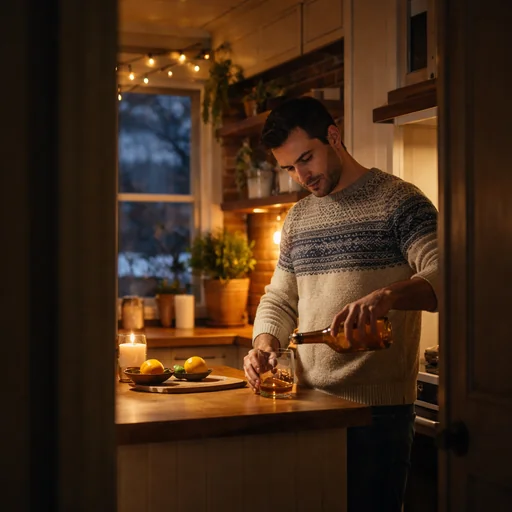
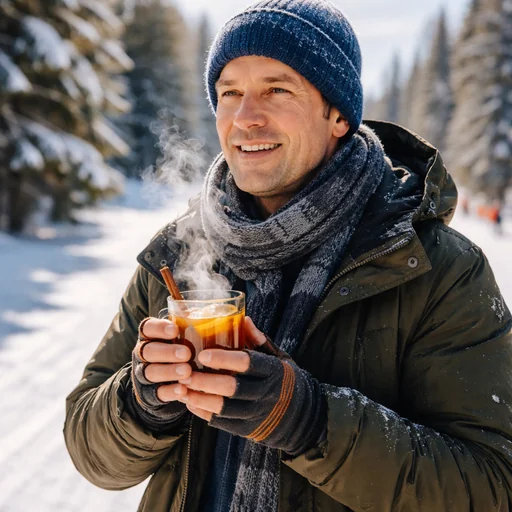
Warm drinks count as food energy too. A spiced cider on the stove or a proper tea station gives people something cozy to hold, and holding a warm mug is half of what a drink was ever really for.
If you want one rule, it is this. When in doubt, make more food than you think you need. Leftovers are a much smaller problem than a hungry room.
Give the Night Structure With Activities and Games
Here is the real secret most party guides miss. Alcohol is often just a substitute for structure. It lowers the pressure of an unstructured room full of people who are not sure what to do.
Give people something to do and you remove the need for that crutch entirely. You do not need much either. One anchor activity usually carries a whole evening.
• A game people can drift in and out of, like cards, trivia, or a puzzle left out on a table.
• A shared task, like decorating cookies, building tacos, or a simple craft.
• A reason to move, like a backyard fire, a dance playlist, or a walk if the weather cooperates.
The point is momentum. When a room has a rhythm of its own, nobody stands around wondering what to do with their hands, and that idle moment is exactly when people reach for another drink out of pure habit.
Keep it loose. Structure should feel like an invitation, never a mandatory schedule taped to the fridge.
The best host offers the option and then lets the night find its own shape. You are setting a table of possibilities, not running a summer camp.
Music, Lighting, and Timing Set the Pace
Three quiet levers control the whole feel of a party, and not one of them comes from a bottle.
Music sets the energy. Build a playlist that starts mellow as people arrive, lifts through the middle, and softens near the end so the night has a real arc. A room reads tempo without anyone consciously noticing.
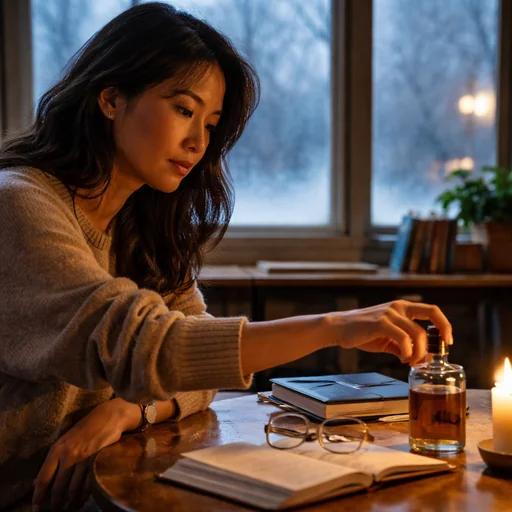
Lighting sets the intimacy. Skip the overhead lights. Lamps, candles, and string lights make almost any space feel like somewhere people want to stay a while.
Warm, low light does for a room what that first drink used to do for jittery nerves. It says relax, you are welcome here, settle in.
Timing sets the ceiling. A defined window, say seven to eleven, gives the party a natural shape and a graceful exit.
Open-ended nights are where things tend to get sloppy, and an alcohol-light party rarely needs the extra hours to feel complete. Let it peak and end while everyone still wishes it were a little longer.
What to Say When a Guest Asks Where the Drinks Are
Someone will ask. Usually it is friendly, occasionally it is a little pointed, and either way the move is to answer with warmth and zero apology.
Lead with what you have, not with what you do not. "I made a couple of great mocktails, come pick one" redirects the entire conversation toward something fun in about four seconds.
You do not owe anyone an explanation for how you are hosting your own gathering. A light, confident answer closes the subject far better than any defense could.
If you want more ready-made lines for these moments, our piece on how to socialize without alcohol is full of them, and they work whether you are the host or a guest.
If a guest seems disappointed, let them be, briefly. Most people take their cue straight from the host.
When you are relaxed and clearly enjoying yourself, the room follows you, not the missing bar cart. Your ease is the most persuasive thing in the house.
And if someone quietly shares that they are cutting back or not drinking tonight, meet it simply. "Good, I've got you" is a complete and generous answer.
The Quiet Upside Your Guests Feel the Next Day
The best review of your party arrives the next morning, when your guests wake up clear instead of wrecked.
No one lies awake at 3 a.m. with a pounding heart. No one pieces together how the night ended. No one drafts the apology text over coffee. That absence is a real gift, and people feel it even when they cannot quite name it.
There is a genuine health layer here as well. Cutting back even modestly carries real benefits of drinking less alcohol, from steadier sleep to a more even mood.
A thoughtful host hands those small wins to the whole room without anyone having to opt in.
The effect tends to stick, too. When people experience an alcohol-light night that genuinely worked, it quietly reshapes what they expect from a good time.
Research on non-alcoholic beverage choices finds that simply making appealing alternatives available shifts what adults reach for. Your party becomes a small, living proof that fun does not require a hangover as the entry fee.
That is a lovely thing to be responsible for. You are not lecturing anyone. You are just showing them a better night and letting the memory do the rest.
A Note for Hosts and Guests Who Are Cutting Back
Some of the people in your home are working on their relationship with alcohol, whether they say so or not. Hosting alcohol-light lifts a real weight off them for an evening, and that alone is worth doing on purpose.
For anyone actively trying to drink less, a supportive room pairs well with support that works underneath the surface, where cravings actually start.
Some people use medication like naltrexone, a daily 50mg tablet that softens the reward alcohol delivers to the brain, so the pull to keep drinking fades over time.
It is grounded in clinical, neurological, and behavioral science, not willpower alone.
At Choose Your Horizon, that kind of care comes as an integrated solution that blends medication with real human coaching, all online and discreet. As a host, you never need to know who is using what.
You just need to make the room easy to be in. The rest is theirs to carry, and there is real, judgment-free help if they want it.
Conclusion
An alcohol-light party is not a party missing its main ingredient. It is a party where the host remembered what the main ingredient always was, which is care, energy, and a room people do not want to leave.
Build a beautiful drink station. Feed people generously. Give the night some structure and a graceful ending. Answer the "where's the booze?" question with a smile and a mocktail.
Do that, and your guests go home glad and wake up gladder. That is the whole art of it, and none of it was ever in the bottle.
Hosting this way is also a quiet kindness to anyone changing how they drink. If that person is you, know that help is steady, discreet, and built around your goals rather than any label.
Frequently Asked Questions
How do I throw a party without alcohol and still make it fun?
Lead with a styled mocktail bar, generous food, and one anchor activity like a game or a shared task. Structure and warmth carry a night far better than a bar cart ever did.
What do I serve instead of alcohol at a party?
Two or three signature mocktails, sparkling water with real garnishes, and a warm option like spiced cider or a tea station. Nice glassware is what makes them feel celebratory.
How do I respond when guests ask why there's no alcohol?
Redirect to what you do have. Something like "I made a couple of great mocktails, come try one" answers the question and moves everyone toward the fun with no apology needed.
Will my guests actually have a good time at an alcohol-free gathering?
Most will, especially when the room has energy and something to do. People take their cue from a relaxed, happy host, and they tend to appreciate waking up clear.
How can I support a guest who is trying to drink less?
Keep appealing non-alcoholic options front and center so choosing one feels normal, not singled out. If they mention cutting back, a simple "I've got you" is all it takes.
Can I still serve some alcohol at an alcohol-light party?
Absolutely. Keep it simple, pour honest measures, and make the non-alcoholic options just as appealing so guests can alternate freely through the night.
Take the Next Step
If hosting alcohol-light is part of a bigger goal to drink less, you do not have to white-knuckle it. Take a quick, discreet online Alcohol Use Assessment to see if naltrexone through Choose Your Horizon could be a good fit for you.