A 2 minute assessment to get a personalized mental health or alcohol recovery plan.

Yes, online alcohol treatment is legitimate when it is built on licensed physicians, FDA-approved medication, and real follow-up. Here is how to tell credible providers from the rest.
What You'll Discover:
• Why telehealth alcohol care is real medicine, not a workaround.
• The four things that make an online provider legitimate.
• How telehealth outcomes compare with in-person care.
• Red flags that should make you close the tab.
• How to verify any provider before you spend a dollar.
If you typed this question into a search bar, good. Skepticism is exactly the right instinct when your health is on the line and a website is asking for your trust.
The internet is full of wellness products dressed up as medicine. Alcohol care is too important to hand over to one of them.
So here is the honest answer, along with a practical way to separate legitimate medical care from everything else.
The Short Answer: Yes, When Four Things Are True
Online alcohol treatment is legitimate medicine when four conditions are met. Licensed physicians make the medical decisions. The medication is FDA approved. The care plan follows evidence. And someone actually follows up with you.
When all four are present, you are getting the same clinical care a good doctor's office provides, delivered through a screen instead of across a desk.
When any of them is missing, you are not looking at treatment. You are looking at a storefront.
The rest of this article shows you how to check each one in a few minutes, because every claim a provider makes is verifiable if you know where to look.
Telehealth Alcohol Care Is Real Medicine
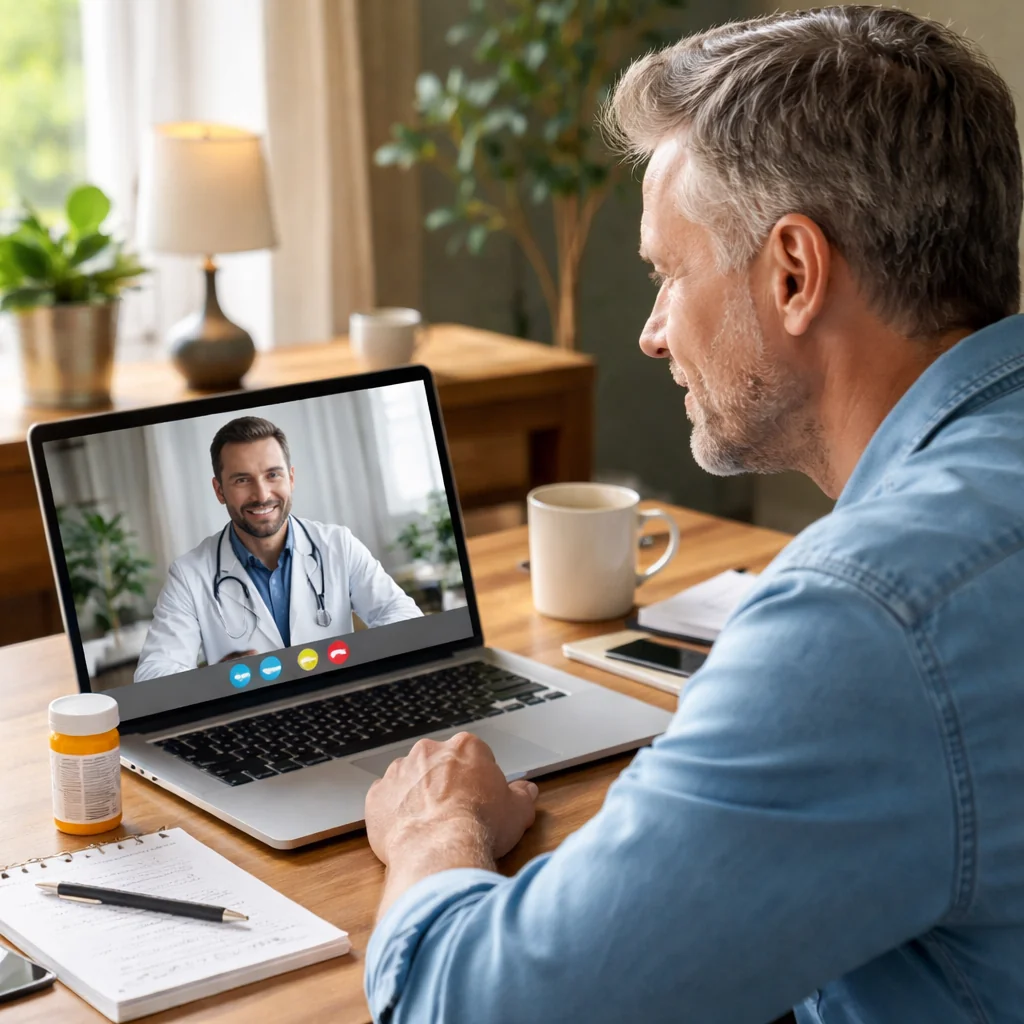
Telehealth is not a loophole. It is a delivery method for medical care that federal health agencies recognize and that peer-reviewed research has evaluated head-on.
A scoping review of telemedicine for substance use disorder screened 856 studies from a full decade of research. Its conclusion was that telemedicine care is beneficial, acceptable to patients, and as effective as in-person care.
That last part deserves emphasis. Not almost as effective. As effective, with some studies finding people actually stay in telehealth care longer.
Physicians prescribing through telehealth carry the same licenses, the same accountability to state medical boards, and the same prescribing rules as any doctor you would see in person.
The prescribing rules are worth knowing too. Naltrexone is not a controlled substance, so a licensed physician can evaluate you and prescribe it fully online, legally, in nearly every state.
We explain how the model works end to end in our guide to telehealth alcohol treatment. The short version is that the medicine is identical. Only the commute changed.
Insurers and Medicaid now cover telehealth visits in many states, which is about as strong a signal of mainstream acceptance as American healthcare produces.
What Legitimacy Looks Like, Piece by Piece
Knowing telehealth can be legitimate is not the same as knowing a specific provider is. Here is what to check.
Licensed Physicians You Can Actually Name
A credible provider tells you who its doctors are. Names, credentials, and training should be public, and every physician must be licensed in the state where you live.
At Choose Your Horizon, consultations are handled by medical doctors under the supervision of a Mayo Clinic-trained psychiatrist. That is the level of transparency you should expect anywhere.
Every state medical board runs a free license lookup online. If you cannot find a provider's doctors there, or cannot find their names at all, that tells you everything.
FDA-Approved Medication, Not Supplements
Legitimate alcohol care uses medication with regulatory approval behind it. For drinking, the cornerstone is naltrexone, a once-daily 50mg tablet approved by the FDA in 1994.
The evidence base is unusually deep. A 2023 meta-analysis published in JAMA analyzed 118 clinical trials covering nearly 21,000 participants and confirmed that naltrexone reduces heavy drinking.
Naltrexone works by blocking the opioid receptors that release dopamine when you drink. Alcohol gradually stops feeling rewarding, and the pull toward the next drink weakens.
Compare that to sites selling herbal blends or "craving support" supplements. Those products carry no approval, no dosing standards, and no evidence. We cover the real options in our article on medications for alcohol use disorder.
A Real Medical Screening Before Any Prescription
Naltrexone is safe for most people, but not everyone. It cannot be combined with opioids, and severe liver disease changes the calculus.
A legitimate provider screens your health history before prescribing, every time. Our guide to getting a naltrexone prescription online walks through what that review covers.
If a website offers to ship medication after nothing but a credit card number, leave. Prescription decisions made without health questions are not medicine.
Privacy Standards in Writing
Real medical providers are bound by HIPAA, the federal law protecting your health information. Their privacy practices should be published, specific, and easy to find.
Discretion should extend to the practical details too, like plain packaging and confidential messaging. We go deeper on this in our article on private alcohol treatment.
Transparent Pricing Before You Commit
Legitimate providers publish their prices. You should know the cost of the consultation, the medication, and the ongoing care before you enter a single payment detail.
Be wary of any site that hides pricing behind a signup wall or charges a fee just to learn what the fees are. Medicine has costs, but honest medicine does not have surprises.
Transparent pricing also signals something deeper. A provider planning to keep you as a patient for months has no reason to trick you on day one.
How a Legitimate Online Visit Actually Goes
Knowing the checklist is easier when you know what the real thing looks like from the inside.
You start with a structured assessment covering your drinking patterns, health history, and goals. The questions mirror the validated screeners used in clinics, and they take about ten minutes.
A licensed physician then reviews your answers, asks follow-ups, and decides whether medication is appropriate. Nothing ships until that review is complete.
If naltrexone is a fit, the prescription is issued within a day and arrives in plain packaging a few days later. Then the follow-up begins, with check-ins, progress tracking, and dose adjustments when needed.
Notice the order. Assessment, physician, prescription, follow-up. Any provider that reverses it, or skips a step, has stopped practicing medicine somewhere along the way.
Legit Provider or Red Flag: A Quick Comparison
Run any provider through this table before you commit.
None of these checks require expertise. Ten minutes on a provider's website, plus one search on your state medical board, covers the entire list.
How Outcomes Compare With In-Person Care
Legitimacy is not just about credentials. It is about whether the care works.
Across the published research, telehealth substance use care consistently matches in-person care on the outcomes that matter, including reduced drinking and treatment retention.
Retention deserves special attention. Several studies found people were more likely to stay in treatment through telehealth, likely because a check-in from your kitchen beats a drive across town.
Staying in care is one of the strongest predictors of long-term change. A format that people do not quit is a clinical advantage, not a convenience feature.
There is a selection effect worth naming as well. Many people who start telehealth care would never have walked into a clinic at all, so the comparison understates what telehealth adds.
For those people, the honest comparison is not telehealth versus in-person. It is telehealth versus nothing, and nothing has a very poor track record.
At Choose Your Horizon, 98 percent of patients report improvements within four weeks, and patients who stay engaged for 12 or more weeks see an 86 percent success rate. Real follow-up is a large part of why.
Things to Confirm Before You Sign Up
Give any provider, including us, this quick inspection first.
• The physicians are named, credentialed, and licensed in your state.
• The medication offered is FDA approved, with screening beforehand.
• Pricing is public and complete, with no surprise fees later.
• Support continues after the prescription, in writing.
• The privacy policy specifically mentions HIPAA protections.
A legitimate provider passes all five without any digging. A questionable one usually fails the first check within a minute.
If you want an independent second opinion, FindTreatment.gov, run by the Substance Abuse and Mental Health Services Administration, is a confidential federal directory of licensed care options.
What Evidence-Based Care Actually Means
The phrase gets thrown around, so it is worth defining. Evidence-based care means the treatments offered have been tested in controlled studies and shown to work.
The National Institute on Alcohol Abuse and Alcoholism outlines the evidence-based options for alcohol use disorder. They include FDA-approved medications and structured behavioral support, alone or combined.
Choose Your Horizon builds on exactly that foundation. The integrated solution combines clinical, neurological, and behavioral science: physician-guided naltrexone, daily accountability, coaching, and progress tracking that adapts to you.
No single tool carries the whole load. Medication quiets the craving, behavioral support rebuilds the habits around it, and follow-up keeps both on course.
That structure works whether your goal is moderation or stopping entirely. Legitimate care helps you drink less or quit, on your own terms, rather than forcing one definition of success.
Why This Question Matters More Than Ever
Millions of Americans drink more than they want to, and most never get help. Fewer than one in ten people with alcohol use disorder receive treatment in a given year.
The gap is not desire. It is friction, stigma, and not knowing whom to trust. Nobody wants to sit in a waiting room to discuss their drinking, and nobody wants to be scammed while trying to fix it.
Telehealth closes the friction gap. Care that is private, online, and reachable from home fits in the margins of a normal day, which is exactly where lasting change tends to happen.
That only works if the care behind the screen is real. Every fake pill site that burns someone makes the next person less likely to seek help at all.
So verify hard, then commit. The worst outcome is not choosing the wrong provider. It is letting doubt keep you from choosing anything.
Trust Is Earned by Structure, Not Slogans
Online alcohol treatment is legitimate when licensed physicians, FDA-approved medication, evidence-based care, and real follow-up are all present. Absence of any one is your cue to keep looking.
The checks take minutes. Doctor names, state license lookup, published pricing, HIPAA language, and proof of follow-up.
More than 8,000 people have changed their relationship with alcohol through Choose Your Horizon, with a 4.3 rating on Trustpilot from verified patients.
We built our integrated solution to pass every test on this page, because skeptical patients make the best partners.
Wanting proof before you trust someone with your health is not cynicism. It is exactly how this decision should be made.
Frequently Asked Questions
Is it legal to get naltrexone prescribed online?
Yes. Naltrexone is not a controlled substance, and licensed physicians can legally prescribe it through telehealth in the states where they hold licenses.
How do I know an online provider's doctors are real?
Look for physician names and credentials on the provider's site, then confirm them through your state medical board's free license lookup. Legitimate providers make this easy.
Is online alcohol treatment as effective as in-person care?
Research says yes. A decade-spanning review found telemedicine substance use care as effective as in-person treatment, with equal or better retention in several studies.
Will anyone find out I am getting treatment online?
Your care is protected health information under HIPAA. With cash-based providers like Choose Your Horizon, nothing is billed to insurance, and medication arrives in plain packaging.
What medication will a legitimate provider prescribe?
For alcohol, the standard is naltrexone, an FDA-approved once-daily 50mg tablet. Some physicians also discuss GLP-1 medications as another physician-guided option when appropriate.
What is the biggest red flag to watch for?
Medication offered without any health screening. A prescription decision made with zero medical questions is the clearest sign a site is not practicing medicine.
The fastest way to evaluate us is to start where every patient starts. Take the online Alcohol Use Assessment and see exactly how physician-guided care works before you commit to anything.