A 2 minute assessment to get a personalized mental health or alcohol recovery plan.


Naltrexone is not known to interact directly with common blood pressure medications. That still makes it a conversation with your prescriber rather than a decision you make alone.
What You'll Discover:
• Whether naltrexone and blood pressure medications can be taken together.
• Why heavy drinking and high blood pressure keep showing up in the same people.
• Exactly what to tell your prescriber before you start.
• How much blood pressure tends to improve when drinking drops.
• Why you never adjust an antihypertensive on your own.
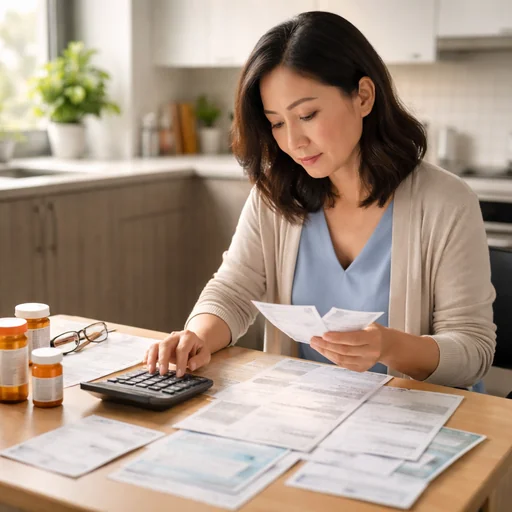
If you take something for blood pressure and you are looking at naltrexone, you are in very common company.
Heavy drinking pushes blood pressure up. So a large share of the people who eventually consider naltrexone already have an antihypertensive sitting in the cabinet.
The short version is reassuring. These are not medications that fight each other in any documented way.
The Short Answer
Naltrexone is not known to have a direct interaction with the common classes of blood pressure medication. It is not flagged against ACE inhibitors, ARBs, calcium channel blockers, beta blockers, or thiazide diuretics.
There is a caveat worth stating out loud. Naltrexone's metabolic pathway suggests it does not have significant interactions with other drugs, though formal studies evaluating those interactions have not been performed.
Those are two different claims. One says nothing has been flagged. The other says the systematic testing was never done in the first place.
That gap is not cause for alarm. It is the reason a prescriber should look at your actual list rather than you relying on an online checker, and we get into the wider picture in our guide to naltrexone drug interactions.
Why Heavy Drinking and High Blood Pressure Travel Together
This connection is not a coincidence. It is one of the strongest modifiable relationships in cardiovascular medicine.
Blood pressure rises with the amount of alcohol consumed, and the pattern holds across populations. Sustained intake above roughly 30 grams a day, which is about two standard drinks, raises hypertension risk in a dose-dependent way.
The mechanisms stack on each other. Alcohol affects sympathetic nervous system activity, blood vessel tone, and cortisol.
Over longer stretches it also contributes to insulin resistance and weight gain, and both of those push pressure upward on their own. Our article on whether alcohol affects blood pressure goes deeper into the mechanics.
This is why so many people hear about their blood pressure and their drinking in the same fifteen minute appointment. The two are genuinely linked, not lumped together out of convenience.
What Counts as a Standard Drink Here
The 30 gram figure only means something if the drink sizes match, and most pours at home do not.
A standard drink in the United States is about 14 grams of pure alcohol. That is roughly 12 ounces of regular beer, 5 ounces of wine, or 1.5 ounces of spirits.
A generous glass of wine at home is frequently two standard drinks. A craft beer at 8 percent can be closer to two as well.
This matters because people routinely report drinking half of what they actually consume, without meaning to mislead anyone. Measuring once is often the most revealing thing you can do before your consultation.
What Naltrexone Does and Does Not Touch
Naltrexone is an opioid antagonist. It occupies opioid receptors so the endorphin release alcohol triggers cannot deliver its usual rewarding lift.
That mechanism lives in the reward pathways of the brain. It is not a cardiovascular drug and it does not act on the systems your blood pressure medication targets, as we explain in our piece on what naltrexone is and how it works.
What naltrexone does need attention on is the liver, since that is where it gets metabolized. A prescriber will ask about liver conditions and will often want liver function checked.
The absolute rule is opioids. Naltrexone blocks opioid receptors, so current opioid use, including prescription pain medication, has to be resolved before starting. That one is not negotiable.
One Overlap Worth Knowing About
There is no interaction between these medications, but there is an overlap in how they can make you feel, and it trips people up.
Some blood pressure medications cause lightheadedness or dizziness, particularly when you stand up quickly. Naltrexone can also cause dizziness in the first week or two.
Alcohol withdrawal and simply drinking less both affect how you feel as well. Four possible explanations, one sensation.
That does not mean something is wrong. It means the first two weeks are a poor time to draw conclusions on your own, and a good time to mention what you are noticing.
Severe or persistent dizziness, fainting, or a reading far outside your usual range is different. That is a call to your clinician rather than a wait-and-see.
What to Tell Your Prescriber
Why Your Blood Pressure May Improve as You Drink Less
This is the part worth getting genuinely interested in, and it is well documented.
A systematic review and meta-analysis found that reducing alcohol consumption lowered systolic blood pressure by about 3.3 mm Hg and diastolic by about 2.0 mm Hg on average.
The effect followed a dose-response pattern. Bigger cuts in drinking produced bigger drops in pressure, which is exactly the shape you want from a lifestyle change.
It was also larger in people who started with higher blood pressure. If your numbers are currently poor, you sit in the group most likely to see a change that shows up on the cuff.
Broadly, each drink per day you cut takes roughly 1 mm Hg off systolic pressure. That is not a cure, and it is a real measurable shift from something you were already weighing for other reasons.
There is usually a second wave of benefit too. Better sleep, less late night eating, and some weight change tend to follow drinking less, and all three push in the same direction.
Why That Improvement Is a Monitoring Conversation
Here is the practical wrinkle nobody mentions. If your antihypertensive was dosed while you were drinking heavily, and the drinking drops substantially, your pressure may settle lower than it used to.
For most people that is simply good news. For some it means the dose eventually needs revisiting.
That revisiting is a prescriber's job with real numbers in front of them. It is not a conclusion to draw from feeling a bit lightheaded one afternoon.
The useful thing on your side is data. A few home readings each week through the first couple of months gives your clinician something concrete instead of an impression.
Write them down with the time of day. Readings taken at wildly different hours are much harder to interpret than a consistent morning habit.
Never Stop a Blood Pressure Medication on Your Own
This gets its own heading because the temptation is real, especially once the readings start looking better.
Stopping an antihypertensive abruptly can cause rebound hypertension, and with certain classes it can be genuinely dangerous. Blood pressure that feels fine is not the same thing as blood pressure that is fine.
Improvements from drinking less accumulate over weeks and months. Your medication is what holds the line while that happens.
If coming off a blood pressure medication is a goal, it is a legitimate one and a supervised process. Bring the readings, make the case, and let a prescriber taper it properly.
Which Drinks Matter and Whether Switching Helps
A common hope is that changing what you drink will handle the blood pressure side. Mostly it will not.
The relationship tracks total ethanol rather than beverage type. Moving from spirits to wine changes very little if the number of standard drinks stays where it was.
What actually moves the number is quantity and pattern. Fewer drinks, and fewer heavy drinking days in particular.
Our piece on the worst alcohol for high blood pressure gets into where the real differences sit, and where they do not.
What Getting Started Actually Looks Like
A physician reviews your health history, your medication list, and how much you have been drinking. Blood pressure and liver function both come up early.
Most people start naltrexone at 50mg daily. Some begin at 25mg and step up once their body has settled.
Early side effects like nausea or headache are usually mild and fade within a week or two. Anything that lingers is a dosing conversation rather than a stopping point.
After that it comes down to consistency. Most people notice a shift in cravings within two to four weeks, and the blood pressure change follows the drinking change rather than arriving first.
Choose Your Horizon is an integrated solution built on clinical, neurological, and behavioral science with physician-guided care, delivered online across 49 states.
A Note on Being Honest About the Number
The drinking figure you give your prescriber does more work than almost anything else in this process.
Underreporting is extremely common and completely understandable. It is also the fastest way to get a plan calibrated for the wrong person.
Nobody is grading you. A physician asking how much you drink is doing the same thing as asking about your sodium intake, which is gathering an input.
If the honest number is higher than you want to say out loud, that is exactly the number worth saying.
What the First Three Months Tend to Look Like
The first week is quiet. You take the tablet, you find out how your stomach handles it, and your blood pressure does essentially nothing new.
Weeks two through four are where the drinking usually shifts. The second drink stops being automatic, and for a lot of people that is the first sign anything is working.
The blood pressure follows behind. Meaningful movement on the cuff generally takes several weeks of genuinely reduced intake, not a few good days.
By month two or three you should have enough home readings to see a trend rather than noise. That is the point where a dose conversation about your antihypertensive becomes reasonable, if the numbers support it.
Some people see very little movement, and that is worth knowing in advance. Blood pressure has many inputs, and alcohol is only one of them.
If Your Doctor Has Already Mentioned Your Drinking
For a lot of people reading this, a clinician has already raised it. Maybe gently, maybe not.
That conversation often lands badly. It can feel like being handed a problem and no tool, especially when the advice stops at cutting back.
Naltrexone is the part that usually goes unmentioned in a rushed appointment. It has been FDA approved for alcohol use disorder since 1994 and works on the reward loop rather than on resolve.
You are allowed to go back and ask about it directly. You are also allowed to ask someone else, which is what telehealth is for.
Nothing about this requires hitting a low point first. High blood pressure and a drinking pattern you would rather change is reason enough.
Where This Leaves You
Naltrexone is not known to interact directly with common blood pressure medications, which is genuinely reassuring if you are managing both.
Formal interaction testing is limited across the board, so your prescriber needs your real list rather than a printout from a checker. That is a small step, not a barrier.
The bigger point is the one worth carrying out of here. Drinking less is one of the most reliable non-drug levers on blood pressure, and the benefit runs largest for people whose numbers are currently highest.
Naltrexone makes that reduction easier to sustain by working on the reward loop instead of asking your willpower to hold the line every evening.
Never adjust an antihypertensive on your own. Take the readings, bring them in, and let your clinician make that call with real data in front of them.
Frequently Asked Questions
Can you take naltrexone with blood pressure medication?
Naltrexone is not known to interact directly with common antihypertensive classes. Formal interaction studies are limited, so confirm with the prescriber who has your full medication list.
Does naltrexone raise or lower blood pressure?
Naltrexone is not a cardiovascular medication and is not known to directly affect blood pressure. Any change you notice is usually the result of drinking less.
How much does blood pressure drop when you cut back on alcohol?
Research on alcohol reduction found average drops of roughly 3.3 mm Hg systolic and 2.0 mm Hg diastolic, with larger effects for heavier drinkers and higher starting pressures.
Can I stop my blood pressure medication if I quit drinking?
Not on your own. Stopping abruptly can cause rebound hypertension, and any reduction should be supervised by your prescriber using actual readings.
Should I check my blood pressure more often on naltrexone?
Taking a few home readings each week during the first couple of months is a good idea. It gives your clinician real data as your drinking changes.
Does switching to beer or wine help my blood pressure?
Not meaningfully. The effect tracks total alcohol rather than beverage type, so the number of standard drinks is what matters.
See whether naltrexone fits alongside the medications you already take. Take the Alcohol Use Assessment and a physician will review your full history before recommending anything.