



What You'll Discover:
- What research actually shows about physicians and alcohol.
- How call schedules and burnout shape the drink after a shift.
- Why clinical knowledge can make your own pattern harder to see.
- What licensure fear looks like in the data, and why it varies by state.
- How physician health programs generally work, and what outcomes look like.
- Where private, physician-guided care fits when the physician is the patient.
You have probably told a patient that drinking is a health issue, not a moral one. That cutting back is worth doing long before anything goes wrong. That asking for help is a sign of good judgment.
Then a 28-hour call ends, and the glass of wine at home is the only thing that reliably turns your brain off.
That gap between the advice and the evening is not hypocrisy. It is what happens when someone spends their working life absorbing other people's worst days, on a schedule that never lets the body settle.
So, here is what the research shows about physicians and alcohol, the pressures behind it, and the very real question of what seeking help means for your career. Not legal advice. Just an honest map.
What the Research Actually Says About Physicians and Alcohol
Start with a number that rarely makes the headlines.
A 2020 narrative review of physician health program outcomes put the lifetime rate of substance use disorders among U.S. physicians at roughly 10 to 12 percent. The authors describe that as similar to the general population.
In other words, physicians as a group are not in worse shape than everyone else. That matters, because a lot of content on this topic implies otherwise.
Alcohol-specific estimates run higher, and they depend heavily on how drinking is measured.
A 2015 national survey of 7,288 physicians found that 12.9 percent of male and 21.4 percent of female physicians met criteria for alcohol abuse or dependence on validated screening instruments.
Prescription drug misuse and illicit drug use, by contrast, were rare in that same survey.
Two caveats matter for a clinical reader. Only 26.7 percent of invited physicians responded, and screening instruments flag risk rather than confirm a diagnosis.
The gender gap deserves a moment too. The survey did not settle why women physicians screened positive more often, but it is a clear reminder that risk is not spread evenly across medicine.
Call Schedules, Night Float, and the Missing Off Switch
Medicine runs on a schedule the human body was never designed for. Overnight call, night float rotations, post-call days, and weekends that blur straight into the week.
Your circadian rhythm never gets a consistent signal about when to wind down. So winding down becomes something you have to produce on demand, at 9 a.m. after a night shift or at midnight after a late case.
Alcohol is the fastest way most people know to do that. It works in about twenty minutes and requires no planning at all.
The trade comes later. Alcohol shortens the time it takes to fall asleep, then fragments the back half of the night, which is the last thing a post-call brain needs.
We go deeper on that cycle in our piece on alcohol and shift work, including what actually helps with sleep when the schedule refuses to cooperate.
Burnout Is the Clearest Signal
If one thread runs through the physician research, it is burnout.
In the 2015 national survey, alcohol abuse or dependence was significantly associated with burnout, depression, lower quality of life, and lower career satisfaction. The drinking and the depletion traveled together.
That fits what many physicians describe. Administrative load, inbox messages that follow you home, moral distress over care you could not deliver, and a slow erosion of the parts of the job that once felt meaningful.
When that load builds with nowhere to go, alcohol becomes a release valve. It is quick, it is socially acceptable, and it works for a couple of hours.
The trouble is that it works on a delay. The relief fades, sleep suffers, and tomorrow starts a little more depleted than today did.
Our article on alcohol and burnout covers the early signs that the release valve has quietly become the main way you cope.
The Culture of Self-Reliance and the Expert's Blind Spot
Medicine trains people to function under pressure, push through fatigue, and be the person everyone else leans on. Those are real strengths. They also make it very hard to raise your own hand.
There is a quieter problem as well. Clinical knowledge does not always make your own pattern easier to see. Sometimes it makes it harder.
You know the diagnostic criteria. You have watched patients in withdrawal and seen what end-stage liver disease looks like. Measured against those cases, two or three glasses a night can feel like nothing.
That comparison is understandable, and it is a trap. You do not need to resemble your sickest patient to benefit from changing how you drink.
Then there is time. Physicians often postpone their own care for years, and alcohol becomes one more thing waiting behind the next shift, the next board exam, or the next quarter's RVUs.
The Barrier to Seeking Help vs. the Reality
| The barrier to seeking help | The reality |
|---|---|
| "Asking for help will end up on my license." | Seeking care is generally a private medical matter. What licensing forms ask varies by state, so read your current one. |
| "I should be able to manage this myself." | Clinical knowledge is not immunity. Physicians who engage in treatment tend to do well, often better than average. |
| "My drinking is not bad enough to count." | You do not need a diagnosis or a crisis to get help. Wanting to drink less is reason enough. |
| "I do not have time for appointments." | Message-based online care fits around call schedules and needs no waiting room. |
| "Everyone at my hospital will know." | Care delivered outside your own health system keeps treatment out of the building you work in. |
What Licensure Fear Looks Like in the Data
For many physicians, the real barrier is not motivation. It is the license.
That fear is measurable. In a study of medical licensure application questions, nearly 40 percent of 5,829 physicians said they would be reluctant to seek formal care for a mental health condition because of licensure concerns.
The researchers also reviewed licensing applications from all 50 states and Washington, D.C. In 2016, only about a third of states had questions limited to current impairment, or no mental health questions at all.
Physicians in states with broader questions were more likely to be reluctant to seek help. Put simply, the wording of a form was shaping whether doctors got care.
That landscape has been shifting since the study was published. So look at the current application for your state rather than relying on what a colleague remembers from residency.
Here is the general shape of it. Getting medical care from a licensed clinician for your own health is a private medical matter, and it is generally treated as confidential health information.
What you may be asked to disclose on a licensing application, a hospital credentialing form, or an employment agreement is a separate question. Those rules vary by state, by board, and by employer.
This is not legal advice, and no article can tell you how your board handles a specific situation. For certainty, read the exact question in front of you or ask a confidential resource that knows your state.
Physician Health Programs, in General Terms
Most states have a physician health program, often called a PHP. These programs generally offer confidential evaluation, referral to treatment, monitoring, and advocacy for physicians with health conditions, including alcohol use.
Many accept self-referrals. How a PHP interacts with the licensing board varies by state, and some offer confidential pathways for physicians who come forward on their own.
Ask the program directly how confidentiality works before you share details. That is a reasonable question, and a good program will answer it plainly.
The outcomes are worth knowing, because they rarely reach the people who are most afraid.
A five-year study of 904 physicians in 16 state programs found that 78.7 percent were licensed and working at the five-year mark. The authors described about three quarters as having favorable outcomes.
The 2020 review reached a similar conclusion. Physicians who completed their program contracts had more favorable outcomes than members of the general population who received mainstream treatment.
That is the opposite of the story many physicians tell themselves. Engaging with care is strongly associated with continuing to practice.
Private Care Outside Your Own Health System
Some physicians have a very specific privacy concern. They do not want their own care documented in the same record system their colleagues open every day.
That concern is reasonable, and it is one reason care outside your own system appeals to so many clinicians. So does skipping a waiting room where your patients, residents, or partners might see you.
Online care removes most of that friction. Consultations happen by message, a physician reviews your history, and medication ships to your door in discreet packaging.
Our overview of private alcohol treatment walks through how discretion works in practice.
Nurses face a closely related set of pressures, from shift work to licensure worries. We cover that side of the hospital in our piece on nurses and alcohol.
Starting Smaller Than a Treatment Plan
Physicians tend to think in terms of protocols. The first step here is much smaller than a protocol.
Track what you actually drink for two weeks, honestly, without deciding anything yet. Most people are surprised by the total, and the surprise is useful data.
Then look for the single most automatic moment. For many doctors it is the first drink after walking in the door post-call, poured before the bag is even down.
Change only that moment first. Keep the pause and the decompression, and put something else in the glass.
With that in mind, consider telling one trusted person outside your department. Saying it out loud to someone who is not your colleague tends to make the next step much easier.
Where Naltrexone Fits
Many physicians know naltrexone from the prescribing side. Being on the other side of the prescription is a different experience, and a useful one.
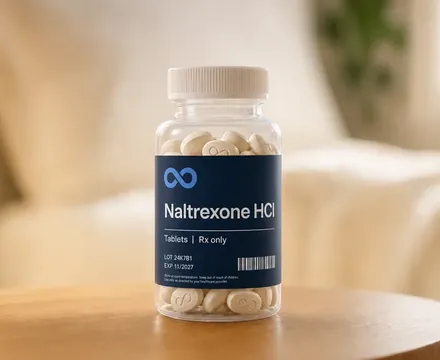
Naltrexone is an oral medication, typically a 50mg tablet, FDA approved for alcohol use disorder since 1994. It is an opioid antagonist that blocks the mu-opioid receptor, which dampens the reward signal alcohol produces.
In plain terms, the post-call glass of wine stops delivering the same payoff. The second glass loses much of its pull, and over a few weeks the habit loop weakens.
Some people take it daily. Others take it about an hour before situations where drinking is likely, as their physician advises. It works for moderation and for abstinence, and most people notice a difference within 2-4 weeks.
One piece of advice physicians tend to resist: do not prescribe it for yourself. An outside prescriber brings the perspective, follow-up, and accountability that make treatment work.
Of course, your prescriber reviews your history first, including any current opioid use, since naltrexone and opioids do not mix. A physician-guided plan can include other options when they fit, such as a GLP-1 medication in some cases.
If you drink heavily every day, do not stop suddenly without medical guidance. You know better than most how serious alcohol withdrawal can be.
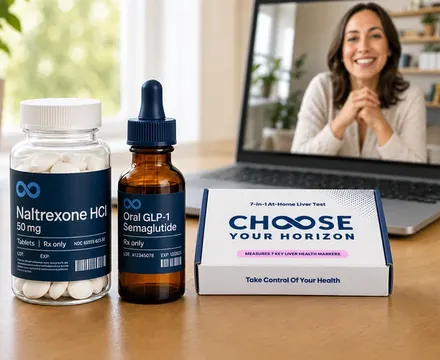
At Choose Your Horizon, naltrexone is one part of an integrated solution that pairs medication with coaching and ongoing support, grounded in clinical, neurological, and behavioral science.
The Bottom Line for Physicians
Physicians are not more prone to alcohol problems than the public. What medicine does is stack the pressures that make drinking an easy off switch, then make it unusually hard to ask for help.
Call schedules disrupt sleep. Burnout needs somewhere to go. And licensure fear, which is real and measurable, keeps many doctors quiet for far too long.
The reassuring part is in the outcomes. Physicians who engage with care tend to do very well, and most keep practicing.
You do not need a crisis or a label to deserve help. Wanting to sleep better, feel present at home, and drink less is reason enough.
Frequently Asked Questions
Do doctors have higher rates of alcohol use disorder?
Reviews put lifetime substance use disorders among U.S. physicians at roughly 10 to 12 percent, similar to the general population. Alcohol screening surveys report higher figures, and estimates depend heavily on the measure.
Will seeking help for alcohol affect my medical license?
Rules vary by state, board, and employer, so no article can answer this for your situation.
Seeking care is generally a private medical matter. Your state's current licensing application is the place to check exactly what is asked.
What is a physician health program?
Most states have one. These programs generally offer confidential evaluation, referral, monitoring, and advocacy for physicians, and many accept self-referrals.
Can I get alcohol treatment outside my own hospital system?
Yes. Online care lets you work with an outside physician, by message and on your schedule, with medication shipped in discreet packaging.
Should I prescribe naltrexone for myself?
It is better not to. An outside prescriber provides the objective review and follow-up that make treatment more effective.
Do I have to stop drinking completely?
No. Naltrexone is used both by people cutting back and by people stopping entirely, and Choose Your Horizon supports either goal.
See whether naltrexone could fit your schedule and your goals. Take the online Alcohol Use Assessment privately, from anywhere, in a few minutes.
A private, physician-led plan to drink less or quit.
Medication, coaching and support from home. A short assessment is the first step.
Start Assessment