

What You'll Discover:
- Why you can start a GLP-1 without quitting alcohol first.
- How the titration weeks work for semaglutide and tirzepatide.
- Why your alcohol tolerance can shift as your eating drops.
- How GI side effects and alcohol can stack up.
- What to tell your prescriber, honestly and specifically.
Plenty of people who start a GLP-1 medication are still drinking when they take their first dose. Some want to cut back, some want to quit eventually, and some just want to know what to expect.
The short answer is that you don't have to stop drinking before you start. A GLP-1 isn't a reward for quitting first. It can be part of how you get there.
All that said, the first weeks matter. Your appetite, your digestion, and your relationship with alcohol all start shifting at once, and a little planning makes that stretch a lot smoother.
One honest note up front. GLP-1 medications are not FDA-approved for alcohol use disorder, so using them to help with drinking is off-label. The evidence is promising, but it's still emerging.
Naltrexone, on the other hand, has been FDA-approved for alcohol use disorder since 1994. We'll come back to where it fits.
You Don't Have to Quit Drinking Before You Start
Plenty of people assume they need to get sober first and then start a medication. With GLP-1s, that's usually not how it works.
In a randomized trial of once-weekly semaglutide in adults with alcohol use disorder, the 48 participants weren't seeking treatment for their drinking when they enrolled. They started the medication from right where they were.
Over nine weeks at low doses, semaglutide reduced how much people drank on the days they drank. It also lowered weekly craving. It did not significantly change the number of drinking days or average drinks per day.
That mix is worth knowing. A GLP-1 may take the edge off, but it isn't a switch that turns drinking off on day one.
There is one important exception to "start where you are." If you drink heavily every day, stopping suddenly can trigger alcohol withdrawal, which can be dangerous. Don't quit cold turkey without medical guidance.
If you ever have confusion, hallucinations, a seizure, or severe shaking after cutting back, get emergency care right away.
How GLP-1 Titration Works in the First Weeks
GLP-1 medications start low and climb slowly. This is called titration, and the main reason for it is your gut.
A small starting dose gives your digestive system time to adjust. That lowers the odds of nausea, vomiting, and other stomach side effects.
For semaglutide (Ozempic and Wegovy), the usual start is 0.25 mg once a week for four weeks. After that, the dose steps up about every four weeks.
Wegovy's label climbs through 0.5 mg, 1 mg, and 1.7 mg before reaching a usual maintenance dose of 2.4 mg around week 17. Ozempic moves to 0.5 mg and may go higher depending on your treatment goals.
For tirzepatide (Mounjaro and Zepbound), the usual start is 2.5 mg once a week for four weeks. The dose then rises in 2.5 mg steps, at least four weeks apart, toward a maintenance dose.
Wegovy's prescribing information also builds in a pause. If a step up is hard to tolerate, your prescriber can delay the next increase by four weeks.
That flexibility matters if you drink. A dose increase week is often when side effects flare, and it's the worst time to pile alcohol on top.
Why Your Alcohol Tolerance Can Shift
People often say alcohol "hits different" on a GLP-1. The reasons are worth getting right, because the obvious guess isn't quite accurate.
GLP-1 medications slow how quickly your stomach empties into your small intestine. Alcohol is absorbed quickly once it reaches the small intestine, so a slower stomach tends to slow absorption and lower the peak.
In a small 2025 pilot study of 20 adults, blood alcohol rose more slowly in people taking a GLP-1. They also reported feeling less intoxicated, which fits what you'd expect from a slower stomach.
So the medication itself isn't pushing alcohol into your bloodstream more quickly. The bigger changes come from what happens around the medication.
You eat a lot less. Food in the stomach is one of the main things that slows the rate of alcohol absorption. When your appetite drops, it's easy to drink on a nearly empty stomach without noticing.
Your body is changing. Alcohol resides mostly in your body water. As you lose weight, the same drink spreads through less water, so it can produce a higher concentration.
Your tolerance drops as you drink less. If the medication helps you cut back, your body loses some of the tolerance it built up. Your old "normal" amount can land harder than it used to.
There's one more wrinkle. Because absorption can be slower, a drink may keep building for longer than you expect.
If you pace yourself by how you feel right now, you may be reacting to drinks that haven't fully landed yet. That's one way people end up more impaired than they planned.
Our guide to whether Ozempic lowers alcohol tolerance goes deeper on what people commonly notice.
GI Side Effects That Can Stack With Alcohol
Stomach side effects are the most common thing people deal with on a GLP-1. In the trials behind Wegovy's label, about 44 percent of people on the 2.4 mg dose reported nausea, compared with 16 percent on placebo.
Diarrhea, vomiting, and constipation were also common. These effects tend to be most noticeable when you start and each time the dose goes up.
Alcohol adds its own load. It irritates the stomach lining, increases acid, and can weaken the muscle that keeps stomach contents out of your esophagus. That last one sets up heartburn.
Put the two together and a couple of drinks can turn mild queasiness into a rough night. Reflux, bloating, and next-day nausea are usually the first things people notice.
Dehydration is the piece people underestimate. Vomiting and diarrhea pull fluid out of your body, and alcohol makes you lose more.
Semaglutide's prescribing information warns that dehydration from GI side effects can lead to kidney problems. That warning matters most during the start and each dose increase.
So if you're already losing fluids, skip alcohol and focus on water until you feel steady.
For a full rundown of what's normal and what isn't, see our guide to GLP-1 side effects for people working on their drinking.
Titration Stage vs What to Watch With Alcohol
Here's a simple way to think about the first few months. Your prescriber's plan may differ, so treat this as a guide, not a schedule.
| Titration Stage | Typical Dose | What to Watch With Alcohol |
|---|---|---|
| Weeks 1-4 (starting dose) | Semaglutide 0.25 mg or tirzepatide 2.5 mg weekly | Appetite starts to drop. Eat a real meal before any drink and keep it to one or two. |
| Each dose increase | Next step up, about every 4 weeks | Nausea often flares. Consider skipping alcohol for a few days around the change. |
| Days with vomiting or diarrhea | Any dose | Skip alcohol entirely. Focus on fluids and call your prescriber if you can't keep liquids down. |
| Maintenance dose | Set by your prescriber | Weight loss and lighter meals lower tolerance. Recalibrate what "a couple of drinks" means for you. |
| Any stage | Any dose | Severe belly pain that won't go away, with or without vomiting, needs prompt medical care. |
That last row isn't about tolerance. GLP-1 labels list acute pancreatitis as a warning, and persistent, severe abdominal pain is the symptom to take seriously.
Why the Early Weeks Are the Time to Drink Less
You don't have to quit to start, but the first weeks are a smart window to ease off. Your body is adjusting to a new medication, and alcohol makes that adjustment harder.
There's an upside, too. Many people find their interest in drinking starts to soften, and a new habit is easier to build while the urge is quieter.
Timing varies from person to person. Our article on how long GLP-1s take to reduce alcohol cravings covers what the research shows so far.
With that in mind, a few habits make the biggest difference.
Eat before you drink. A real meal slows how quickly alcohol reaches your bloodstream. Even when you aren't hungry, eat something first.
Shrink the pour. A standard drink is 12 ounces of regular beer, 5 ounces of wine, or 1.5 ounces of spirits. Many home pours are a lot bigger than that.
Set a number before you start. Decide on one or two drinks ahead of time and stop there. Alternating with water helps with hydration and slows your pace.
Watch your dose calendar. Drink less, or not at all, in the days around a dose increase and on any day you feel queasy.
If you take a GLP-1 for type 2 diabetes along with other medications that lower blood sugar, be extra careful. Alcohol can push blood sugar down, especially when you haven't eaten much.
For more practical do's and don'ts, our guide on whether you can drink alcohol on a GLP-1 is a good companion read.
What to Tell Your Prescriber, Honestly
The most useful thing you can bring to your first appointment is an honest picture of your drinking. Nobody is grading you. Your prescriber needs real numbers to keep you safe.
Be specific. "Socially" means different things to different people. "Three or four glasses of wine most nights, more on weekends" gives your clinician something to work with.
Here's what's worth sharing:
- How many drinks you have in a typical week, and your heaviest day.
- Whether you feel shaky, sweaty, or anxious when you go without a drink.
- Any history of pancreatitis, gallbladder problems, or severe stomach issues.
- A personal or family history of medullary thyroid cancer or MEN2.
- Your other medications, especially anything for diabetes, mood, or sleep.
- Your goal, whether that's cutting back, taking breaks, or quitting.
Pancreatitis matters for a specific reason. GLP-1 labels list it as a warning, and heavy drinking is one of the leading causes of pancreatitis. Your prescriber needs both pieces of the picture.
Withdrawal symptoms matter, too. If your body has come to depend on alcohol, your prescriber can help you cut back safely instead of leaving you to white-knuckle it.
Keep the conversation going after you start. If alcohol is hitting harder, if you're drinking on an empty stomach, or if side effects spike after drinking, that's useful information for adjusting your plan.
Where Naltrexone Fits
A GLP-1 can quiet appetite and may soften the pull of alcohol. Naltrexone works on a different part of the picture.
Naltrexone blocks the opioid receptors involved in alcohol's rewarding buzz. Over time, drinking feels less rewarding, so the urge for the next drink fades.
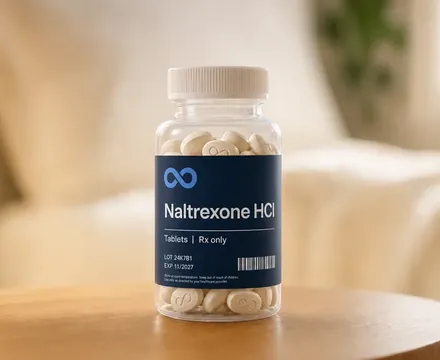
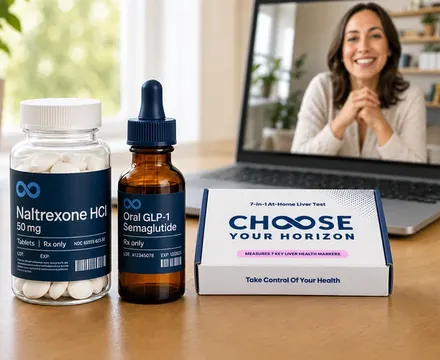
It comes as a 50 mg tablet, and you can take it while you're still drinking. That makes it a natural fit for people starting from where they are, with decades of clinical research behind it.
Choose Your Horizon offers a physician-guided GLP-1 and naltrexone combination for people who are a good fit for both. A physician reviews your health history, decides what makes sense, and adjusts the plan as you go.
Of course, both medications can cause nausea. Your physician will plan the timing of each start with you so your stomach isn't dealing with two new things at once.
Starting Where You Are Is Enough
You don't need to quit drinking to start a GLP-1. Plenty of people begin while they're still drinking, and that's a normal place to start.
The first weeks are when the medication and your body are adjusting the most. Eating before you drink, keeping drinks small, and easing off around dose increases go a long way.
Tolerance can shift as your eating drops and your weight changes. The medication slows absorption, but eating less and drinking less can still make alcohol land harder than you expect.
Most of all, be honest with your prescriber. The more they know about your drinking, the better they can tailor a plan that keeps you safe and moving toward your goals.
Frequently Asked Questions
Do I have to stop drinking before starting a GLP-1?
No. Many people start while they're still drinking. If you drink heavily every day, talk to a clinician before cutting back suddenly, since withdrawal can be dangerous.
Is it safe to drink alcohol during GLP-1 titration?
Many people drink lightly during titration, but the early weeks are when side effects are strongest. Eat first, keep it to one or two drinks, and skip alcohol around dose increases or on queasy days.
Does a GLP-1 make alcohol hit harder?
It can feel that way, but not because the medication speeds up absorption. GLP-1s slow stomach emptying. Alcohol feels stronger mostly because you're eating less, losing weight, and losing tolerance as you drink less.
How soon will a GLP-1 reduce my urge to drink?
It varies. In a nine-week trial, low-dose semaglutide reduced weekly craving and drinks per drinking day, but not everyone notices a change right away.
What should I tell my prescriber about my drinking?
Share how much you drink in a typical week, your heaviest days, any withdrawal symptoms, and any history of pancreatitis or gallbladder problems. Specific numbers help more than general descriptions.
Can I take naltrexone while starting a GLP-1?
Some people take both under physician guidance. Naltrexone is FDA-approved for alcohol use disorder, and a physician can plan the timing so side effects are easier to manage.
If you're starting a GLP-1 and want support with your drinking at the same time, take the online Alcohol Use Assessment to see if naltrexone, or a physician-guided GLP-1 and naltrexone combination, is a good fit for you.
A private, physician-led plan to drink less or quit.
Medication, coaching and support from home. A short assessment is the first step.
Start Assessment