

What You'll Discover:
- Where retatrutide stands with the FDA as of November 2026.
- Why scientists think GLP-1 type drugs might turn down alcohol cravings.
- What the first semaglutide trial in alcohol use disorder found.
- What is and isn't known about retatrutide and alcohol specifically.
- Why "research peptide" retatrutide sold online is a serious gamble.
- Where naltrexone and a GLP-1 + naltrexone combination fit in.
Retatrutide has gone from a name in clinical trial reports to one of the most talked-about medications online.
Much of that buzz is about weight loss. A growing share of it is about something else: people saying they suddenly care less about drinking.
So it makes sense that "does retatrutide reduce alcohol cravings" has become a common search. The short answer is that nobody knows yet, because retatrutide hasn't been studied in people for alcohol.
What we do have is a solid hypothesis, early animal data, and a growing body of research on its GLP-1 relatives. Each piece tells part of the story.
If you're mainly wondering whether it's safe to drink while on retatrutide, our guide to retatrutide and alcohol covers drinking safety in detail.
Where Retatrutide Stands in November 2026
Retatrutide is an investigational medication made by Eli Lilly. It is not FDA-approved for any condition, including weight loss, diabetes, or alcohol use.
It has moved quickly through late-stage research, and Lilly's phase 3 TRIUMPH trials in obesity have reported strong results.
In TRIUMPH-2 and TRIUMPH-3, people on the highest 12 mg dose lost about 21% to 23% of their body weight on average over 80 weeks.
Lilly has said it plans to submit retatrutide to the FDA for approval in the first quarter of 2027. Until that review is complete, Lilly describes it as an investigational molecule that cannot be legally sold or marketed for human use.
In August 2026, Lilly stated that no medicine containing retatrutide has been approved for human use by any regulatory agency in the world. Keep that in mind for everything below, especially the section on online sellers.
How a Triple Agonist Works
Most people know GLP-1 medications through semaglutide (Ozempic, Wegovy) or tirzepatide (Mounjaro, Zepbound). Retatrutide goes one step further.
A review of retatrutide as an investigational triple agonist describes how it activates three hormone receptors at once: GLP-1, GIP, and glucagon.
GLP-1 and GIP help regulate blood sugar, slow digestion, and increase the feeling of fullness. The glucagon receptor adds effects on how the body burns energy and handles fat, including fat in the liver.
GLP-1 receptors aren't only in the gut, though. They're also found in brain areas involved in motivation and reward, which is where the alcohol question starts.
Why Scientists Think GLP-1 Drugs Might Quiet Alcohol Cravings
Alcohol feels rewarding partly because it triggers a release of dopamine in the brain's reward circuit. Over time, the brain learns to expect that payoff, and cravings build around it.
Researchers have spent years testing whether GLP-1 drugs interfere with that loop.
A review of the animal research reports that GLP-1 receptor agonists lower alcohol intake in rodents and blunt the dopamine release alcohol normally causes in a key reward area.
In plain terms, drinking seems to feel less rewarding to the animals. They drink less, and they work less hard to get alcohol.
That's the same reward pathway that makes people feel full sooner and lose interest in food on these medications. The theory is that a quieter reward signal could make the second or third drink feel less appealing too.
We cover the whole drug class in more depth in our article on whether GLP-1 medications reduce alcohol cravings.
The First Human Trial: Semaglutide
Animal data is a starting point, not an answer. The most important human result so far comes from semaglutide, not retatrutide.
A randomized trial published in JAMA Psychiatry in 2025 tested once-weekly semaglutide in adults with alcohol use disorder. It was small, with 48 participants, and short, with nine weeks of low-dose treatment.
The results were encouraging. People on semaglutide drank less in a lab drinking session, had fewer drinks on the days they drank, and reported lower weekly cravings than people on placebo.
The trial also had clear limits. Semaglutide didn't reduce the number of days people drank, and nine weeks with 48 people is far from the large, long trials needed to prove a medication works for alcohol.
Tirzepatide, which acts on GLP-1 and GIP, is a step closer to retatrutide chemically. Its alcohol research is earlier still, which we explain in our post on tirzepatide and alcohol cravings.
What We Know About Retatrutide and Alcohol Specifically
Here's where the evidence gets thin. As of November 2026, there are no published human studies testing retatrutide for alcohol cravings or alcohol use disorder.
The closest thing is a 2025 animal study in the journal Psychopharmacology. Researchers trained rats to recognize how alcohol feels from the inside, then gave them semaglutide, tirzepatide, or retatrutide.
All three drugs dampened the rats' ability to recognize alcohol's effects. That hints that retatrutide may change how alcohol feels, much like its relatives.
It's an interesting signal, but it was in rats, and it didn't measure cravings or drinking in people.
The large TRIUMPH trials were built to measure weight, blood sugar, and related health outcomes. They weren't designed to answer questions about drinking.
Retatrutide and Alcohol: What We Know vs. What We Don't Yet
| Question | What We Know | What We Don't Know Yet |
|---|---|---|
| Is it approved? | Not FDA-approved for any use. Lilly plans to file in early 2027 | When or if approval comes, and for which conditions |
| Does the drug class affect drinking? | GLP-1 drugs reduce alcohol intake in animals and showed early benefit in one small semaglutide trial | Whether those effects hold up in large, long human trials |
| Does retatrutide itself affect alcohol? | It dampened alcohol's internal cues in one rat study | Whether it lowers cravings or drinking in people |
| Is it a treatment for alcohol use? | No GLP-1 drug is FDA-approved for alcohol use disorder | Whether any will be, and at what dose |
| Is online "research" retatrutide safe? | The FDA has warned sellers and says these products may be harmful | What's actually inside any given vial |
What People Report Online
Spend a few minutes on Reddit or in peptide forums and you'll find a pattern. People on retatrutide often describe losing interest in a second drink, forgetting to pour one at all, or feeling full and unwilling to drink on top of it.
Others describe the opposite side of the experience. They talk about feeling unwell after drinking, getting nauseated more easily, or noticing that alcohol simply isn't fun anymore.
These reports matter as early signals. They line up with what the animal research suggests, and they're part of why researchers are excited about this whole class of drugs.
They also come with big caveats. Many of the people posting are using unregulated product from online sellers, so it's unclear what dose, or even what drug, they're taking.
Eating less, feeling sick, and simply expecting a change can all reduce drinking for reasons that have nothing to do with cravings. Stories can't separate those effects. Only controlled trials can.
The Gray-Market "Research Peptide" Problem
Because retatrutide isn't approved, it isn't available at a pharmacy. That hasn't stopped websites from selling vials labeled "for research use only" or "not for human consumption," often with dosing charts that make the intended use obvious.
The FDA has been clear about these products. In its guidance on unapproved GLP-1 drugs used for weight loss, the agency says it has warned companies that illegally sold semaglutide, tirzepatide, or retatrutide falsely labeled "for research purposes."
The same FDA page states that retatrutide cannot be used in compounding under federal law. It urges consumers not to buy these products, which are of unknown quality and may be harmful to their health.
Lilly has called the black market for retatrutide "entirely unverified" and says it has flagged more than 14,000 online listings, ads, and posts.
Why This Matters for Your Health
With an unapproved vial, you can't know the true dose, whether the product is sterile, or whether it contains retatrutide at all. You're also mixing and injecting it yourself, without a clinician watching for side effects.
Retatrutide has real side effects even in controlled trials. Diarrhea and nausea were the most common in TRIUMPH-2 and TRIUMPH-3, and some participants stopped the drug because of side effects.
Add alcohol and unknown dosing on top of that, and the risks stack up fast. The FDA's advice is simple: get prescription medications from a licensed prescriber and fill them at a state-licensed pharmacy.
What Real Proof Would Look Like
It helps to know what researchers would need before anyone could say retatrutide treats alcohol cravings. The bar is higher than a promising rat study or a wave of forum posts.
A convincing answer would come from randomized trials that compare retatrutide with placebo in people who want to drink less. Neither the participants nor the researchers would know who got which.
Those trials would track outcomes that matter in daily life, like heavy drinking days, total drinks per week, and cravings, over several months rather than a few weeks. They'd also watch closely for side effects when alcohol and the drug mix.
Until that kind of evidence exists, any claim that retatrutide "cures" drinking is marketing, not science.
If You're Already on a GLP-1 and Drinking Less
Some people taking an approved GLP-1 for weight or diabetes notice they're drinking less without trying. If that's you, it's worth paying attention to.
Keep a simple log of your drinks for a few weeks, and share it with your prescriber. It gives your clinician real information, and it helps you see whether the change is steady or fading.
If you'd like the change to last, adding a medication designed for alcohol can help. That's where naltrexone comes in.
Where Naltrexone Fits
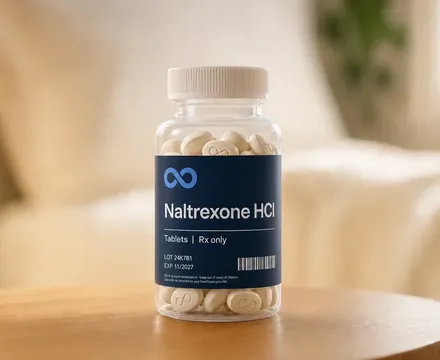
While the GLP-1 research develops, there's a medication that has been FDA-approved for alcohol use disorder since 1994: naltrexone.
Naltrexone works directly on the reward side of drinking. It blocks the opioid receptors that alcohol's feel-good endorphins act on, which takes the edge off the buzz and makes cravings for the next drink easier to manage.
It's taken as a daily 50 mg tablet, or before drinking situations, and it supports both moderation and quitting. You don't have to stop drinking completely to start it.
That's a key difference. GLP-1 medications, including retatrutide, are not FDA-approved for alcohol use disorder, and the research is still emerging. Naltrexone has decades of trials behind it for exactly this purpose.
Getting Both: A GLP-1 + Naltrexone Combination
Some people want help with both weight and drinking. For them, the question isn't GLP-1 or naltrexone. It's whether the two can work together.
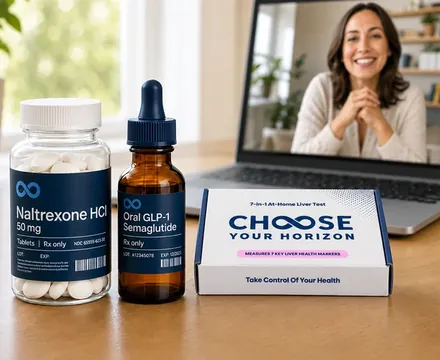
Choose Your Horizon offers a physician-guided GLP-1 + naltrexone combination, with plans from $399/month.
A physician reviews your health history and goals, then prescribes and monitors both medications through an integrated solution that's 100% online.
The two medications act on different systems. GLP-1 drugs work on appetite and metabolism, while naltrexone works on the opioid side of alcohol's reward.
Our guide to taking GLP-1 and naltrexone together explains how the combination works and who it suits.
Retatrutide isn't part of that, because it isn't approved for prescribing. The combination uses medications you can legally get through a licensed pharmacy, with a physician involved at every step.
The Bottom Line
Retatrutide might reduce alcohol cravings. The theory is reasonable, related GLP-1 drugs show early promise, and one rat study suggests retatrutide changes how alcohol feels.
But no human trial has tested it for drinking, it isn't FDA-approved for anything yet, and gray-market versions carry risks you can't see from the label.
If cutting back on alcohol is your goal right now, you don't have to wait for retatrutide's research to catch up.
Naltrexone is available today, and a physician-guided combination is an option if you want GLP-1 support as well. Asking for help with drinking is a smart, ordinary step.
Frequently Asked Questions
Does retatrutide help with alcohol cravings?
It hasn't been tested in people for alcohol yet. Related GLP-1 drugs have reduced drinking in animal studies and in one small semaglutide trial, so researchers think it's possible.
Is retatrutide FDA-approved?
No. As of November 2026, retatrutide is investigational and not approved for any use. Lilly has said it plans to submit it to the FDA in the first quarter of 2027.
Is it safe to buy "research peptide" retatrutide online?
No. The FDA has warned companies selling retatrutide labeled "for research purposes" and says these products are of unknown quality and may be harmful.
Can you drink alcohol on retatrutide?
Drinking safety on retatrutide is covered in our dedicated retatrutide and alcohol guide. In general, talk with your prescriber, start low, and expect alcohol to affect you differently.
Is there an approved medication for alcohol cravings?
Yes. Naltrexone has been FDA-approved for alcohol use disorder since 1994. It reduces the reward from drinking and works for both cutting back and quitting.
Can I take a GLP-1 and naltrexone together?
Many people can, with physician guidance. Choose Your Horizon offers a physician-guided GLP-1 + naltrexone combination, with plans from $399/month.
If you're ready to change your relationship with alcohol, the first step is quick and private. Take the online Alcohol Use Assessment to see whether naltrexone, alone or alongside a GLP-1, could be a good fit for you.
A private, physician-led plan to drink less or quit.
Medication, coaching and support from home. A short assessment is the first step.
Start Assessment