A 2 minute assessment to get a personalized mental health or alcohol recovery plan.


A weight-loss medication is drawing attention for something unexpected: it appears to quiet the urge to drink.
What You'll Discover:
• What tirzepatide is and how its dual mechanism differs from semaglutide
• Why GLP-1 and GIP receptors in the brain may affect alcohol cravings
• What the early evidence actually shows about tirzepatide and alcohol
• How tirzepatide compares to naltrexone, the established FDA-approved option for alcohol use disorder
• What to consider if you are exploring medications to help with drinking
Tirzepatide was designed to treat type 2 diabetes and obesity. Patients taking it for those reasons started reporting something else: their desire to drink was going down, and they weren't even trying.
That pattern is consistent enough across patient reports and early studies that researchers are paying close attention. This article walks through what the evidence actually shows, where the gaps are, and how tirzepatide fits into the broader picture of alcohol treatment today.
What Tirzepatide Is
Tirzepatide is the active ingredient in Mounjaro and Zepbound, both FDA-approved medications. Mounjaro is approved for type 2 diabetes and Zepbound for obesity. It belongs to a class of drugs called incretin-based therapies, but it has a feature that sets it apart: it activates two separate receptor types at once.
Most GLP-1 medications, including semaglutide (Ozempic and Wegovy), work by mimicking glucagon-like peptide-1, a hormone the gut releases after eating. GLP-1 slows digestion, reduces appetite, and signals fullness to the brain. Tirzepatide does all of that, and it also activates glucose-dependent insulinotropic polypeptide (GIP) receptors. This dual GLP-1 and GIP receptor activation is why tirzepatide is sometimes called a "twincretin."
In weight-loss trials, the dual mechanism produced stronger results than semaglutide alone. That same dual action is what has researchers curious about alcohol cravings.
The Reason a Diabetes Drug Can Affect Alcohol Cravings
The connection between GLP-1 receptor agonists and alcohol cravings is not a coincidence. GLP-1 receptors are found throughout the body, including in areas of the brain that govern reward, motivation, and habit formation. These regions, particularly the ventral tegmental area and the nucleus accumbens, are the same circuits that drive cravings for alcohol and other rewarding substances.
When alcohol is consumed, the brain releases dopamine in these reward circuits, producing a pleasurable feeling that reinforces the urge to drink again. GLP-1 receptor agonists appear to dampen this dopamine response. The result, at least in animal studies and early human data, is that the reward signal from alcohol becomes weaker, and cravings follow suit.
GIP receptors add another layer to this picture. GIP receptors are also present in brain regions associated with reward and stress regulation. Tirzepatide's action on both GLP-1 and GIP receptors may engage the brain's craving circuitry more broadly than a GLP-1-only medication can.
Alcohol disrupts the brain's communication pathways and alters its reward signaling over time. Medications that interact with those same reward circuits represent a new angle for alcohol treatment research, and tirzepatide's dual mechanism puts it squarely in that conversation.
What the Research Actually Shows
Animal Studies: Early but Consistent
The most rigorous data so far comes from animal studies. Researchers have found that GLP-1 receptor agonists consistently reduce alcohol consumption in rodent models. A 2023 study in JCI Insight found that semaglutide dose-dependently reduced binge-like alcohol drinking in both mice and rats. The researchers found changes in GABA neurotransmission in regions involved in craving and stress, pointing to a real neurological mechanism rather than a nonspecific effect.
Tirzepatide-specific animal data followed. A 2026 rodent study found that tirzepatide reduced both alcohol drinking and relapse-like behaviors, building on the semaglutide findings and suggesting the dual GIP/GLP-1 mechanism may be at least as potent.
Human Observational Evidence
In humans, the evidence is preliminary but consistent in its direction. A 2023 study in Scientific Reports analyzed social media reports and a remote clinical survey of 153 people with obesity who were taking either semaglutide or tirzepatide. The study found that both medications were associated with significantly lower self-reported alcohol intake, fewer drinks per drinking episode, and lower odds of binge drinking compared to controls. Among social media posts discussing these medications, 71% mentioned craving reduction or a decreased desire to drink.
A 2025 review in Progress in Cardiovascular Diseases characterized tirzepatide and semaglutide as "anti-consumption agents" that affect brain reward pathways governing addiction to food, alcohol, nicotine, and other substances. The authors noted consistent observational evidence of spontaneous, unintentional reductions in alcohol use among people taking these medications for metabolic reasons.
What Is Still Unknown
There are no large randomized controlled trials testing tirzepatide specifically for alcohol use disorder. The first RCT using a GLP-1 medication for AUD, published in 2025, examined weekly semaglutide in adults with AUD and produced promising results for that drug. Tirzepatide has not yet been tested in a comparable dedicated AUD clinical trial.
The observational data, while intriguing, cannot establish cause and effect on its own. People who take a weight-loss medication may change their overall lifestyle, including drinking habits, for reasons unrelated to the drug. Placebo-controlled trials are needed to close that gap.
The research is genuinely early. That distinction matters if you are considering tirzepatide specifically for alcohol-related reasons, and it is the honest context anyone exploring this topic deserves to have.
Tirzepatide vs. Naltrexone: Comparing the Evidence
This comparison matters because it shows what tirzepatide can and cannot offer right now, relative to a treatment that already has a long track record.
Naltrexone is an opioid antagonist with more than 30 years of evidence supporting its use. The FDA approved it for alcohol use disorder in 1994. A 2023 JAMA meta-analysis covering 118 clinical trials and 20,976 participants confirmed naltrexone at 50 mg per day as a first-line pharmacotherapy for AUD, with a number needed to treat of 11 for preventing return to heavy drinking.
It works by blocking mu-opioid receptors and reducing the reward response to alcohol, which diminishes both the craving and the reinforcement that keeps people drinking. That mechanism is well understood, and the clinical evidence behind it spans decades.
Tirzepatide, by contrast, has no dedicated AUD clinical trials. It is not FDA-approved for alcohol use disorder. It is a meaningful candidate for future research, given the dual GIP/GLP-1 mechanism, but it is not a substitute for a treatment with decades of evidence behind it.
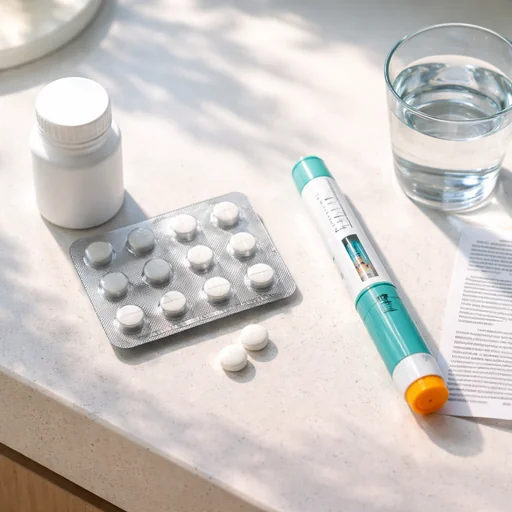
The practical differences matter, too. Tirzepatide is an injectable medication approved for metabolic conditions. Accessing it for alcohol cravings requires a prescriber willing to use it off-label, and insurance coverage for that indication does not exist.
Naltrexone is available as an inexpensive generic oral tablet, widely prescribed for AUD and accessible through telehealth. For people who already take tirzepatide for metabolic reasons and notice reduced cravings, that is an added benefit worth discussing with a clinician. For people seeking medical help for alcohol use as a primary goal, naltrexone is the better-supported first-line choice.
Our detailed breakdown at naltrexone vs. GLP-1 for alcohol use disorder walks through the mechanism, evidence base, and practical differences for each approach if you want the full comparison.
GLP-1 Medications and Naltrexone: Using Both
This question comes up more often now that GLP-1 medications are so widely used. The two mechanisms are distinct. Naltrexone works on opioid receptors, while GLP-1 and GIP receptor agonists work on incretin receptors in the brain's reward circuits. Because they target different receptor systems, there is no obvious pharmacological reason why the two could not be used together.
There is no widely published data specifically on combining tirzepatide with naltrexone for AUD. Clinicians who manage patients on GLP-1 medications have started asking this question, but formal guidance has not been established. What is clear is that neither medication replaces behavioral support, and both work best within a broader care framework.
If you are already taking tirzepatide and want to address your drinking, talking to your prescribing clinician about adding a dedicated AUD treatment is a reasonable conversation to initiate. For a broader look at how GLP-1 medications are being explored for alcohol reduction, our guide on the benefits of GLP-1 for reducing alcohol use covers the full picture in plain language.
Who Might Find This Research Relevant
Several groups of people may find the tirzepatide-and-alcohol conversation particularly useful to understand:
• People already prescribed tirzepatide for obesity or type 2 diabetes who have noticed a change in their drinking and want to know why
• People with both obesity and alcohol use disorder who are wondering whether one medication might address both concerns
• People who have not had a strong response to naltrexone and want to discuss alternative or complementary options with a clinician
• People who want to understand the full landscape of medication options before choosing a treatment path
What all of these groups have in common is the need for a conversation with a qualified clinician. The emerging data on tirzepatide and alcohol is genuinely promising. It does not yet support using tirzepatide as a standalone treatment for AUD. A physician who understands both metabolic medicine and alcohol use disorder is the right person to evaluate whether tirzepatide is relevant to any individual's situation.
What "Early Evidence" Actually Means Here
The phrase "early evidence" gets stretched in health media to mean almost anything from a single patient report to multiple well-designed studies. For tirzepatide and alcohol, the evidence sits in a credible but genuinely preliminary zone, and it is worth being precise about that.
The animal data is mechanistically coherent. The receptors involved are real, the brain regions they target are well understood, and the effect on drinking behavior has been replicated across multiple rodent models. The observational human data is consistent across several sources and reflects what many patients have reported without being prompted. A completed RCT of semaglutide, the closely related single-agonist drug, showed positive results for AUD in humans.
What is missing is a placebo-controlled trial of tirzepatide specifically in people with AUD. That research is likely underway given the level of scientific interest, but it has not yet been published.
That gap matters in a practical way. Not everyone who takes tirzepatide will experience reduced alcohol cravings. Some people report no change, and a small number report increased alcohol sensitivity. Without a controlled trial, it is not possible to predict who will respond and how strongly.
The responsible takeaway is straightforward: tirzepatide is a promising candidate, the mechanism is plausible, and the early signals are encouraging. It is not a proven treatment for AUD. Naltrexone is.
Practical Takeaways
The reward circuitry that drives alcohol cravings can be affected by multiple types of medications. GLP-1 receptor agonists, including tirzepatide, appear to modulate that circuitry in ways that reduce cravings for some people. That effect is most likely the result of the medication's action on brain reward pathways, not a nonspecific side effect of weight loss or appetite changes.
Tirzepatide's dual GLP-1 and GIP mechanism may produce a stronger effect on cravings than semaglutide alone. The early animal data supports that hypothesis. Translating animal data to human outcomes is not guaranteed, and the question will only be settled when dedicated RCTs are completed.
Naltrexone has decades of RCT evidence, FDA approval for AUD, and a strong safety record. For most people seeking medical help for alcohol use, it is still the evidence-based first choice. It works by a completely different mechanism, blocking the opioid reward response that alcohol triggers rather than modulating incretin receptors. That mechanism is well understood, and the clinical outcomes are well documented.
Anyone considering medications for alcohol use should talk with a clinician who understands the full picture. Alcohol use disorder is a medical condition, not a character flaw, and it responds to medical treatment. Many people do not need to wait for emerging research to get effective help. If reading about tirzepatide reducing cravings is making you consider whether medical support could help you, that instinct is worth acting on. Naltrexone is available now, it is affordable, and it has a track record spanning more than three decades.
Conclusion
Tirzepatide's potential to reduce alcohol cravings is one of the more interesting developments in addiction medicine in recent years. The dual GIP/GLP-1 mechanism gives it a theoretical edge over earlier GLP-1 drugs, and the early human and animal data points consistently in the same direction. The research is still in its early stages, and tirzepatide is not yet an evidence-based treatment for alcohol use disorder.
If you are ready to take a step toward drinking less or quitting, naltrexone remains the most thoroughly studied option available. It has helped more than 8,000 people through Choose Your Horizon alone, and 86% of patients in clinical trials reported drinking less by the end of treatment.
You do not need to hit a low point to seek help, and you do not need to wait for the next wave of research to start feeling better. Take a free online Alcohol Use Assessment to see whether naltrexone through Choose Your Horizon could be a good fit for where you are right now.