A 2 minute assessment to get a personalized mental health or alcohol recovery plan.

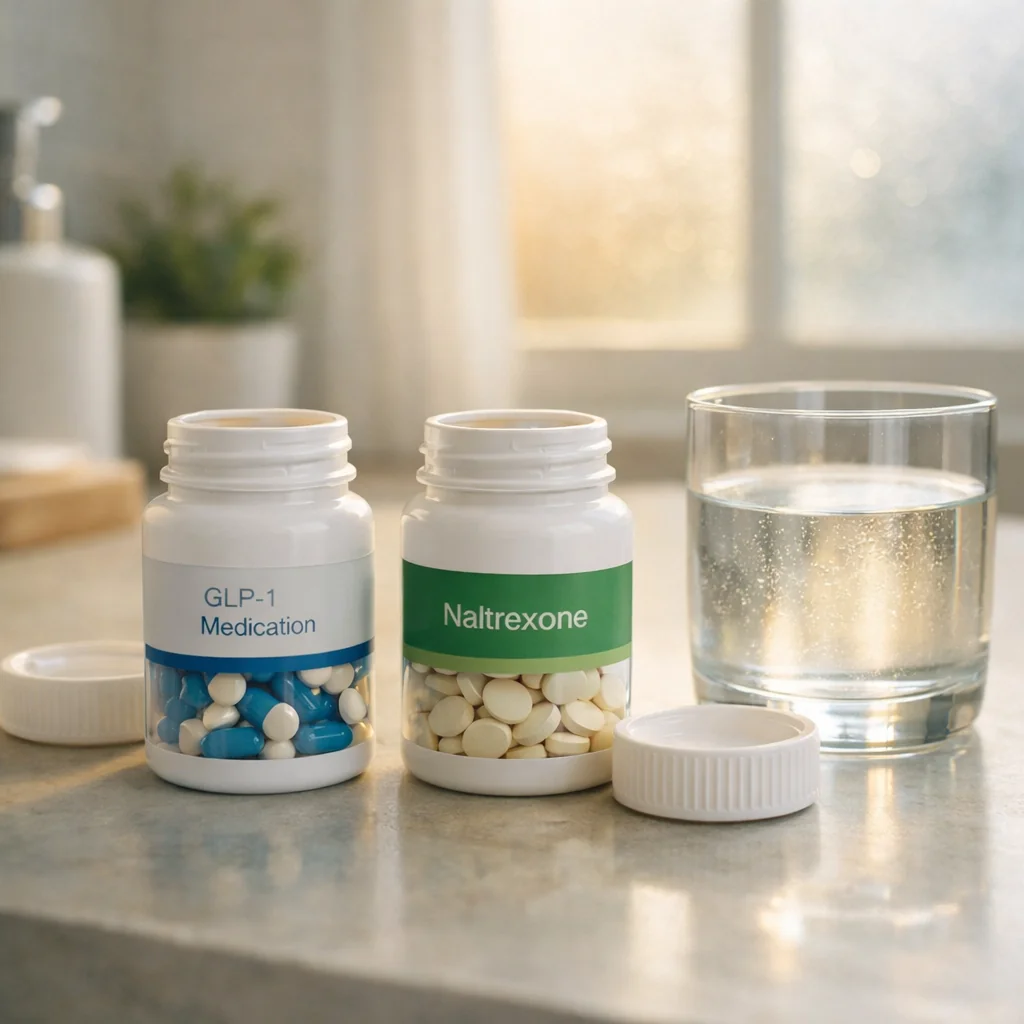
Will doubling up with GLP-1 medication and naltrexone deliver twice the results, a broader range of benefits or no difference at all? Our experts size up simultaneously taking GLP-1 medication and naltrexone.
What You’ll Learn:
• Why more people are taking naltrexone and GLP-1s at once.
• If there are any safety considerations related to taking both together.
• What the research actually shows about combined benefits..
• Who should or should not use GLP-1s and naltrexone together.
• What to expect when you use both at the same time.
Already 10 million people use GLP-1 medications. Some of those people have already noticed a decrease in their desire to drink alcohol. Many are pleasantly surprised at how much better they feel, in part because they’re drinking less.
The people who are motivated to continue making progress and cut back further or quit drinking entirely are often interested in using naltrexone medication as well. In some ways naltrexone is similar to GLP-1s, but it works more directly on the opioid system in response to alcohol use.
There are also people who are taking naltrexone for alcohol use that keep hearing more and more about emerging research on the benefits of GLP-1 medications. Because alcohol use can cause excess calorie consumption, the weight loss aspect paired with alcohol use reduction is a good combination.
GLP-1s and naltrexone can be used together for various purposes or combined in an effort to further reduce alcohol cravings, binge drinking and days that alcohol is consumed.
Head-to-Head: How Traditional Alcohol Use Disorder Medications Work Compared to GLP-1 Semaglutide
What Safety Considerations Exist When Taking Naltrexone and GLP-1 Semaglutide
These days it’s all about biomarker blood testing and dialing in specific medication combinations to optimize how our brains and bodies function. We’re beginning to learn a lot more about using different therapies in combination to enhance outcomes, but you have to be careful when you’re mixing medications.
Fortunately, there’s no known negative drug interaction or contraindications between naltrexone and GLP-1 semaglutide medication. There are also no noted effects that would make either medication less effective.
Side Effects
This doesn’t mean there aren’t any health and safety considerations. Both types of medications are very safe for the vast majority of people, but each one has the potential side effects.
The thing to really watch out for is gastrointestinal side effects since those are the most common for both medications. Nausea, loss of appetite and constipation are possible using either medication alone so those side effects may be intensified for some people when naltrexone and GLP-1s are taken together.
If you’re concerned about GI tract issues, our overview on avoiding naltrexone nausea can help reduce the likelihood they’ll be a problem.
Individual Medication Precautions
There are still health precautions associated with each medication that have to be taken into consideration. The risk is relatively low, but the precautions to consider are:
Naltrexone
• Can impede liver function in people with uncontrolled liver disease
• Hepatoxicity in high doses (rare but possible)
• Can’t be combined with opioid medications
GLP-1 Semaglutide
• Animal studies showed a slight increase for medullary thyroid carcinoma (MTC)
• Rare but possible pancreas inflammation
• Increase in gallbladder inflammation and gallstones
Clinician Supervision For Safety
Even though both medications are considered generally safe, the points above highlight the importance of clinician supervision. This isn’t a “stack and go” situation. A qualified clinician needs to:
• Do an evaluation to ensure there aren’t any concerning health risks.
• Prescribe the medications in the proper dose.
• Monitor the response to limit side effects while tracking progress.
People are now using GLP-1 medications with naltrexone, but the research is still limited at the moment. Working with a knowledgeable clinician helps to overcome this limitation as large-scale studies are being conducted.
Research-Backed Benefits of Taking Naltrexone and GLP-1s at the Same Time
What’s even better than being able to take both medications simultaneous with no contraindications is that combining them could actually improve the results. At least that’s the promising hypothesis of the limited research that’s been done and anecdotal case-based outcomes.
Taking naltrexone and GLP-1s simultaneously could provide the following benefits:
• Reduced "reward" of drinking in the moment with naltrexone and lower baseline interest in alcohol with GLP-1 semaglutide. Overall reduced cue-driven cravings between drinking occasions.
• Added metabolic upside with reduced alcohol consumption. The combo could help cut back on alcohol use while also improving weight and blood sugar issues that are associated with heavy drinking.
• For people already managing both weight and drinking goals, one combined plan may be simpler and easier to adhere to compared with two unconnected treatment paths.
Most research involving GLP-1s has looked specifically at how it impacts weight loss and diabetes management, and a few have looked into the effects of drinking alcohol while taking GLP-1 semaglutide. One recent study found GLP-1 could reduce binge drinking.
Naltrexone studies have focused on the medication’s effect on reducing opioid and alcohol use. There hasn’t been a focus on naltrexone’s ability to help with weight management.
The limited research that has evaluated the medications when taken together have been done primarily to measure weight loss outcomes. But so far researchers have found there’s a synergistic effect to taking both medications together. They work together to target different reward and appetite pathways. As a result, there’s enhanced weight loss. It’s particularly beneficial for patients that have experienced plateaued weight loss or didn’t respond well with GLP-1s alone.
Using naltrexone and GLP-1s together also has the potential to curb addictive behaviors related to both alcohol use and binge eating. A landmark clinical trial published in JAMA noted that combination could help improve results by addressing addictive behaviors using different neurochemical pathways.
So far, there’s enough promise that there’s interest in initiating research that looks specifically at how combining GLP-1s and naltrexone can improve alcohol use disorder treatment. Early studies have found that GLP-1 semaglutide could be on par with naltrexone for reducing alcohol use, but it’s less clear if combining the two would be more beneficial than using either alone. The promise is there, but it needs to be clinically proven to provide research-back claims.
Who Should and Should Not Use GLP-1 Semaglutide and Naltrexone Together
Combining naltrexone and GLP-1 medication makes sense for some people more than others. The appropriateness is first and foremost based on safety considerations with each individual medication and then on the patient’s health goals.
Who Should Consider Taking Naltrexone and GLP-1
• Anyone who wants to lose weight and curb their alcohol use.
• People who want additional support reducing alcohol cravings.
• People who don’t have known liver, pancreas or GI tract issues.
Who Should NOT Consider Taking Naltrexone and GLP-1
• Those who have GI tract issues, severe liver disease or pancreas problems.
• Anyone who is allergic to any of the components of either medication.
• People who are struggling with eating disorders.
• Individuals who are using opioids in any form.
Remember, this isn’t a self-medication situation even if you’re the ideal candidate. You’ll need a prescription for both medications, and medical supervision while taking naltrexone and GLP-1s.
What to Expect When You Use Naltrexone and GLP-1s Simultaneously
It helps to know what to expect when you’re taking naltrexone and GLP-1s together so that you can hopefully avoid side effects and be as proactive as possible. The key points to know are:
You’ll Start With One Medication, Then Incorporate the Other
If you aren’t yet taking either medication, you’ll start with one and then add the other once you’ve adjusted. Typically, people tend to level out after a few weeks, but dosage adjustments may need to be made.
Start Healthy Habits to Manage Side Effects
Side effects are usually felt in the first week or two before subsiding. If you’re already sleeping well, staying hydrated and eating healthy you’ll be in the best position to adjust easily to the new medications.
There Will Be Daily and Weekly Doses
You’ll need to take the medications at the right time to get the full benefit. It’s best practice to take naltrexone daily at the same time. GLP-1 medications are taken once a week.
You’ll Check In With Your Clinician
Monitoring the response and results is essential when you are combining naltrexone and GLP-1s. It’s not a set it and forget it strategy, which is why it’s important to get your prescriptions from a prescriber like Choose Your Horizon that provides support. Plan to check in with your prescribing clinician within the first week or two, even if you aren’t experiencing side effects.
Want to know if you’re a candidate for combining naltrexone and GLP-1s or if one medication is recommended more than the other? Choose Your Horizon offers convenient, affordable online prescriptions for GLP-1 semaglutide and naltrexone. We’re one provider that makes using both medications easy.
Get started today! Take the Alcohol Use Assessment to get your Audit-C Score and learn more about medications that can help you reduce alcohol cravings and consumption.