

What You'll Discover:
- Why the same drink tends to hit women harder.
- How women's drinking has changed in recent years.
- Who was actually studied in GLP-1 and alcohol research.
- How menopause can shift drinking patterns.
- What GLP-1 labels say about birth control and pregnancy.
GLP-1 medicines like semaglutide and tirzepatide are prescribed for weight management and type 2 diabetes. Many people who take them also notice a change in how much they want to drink.
If you're a woman who drinks, the picture has a few extra layers. Your body handles alcohol differently, your life stage can shift your drinking, and some GLP-1 medicines come with specific guidance about birth control.
So, here's what the research and the prescribing information actually say. Think of it as a head start on a clearer conversation with your prescriber.
Why Alcohol Affects Women Differently
The same drink doesn't land the same way in every body. According to the National Institute on Alcohol Abuse and Alcoholism's fact sheet on women and alcohol, much of the difference comes down to body water.
Alcohol lives mostly in the body's water, and pound for pound, women have less water than men. So when a woman and a man of the same weight drink the same amount, her blood alcohol concentration tends to be higher.
That has real consequences. NIAAA notes that women start to have alcohol-related problems sooner and at lower drinking amounts than men. Women are also more likely to have hangovers and blackouts at comparable doses.
NIAAA adds that even one drink a day can raise a woman's breast cancer risk by 5% to 15% compared with not drinking at all. Our guide to women and alcohol covers these risks in more depth.
Women's Drinking Has Been Rising
This isn't a niche concern. NIAAA states plainly that alcohol use and misuse among women are increasing.
Over the past 20 years, women have also seen larger increases than men in alcohol-related emergency visits, hospital stays, and deaths, according to the same fact sheet.
Survey data point the same way. A 2020 study of National Health Interview Survey data, published in Drug and Alcohol Dependence, found that the odds of binge drinking among U.S. women ages 30 to 49 rose about 7% a year from 2006 to 2018.
The steepest rise was among women with the most education. In that group, the predicted share who binge drank climbed from 13% to 32% over the study period.
None of this means something is wrong with you if you drink. It means you're far from alone if you've noticed your drinking creeping up and want to do something about it.
What GLP-1 Medicines Are, and What They Aren't
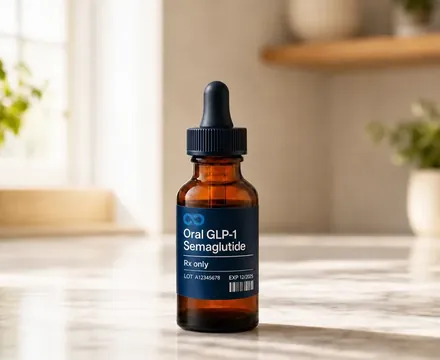
GLP-1 medicines mimic a gut hormone that helps regulate appetite and blood sugar. Semaglutide is sold as Ozempic for type 2 diabetes and Wegovy for weight management.
Tirzepatide, sold as Zepbound for weight management, acts on both GIP and GLP-1 receptors.
None of these medicines are FDA-approved to treat alcohol use disorder. Research suggesting they may help people drink less is emerging, and using them for that purpose is off-label.
By contrast, naltrexone has been FDA-approved for alcohol use disorder since 1994. That difference matters when you're deciding what to try first.
Who Was in the GLP-1 and Alcohol Research
Here's a detail that often gets missed. Some of the most cited GLP-1 and alcohol research enrolled mostly women.
The best-known example is a 2025 randomized trial of once-weekly semaglutide in adults with alcohol use disorder, published in JAMA Psychiatry. Of the 48 participants, 34, or 71%, were female.
Over nine weeks of low-dose treatment, semaglutide reduced how much people drank during a lab drinking session. It also reduced drinks per drinking day and weekly craving compared with placebo.
It did not change the number of drinking days or the average drinks per calendar day. The authors described the results as initial evidence that justifies larger trials.
A separate remote study of semaglutide and tirzepatide, published in Scientific Reports in 2023, recruited 153 adults with obesity who drank. Most participants were women around 40, and those on the medicines reported drinking less.
So women weren't left out of this early research. The catch is that these studies were small, and they weren't designed to show whether women respond differently from men. That question is still open.
How GLP-1s Can Change the Way Alcohol Feels
GLP-1 medicines slow how quickly the stomach empties. Since most alcohol is absorbed after it leaves the stomach, that slows how fast alcohol reaches your bloodstream and tends to lower the peak.
In practice, the buzz may arrive later and feel milder. That can be helpful, but there's a catch. If you're waiting for a familiar feeling, it's easy to have another drink before the first one registers.
How this combines with women's naturally higher blood alcohol levels hasn't been studied directly. The safest approach is to go slowly and pay attention.
Our guide on whether you can drink alcohol on a GLP-1 walks through the practical side.
A Milder Buzz Doesn't Mean Less Risk
Feeling less tipsy isn't the same as having less alcohol in your system. Your blood alcohol still matters for driving, for your liver, and for the hangovers and blackouts women are already more prone to.
Count drinks rather than relying on how you feel. And if you plan to drive, the safest number is zero.
Menopause, Midlife, and Drinking
Midlife brings its own shifts. Sleep, mood, and weight can all change during the menopause transition, and drinking patterns often change with them.
A study following women across the menopausal transition used data from 3,302 women who were 42 to 52 when the study began and were followed for 10 years.
Women were more likely to shift from non-excessive to excessive drinking during early perimenopause and after menopause. The authors concluded that the transition marks a period of instability in alcohol use.
Alcohol can also make some of the symptoms women are trying to manage harder, like disrupted sleep and hot flashes. Our article on alcohol and menopause covers that overlap.
If you're starting a GLP-1 in midlife, it's a good moment to look at your drinking too. Both your medication and your drinking affect sleep, weight, and how you feel day to day.
Birth Control and GLP-1 Medicines
This is where the details really matter, because the guidance is not the same for every GLP-1 medicine.
Tirzepatide
The Zepbound prescribing information says tirzepatide may reduce the effectiveness of oral hormonal birth control because it delays gastric emptying. That delay is largest after the first dose and lessens over time.
The label advises people using birth control pills to switch to a non-oral method or add a barrier method, like condoms. That applies for 4 weeks after starting Zepbound and for 4 weeks after each dose increase.
The label also says hormonal birth control that isn't taken by mouth should not be affected. That includes options like the patch, ring, implant, shot, or hormonal IUD.
Semaglutide
The guidance for semaglutide reads differently. The Wegovy prescribing information notes that semaglutide delays gastric emptying and could affect the absorption of oral medicines.
But in its clinical pharmacology studies, semaglutide 1 mg didn't affect the absorption of the oral medicines tested, including a common birth control pill. The label doesn't carry the same 4-week backup instruction as Zepbound.
When Stomach Side Effects Get in the Way
GLP-1 medicines can cause vomiting and diarrhea, especially early on. If you have either soon after taking a birth control pill, the pill may not be fully absorbed.
Ask your prescriber or pharmacist what to do if that happens, and whether backup protection makes sense for you. Whatever medicine you take, they're the right people to confirm your plan.
Planning a Pregnancy
Both labels also address pregnancy. The Zepbound label says it may cause fetal harm and should be stopped when pregnancy is recognized.
The Wegovy label advises stopping at least 2 months before a planned pregnancy, because semaglutide stays in the body for a long time.
Alcohol belongs in that planning conversation too. NIAAA notes that there is no known safe amount of alcohol during pregnancy.
What's Different for Women at a Glance
| What's Different for Women | Why It Matters |
|---|---|
| Less body water, so higher blood alcohol from the same drink | The same drink hits harder, and problems can start at lower amounts |
| Alcohol use among women is increasing | Wanting to cut back is common, and support is widely available |
| The 2025 semaglutide trial was 71% female | Encouraging, but the trial had only 48 people and didn't compare sexes |
| Drinking can shift during perimenopause and after menopause | Midlife is a smart time to check in on drinking habits |
| Tirzepatide can reduce birth control pill effectiveness | Its label advises backup or non-oral birth control for 4 weeks after starting and after each dose increase |
| Pregnancy planning | GLP-1 labels advise stopping ahead of or at pregnancy, and no amount of alcohol is known to be safe |
Practical Tips for Women Who Drink and Take a GLP-1
A few steps help you get the benefits of your medication while keeping drinking in check:
- Tell your prescriber honestly how much you drink, so the advice fits your situation.
- Start slowly with any drink and wait before having another, since the effects may arrive later.
- Ask whether your GLP-1 affects your specific birth control, and when backup is needed.
- Skip alcohol on days when nausea or stomach upset is already a problem.
- Track how much you drink for a few weeks, so you can see whether it's changing.
What to Share With Your Prescriber
The more your prescriber knows, the better the plan. It helps to bring up a few things at your next visit, even if they feel unrelated to your GLP-1.
Share your typical weekly drinking, including the heavier nights. Mention which birth control you use and whether you've had vomiting or diarrhea since starting.
If you're in perimenopause or menopause, describe your symptoms and any treatments you use. And if a pregnancy might be in your plans, say so early, since it affects timing for both your medicine and your drinking.
Where Naltrexone Fits
GLP-1 medicines may turn out to be a useful tool for drinking less, but the evidence is still being built. Naltrexone is the established option.
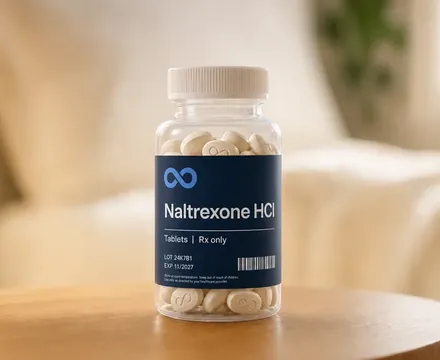
It blocks opioid receptors involved in alcohol's rewarding buzz, which helps many people stop after one or two drinks. It's a 50mg tablet that works whether your goal is cutting back or quitting.
Research suggests it works for women, too. A pooled analysis of two naltrexone trials found the benefit over placebo appeared similar in women and men. Our guide to naltrexone for women covers what to expect.
How Choose Your Horizon Can Help
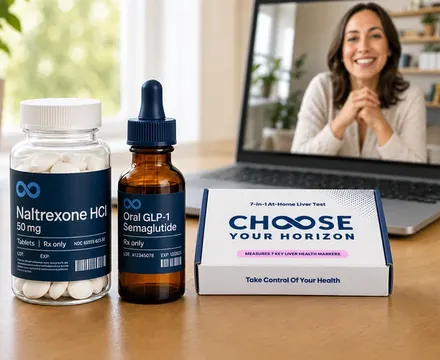
Choose Your Horizon offers an integrated solution built on clinical, neurological, and behavioral science. Our physicians can prescribe naltrexone after an online assessment, with coaching and ongoing support included.
For some women, our physicians may recommend a physician-guided GLP-1 and naltrexone combination when it fits their health history and goals. Everything happens online and discreetly, and you set the goal.
The Bottom Line for Women Who Drink and Take a GLP-1
Women reach higher blood alcohol levels than men from the same drink, and drinking among women has been rising. Midlife and menopause can shift drinking patterns even further.
Early GLP-1 and alcohol research enrolled mostly women and shows promise, but it's small, off-label, and not yet proven. Tirzepatide's label also calls for backup birth control after starting and after dose increases.
Naltrexone is FDA-approved for alcohol use disorder and works for women too. Whatever you're taking, an honest conversation with your prescriber is the best place to start.
Frequently Asked Questions
Do GLP-1 medications work differently for women who drink?
It's not known yet. The 2025 semaglutide trial for alcohol use disorder was 71% female, but it was too small to compare women and men.
Does tirzepatide affect birth control pills?
Yes, according to the Zepbound label. It advises switching to a non-oral method or adding a barrier method for 4 weeks after starting and after each dose increase.
Does semaglutide affect birth control?
The Wegovy label reports that semaglutide 1 mg didn't affect the absorption of a tested birth control pill. Ask your prescriber about your specific medicines, especially if you have vomiting or diarrhea.
Can menopause change how much you drink?
It can. A 10-year study found women were more likely to shift into excessive drinking during early perimenopause and after menopause.
Is it safe to drink alcohol on a GLP-1?
Many people do drink occasionally, but go slowly. GLP-1s slow alcohol absorption, so effects may arrive later, and stomach side effects can make drinking less comfortable.
Is naltrexone a good option for women?
For many women, yes. It's FDA-approved for alcohol use disorder, and a pooled analysis of two trials found its benefit appeared similar in women and men.
If you're ready to change your relationship with alcohol, take the Alcohol Use Assessment online to see if naltrexone, or a physician-guided GLP-1 and naltrexone combination, is a good fit for you.
A private, physician-led plan to drink less or quit.
Medication, coaching and support from home. A short assessment is the first step.
Start Assessment