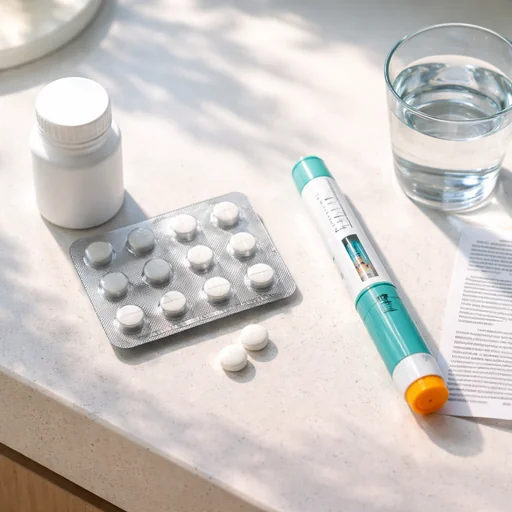
A 2 minute assessment to get a personalized mental health or alcohol recovery plan.

Menopause changes how the body handles alcohol, and alcohol in turn worsens several of the symptoms people turn to it to cope with. Here is what current research says and why midlife is a reasonable moment to reconsider drinking.
What You'll Learn:
• How menopause changes the way the body metabolizes alcohol.
• What the research shows about alcohol's effect on hot flashes, night sweats, and sleep.
• Why drinking during menopause raises risks for cardiovascular disease, bone loss, and some cancers.
• The bidirectional link between mid-life mental health and drinking.
• Practical ways to cut back without making menopause symptoms harder.
Menopause reshapes a lot of what the body has quietly done on autopilot for decades. Sleep changes. Mood changes. Skin and hair change. Tolerance to alcohol changes too, often in ways that catch people off guard. A glass of wine that used to pair with dinner starts triggering night sweats, ruining sleep, or hitting much harder than it used to.
This article explains what is actually happening during midlife, what the research shows about alcohol's effect on specific menopause symptoms, and why many clinicians now encourage women in this life stage to take a fresh look at their drinking. It is educational, not medical advice.
Why Alcohol Hits Differently During Menopause
The shift begins earlier than most people realize. Estrogen and progesterone both start to fluctuate in perimenopause, often years before periods stop. Those hormones influence body composition, liver enzyme activity, and how fluid is distributed across tissues. As University Hospitals summarizes, lower estrogen tends to increase body fat percentage and reduce total body water, which means a given amount of alcohol produces a higher blood alcohol concentration than it used to.
Add in the gradual decline in the activity of alcohol-metabolizing enzymes that happens with age in both sexes, and the result is predictable. The same two glasses of wine that felt like nothing at forty-two can feel like three at fifty-two.
This is not anecdotal. Clinicians who work with midlife women see it constantly, and the biochemistry lines up. If you have noticed that alcohol suddenly has more of an effect on you, you are not imagining it. The body really did change.
Hot Flashes and Night Sweats
The relationship between alcohol and vasomotor symptoms, the clinical term for hot flashes and night sweats, is a little more nuanced than the popular narrative suggests. Alcohol dilates peripheral blood vessels, which can trigger a hot flash in someone already prone to them. It also disrupts thermoregulation in the hours after drinking, which is why night sweats are such a common complaint among mid-life women who drink in the evenings.
Research has shown mixed results across menopause stages. A 2007 study published in Menopause that looked at current alcohol use, hormone levels, and hot flashes in midlife women found that moderate to heavier drinking was associated with more frequent and more intense vasomotor symptoms in many, though not all, subgroups.
More recently, Mayo Clinic clinicians have emphasized that for women already experiencing hot flashes, alcohol tends to make them worse. The trigger is not theoretical. It is something many women can map in their own diaries if they track drinks and flashes for a week or two.
If hot flashes are disrupting your quality of life and you drink regularly, reducing alcohol is one of the cheapest, highest-yield things you can try. Results often show up within a week or two of cutting back.
Sleep, Which Gets Hit From Two Sides
Sleep problems are one of the core complaints of perimenopause and menopause. Night sweats, insomnia, early morning awakenings, and general restlessness all get worse during this phase for a majority of women. Alcohol, despite being commonly used as a sleep aid, consistently makes the underlying sleep architecture worse.
What alcohol does is compress sleep onset, which is why it feels helpful, and then fragment the second half of the night. It suppresses REM sleep, increases wakefulness after the first few hours, and worsens breathing during sleep. For someone already waking up at 3 a.m. because of hormonal sleep disruption, a nightcap does not solve the problem. It adds a second layer to it.
As we discuss in our post on alcohol and cortisol, alcohol also disrupts cortisol rhythms, which for mid-life women already contending with cortisol shifts from perimenopause is a compounding problem.
Mood and Mental Health in Mid-Life
Perimenopause and early menopause are periods of elevated risk for depression, anxiety, and panic symptoms. Hormonal shifts interact with sleep deprivation, life-stage stressors like aging parents and changing careers, and often a slow erosion of previously stable routines.
A 2025 study in Women's Health looking at women's alcohol use in mid-life found significant associations between menopause symptom burden, drinking behavior, and mental health indicators. Women with heavier symptom loads were more likely to be drinking at levels the researchers classified as concerning, and the heaviest drinkers had worse mental health outcomes overall.
The relationship runs in both directions. Worse symptoms drive drinking, and drinking worsens the physiological and psychological factors that amplify symptoms. It is one of the reasons many women describe feeling stuck in a loop that did not exist in their thirties.
The Health Risks That Rise in Midlife
Beyond symptoms, drinking during and after menopause raises several serious long-term risks. Lower estrogen accelerates bone loss, and alcohol further impairs calcium absorption and bone remodeling, adding to osteoporosis risk. Cardiovascular disease risk rises for women after menopause as estrogen's protective effects fade, and heavier drinking independently raises cardiovascular risk.
The relationship to breast cancer is particularly well established. Even moderate drinking raises breast cancer risk in a dose-dependent fashion, and the risk increase is more pronounced in postmenopausal women. The National Institute on Alcohol Abuse and Alcoholism tracks these associations in depth and frames alcohol as one of the modifiable risk factors women have the most control over.
As we cover in our article on women and alcohol, women face a steeper health risk curve from the same amount of drinking compared to men, and the gap widens after menopause.
Why Cutting Back Is Harder Than It Sounds
Most women in this life stage are not drinking because they lack information. They know alcohol is not great. They drink because evenings are stressful, sleep is bad, social life runs on it, and willpower alone is often not enough to undo a decades-long habit in the middle of a hormonal shift.
This is where the conversation about medication usually starts. Naltrexone is a non-addictive, non-sedating prescription medication that blunts the pleasure signal alcohol sends to the brain. Most people on it find that after a few weeks, cravings meaningfully quiet down and the automatic reach for a drink at 6 p.m. becomes a choice rather than a reflex. Our guide to how to use naltrexone to stop alcohol cravings walks through how the medication fits into a plan.
For women specifically in perimenopause or menopause, naltrexone has an additional practical advantage. It does not interfere with estrogen, hormone replacement therapy, or the medications commonly used for hot flashes. It is metabolized through pathways that do not meaningfully conflict with the typical mid-life medication list.
Practical Ways to Start Cutting Back
A few concrete steps that tend to help:
• Track what you are actually drinking for two weeks. Most people meaningfully underestimate.
• Set a specific goal rather than a vague one. "Three drinks per week" is easier to track than "cut back."
• Pick two or three alcohol-free evenings as anchors. Break the automatic association between evening and drink.
• Address sleep separately. Many midlife drinkers find that once sleep improves, the desire to drink drops noticeably.
If these approaches alone have not been enough to get you where you want to be, a medical consultation about naltrexone is a reasonable next step. You do not need to have a drinking problem in the old-fashioned sense to benefit from the medication. Many women who come to CYH are drinking in ways their doctors would not flag, but that they themselves are tired of.
When to Seek Medical Attention
If your drinking has reached a level where stopping cold causes tremors, sweating, rapid heartbeat, or confusion, do not try to stop on your own. Alcohol withdrawal can be medically serious. Contact your primary care clinician, call 911, or go to an emergency department for evaluation.
If you are experiencing significant depression, thoughts of self-harm, or panic symptoms that you cannot manage, reach out to a mental health professional or call 988 in the United States for immediate support. These symptoms are common in perimenopause and are highly treatable.
Bottom Line
Alcohol and menopause is a bad combination for most women, and increasingly it is recognized as such by the medical community. The symptoms people drink to manage, sleep disruption, mood changes, hot flashes, tend to get worse with alcohol, not better. And the long-term health stakes, cardiovascular risk, bone loss, and certain cancers, are higher in midlife and older age than they were at thirty.
Reconsidering your drinking during this stage is one of the single highest-yield adjustments you can make. If the automatic reach for a glass in the evening is where the challenge lives, you can take our online Alcohol Use Assessment to get a clearer picture of where you stand and whether naltrexone could help you move forward.
This article is educational and is not medical advice. Decisions about alcohol, menopause management, or prescription medication should be made with a qualified clinician who knows your full medical history.