



What You'll Discover:
- Why military spouse life creates drinking pressures of its own, separate from the service member's.
- What research shows about deployments, combat exposure, and spouse drinking.
- Why PCS moves can weigh on mental health even more than deployments.
- How rebuilding a support network every few years leaves a gap alcohol fills easily.
- Practical ways to cut back that survive the next set of orders.
- How online care can stay with you from one duty station to the next.
Military spouses are the ones who keep the household running when orders change, the deployment date moves up, and the movers lose the box with the winter coats. You get very good at holding things together.
What gets far less attention is what you use to hold yourself together. For a lot of spouses, the quiet answer is a glass of wine after bedtime. Then two. Then a nightly fixture.
That pattern says something real about the load you are carrying. It says nothing bad about who you are, and it responds well to practical changes that can move with you.
Most writing about alcohol and the military focuses on the person in uniform. We cover that side in our look at drinking in the military, from unit culture to combat stress. This piece is about the person at home.
The Load Military Spouses Carry
None of the pressures of military family life are rare on their own. Plenty of civilians solo parent, change jobs, or move. The difference is that military spouses tend to get all of them at once, on someone else's schedule.
Deployment turns one parent into two. You handle the school pickups, the sick days, the car that will not start, and the bills. Then you handle the quiet that settles in after the kids finally fall asleep.
Homecoming gets treated as the finish line. In practice it is another transition, because roles that shifted during the deployment have to shift back, and that rarely happens on the first try.
Careers take a hit too. Many spouses rebuild a resume, a professional license, or a client list with every move. That is a financial strain and an identity strain, and it almost never gets named out loud.
So the stress is not one big event. It is a steady stack of resets, and every reset asks you to be the stable one.
What Research Shows About Spouses and Drinking
The good news first. Most military spouses do not drink at risky levels, and that deserves to be said plainly before anything else.
A sizable minority do, though. The Millennium Cohort Family Study follows military families over time, and among more than 5,000 spouses, about one in five reported risky drinking at follow-up.
The risk factors the researchers identified tell the story. Elevated post-traumatic stress symptoms, marital separation, and a service member's deployment with combat exposure were all linked to a spouse's later risky drinking.
Put simply, a spouse's drinking tends to track the strain the whole family is under. When a service member comes home carrying combat experience, the weight does not stay with one person.
Related findings from the same family cohort show that couples' drinking patterns tend to converge over time. What one partner does with alcohol often shapes what the other does.
That cuts both ways, and the hopeful direction is real. A change in one person's evening routine can ripple through the household for the better.
Why PCS Moves Can Weigh More Than Deployments
Deployments get the attention, and understandably so. The research on spouse mental health points somewhere most people do not expect, though.
In a longitudinal study of civilian partners of Army soldiers, problems tied to military moves predicted greater psychological distress, even after accounting for the service member's PTSD symptoms and time apart during deployment.
Deployment separation on its own was not a significant predictor of distress in that study. The move was.
That makes sense once you list what a PCS actually resets. Housing, schools, the job search, the pediatrician, the dentist, the vet, and the route to the grocery store all change in the same few weeks.
It also resets the invisible things. The neighbor who would grab your kids in an emergency. The friend you text at 10pm. The clinician who already knows your history.
For many families, this happens every few years. Each individual move is survivable. Doing it again and again is what quietly wears people down.
Rebuilding Your Village Every Few Years
The first months at a new duty station are often the loneliest stretch of the whole cycle. You learn the commissary layout before you learn a single neighbor's name.
Evenings are where that loneliness concentrates. The kids are asleep, the house is unfamiliar, and the people who would normally fill that hour now live three time zones away.
A glass of wine fills the hour very efficiently. It asks nothing of you, and it does not require introducing yourself to anyone.
Loneliness and drinking feed each other in a well-documented loop, which we unpack in our guide to alcohol and loneliness. The more the evenings blur together, the harder it gets to reach out.
Researchers have documented elevated stress, depression, and anxiety among military spouses. One study of barriers to healthy habits among military spouses found that lack of time was the most common barrier to exercise.
The study's title captures the whole pattern in four words: "Everything else comes first." The family, the move, and the mission all go ahead of your own health, and the evening drink becomes the one thing that is just for you.
Hail and Farewells, Spouse Clubs, and the Social Pour
There is another reason drinking creeps up, and it has nothing to do with being alone. Military social life runs on alcohol to a degree that civilians often find surprising.
Hail and farewells, unit holiday parties, spouse club socials, and the backyard gathering after a homecoming all tend to revolve around a drink. Showing up is how you build the new village, and the drink comes with the invitation.
That makes heavier drinking feel ordinary, because everyone around you is doing the same thing. It also makes cutting back feel like opting out of the community you just moved across the country to join.
The good news is that you can stay fully in the room without matching every pour. Most people at these events are paying far less attention to your glass than you think.
When the Evening Drink Becomes the Coping Tool
Wanting relief at the end of a hard day is not a failure. Wanting the volume turned down on worry is a human response, especially when your partner is somewhere you cannot reach.
The trouble is how alcohol delivers that relief. It calms the first hour, then disrupts sleep in the second half of the night, which leaves you more tired and more on edge the next day.
A more anxious tomorrow makes tomorrow's drink feel more necessary. Over a nine-month deployment, that loop can turn one glass into a reliable three without any single night feeling like a turning point.
If a drink has become your main way to handle anxiety or loneliness, our guide on how to stop using alcohol as self-medication walks through what to put in its place.
Noticing the pattern is honestly the hardest part. Once you see it, most of the fixes are practical.
Military-Life Stressors and What Actually Helps
Each part of military life pulls toward drinking in its own way. Matching the fix to the specific stressor works much better than a general promise to cut back.
| Military-life stressor | How it pulls toward drinking | What actually helps |
|---|---|---|
| Deployment and solo parenting | Bedtime becomes the only off-duty moment, and a drink marks it | A fixed alcohol-free ritual after bedtime and one standing weekly call with another adult |
| PCS move | Routine, friends, and doctors all reset at once | Set up your care and two weekly commitments before the last box is unpacked |
| Rebuilding a support network | Quiet evenings with nobody nearby to call | Join one recurring group in the first month, even a small one |
| Reintegration after homecoming | Roles shift, tension rises, and drinking together becomes the default | Plan alcohol-free time together and talk about the new rhythm out loud |
| Alcohol-centered social events | Saying no can feel like opting out of the community | Arrive with a drink you chose and leave on your own schedule |
Practical Ways to Cut Back That Travel With You
The best strategies for military spouses are the ones that do not depend on a particular house, base, or friend group. They need to survive the next set of orders.
Start by tracking honestly for two weeks. Write down every drink with no judgment attached. Most people find the real number is higher than the one memory was offering, and seeing it in writing shifts behavior on its own.
Then focus on the after-bedtime window, because that one hour is usually the whole pattern. Replace the drink with something that carries its own small reward, like a bath, a show you save for that hour, or a call with a friend.
A few other moves help a lot of spouses:
- Decide your limit before a social event, not during it.
- Keep an alcohol-free drink you genuinely enjoy in the fridge.
- Plan the first two weeks of a deployment on purpose, since early habits tend to stick.
- Tell one person what you are working on, even if they live far away.
Confidential counseling is also available. Military OneSource offers free, confidential non-medical counseling for spouses of active duty, National Guard, and reserve members, by phone, video, chat, or in person, at 800-342-9647.
That counseling is not reported to command, with legal exceptions for abuse, illegal activity, or a threat of harm. It does not affect your spouse's career or security clearance.
Keeping Care Steady Through Every PCS Move
One of the quieter costs of military life is that your health care resets with every move. New clinic, new provider, and the same story told from the very beginning.
Research backs up what spouses already feel. In a survey of 175 military spouses, more PCS moves and more providers were linked to lower continuity of care, and spouses with continuous care reported higher satisfaction.
That matters for alcohol care in particular. Changing a drinking pattern works best with someone who knows your history, notices progress, and adjusts the plan when life changes.
With that in mind, online care has a real advantage for military families. Choose Your Horizon operates in all 50 states, so a stateside PCS usually means updating your shipping address rather than starting over with someone new.
We explain how licensing and refills work across state lines in our guide to alcohol care when you move states. Overseas assignments are a different situation, so raise those with your care team early.
Where Naltrexone Fits
For some spouses, practical changes are enough. For others, the pull of the evening drink is strong enough that a little medical support makes the difference.
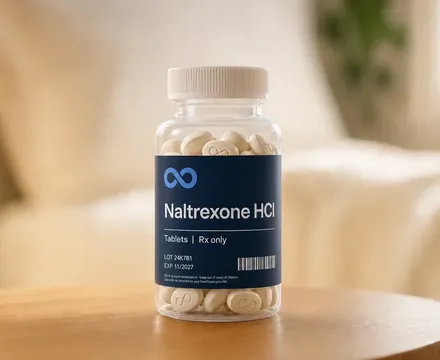
Naltrexone is an oral 50mg tablet that has been FDA-approved for alcohol use disorder since 1994. It blocks the opioid receptors involved in alcohol's reward signal, so drinking delivers less of the pleasant feeling that drives cravings.
People use it to drink less or to stop entirely. Many find that the second and third drink simply lose their pull, which makes sticking to a limit feel far less effortful.
Some take it daily. Others take it about an hour before an event where they expect to drink, which fits neatly around a calendar full of unit functions.
It is not right for everyone. Naltrexone cannot be taken with opioid pain medications, and a clinician should review your liver health and other medications before you start.
Choose Your Horizon pairs naltrexone with physician-guided care, coaching, and daily tracking. It is an integrated solution grounded in clinical, neurological, and behavioral science, delivered online and discreetly.
The Bottom Line
Military spouses carry a load few civilians see in full. Deployments, homecomings, career resets, and repeated moves all stack, and the evening drink can quietly become the one constant.
Spouse drinking tends to follow the family's strain, and moves can weigh on mental health even more than deployments. Noticing that in yourself is not an admission of anything.
The fixes are practical and portable. Name the hour that matters, replace the ritual, use confidential support, and choose care that can follow you from one duty station to the next.
You do not need a crisis to deserve help with this. Wanting your evenings back is reason enough.
Frequently Asked Questions
Do military spouses drink more than civilians?
The research is mixed. In one large study of military families, about one in five spouses reported risky drinking, and the risk rose with combat deployment, post-traumatic stress symptoms, and marital separation.
Why is a PCS move so hard on mental health?
A move resets housing, schools, work, and friendships all at once. In a study of Army partners, problems tied to moves predicted psychological distress, while deployment separation alone did not.
Can I get help for drinking without affecting my spouse's career?
Yes. Military OneSource counseling for spouses is confidential and not reported to command, with legal exceptions for abuse, illegal activity, or threat of harm. Choose Your Horizon is a private, civilian telehealth service.
What happens to my alcohol care when we PCS?
Choose Your Horizon operates in all 50 states, so a stateside move usually means updating your address instead of starting over. Talk with your care team before any overseas assignment.
Can I take naltrexone and still go to unit social events?
Many people take naltrexone while working toward drinking less, not only when quitting entirely. Your clinician can help you decide whether daily or targeted dosing fits your calendar.
Is it normal to drink more during a deployment?
It is common. Solo parenting, worry, and quiet evenings all push in that direction, and noticing the change early makes it much easier to adjust.
If you are ready to look at your evenings differently, start small and stay private. Take the Alcohol Use Assessment to see whether naltrexone could fit your life, wherever the next orders take you.
A private, physician-led plan to drink less or quit.
Medication, coaching and support from home. A short assessment is the first step.
Start Assessment