A 2 minute assessment to get a personalized mental health or alcohol recovery plan.

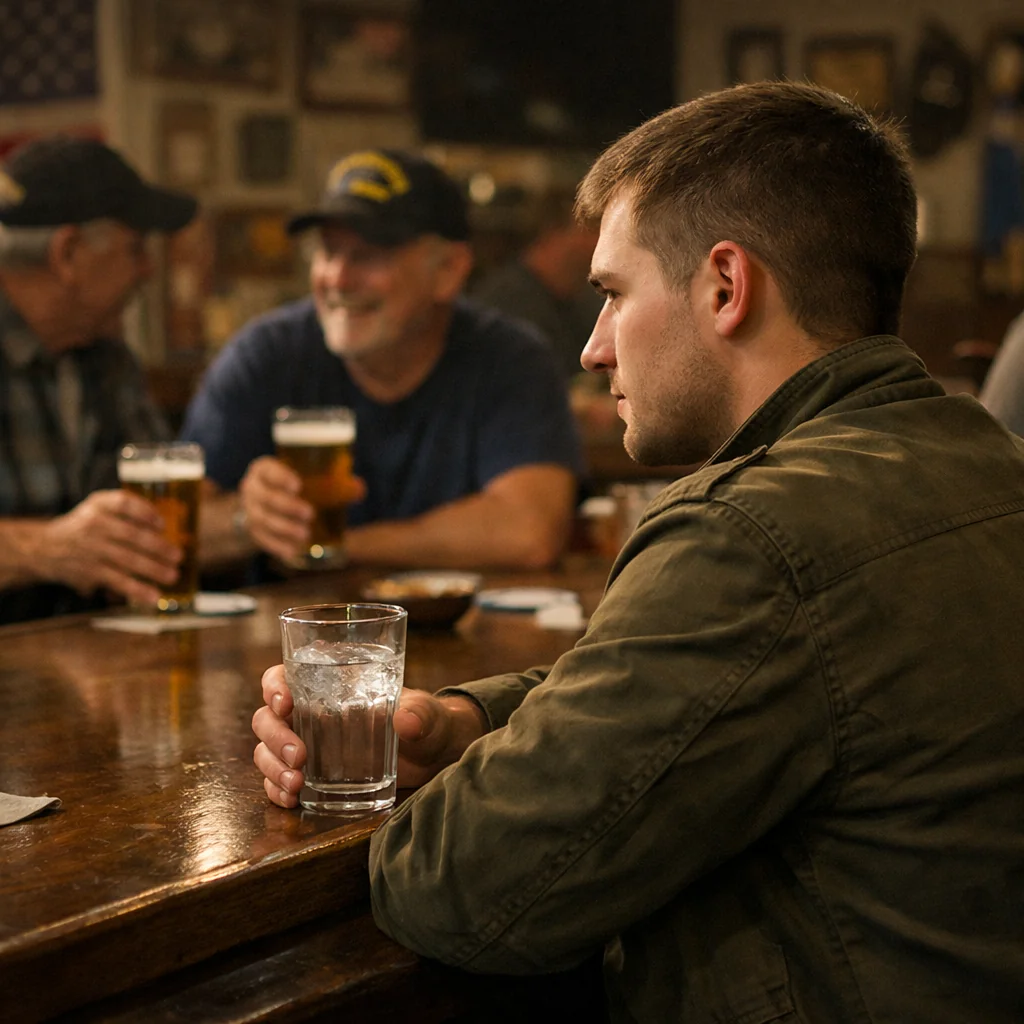
Studies show that alcohol misuse is more common among people who are or have been in the military, but the problem can go unnoticed or get downplayed for a number of reasons.
What You’ll Learn:
• Statistics on alcohol use in the military.
• Why alcohol is engrained in military culture.
• Why drinking is considered acceptable to military members and veterans.
• What causes drinking problems among veterans and servicemembers to go untreated.
There are a lot of amazing things about the U.S. military, and joining the Armed Forces can be an extremely positive influence in a person’s life. But one shortcoming is the normalization of drinking in our military culture. That culture is changing, but its effect is still felt across branches and ranks for active servicemembers and veterans.
Studies suggest that alcohol misuse is higher among military members compared to the general public. While around one in ten adults in the U.S. have alcohol use disorder, reports from the Army found that 22% of soldiers reported engaging in hazardous or heavy drinking. That’s more than double the national average.
Another study from NIDA backed this finding up. It concluded that servicemembers were more likely to abuse alcohol than civilians. And a Department of Defense (DoD) study from 2018 found that a troubling 34% of servicemembers were binge drinkers. Nearly 10% participated in binge drinking at least 1-2 times a week.
Part of the reason behind the alcohol misuse is normalization. Within the military alcohol use, including problematic use, has been normalized for years for a variety of reasons.
Even Heavy Use Among Servicemembers is Considered Acceptable by Many
For many people in the military, drinking alcohol isn’t frowned upon, it’s readily accepted. Even when someone exhibits drinking red flags they can be missed and thought of as part of the territory that goes along with military service. They fail to realize that binge drinking and chronic alcohol use isn’t healthy behavior for anyone.
Plus, connecting with comrades over drinks is considered part of the military culture.
The worse part is that for many people the alcohol use continues even after they separate from the military. Even so, the label of “veteran” is still seen as an acceptable reason for drinking. Case in point, many Veterans of Foreign Wars (VFWs) have what is called a canteen, which is another name for a members-only bar.
Military Members Have High-Stress Jobs
The military is one of the highest stress work environments that exist. Combat, deployment to other countries, prolonged periods away from family - there’s a long list of stressors that are unique to the military.
Unfortunately, many people use alcohol as a stress reliever, and members of the military are no different. In fact, it can be normalized as a way of dealing with stress within a military unit and de-stressing with other servicemembers. To be fair, some military leadership teach healthy coping mechanisms and encourage members to get behavioral support if needed, but that isn’t the case in all units.
Potential For PTSD
There is a specific type of stress that can be extremely detrimental to mental health and lead people to self-medicate with alcohol. Anyone can experience an event that leads to post-traumatic stress disorder (PTSD). But due to the nature of their jobs, military servicemembers have a higher likelihood of experiencing it than average.
The issue is particularly problematic for combat veterans that are exposed to extreme violence. And while they are prepared for what could happen, many combat veterans still have difficulty grappling with what they see and experience in war zones.
Servicemembers and veterans that turn to alcohol instead of professional treatment for PTSD increase their risk of suicide and developing other mental health issues.
Military Members Are Seen as Strong Enough to Control Alcohol Misuse
People who join the military and make it through bootcamp are considered to be disciplined people. After all, the military is a regimented atmosphere.
But when dependence from an alcohol use disorder develops controlling drinking isn’t a matter of discipline or willpower. Few people can white knuckle it using discipline alone because of changes within the brain and body. Thinking that someone should be able to get a handle on their drinking because they are disciplined is a fallacy that can result in someone not getting the support and help that they need.
Today, it’s recognized more within the military that being disciplined doesn’t assure problematic drinking can be controlled. Voluntary Care, a self-referral program in which a servicemember chooses on their own to get help, is being encouraged more. The goal is to ensure military readiness and get control over the issue in the early stages when it’s easier to manage. It helps that the Voluntary Care program doesn’t have a career impact for a servicemember, their security clearances or education eligibility.
Lack of Information About Resources
There have been accounts that during the periodic health assessment when military members tell doctors how much they drink and it clearly falls into the heavy use category little is done to get the servicemember into treatment. Too often the doctors look at it as a stress reliever and that military members have the discipline to keep drinking under control.
To be fair, this is a problem outside of the military. Many civilian primary care physicians fail to recommend naltrexone and other treatment options for alcohol use disorder for a variety of reasons.
But here’s something unique that people who are currently serving don’t realize - they can self-refer themselves to see a specialist and even enroll in an inpatient program. Making this decision won’t impact your military career either. In addition to help with alcohol use disorder, you can also get screened for anxiety and depression, which may be the catalyst for the drinking.
But too many servicemembers don’t realize this option exists.
What a servicemember wants to avoid is Commander-Directed Care. This is when a commander recognizes that a servicemember is misusing alcohol but the person refuses to get help. While it’s a valuable tool in getting people into treatment, if a servicemember fails to follow the program there can be career repercussions, unlike with the Voluntary Care program.
In 2021 the DoD also came up with clinical practice guidelines for screening and treating alcohol misuse. It includes co-occurring disorders since anxiety, depression and PTSD can exist alongside the alcohol use disorder. The recommended treatment options include cognitive behavior therapy (CBT), 12-step facilitation and the use of pharmacotherapy like naltrexone medication.
At Choose Your Horizon we proudly support active servicemembers and military veterans. Our Alcohol Use Assessment uses the same AUDIT-C screening techniques to identify problematic drinking and solutions for treatment. Anyone can take the confidential assessment for free to get an Audit-C score and speak with a qualified clinician about treatment options.