A 2 minute assessment to get a personalized mental health or alcohol recovery plan.


When the evenings feel empty, a drink can feel like company. Here is why loneliness reaches for the glass, and how to build connection that lasts.
What You'll Discover:
• Why loneliness is one of the most common reasons people drink.
• How a drink comes to feel like company, and what it quietly costs.
• The loop that loneliness and drinking make together.
• Gentle, doable ways to build connection that does not run on alcohol.
• How naltrexone can lower the pull while you rebuild.
There is a particular kind of quiet that settles in on an empty evening. The day is done, the messages have stopped, and the hours ahead feel a little too open.
For a lot of people, that is when the bottle starts to look like company. A drink to soften the edges of being alone. A small ritual that makes the quiet feel less like absence.
If that is familiar, you are in good and plentiful company, even if it does not feel that way tonight. Loneliness is one of the most human experiences there is.
It is also quietly on the rise. More of us live alone, work remotely, and keep our closest ties through a screen. The ache you feel is partly personal and partly the shape of modern life.
This is a gentle look at why loneliness and drinking find each other, and how to loosen that link without white-knuckling anything.
There is no shame anywhere in this piece. Only a little understanding, and some kind, practical next steps you can take at your own pace.
Loneliness Is a Feeling, Not a Failing
First, the reframe that changes everything. Loneliness is not evidence that you are unlikeable or that something is wrong with you. It is a signal, like hunger or thirst.
Hunger tells you the body needs food. Loneliness tells you the self needs connection. It is information, not a verdict.
There are also two flavors of it worth knowing. Emotional loneliness is missing a close, intimate bond. Social loneliness is missing a wider circle to belong to.
You can have plenty of people around and still feel the first kind. Naming which one you feel helps you aim at the right sort of connection.
And it is remarkably common. Loneliness and isolation are now widespread enough that public health agencies track them as real risks to physical and mental health.
So if you have been carrying your loneliness as a private shame, you can set that down. It is a shared human weather system, and weather can change.
The Shapes Loneliness Takes
Loneliness is not one thing, and naming your version can make it feel less overwhelming. It often arrives with a life change rather than a flaw.
A move to a new city, where you know the streets but not the people. A loss, where a specific person is missing and no crowd fills the gap.
An empty nest, after years of a full and noisy house. A breakup, where evenings that used to be shared are suddenly your own.
Working from home, where whole days can pass without a real conversation. Or simply a season where old friendships drifted and new ones have not formed yet.
If any of these fit, notice that they are circumstances, not character. Circumstances shift, and the loneliness that came with them can shift too.
Why Loneliness Reaches for a Drink
Alcohol is good at doing an impression of connection. It loosens the nervous system, softens self-consciousness, and for a little while makes solitude feel warmer.
For someone who feels socially anxious or on the outside, that effect is powerful. Research shows people often use alcohol to cope with social discomfort, reaching for it to feel more at ease.
A glass can also fill the shape of a ritual that used to belong to other people. The clink, the pour, the pause. It stands in for company that is not there tonight.
None of that makes you weak. It makes you a person who found something that takes the edge off a real and painful need. The only trouble is that the thing you found cannot actually meet the need.
There is also a catch built into it. The warmth a drink lends to solitude fades a little faster each time, so the amount it takes to feel that ease tends to creep upward. The need stays exactly where it was.
The Loop Loneliness and Drinking Make Together
Here is the gentle truth at the center of this. A drink can ease the feeling of loneliness for an hour, but over time it tends to deepen the isolation underneath.
Drinking to soothe loneliness usually happens alone. And drinking alone tends to pull you further from people rather than closer.
Researchers describe a two-way street where isolation and problem drinking feed each other through the brain's social and reward systems.
The next morning can bring a low mood or a flicker of shame, which makes reaching out feel harder. So the world shrinks a little, and the glass fills the space where a person might have been.
Over months, that quiet shrinking can start to feel like just who you are. It is not. It is the loop doing what loops do, and the story it tells about you is not the truth.
It is a loop, and loops can be interrupted. The point is not to blame the drink or yourself, but to see the mechanism clearly enough to change it.
Drinking Alone Versus the Loneliness Underneath
It helps to separate the act from the driver. Drinking alone is the behavior. Loneliness is the feeling underneath that so often steers it.
You can change the behavior on the surface, but if the loneliness stays unmet, the pull tends to return. That is why treating drinking alone as only a willpower problem usually does not hold.
The kinder and more effective move is to tend the driver. Meet some of the need for connection, and the behavior has far less work to do. The drink was doing a job, and once something better does that job, it can quietly retire.
That is genuinely good news. It means the goal is not only to take something away. It is to add something in, which is a much warmer project to be part of.
And adding is something you can start today, in a small way, with no big announcement or dramatic change. A single text counts.
Building Connection That Does Not Run on Alcohol
Rebuilding connection when you feel lonely can sound exhausting, so let me make it small. You are not trying to build a bustling social life overnight. You are adding a few grams of real contact.
Think of it like physical therapy for a muscle that has gone quiet. Small, regular movements, not one heroic effort. Consistency matters more than intensity here.
Start with low-stakes contact. A hello to a barista, a text to one person, a nod to a neighbor. Tiny doses of contact are still contact, and they add up.
Put yourself near people. A cafe, a library, a walk in a busy park. Being around others, even without talking, softens the sharpest edge of loneliness.
Join something that repeats. A class, a volunteer shift, a walking group. Repetition is how acquaintances slowly become friends, with no single high-pressure moment required.
Lean on the ties you already have. A sibling you have not called, an old friend who still crosses your mind. Reconnecting is often easier than starting from zero.
Practice socializing without a drink in hand. It can feel strange at first, and that is normal. Our guide to socializing without alcohol has gentle ways to ease in.
If you worry that changing your drinking will cost you your current friendships, that fear is worth naming out loud. We wrote about it directly in losing friends when you stop drinking, because the real picture is more hopeful than it feels.
And if loneliness ever tips into something heavier or hopeless, please reach out. A doctor, a counselor, or a support line can help, and you deserve that support as much as anyone does.
When the Pull Is Strong, Gentle Help
Sometimes the reach for a drink is so automatic that in-the-moment intentions are not enough. That is not a failure of will. It is a habit worn deep, and habits like that respond well to support.
Reaching for support here is not giving up on doing it yourself. It is giving yourself a fair chance, the way you would want a friend in the same spot to have.
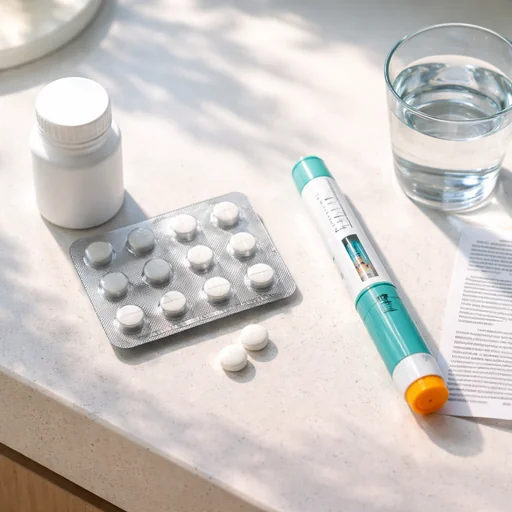
Naltrexone is one option worth knowing about. It is an oral 50mg tablet that reduces the reward alcohol produces in the brain, which softens the automatic pull toward the glass.
With the craving quieter, you have more room to do the slower work of connection. It is hard to reach out to people when a strong urge is shouting, and this can turn that volume down.
It does not do the connecting for you, and it should not try to. What it does is clear some of the noise, so the quieter, braver work of reaching out gets a little more room.
It also helps to tend the loneliness itself, not just the drinking. Learning to stop using alcohol as self-medication means finding other ways to meet the need the drink was standing in for.
This is the idea behind an integrated solution. Lower the pull, tend the feeling, and rebuild connection, all supported by clinical, neurological, and behavioral science. Choose Your Horizon is built around that combination.
The Bigger Picture
Loneliness is painful, but it is not permanent, and it is not a sentence you have been handed. It is a need, pointing you toward something real.
The drink was an understandable stand-in for connection. You are allowed to trade it, slowly and gently, for the actual thing.
You do not have to do it perfectly or all at once. One small moment of contact, one quieter evening, one kind choice toward yourself. That is how the loop loosens.
You may be surprised how quickly small changes register. The nervous system is social by design, and it responds to even modest doses of real contact.
Plenty of people have stood exactly where you are, in the same quiet, with the same glass. Many found their way to fuller evenings, and there is no reason you cannot be one of them.
Frequently Asked Questions
Is it bad to drink alone when I feel lonely?
Drinking alone is not automatically harmful, but using it to manage loneliness can deepen isolation over time. If the glass has become your main company, that is a gentle signal to add real connection and, if needed, some support.
Why does alcohol make me feel more lonely the next day?
Alcohol can lower your mood as it leaves your system, and that dip often shows up as sadness or shame the next day. Those feelings make reaching out harder, which is part of the loop.
It tends to ease as you drink less, and a steadier next-day mood is often one of the first things people notice.
How do I meet people if drinking is how I usually socialize?
Start with repeating, low-pressure settings like classes, volunteering, or walking groups. Connection built on a shared activity does not need alcohol, and it tends to feel steadier over time.
Having something to do with your hands takes the pressure off the talking.
Will I lose my friends if I stop drinking?
Some social ties may shift, but many stay, and new ones form around what you actually enjoy. The fear is common, and it is usually larger than the reality. The bonds that were only about drinking may fade, while the ones that mattered tend to remain.
Can naltrexone help with loneliness drinking?
Naltrexone does not treat loneliness directly, but it lowers the reward and craving that make reaching for a drink feel automatic. That frees up energy for the connection that actually helps.
Does loneliness go away when you stop drinking?
Not on its own, at least not right away. Stopping removes something that was deepening it, but connection still needs building. A clearer head and a steadier mood tend to make that building easier.
Take the Next Step
If evenings have felt empty and the glass has been filling the quiet, please know there is a gentler way through, and you are not the only one walking it.
You can lower the pull and rebuild connection at the same time, one small step at a time. Take a quick, discreet online Alcohol Use Assessment to see if naltrexone could be a good fit for you.