

What You'll Discover:
- What the FDA label actually says about naltrexone dosing for alcohol.
- Where the 100 mg number comes from, including the large NIH-funded COMBINE study.
- What the research shows about 100 mg compared with 50 mg.
- How the liver warning has changed and what monitoring looks like.
- Why a clinician, not the patient, decides on a higher dose.
- What to check before anyone talks about increasing your dose.
If you've been reading about naltrexone, you've probably noticed two numbers. Most prescriptions say 50 mg. Then a study, a forum thread, or a friend mentions 100 mg, and suddenly you wonder if you're taking too little.
It's a fair thing to wonder about. Naltrexone works best when it's dosed well, and nobody wants to put in the effort only to feel like the medication is underpowered.
This post focuses on one narrow question: what 100 mg means for alcohol use. For the full picture of how dosing works, including 25 mg starts and timing, our guide to the best naltrexone dose for alcohol covers it from start to finish.
The Short Answer on Naltrexone 100 mg
The standard dose of naltrexone for alcohol is 50 mg once a day. That's the dose on the FDA label and the dose most people do well on.
100 mg a day is not a made-up number. It was the dose used in some of the biggest naltrexone trials ever run, and some clinicians do prescribe it for specific patients.
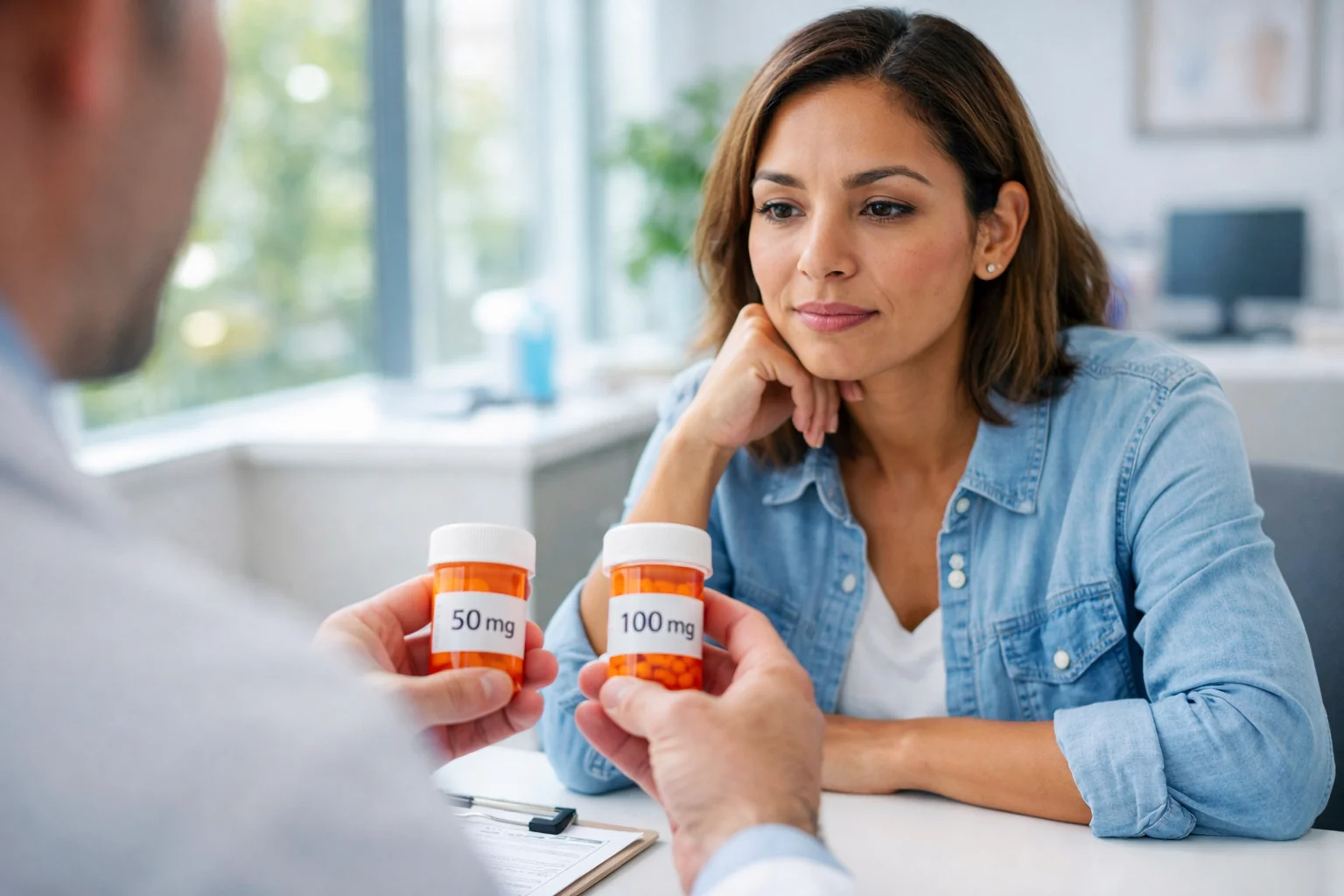
But it's an off-label daily dose, and the research hasn't shown that doubling the dose reliably works better for most people. It's a decision a clinician makes after looking at your health, your side effects, and how 50 mg has been working.
So, whether 100 mg is too much depends on who's deciding. Under medical supervision, it can be reasonable. Doubling up on your own because cravings are still there is the wrong move.
What the FDA Label Says About Naltrexone Dosing
Naltrexone tablets have been FDA-approved for alcohol dependence since 1994. The current FDA-approved prescribing information for naltrexone tablets is direct about the dose: "A dose of 50 mg once daily is recommended for most patients."
The trials behind that approval used 50 mg once a day for 12 weeks, alongside counseling and support. That's why 50 mg became the anchor dose that pharmacies, insurers, and most prescribers work from.
The label also describes flexible schedules for supervised dosing, such as 100 mg every other day. That still averages out to 50 mg a day. It's a different thing from taking 100 mg every single day.
One more line in the label matters for this topic. It notes there may be a higher risk of liver cell injury with single doses above 50 mg, and that this should be weighed against the potential benefit.
That sentence is one of the main reasons a higher dose is a medical decision and not a personal experiment.
Where the 100 mg Number Comes From
The biggest source of the 100 mg figure is the COMBINE study, a large NIH-funded trial published in JAMA in 2006. It enrolled 1,383 adults with alcohol dependence across 11 sites in the U.S.
In COMBINE, people took naltrexone at 100 mg a day for 16 weeks, often paired with a brief support approach called medical management. Those visits focused on taking the medication consistently and checking in on drinking.
The results were encouraging. People taking naltrexone with medical management spent about 80.6% of days abstinent, compared with 75.1% on placebo, and they were slower to return to heavy drinking.
That's a meaningful result from a well-run trial, and it's the reason 100 mg shows up so often in articles and online discussions.
There's a catch, though. COMBINE tested 100 mg against placebo. It did not test 100 mg against 50 mg. So it tells you 100 mg works better than no medication, not that it works better than the standard dose.
Does 100 mg Work Better Than 50 mg
This is the question most people really want answered. Spoiler alert: the research doesn't give a clean yes.
Large reviews of naltrexone for alcohol have centered on the 50 mg dose. A 2014 JAMA review of outpatient treatment found that oral naltrexone at 50 mg a day lowered the chance of returning to heavy drinking.
Most of the evidence base lives at that dose.
One smaller dose-ranging trial in people who smoked and drank at hazardous levels compared 25 mg, 50 mg, and 100 mg against placebo. The 25 mg and 50 mg doses beat placebo on avoiding hazardous drinking.
The authors concluded the effect appeared to favor the lower doses, which may also be better tolerated and cheaper than 100 mg.
That was one study in a specific group, so it doesn't settle anything. It does push back on the idea that more is automatically better.
Some researchers have suggested that certain people, for example those who clear the medication quickly, might need more. That's a reason a clinician might consider a higher dose for one person. It's not evidence that everyone should take it.
The fair summary looks like this. 100 mg has been studied and was well tolerated in a large trial. 50 mg has the FDA approval and the deepest evidence base. And the research hasn't shown that doubling the dose is reliably better for most people.
Naltrexone 25 mg, 50 mg, and 100 mg at a Glance
| Dose | How It's Used | What the Evidence Shows | Who Decides |
|---|---|---|---|
| 25 mg | A starting or step-down dose some clinicians use to ease side effects | Beat placebo in one dose-ranging trial in hazardous drinkers | Your prescribing clinician |
| 50 mg | The standard daily dose on the FDA label for alcohol dependence | The approved dose, with the largest body of trial evidence | Your clinician, as the default |
| 100 mg | An off-label daily dose used in COMBINE and some other trials | Beat placebo in COMBINE, not proven better than 50 mg for most people | Your clinician, after review and monitoring |
Side Effects: What Changes When the Dose Goes Up
Most people tolerate naltrexone well.
In a large open-label safety study of about 570 people taking naltrexone for alcohol, the most common side effects were nausea (10%), headache (7%), dizziness (4%), nervousness (4%), fatigue (4%), and insomnia (3%).
Those effects tend to show up early and often fade after the first couple of weeks. Taking the tablet with food helps some people with nausea.
Here's the practical point. If 50 mg already upsets your stomach, doubling the dose isn't the fix. In that case a clinician is more likely to look at timing, food, or a lower dose than a higher one.
The dose-ranging trial mentioned above is a good reminder here. Its authors pointed to the lower doses as likely better tolerated, which matters a lot when the goal is a medication you'll keep taking for months.
The Liver Question
Naltrexone used to carry a boxed warning about liver injury, the most serious kind of warning on a U.S. drug label. A lot of older articles still mention it.
That changed. A recent clinical review notes that the FDA removed the boxed hepatotoxicity warning from naltrexone in 2013, with no known cases of liver failure attributed to the medication.
A liver warning and precaution still appear in the full label.
The original concern came from studies using much higher doses than anyone takes for alcohol.
The NIH's LiverTox database describes transient liver enzyme rises in about 25% of people taking 300 mg a day, six times the usual dose, and those rises resolved quickly after stopping.
LiverTox also notes that naltrexone has not been shown to cause clinically apparent liver injury, and that in several studies enzyme rises happened at about the same rate as on placebo.
So 100 mg is far below the doses that raised the original alarm. Still, the label's note about doses above 50 mg is the reason clinicians take liver health seriously before going higher.
What Liver Monitoring Can Look Like
Many clinicians check liver enzymes before starting naltrexone and again over time, especially when someone already has liver concerns or is on a higher dose.
Heavy drinking itself can raise liver enzymes, so a baseline helps make sense of later results.
The label also says naltrexone should be stopped if signs of acute hepatitis appear. That includes yellowing skin or eyes, dark urine, pain in the upper right belly, or unusual fatigue.
Our article on whether naltrexone is safe for the liver goes deeper on liver tests, existing liver disease, and what the newer research shows.
Why a Clinician Decides, Not the Patient
It's tempting to think of dose like volume. If 50 mg is helping a little, 100 mg should help twice as much. Medications don't usually work that way, and naltrexone is no exception.
Never double your naltrexone dose on your own. Here's why the decision belongs with a clinician.
Your liver picture matters. A clinician weighs your liver enzymes, your drinking level, and any history of liver disease before moving above the label dose.
Your other medications matter. Naltrexone blocks opioid receptors. That means it can block opioid pain medicines, and it can cause sudden withdrawal in anyone who has opioids in their system.
Your side effects matter. If you're already feeling nausea or headaches, a higher dose may make the medication harder to stick with.
The cause of the problem matters. Often the issue isn't the dose at all. It's timing, missed doses, or a goal that needs more support around the medication.
A clinician can sort through those possibilities. If you're wondering whether you're a candidate for a change, our guide on when to increase your naltrexone dose walks through the signals clinicians look for.
What to Check Before Anyone Talks About a Higher Dose
If naltrexone at 50 mg doesn't seem to be doing enough, start with a few basics. Most of the time, one of these is the real issue.
Consistency. In COMBINE, people who took their medication as prescribed spent more days abstinent than those who didn't. Missed doses are the most common reason naltrexone seems weak.
Timing. Naltrexone needs to be in your system before you drink. If you take it targeted, before drinking situations, give it at least an hour to start working.
Time. Many people notice changes within two to four weeks. Judging a dose after a few days usually isn't enough time.
Support around the pill. Tracking your drinks, having someone to check in with, and planning for your most common triggers all make the medication work better.
If you've covered those and still aren't seeing a change, that's useful information for your clinician. Our article on what to do if naltrexone doesn't seem to work covers the next steps in more detail.
How Choose Your Horizon Approaches Naltrexone Dosing
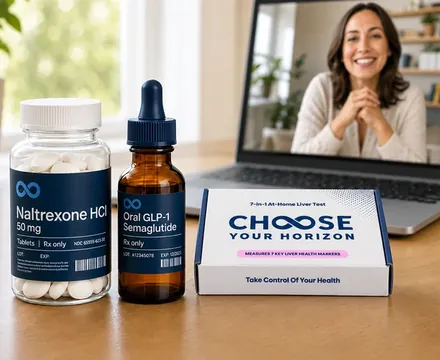
Choose Your Horizon prescribes oral naltrexone 50 mg, the FDA label dose for alcohol, through physician-guided care that's 100% online and available in all 50 states.
Physicians review your health history, current medications, and drinking goals before prescribing. Moderation and quitting are both valid goals, and the dose works for either one.
From there, the integrated solution adds daily check-ins, drink tracking, and coaching, so the medication isn't doing all the work alone. Some plans include at-home liver testing to keep an eye on liver health over time.
If something isn't working, the answer starts with a conversation with your care team, not a bigger pill.
The Bottom Line
The FDA label dose of naltrexone for alcohol is 50 mg once a day. 100 mg a day comes mainly from the COMBINE study, where it beat placebo and was well tolerated.
What the research hasn't shown is that 100 mg works better than 50 mg for most people. Higher doses also bring more attention to liver health, which is why the decision belongs with a clinician.
If your current dose isn't doing enough, you haven't failed and the medication hasn't failed either. Talk to your prescriber, check the basics, and adjust from there. Asking for help to get it right is exactly how this is supposed to work.
Frequently Asked Questions
Is 100 mg of naltrexone too much?
Not necessarily. 100 mg a day was used in the large COMBINE trial and was well tolerated, but it's above the 50 mg label dose for alcohol. Only take 100 mg if a clinician prescribes it.
Can you take 100 mg of naltrexone daily?
Some clinicians prescribe 100 mg daily for specific patients, with liver monitoring. It's an off-label daily dose, so it should never be a decision you make on your own.
Is 100 mg of naltrexone more effective than 50 mg for alcohol?
Research hasn't shown that 100 mg works better for most people. Most of the evidence supports 50 mg, which is the FDA-approved dose for alcohol dependence.
Does a higher naltrexone dose hurt your liver?
The liver concerns came from doses around 300 mg a day, far above 100 mg. The boxed warning was removed in 2013, but a liver precaution remains, so clinicians often check liver enzymes, especially at higher doses.
What should I do if 50 mg of naltrexone isn't working?
Check consistency, timing, and how long you've been taking it, then talk with your prescriber. Many people need two to four weeks to notice a clear change.
If you're wondering whether naltrexone could help you drink less or quit, start with the basics. Take the online Alcohol Use Assessment to see if Choose Your Horizon's physician-guided integrated solution is a good fit for you.
A private, physician-led plan to drink less or quit.
Medication, coaching and support from home. A short assessment is the first step.
Start Assessment