



What You'll Discover:
- Why drinking often creeps up in the first year with a baby.
- How "mommy needs wine" culture shapes the way new parents think about alcohol.
- What sleep deprivation and alcohol do to each other.
- What the AAP and NIH say about alcohol, bed-sharing, and couches.
- What the CDC says about breastfeeding and alcohol.
- Practical ways to cut back that fit a newborn schedule.
Nobody can fully prepare you for the newborn months. The love is enormous, and so is the exhaustion. Days run together, nights come in two-hour pieces, and your own needs drop to the very bottom of the list.
So when the baby finally sleeps and someone hands you a glass of wine, it can feel like the first thing all day that was just for you. That feeling is understandable, and millions of parents share it.
This piece is not here to judge that glass. It is here to explain how alcohol fits into the first year, and to share the handful of safety facts that matter more than anything else.
Why Drinking Creeps Up in the Newborn Months
The biggest driver is sleep, or the lack of it. In a study that followed 232 couples from pregnancy through their baby's first year, about 70 percent of mothers and 50 percent of fathers showed at least subclinical insomnia.
Mothers in that study had worse sleep quality at every check-in, while fathers slept for shorter stretches. Sleep quality dropped from pregnancy to four months, then gradually improved through the rest of the first year.
So both parents are running on empty, just in slightly different ways. When you are that tired, anything that promises quick relief becomes very appealing.
Isolation adds to it. Many new parents spend long days at home with a baby, away from coworkers and friends, and the evening can feel like the only part of the day that belongs to you.
For the birthing parent, there is often a milestone feeling too. After months without alcohol during pregnancy, the first glass can feel like a small return to the person you were before.
None of this is a character flaw. It is what happens when a person with very little sleep and very little time reaches for the fastest available break.
The "You Deserve a Drink" Culture
New parents get a steady stream of messages that alcohol is the reward for surviving the day. Wine-themed baby shower gifts, "mommy juice" mugs, and memes counting down to wine o'clock are everywhere.
Dads and partners get their own version, usually framed as the beer you earned after the bedtime routine. Either way the message is the same. Parenting is hard, and alcohol is how you cope.
We look at how that message took hold in our piece on mommy wine culture, and why it tends to make stress worse rather than better.
The data paints a different picture than the memes. A national analysis of drinking from 2006 to 2018 found that parents drink less than adults without children, and trends among women did not differ by parenting status.
So the joke is louder than the reality. Most new parents are not drinking heavily. The cultural script just makes it easy to slide from an occasional glass to a nightly one without noticing.
What Sleep Deprivation and Alcohol Do Together
Alcohol is sedating, so it can help you fall asleep faster. The trouble is what happens next. As your body processes it, sleep in the second half of the night becomes lighter and more broken.
For most adults, that trade is mildly annoying. For a new parent who already gets sleep in fragments, it is expensive, because the few hours you do get become less restful.
Alcohol and exhaustion also stack on top of each other. Both slow your reactions and make it harder to wake fully, so a tired parent who has had a drink is more likely to doze off somewhere they never intended to.
We go deeper on how alcohol changes your sleep in our guide to sleeping and alcohol. The short answer is that the drink borrows rest from later in the night.
The Safe-Sleep Rules That Matter Most
This is the most important section of the piece, so it is worth being clear and calm about it.
The American Academy of Pediatrics recommends that babies sleep on their backs, on a firm, flat surface, in their own crib or bassinet. It also recommends sharing a room with your baby for at least the first six months, but not sharing a bed.
Room-sharing is a genuine win. The AAP notes it can decrease the risk of SIDS by as much as 50 percent, and it makes night feeds much easier.
The AAP does not recommend bed-sharing under any circumstances, and it is especially clear about alcohol.
The risk of sleep-related infant death is more than 10 times higher when a baby shares a bed with someone who is fatigued, sedated by medication, or has used alcohol or drugs.
Couches and armchairs are a separate and serious concern. The AAP notes the risk is up to 67 times higher when an infant sleeps with someone on a couch, soft armchair, or cushion.
The National Institutes of Health Safe to Sleep campaign puts it plainly. Couches and armchairs are never safe places for babies to sleep, and they are extremely dangerous when an adult falls asleep while feeding or comforting a baby.
NIH also lists an adult who is very tired, taking drowsy medication, or using alcohol as a very high-risk situation for sharing any sleep surface. It advises that anyone caring for a baby be alcohol-free.
None of this is meant to frighten you. It is about knowing which risk factor sits fully in your control. You cannot always control how tired you are. You can decide in advance what happens on a night you have had a drink.
A simple plan covers most of it. On any night you have had a drink, your baby sleeps only in their own crib or bassinet. If you feed in bed, you put your baby back in their own space before you rest.
That rule applies to every caregiver. Grandparents, babysitters, and visiting relatives who have been drinking at a family gathering should not be the ones doing the late-night snuggle on the sofa.
Breastfeeding and Alcohol: What the CDC Says
Breastfeeding parents get a lot of conflicting advice about alcohol. Here is what the Centers for Disease Control and Prevention actually says.
Not drinking alcohol is the safest option for breastfeeding mothers. Moderate drinking, meaning up to one standard drink a day, is not known to be harmful to the infant.
To be safest, the CDC suggests waiting at least two hours after a single drink before nursing. More than one drink a day while breastfeeding is not recommended.
Alcohol levels in breast milk closely match the level in your blood, and they usually peak 30 to 60 minutes after a drink. That is why timing matters more than any trick.
Timing also scales with amount. Alcohol from one drink can be detected in breast milk for about 2 to 3 hours, from two drinks for about 4 to 5 hours, and from three drinks for about 6 to 8 hours.
Spoiler alert: pumping and dumping does not speed things up. It can relieve discomfort or keep your pumping schedule on track, but it does not lower the alcohol in your milk any faster.
Milk you expressed earlier, before drinking, makes a good backup.
The CDC also notes that drinking is not a reason to stop breastfeeding. Every situation is different, so talk with your pediatrician, OB, midwife, or lactation consultant about what makes sense for you and your baby.
New-Parent Moments and Safer Choices
Most alcohol risk with a baby comes down to a few specific moments. Planning for those moments ahead of time is far easier than deciding at 2am.
| The new-parent moment | Why alcohol raises the stakes | A safer choice |
|---|---|---|
| Late-night feed on the couch after a glass of wine | Couches are never safe for infant sleep, and alcohol makes dozing off more likely | Feed somewhere you are unlikely to doze, then return baby to their own sleep space |
| Bringing baby into your bed after drinking | Bed-sharing risk is more than 10 times higher when a parent has used alcohol | Baby sleeps only in their own crib or bassinet in your room |
| Breastfeeding after a drink | Alcohol in milk tracks the level in your blood | Wait at least two hours per drink, or use milk expressed earlier |
| Solo night shift after drinking | Caring for an infant while intoxicated is not safe | Skip the drink on your shift, or hand off to a sober adult |
| The "I deserve this" glass after a brutal day | Alcohol fragments sleep that is already scarce | A shower, a snack, a 20-minute break, or a nap swap with your partner |
Partners Are Part of the Plan
The safest households treat alcohol and night duty as a team decision. One simple agreement covers a lot of ground.
Decide who is on duty each night, and agree that the on-duty parent does not drink. The off-duty parent can actually rest, knowing someone fully alert has the baby.
That helps with the sleep problem too. Trading longer protected blocks of sleep, even four hours at a stretch, often restores more energy than any drink could.
Talk about it before the baby arrives if you can, or during a calm daytime moment if you are already in the thick of it. Agreements made at 3am rarely hold up.
When Drinking Is Covering Something Heavier
Sometimes the evening drink is not really about winding down. It is about quieting anxiety, numbing sadness, or getting through feelings that are hard to name.
Postpartum depression and anxiety are common, and they can affect any parent, including fathers and adoptive parents. They are also very treatable, and they are not a sign that you are failing at parenthood.
If you notice you are drinking to cope with low mood, constant worry, or feeling disconnected from your baby, bring it to your doctor, midwife, or pediatrician. They hear this often, and they can help.
The National Maternal Mental Health Hotline offers free, confidential support 24 hours a day by call or text at 1-833-TLC-MAMA (1-833-852-6262). It serves pregnant and postpartum parents and the people who love them.
If you ever have thoughts of harming yourself or your baby, call or text 988 or go to the nearest emergency room right away.
Cutting Back Without Adding Pressure
New parents do not need another demanding project. The goal is small changes that fit inside a newborn schedule.
A few that tend to work:
- Keep alcohol out of the house for the first few months, so the easy default is no drink.
- Stock an alcohol-free drink you like for the post-bedtime moment.
- Agree on your night-duty rule with your partner.
- Plan ahead for visitors and celebrations, when drinks flow most freely.
- Pick one small daily reset that is truly yours, like a walk or an uninterrupted shower.
If an evening drink has already turned into an every-night ritual, our guide on how to stop drinking every night walks through swapping the routine while keeping the comfort of the cue.
And go easy on yourself. Any reduction counts, especially in a year when everything else already feels hard.
Where Naltrexone Fits, and When to Check First
For some parents, practical changes are enough. For others, the pull of a nightly drink is strong enough that a little medical support helps.
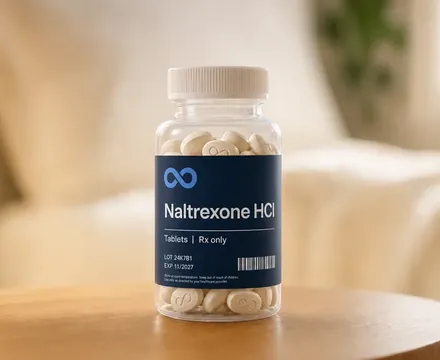
Naltrexone is an oral 50mg tablet, FDA-approved for alcohol use disorder since 1994. It blocks the opioid receptors involved in alcohol's reward, which makes drinking less rewarding and helps quiet cravings.
The newborn year adds a few things to discuss first. If you are pregnant, planning another pregnancy, or breastfeeding, any medication decision belongs in a conversation with your clinician and your baby's pediatrician.
We cover what is known about that question in our guide to naltrexone and pregnancy. Naltrexone also cannot be taken with opioid pain medication, which matters if you are still recovering from a cesarean birth.
Choose Your Horizon pairs naltrexone with physician-guided care, coaching, and tracking. It is an integrated solution grounded in clinical, neurological, and behavioral science, available online in all 50 states.
Being Gentle With Yourself Is Part of It
The newborn months are some of the hardest of adult life, and alcohol can easily slide into the role of the only break you get. That says a lot about how depleted new parents are, and very little about character.
A few rules matter most. Babies sleep in their own space, never on a couch with a drowsy adult, and never in a bed with someone who has been drinking.
Breastfeeding and an occasional drink can coexist with planning, and the CDC's guidance on timing is clear. Your pediatrician can fill in the details for your family.
Beyond that, aim for rest over reward. Protected sleep, a partner plan, and honest conversations with your clinician will do more for you than any glass.
You do not need a crisis to deserve help. Wanting to feel more rested and present this year is reason enough.
Frequently Asked Questions
Can I have a glass of wine while breastfeeding?
The CDC says not drinking is the safest option, but up to one standard drink a day is not known to harm the infant. To be safest, wait at least two hours after a single drink before nursing.
How long should I wait to breastfeed after drinking?
The CDC suggests about two hours per drink. Alcohol from two drinks can be detected in breast milk for about 4 to 5 hours.
Does pumping and dumping get alcohol out of breast milk faster?
No. Pumping can ease discomfort or keep your schedule on track, but it does not lower the alcohol level in your milk any faster.
Is it safe to sleep with my baby if I have had one drink?
The AAP recommends against bed-sharing in all circumstances, and the risk is much higher after alcohol. Your baby should sleep in their own crib or bassinet, ideally in your room.
Is it normal to want a drink more after having a baby?
Yes, it is common. Severe sleep loss, isolation, and constant caregiving all make a quick break feel essential, which is why planning your breaks matters.
Can I take naltrexone while breastfeeding?
That is a decision to make with your clinician and your baby's pediatrician, who can weigh it against your specific situation. Naltrexone also cannot be combined with opioid pain medication.
When you are ready for support that fits around a newborn, start with one quick, private step. Take the Alcohol Use Assessment and a physician will review your history, including pregnancy and breastfeeding.
A private, physician-led plan to drink less or quit.
Medication, coaching and support from home. A short assessment is the first step.
Start Assessment