



What You'll Discover:
- What federal survey data actually shows about drinking in food service.
- Why the shift drink and the after-close hang are so hard to skip.
- How late nights, cash tips, and constant access change the math.
- What alcohol does to sleep that starts at 3 a.m.
- Practical swaps that keep the crew connection without the hangover.
- How private, physician-guided care fits around a restaurant schedule.
Restaurant work runs on a rhythm most people never see. A double, a rush that peaks at 8:30, a close that ends well past midnight, and a body still running hot when the last chair goes up.
Then somebody pours a shift drink.
That moment is not a character flaw. It is a ritual, and rituals exist because they do something useful. It marks the end of the night and puts front and back of house at the same table.
The catch is that the ritual lives inside a job where alcohol is also the product, the upsell, and the reason a lot of regulars walk in. That mix makes drinking easy to fall into and easy to stop noticing.
This guide is for servers, bartenders, cooks, managers, and owners who want a clear look at that pattern. Spoiler alert: the fixes are a lot more practical than "just stop going out."
What the Data Actually Says About Drinking in Food Service
You will find dramatic claims about restaurant workers and alcohol all over the internet. The most solid numbers come from the federal government, and they tell a more measured story.
SAMHSA's national survey report on substance use by industry pooled data from 2008 to 2012 for full-time workers aged 18 to 64. It defined heavy alcohol use as five or more drinks on one occasion, on five or more days in the past month.
Across all full-time workers, 8.7 percent met that bar. In accommodations and food services, it was 11.8 percent.
So, higher than average. But not the highest. Mining (17.5 percent) and construction (16.5 percent) both came in well ahead of restaurants on heavy drinking.
The same report found food service had the highest rate of past-year substance use disorder of any industry, at 16.9 percent. Then it added a detail most articles leave out.
That finding did not hold up once researchers accounted for age and gender. In plain terms, much of the gap reflects who tends to work in restaurants (a younger crowd), not something about the work itself.
Two honest caveats. This is older data, so treat it as a pattern rather than a current headline number. And an industry average says nothing about you specifically.
The Shift Drink Is a Ritual, Not a Character Flaw
The most useful research on restaurant drinking looks less at how much people drink and more at when, and with whom.
A survey of 1,294 young adult employees at a national restaurant chain found that very few people drank right before a shift, and even fewer during one. Most of the drinking happened after work or on days off.
That matters. The stereotype of the server sneaking shots in the walk-in does not match what the data describes. The pattern is about what happens once the doors lock.
The same study found that how often people socialized with coworkers after work was significantly linked to problem drinking. The crew hang was one of the clearest signals in the whole survey.
None of that makes your coworkers a bad influence. The after-close table is where you debrief the eight-top from hell, laugh about the ticket that came back three times, and remember you are on a team.
That connection is real, and it is worth protecting. The goal is to separate the crew from the alcohol, so you never have to choose between your people and your mornings.
We break down that exact handoff in our guide on how to stop drinking after work, including what to do in the first 30 minutes after you clock out.
Late Nights, Cash Tips, and a Bar That Is Always Open
Plenty of jobs are stressful. Restaurant work layers a few very specific pressures on top of the stress, and each one makes drinking unusually convenient.
The hours. When you get off at 1 a.m., your options are a bar, a diner, or your couch. The bar is the one that is open, lit up, and full of people who keep your hours.
The adrenaline. Service is a sustained stress response. Your heart rate and focus stay up for hours, and they do not drop just because the POS closed out. Alcohol is the fastest off switch most people know.
The cash. Tips paid out at the end of the night put money in your hand at exactly the moment rounds are being ordered. Buying the bar a round can feel like part of the job.
The pricing. Shift drinks, comped pours, and industry-night discounts lower the cost of the next drink. When a drink is close to free, the usual brakes stop working.
The product knowledge. For bartenders and sommeliers, tasting is a real professional skill. That is legitimate. It also means alcohol is present at work in a way it simply is not for most people.
Every one of these is a feature of the job, not a personal failing. And problems built into a structure tend to respond well to changes in that structure.
If your schedule bounces between brunch and close, our piece on alcohol and shift work covers how irregular hours shape drinking patterns and what helps your body find a rhythm again.
What Alcohol Does to Sleep That Starts at 3 A.M.
This is where the late-night drink quietly works against you.
Alcohol genuinely helps you fall asleep faster. A review of how alcohol disrupts sleep describes it shortening the time to fall asleep and deepening sleep in the first half of the night. The second half is where it falls apart.
Now map that onto a restaurant schedule. If you fall asleep at 3 a.m. and have to be up at 10 for brunch, the second half of the night is your entire morning.
That is daylight, traffic noise, and the stretch when alcohol-related sleep disruption hits hardest. You wake up feeling like you slept, minus the recovery that sleep was supposed to deliver.
So you lean on coffee to get through the next shift, then on a drink to come down from it. That seesaw is common, and it is exhausting.
A few things help more than people expect. Blackout curtains, a consistent wind-down even on days off, and real time between your last drink and your pillow.
Burnout, Emotional Labor, and the Hospitality Smile
Restaurant work asks you to be "on" for hours at a stretch. Warm with the guest who snapped at you, calm while the kitchen is buried, and smiling through a back that aches by hour ten.
That is emotional labor, the work of managing your own feelings so the guest has a good night. It never shows up on a paycheck, and it takes a real toll.
When that load builds with nowhere to go, burnout follows. Drinking becomes the release valve because it is right there and it works fast.
The problem is that it works on a delay. The relief lasts a couple of hours, and the next day starts a little more depleted than the last one did.
We go deeper on that cycle in our article on alcohol and burnout, including the early signs that the release valve has quietly become your main way of coping.
The Industry Norm vs. What Actually Helps
| The industry norm | Why it sticks | What actually helps |
|---|---|---|
| The shift drink at close | It marks the end of the night | Keep the ritual and change the glass to a zero-proof pour |
| The after-close bar with the crew | It is where the team bonds | Rotate in a late-night food spot, or set a one-drink cap |
| Cash tips spent on rounds | Money is in your hand at 1 a.m. | Move tips out of your wallet before you leave the building |
| Drinking to come down from service | The adrenaline will not switch off | A 20-minute wind-down: shower, real food, phone down |
| Tasting on the job | Product knowledge matters | Small pours, spit, and keep notes on what you tasted |
Small Changes That Hold Up on a Restaurant Schedule
Advice built for 9-to-5 jobs tends to collapse in this industry. Telling a bartender to "skip happy hour" misses the point entirely.
What works is narrower and more specific. Pick the single moment where drinking is most automatic for you, and change only that one first.
For most people, that moment is the shift drink or the first stop after close. A few changes tend to hold up:
- Decide your number before the first pour. Choosing at the start of the night works far better than deciding three drinks in.
- Eat before and after service. Family meal and a real plate after close slow down how fast alcohol hits you.
- Alternate every drink with water or soda. It keeps your hands busy and roughly halves your pace.
- Plan the ride home before you clock out. It takes one of the riskiest decisions off the end of a long night.
Then track what you actually drink for two weeks, without judging any of it. Most people are surprised by the total, and that surprise is useful information.
With that in mind, decide what you want that number to be. You can aim to cut back or to stop completely. Both are legitimate goals, and you are allowed to change your mind.
Why Privacy Matters in a Small Industry
The restaurant world is small. Your GM may drink at the same bar you do. Your regulars, your old coworkers, and your next employer all seem to know each other.
That makes asking for help feel risky in a very particular way. Nobody wants to become the story at the next industry night.
There is a practical problem too. A lot of traditional care runs on weekday office hours, which is exactly when many industry people are asleep or prepping for service.
Online care removes most of that friction. Consultations happen by message from wherever you are, a physician reviews your history, and medication ships to your door in discreet packaging.
You do not need a referral, an employer, or a waiting room. Our overview of private alcohol treatment walks through how discretion works in practice.
Where Naltrexone Fits
You do not need a label, a low point, or an announcement to anyone to get help. Wanting to drink less is reason enough.
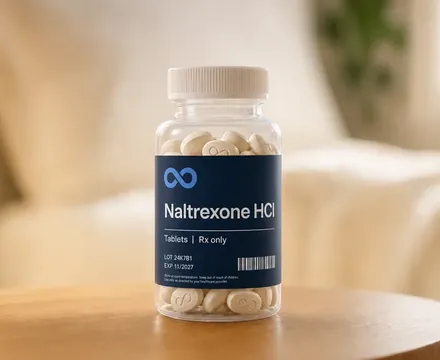
Naltrexone is an oral medication, typically a 50mg tablet, FDA approved for alcohol use disorder since 1994. It is an opioid antagonist that blocks the mu-opioid receptor, which dampens the reward signal alcohol produces in the brain.
In plain terms, the shift drink stops delivering the same payoff. The second and third drink lose a lot of their pull, which is exactly where most nights tend to get away from people.
Some people take it daily. Others take it about an hour before a night where drinking is likely, like a staff party or an industry night, as their physician advises.
It works for people aiming to cut back and for people aiming to stop entirely. Most notice a difference within 2-4 weeks.
Of course, your prescriber reviews your history first, including any current opioid use, since naltrexone and opioids do not mix. A physician-guided plan can include other options when they fit, such as a GLP-1 medication in some cases.
One safety note. If you drink heavily every day, do not stop suddenly without talking to a clinician, because alcohol withdrawal can be serious. Seek emergency care for confusion, seizures, or hallucinations.
At Choose Your Horizon, naltrexone is one part of an integrated solution that pairs medication with coaching and ongoing support, grounded in clinical, neurological, and behavioral science.
The Bottom Line on Restaurant Industry Drinking
Restaurant work does not create a drinking problem. It creates conditions where drinking is close at hand, socially expected, and very good at switching off a long night.
The data shows a modest elevation, and much of it traces back to the industry's younger workforce. Most of the drinking happens after close, often with the crew.
That means the fixes are practical. Keep the people, change the glass, protect your sleep, and get the tips out of your pocket before the bar starts a tab.
If you want more support than willpower alone, medication paired with coaching is one of the best-evidenced options available. And it can happen entirely on your schedule.
Frequently Asked Questions
Do restaurant workers drink more than other workers?
Federal data from 2008 to 2012 found heavy drinking higher in food service (11.8 percent) than across all full-time workers (8.7 percent). Mining and construction were higher still.
Much of the gap reflects the industry's younger workforce rather than the work itself.
Is having a shift drink a bad habit?
Not automatically. It becomes worth a closer look when one drink reliably turns into several, or when you cannot picture ending a shift without it.
How can I stop drinking after a late shift?
Change the moment, not your whole life. Keep the crew time, swap in a zero-proof drink, eat a real meal, and decide your limit before you clock out.
Can I take naltrexone if I work in a bar or restaurant?
Many people in the industry do. Your prescriber will review your health history and help you choose daily or as-needed dosing that fits your schedule.
Will my employer know if I get help online?
You sign up with Choose Your Horizon directly, so no employer referral is involved. Consultations happen online and medication ships in discreet packaging.
See whether naltrexone could fit your schedule and your goals. Take the online Alcohol Use Assessment privately, on your own time, in a few minutes.
A private, physician-led plan to drink less or quit.
Medication, coaching and support from home. A short assessment is the first step.
Start Assessment