



What You'll Discover:
- What the research actually shows about drinking in LGBTQ+ communities.
- Why scientists point to minority stress, not identity, as the driver.
- How bars and nightlife became community spaces, and why that complicates cutting back.
- How internalized stigma and loneliness connect to drinking to cope.
- What affirming, judgment-free care looks like in practice.
- Practical ways to build a social life that doesn't revolve around alcohol.
If you're LGBTQ+ and you've started wondering about your drinking, you're asking a fair question. You're also in very good company.
Researchers have spent decades studying alcohol in queer and trans communities. The findings are consistent enough to take seriously.
The most important finding is also the one that gets lost. Being lesbian, gay, bisexual, transgender, queer, or nonbinary doesn't cause drinking problems. The stress of living in a world that treats you as less than does.
That distinction changes how you see yourself. It also shapes what kind of help actually works.
What the Research Shows About LGBTQ+ Drinking
A 2024 review in Alcohol Research: Current Reviews, the journal of the National Institute on Alcohol Abuse and Alcoholism, put it plainly.
Sexual and gender minority people are at heightened risk for alcohol use, hazardous drinking, and alcohol use disorder compared with heterosexual and cisgender people.
The details vary by group. One analysis looked at 67,354 adults ages 18 to 49 in the 2015 and 2016 National Survey on Drug Use and Health, a federal survey conducted every year.
It found that bisexual women had significantly higher odds of every outcome measured at every age compared with heterosexual women. Those outcomes included heavy episodic drinking and alcohol or substance use disorder.
Gay and lesbian adults in the same study had higher odds on nearly all outcomes at ages 18 to 25, but not consistently at older ages. Bisexual men differed from heterosexual men only at ages 35 to 49, and only on some measures.
So the picture isn't uniform. Women, and bisexual women in particular, tend to show the widest gaps.
The 2024 review adds a trend worth knowing. Drinking has declined among young people overall, but gaps based on sexual orientation have held steady and have widened for sexual minority girls and women.
Research on transgender and nonbinary people is thinner. Still, the review describes several large studies in which transgender adults were more likely than cisgender adults to have an alcohol use disorder diagnosis.
None of this describes you as an individual. Plenty of LGBTQ+ people drink lightly or not at all. These are population patterns, and they point to a cause that sits outside the person.
Minority Stress Is the Driver, Not Identity
Researchers use the term minority stress to describe the extra, ongoing strain of belonging to a group that faces prejudice. The 2024 review builds on this idea and looks at stress working on three levels:
- Structural: laws, policies, and institutions that treat LGBTQ+ people unequally.
- Interpersonal: rejection, harassment, misgendering, and discrimination from other people.
- Internal: negative messages a person absorbs about themselves, plus the constant work of deciding when it's safe to be out.
The review describes these drinking gaps as health inequities rooted in historical and societal systems of oppression. Put simply, the gap exists because of how LGBTQ+ people are treated.
That's actually hopeful. A gap created by treatment can be narrowed by better treatment, in every sense of the word.
Stress shapes drinking for reasons rooted in clinical, neurological, and behavioral science. Alcohol takes the edge off stress and anxiety in the short term, and the brain learns that pairing fast.
Over time, the drink can stop being something you enjoy and start being the way you get through. Our guide on how to stop using alcohol as self-medication explains how that loop forms and how to loosen it.
Internalized Stigma, Loneliness, and Drinking to Cope
Some of the most damaging stress happens quietly. Researchers call it internalized stigma, or internalized heterosexism, when a person has absorbed negative messages about being LGBTQ+ and turned them inward.
One study looked at 187 men who have sex with men and who were dealing with problem drinking. It found that internalized heterosexism was linked to heavier drinking, more alcohol problems, and more psychological distress.
Drinking to cope was the pathway that connected internalized stigma to every outcome the researchers measured. Loneliness and community participation showed up as pathways for alcohol problems too.
The study mostly captured a single moment in time, so it can't prove cause and effect. Still, it points to something useful. The reasons behind drinking matter as much as the amount, and both coping skills and loneliness can change.
Loneliness makes sense here. If you can't be fully yourself with family, coworkers, or old friends, isolation can build even when your calendar looks full.
If that sounds familiar, our article on alcohol and loneliness covers why drinking tends to deepen isolation instead of relieving it.
Signs Drinking Has Shifted From Social to Coping
Drinking with friends on a Saturday and drinking to get through a Tuesday can look the same from the outside. They feel very different from the inside.
A few signs suggest alcohol has taken on a coping role. You reach for a drink after a hard conversation about your identity. You drink before events so you can feel at ease being seen. You drink alone more than you used to.
Other signs are quieter. You need a few drinks before you feel like yourself at a party. You feel low or anxious the day after, then drink again to settle that feeling.
None of these signs means something is wrong with you. They mean alcohol is doing a job that deserves a better tool. Noticing that is the first real step.
Bars and Nightlife as Community Spaces
Any honest conversation about LGBTQ+ drinking has to include bars. For generations, gay bars were among the only places queer and trans people could meet openly, find each other, organize, and feel safe.
The 2024 review makes the same point. Because of historic and systemic discrimination, safe and affirming spaces for LGBTQ+ people have been scarce, and LGBTQ+ bars were often one of the few places to connect and resist oppression.
Those spaces frequently involved alcohol. The review also notes that alcohol companies have targeted LGBTQ+ communities with marketing, which shapes what feels normal on a night out.
That history makes cutting back socially complicated. Stepping away from the bar can feel like stepping away from your people, or even like stepping back toward the isolation you worked hard to escape.
The good news is that you don't have to give up community to change your drinking. The goal is to make sure alcohol isn't the price of admission.
Many people keep going out and simply change what's in the glass, or how many rounds they have. Our guide on how to socialize without alcohol has practical ideas that work in any crowd.
Why Affirming, Judgment-Free Care Matters
Many LGBTQ+ people have had at least one bad experience in a medical setting. Being misgendered, lectured, or treated as a curiosity teaches you to avoid care, and that avoidance can delay help for years.
A 2024 study interviewed 23 LGBTQ+ people with lived experience of substance use about treatment. Participants described bullying, misgendering, and even denial of services in some settings.
The authors concluded that LGBTQ+ affirming substance use services remain limited. The same participants named what helped, including peer community, staff who advocated for them, and openly LGBTQ+ staff.
Their recommendations were practical. They included non-discrimination policies, routine pronoun sharing, and regular staff training.
There's also evidence that affirmation itself helps. The 2024 review notes that affirming approaches, such as affirming cognitive behavioral therapy and affirming counseling, show some efficacy in reducing drinking.
Those results came from studies of young sexual minority men and sexual minority women.
The review adds that access to gender-affirming medical care appears protective against heavy drinking and alcohol use disorder in transgender and gender-diverse people. Feeling seen is part of good care.
So affirming care isn't a special extra. It's the baseline that lets everything else work. You can't do honest work on your drinking with someone you feel you have to hide from.
The Pressure vs What Affirming Support Looks Like
Here's how common stressors line up with the kind of support that actually helps.
| The pressure | What affirming support looks like |
|---|---|
| Discrimination, rejection, or harassment | A clinician who treats stigma as a real stressor, not a personal failing |
| Internalized stigma and shame | Care that separates who you are from the habit you're working on |
| A social life built around bars | Support for moderation or alcohol-free nights without leaving your community |
| Fear of being misgendered or judged | Private, respectful care where you share only what you choose |
| Loneliness or distance from family | Coaching and connection that help you build support beyond the bar |
Practical Steps That Respect Your Life
Changing your drinking doesn't require a dramatic announcement or a full reinvention. Small, specific moves tend to stick better.
Track the stress, not just the drinks. For two weeks, note when you drink and what happened beforehand. Many people spot a pattern, like a hard call with family or a night of feeling invisible.
Plan your nights out. Decide your number before you arrive and alternate with water or alcohol-free drinks. Most bartenders can make an alcohol-free drink that looks like everything else on the bar.
Widen where community happens. Look for alcohol-free LGBTQ+ meetups, sports leagues, book clubs, hiking groups, or events at a local LGBTQ+ community center. Daytime gatherings tend to center less on drinking.
Find one person who gets it. A friend who also wants to drink less makes nights out easier. So does a therapist or coach who understands minority stress.
Be careful with sudden stops. If you've been drinking heavily every day, quitting abruptly can bring on withdrawal. Talk with a clinician first, and get emergency care for shaking, confusion, hallucinations, or seizures.
If you're in crisis or thinking about harming yourself, call or text 988 to reach the Suicide and Crisis Lifeline.
How Choose Your Horizon Can Help
Choose Your Horizon offers alcohol care that's 100% online, discreet, and judgment-free. You can start from home, on your own schedule, without a waiting room or a front desk.
If privacy matters to you, our guide to private alcohol treatment explains how discreet, at-home care works.
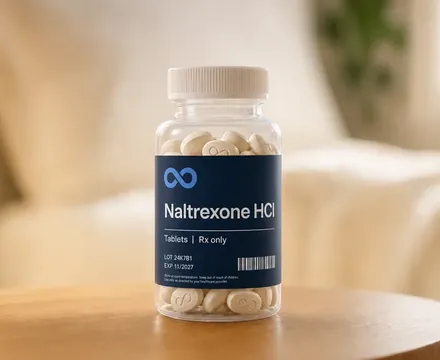
Our integrated solution combines naltrexone with physician-guided care and coaching support, grounded in clinical, neurological, and behavioral science. Naltrexone is an FDA-approved medication taken as a daily 50mg tablet.
It blocks the opioid receptors involved in alcohol's rewarding effects. In plain terms, drinking stops feeling as rewarding, so cravings ease over time.
You also set the goal. Some people want to quit. Others want to drink less and keep going out with friends. Both are valid, and naltrexone supports either one.
Of course, medication is one tool, not the whole answer. The stress that drives drinking is real, and coaching can help you build other ways to handle it, especially when the stress comes from the world around you.
Moving Forward on Your Own Terms
Higher rates of heavy drinking in LGBTQ+ communities are well documented, and researchers increasingly agree on why. Minority stress, internalized stigma, loneliness, and a social history built around bars all play a role. Your identity doesn't.
That means change is possible without giving up who you are or where you belong. It starts with care that treats you with respect and a plan that fits your life.
Reaching out about your drinking isn't a sign that something is wrong with you. It's a sign you're paying attention to your health, and that deserves support.
Frequently Asked Questions
Do LGBTQ+ people drink more than straight people?
On average, research shows higher rates of hazardous drinking and alcohol use disorder in LGBTQ+ communities, especially among bisexual women. The gap varies by group and age, and many LGBTQ+ people drink lightly or not at all.
What is minority stress?
Minority stress is the extra, ongoing strain that comes from facing prejudice, rejection, and stigma because of who you are. Research links it to higher rates of heavy drinking.
Is being LGBTQ+ a risk factor for drinking problems?
Being LGBTQ+ isn't the risk. The risk comes from discrimination, stigma, and the stress they create, along with social settings that often center on alcohol.
Can I cut back without giving up the bar scene?
Yes. Many people keep going out and change their approach, such as setting a drink limit, alternating with alcohol-free drinks, or adding plans that don't revolve around alcohol.
What should LGBTQ+ affirming alcohol care include?
Look for respectful language, correct names and pronouns, privacy, and clinicians who recognize stigma as a real stressor. You should never have to hide who you are to get care.
Is online alcohol treatment private?
With Choose Your Horizon, consultations happen online and medication ships in discreet packaging. You decide what to share and when.
Take the next step on your own terms. Take the Alcohol Use Assessment to find out privately whether naltrexone and Choose Your Horizon's judgment-free care are a good fit for you.
A private, physician-led plan to drink less or quit.
Medication, coaching and support from home. A short assessment is the first step.
Start Assessment