A 2 minute assessment to get a personalized mental health or alcohol recovery plan.

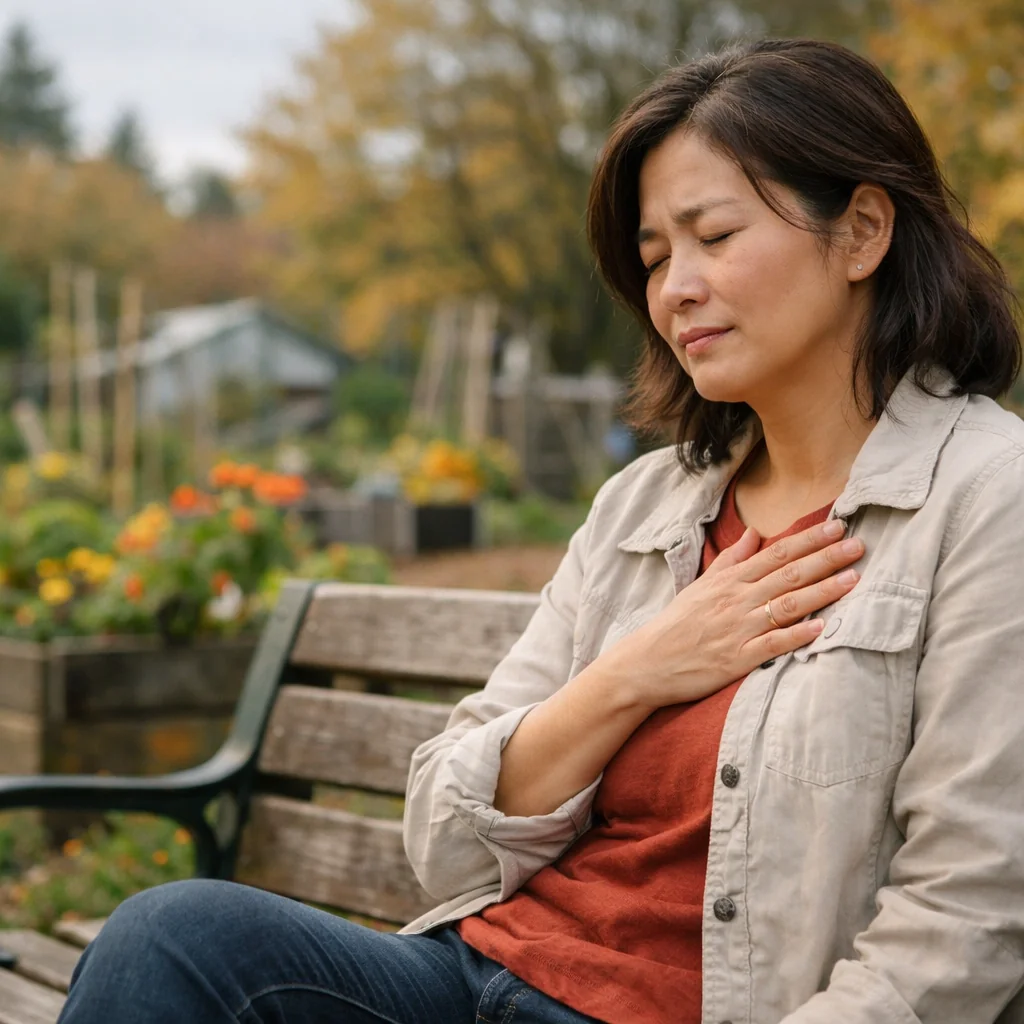
A single big night of drinking can leave a perfectly healthy heart fluttering or racing the next day, even when nothing is wrong with it.
What You'll Discover:
• What holiday heart syndrome is and why a normal heart can do this.
• How binge drinking sets off a fast or irregular heartbeat.
• The usual timing, from a few hours to a day and a half later.
• The red-flag symptoms that mean you should get urgent care.
• How avoiding binges and cutting back keeps it from coming back.
You wake up the morning after a party or a long holiday weekend and your heart is doing something strange. It races, flutters, or skips, and you have never felt that before.
For a lot of people, that is holiday heart syndrome. It is a fast or irregular heartbeat that shows up after a bout of heavy drinking, often in someone with no heart problems at all.
The name sounds quaint, but the feeling is unsettling. The good news is that it usually settles on its own, and it responds well to the one change that caused it.
This is a clear case where cutting back actually changes what your heart does. Skip the binge and the trigger goes away with it.
What Holiday Heart Syndrome Actually Is
Holiday heart syndrome is the term for an abnormal heart rhythm that follows a session of heavy drinking. The most common rhythm involved is atrial fibrillation, often shortened to AFib.
Atrial fibrillation means the upper chambers of your heart, the atria, quiver instead of beating in a steady, organized way. That makes your pulse feel fast, irregular, or both.
A cardiologist named Philip Ettinger coined the term in 1978 after noticing a pattern. People kept showing up with these rhythm problems around weekends and holidays, right after they had been drinking more than usual.
The part that surprises people is who it hits. You do not need a heart condition or a history of heart trouble to get it. According to Cleveland Clinic, you do not even need to be a heavy drinker, since one heavy session can be enough.
A peer-reviewed literature review on holiday heart syndrome describes it as atrial fibrillation and other fast rhythms that follow binge drinking in people without known cardiac disease. That last part is what makes it its own thing.
So this is not the same as having a chronic heart rhythm disorder. It is a healthy heart reacting to a specific, temporary trigger.
Why a Binge Can Set Off Your Heart
The trigger here is a binge, not a single glass of wine with dinner. The amount matters, and there is a clear line for what counts as a binge.
The National Institute on Alcohol Abuse and Alcoholism defines binge drinking as the pattern that brings your blood alcohol to 0.08 percent. That is roughly five drinks for men or four for women in about two hours.
When you drink that much that fast, alcohol changes how the electrical signals in your heart fire. It can shorten the recovery time between beats and make the atria more likely to slip into that quivering pattern.
There is a chemistry piece too. Heavy drinking ramps up stress hormones like adrenaline, which speed the heart and make it more excitable.
Dehydration and lost electrolytes add to it. A big night often means less water and, if there is vomiting, low potassium and magnesium, both of which the heart depends on to beat smoothly.
The literature review points to several overlapping mechanisms at once, including these electrical changes and stress on the heart muscle. They stack up during and right after a heavy session, which is when the rhythm is most likely to go off.
This is also why holiday heart can feel so out of nowhere. The same body that handles a drink or two without issue can react sharply to a flood of alcohol in a short window.
How Long After a Binge It Shows Up
Timing is one of the most useful things to understand here. Holiday heart does not usually hit while you are still out drinking. It tends to arrive later.
Many people feel it the next morning or even the following evening. The common window runs from about 12 hours to 36 hours after the heavy drinking, when alcohol is leaving your system and your body is recovering.
Some changes start earlier. The American Heart Association describes a 2024 study of young adults planning a night of heavy drinking, where heartbeat changes peaked around four hours into the session.
In that same report, about 5 percent of the drinkers had some kind of heartbeat irregularity within 48 hours. That helps explain why an episode can show up a full day or more after the last drink.
The reassuring side is how it tends to end. The literature review notes that in many cases the rhythm corrects itself within about 24 hours once a person stops drinking.
So for most people this is a passing event, not a permanent one. Your heart slips out of rhythm, then finds its way back as your body clears the alcohol and rehydrates.
What Holiday Heart Feels Like
The signature symptom is palpitations. That is the feeling of your heart pounding, fluttering, racing, or skipping in a way you can actually notice.
According to Cleveland Clinic, palpitations are the most common reason people with holiday heart come in. The beat feels fast or irregular, and it can be hard to ignore once you tune into it.
Other symptoms often come along for the ride. You might feel short of breath, lightheaded, unusually tired, or weak, especially if your heart has been racing for a while.
Some of this overlaps with a plain hangover, which is part of why people miss it. A pounding heart can get written off as dehydration or poor sleep when a rhythm change is actually driving it.
If you want the bigger picture on how drinking speeds things up, we cover it in our guide to whether alcohol increases your heart rate. Holiday heart is the sharper, rhythm-level version of that effect.
The key thing to know is that the racing or fluttering itself is the main event. For most people it comes, lingers for a stretch, and then fades.
Holiday Heart vs Ongoing Atrial Fibrillation
It helps to see how a one-off holiday heart episode differs from ongoing atrial fibrillation, which is a chronic condition that needs long-term care. They can feel similar in the moment but they are not the same thing.
The line between them can blur over time. The American Heart Association notes that repeated heavy drinking can make AFib more frequent and longer lasting, so a once-in-a-while event can turn into a recurring one.
That is the real reason to take an episode seriously even when it passes. We go deeper into that long-term link in our article on alcohol and atrial fibrillation.
A single episode is a signal, not a sentence. It is your heart telling you the binge was too much, and it is worth listening to.
When to Get Urgent Care
Most holiday heart episodes settle on their own, but some symptoms mean you should not wait it out at home. These are the ones that need prompt medical attention.
Get urgent or emergency care if you have chest pain or pressure along with the palpitations. Chest pain is never something to ride out on your own.
Seek help right away if you faint, nearly faint, or feel severely dizzy. That can mean your heart is not pumping enough blood while it is out of rhythm.
Do not wait if the racing or irregular beat is sustained and does not let up, or if you have severe shortness of breath. A rhythm that will not break on its own needs to be checked.
When in doubt, treat new chest pain, fainting, or a heartbeat that will not slow as an emergency. It is always better to be evaluated and reassured than to guess at home.
This article is educational and not a substitute for medical advice. If you have repeated episodes or any underlying heart condition, talk with a clinician about what is safe for you.
How Cutting Back Prevents It
Here is the encouraging part. Holiday heart has one main trigger, and that trigger is something you can change.
Because binge drinking is what sets it off, avoiding binges is the most direct way to prevent it. Fewer heavy nights means fewer chances for your heart to slip out of rhythm.
Cutting back helps your heart in other ways too. The American Heart Association points out that drinking raises blood pressure in the near term, and high blood pressure is its own strain on the heart.
If that connection interests you, we break it down in our piece on whether alcohol affects your blood pressure. Steadier blood pressure is one more reason cutting back pays off quickly.
You do not have to quit entirely to lower your risk. Spacing drinks out, drinking water alongside them, and skipping the heavy nights all reduce how hard you push your heart at once.
The wider payoff is real and tends to arrive fast. The benefits of drinking less alcohol show up across sleep, energy, blood pressure, and heart rhythm, which makes the change easier to keep.
For many people, the hardest part is not knowing the risk. It is stopping after the first drink or two when the night is rolling and one more feels automatic.
Where Naltrexone Can Fit
If holding back during a big night is the part that trips you up, naltrexone is one option worth knowing about. At Choose Your Horizon it is offered as an oral medication, taken as a 50mg tablet.
Naltrexone works by reducing the reward and craving that can turn one drink into five. It softens the pull that makes a binge feel like it has its own momentum.
By easing that pull, it makes it easier to stop after a drink or two, which is exactly the pattern that keeps holiday heart from getting started. The trigger never reaches the level that sets your heart off.
It works alongside the habits above, not instead of them. The medication lowers the craving while you build a routine that protects your heart.
This is part of an integrated solution that combines naltrexone with coaching and physician-guided care, grounded in clinical, neurological, and behavioral science. The goal is to make fewer heavy nights feel doable instead of a fight with willpower.
For someone who wants to keep enjoying social occasions without the next-morning heart scare, that combination can be what finally makes moderation stick.
A Steadier Heart Is Within Reach
Holiday heart syndrome is your heart reacting to a binge, usually with a fast or irregular beat that shows up 12 to 36 hours later and often clears on its own within a day.
You do not need a heart condition to get it, and you do not need to panic when it passes quickly. What you do need is to take it as a signal that the heavy night was too much for your heart to handle smoothly.
Most episodes resolve, but chest pain, fainting, or a racing beat that will not stop are reasons to get urgent care right away. When something feels wrong, get checked.
The best prevention is the simplest one. Avoid binges, cut back where you can, and your heart loses its trigger.
You do not have to hit a low point to deserve support, and you get to set your own goals. If stopping after one or two is the hard part, help is available.
Frequently Asked Questions
Is holiday heart syndrome dangerous?
For most people it passes on its own within about a day. It becomes dangerous if it comes with chest pain, fainting, severe shortness of breath, or a racing beat that will not stop, which all need urgent care.
How long does holiday heart syndrome last?
The irregular rhythm often corrects itself within about 24 hours once you stop drinking and rehydrate. Episodes usually show up 12 to 36 hours after a binge and fade as the alcohol clears.
Can you get holiday heart without a heart condition?
Yes. The defining feature is that it happens in people with no known heart disease. A single heavy drinking session can trigger it, even in someone who rarely drinks that much.
How much drinking causes holiday heart syndrome?
It is linked to binge drinking, which NIAAA defines as about five drinks for men or four for women in roughly two hours. The faster and heavier the drinking, the higher the risk.
Does holiday heart syndrome go away if I stop drinking?
Usually yes for a single episode. Avoiding binges is the most direct way to prevent it from coming back, since heavy drinking is the main trigger.
Should I go to the ER for heart palpitations after drinking?
Go right away if palpitations come with chest pain, fainting, or severe breathlessness, or if the irregular beat will not stop. If symptoms are mild and settle quickly, follow up with a clinician.
If big nights are where things get away from you, you can take an online Alcohol Use Assessment with Choose Your Horizon to see whether naltrexone could be a good fit for you.