A 2 minute assessment to get a personalized mental health or alcohol recovery plan.

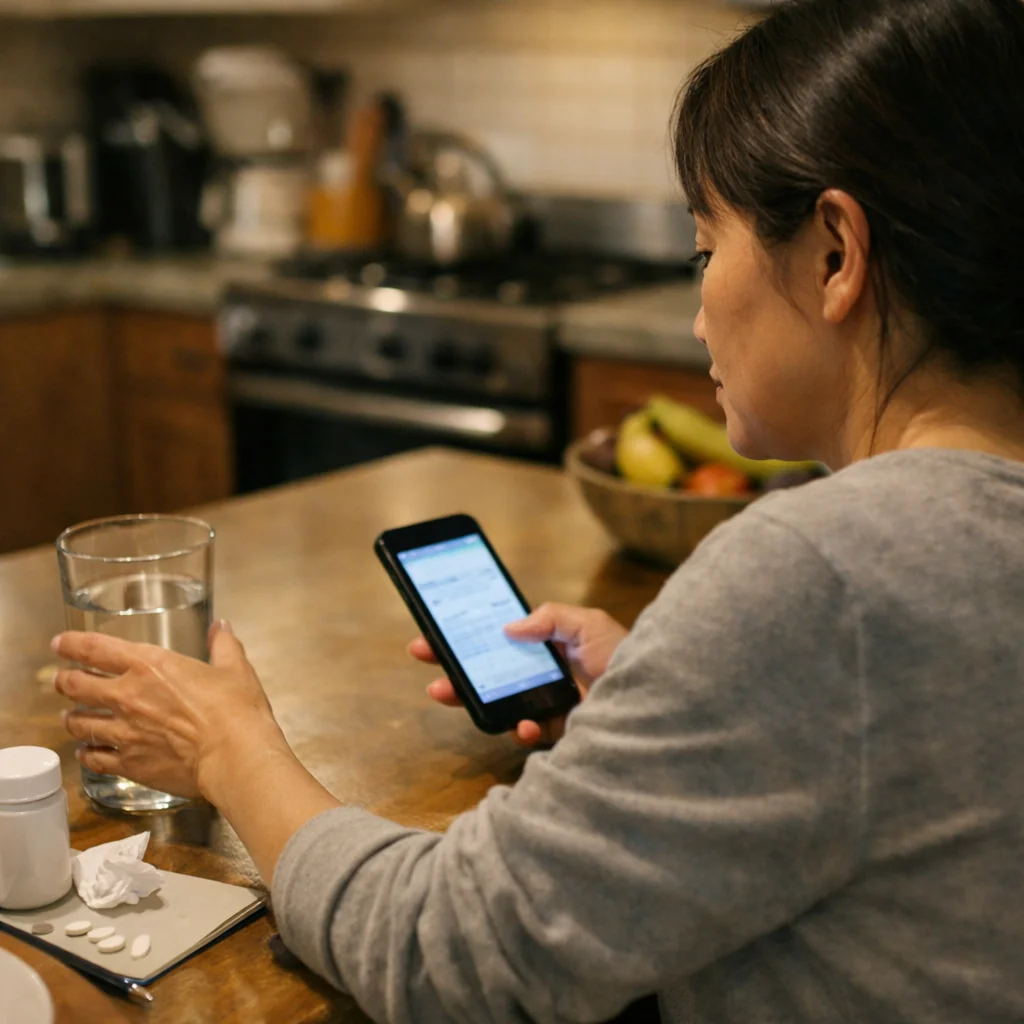
A slip is information about what to adjust, not a verdict on you. What you do in the next few hours and days matters far more than the drink itself.
What You'll Discover:
• Why a slip is data, not failure, and what the research says about that.
• The immediate, practical steps to take right now.
• A safety warning about trying to catch up, plus medical red flags.
• How to read what the slip is telling you and adjust.
• Where naltrexone fits as you move forward.
If you drank after working to stop or cut back, and you are sitting in that heavy mix of guilt and frustration, start here. This is recoverable, and you have not undone everything.
What happens next is what counts. Not the slip, but your response to it. And the most useful response is calm, clear-eyed, and kind to yourself.
This is especially true if you have been here before. A repeat slip can feel like proof that change is impossible. It is not. It is a signal pointing at something to adjust, and this guide walks through how to read it.
A Slip Is Data, Not Failure
Begin with the reframe, because it changes everything that follows. One drink, or even one rough night, is a lapse. It is not a collapse, and it is not who you are.
The National Institute on Alcohol Abuse and Alcoholism is clear that a return to drinking is common and recoverable. Most people working on alcohol have at least one slip. It is part of the terrain, not a sign you are off the map.
Here is why the framing is not just feel-good talk. There is a well-studied trap called the abstinence violation effect.
The idea is simple and a little cruel. When you see drinking as all-or-nothing, one slip feels like total failure. That despair, the sense that you have already blown it, is exactly what pushes a single drink into a full return.
So the reframe is protective. If a slip is just data, you can stop, learn from it, and continue. If a slip is proof of failure, you are far more likely to keep drinking. The story you tell yourself in this moment shapes what happens next.
We go deeper into the biology of why this is so hard in our piece on why quitting alcohol is hard. The short version is that the difficulty is built into the brain, not into your character.
Right Now: The Immediate Steps
In the moment, keep it simple. You do not need a grand plan tonight. You need a few small, steadying actions.
• Stop where you are. The next drink is always the one most within your control.
• Get somewhere safe and avoid driving or any risky activity.
• Drink water and eat something if you can.
• Tell one person you trust, if you have someone. Saying it out loud breaks the secrecy that fuels the spiral.
That is genuinely enough for the first hour. You are not trying to fix the whole thing tonight. You are just closing the gap and getting safe.
Think of it like steadying yourself after a stumble. You do not analyze the fall mid-air. You find your footing first, and the analysis comes later when your head is clearer.
Resist the urge to make any big decisions about your worth or your future while you are still in the feeling. Those thoughts are loud right now and unreliable. They will quiet down.
The Catch-Up Trap and Medical Red Flags
This part is about safety, so it is worth reading closely. After a slip, two dangerous instincts can show up.
The first is the catch-up trap. The thinking goes, I already broke the streak, so I might as well really drink. This is the abstinence violation effect turning into action, and it is how one drink becomes a binge.
Keep the line clear in your mind. One drink is a slip. Six more is a genuine risk to your health.
So if you have slipped, the single most protective thing you can do is not try to catch up. The slip already happened. Drinking heavily on top of it only adds harm without undoing anything.
The second is ignoring real medical warning signs. If you have been drinking heavily for a while and then stop suddenly, withdrawal can become dangerous.
Seek emergency care for symptoms like shaking that will not stop, confusion, hallucinations, a racing heart, or seizures. These are not things to wait out.
This article is educational, not medical advice. When in doubt about withdrawal or any worrying symptom, contact a clinician or emergency services. Safety comes before any recovery goal.
Reflect and Adjust: What the Slip Is Telling You
Once you are steady, usually the next day, the slip becomes useful. Treated as data, it has something specific to teach you.
Ask plain questions without judgment. What was happening right before. Was it a particular place, person, feeling, or time of day. Were you tired, stressed, lonely, or celebrating.
Almost every slip has a trigger, and the trigger is the real target. The drink was the symptom. Naming the trigger turns a vague failure into a concrete thing you can plan around next time.
Then adjust one thing. Maybe it is avoiding a specific setting for now. Maybe it is having a plan for that 6pm stretch. Our guide to how to resist alcohol cravings has practical tools for the high-risk moments.
The NIAAA notes that continued follow-up with a provider helps people adjust the plan and keep moving forward. A slip is often the cue to refine your approach, not abandon it.
A Quick Reference for the Moment
Here is the whole thing distilled into what to do, what helps, and what to avoid right after a slip.
The pattern across the table is the same. Stay safe, stay kind, and treat the slip as a single data point you can learn from.
Be Careful With the Story You Tell Yourself
The hours after a slip are loud with self-talk, and most of it is not your friend. The mind reaches for sweeping verdicts. I always do this. I will never change. I might as well give up.
None of those are facts. They are the abstinence violation effect dressed up as wisdom. They feel true because they are intense, but intensity is not accuracy.
A more honest sentence is much smaller. I drank when I did not plan to, and now I am going to get safe and figure out why. That is the whole truth, and it leaves the door open.
This matters most for people who have slipped repeatedly. Each slip can feel like more evidence for the harsh story, when really it is just more evidence that the craving needs a different kind of help.
So treat the harsh narrator with suspicion. It has been wrong every previous time it told you the situation was hopeless, because you are here, still trying. That alone disproves it.
Speaking gently to yourself here is not soft. It is strategic. The kinder, smaller story is the one that actually keeps you moving forward instead of spiraling down.
Where Naltrexone Fits From Here
A slip is also a natural moment to ask whether your tools are strong enough. If you were relying mainly on willpower, the slip may be telling you the craving needs to be addressed more directly.
This is where naltrexone fits. It blocks the reward alcohol delivers, so over time the craving that led to the slip gets weaker rather than stronger. You can read more in our piece on whether naltrexone reduces alcohol cravings.
Here is the part that fits a slip especially well. With the medication on board, even a drink does not have to set you back, because the reward is blunted. A slip on naltrexone tends to be a smaller, less reinforcing event.
That is a different relationship with slips than the all-or-nothing model offers. Instead of every drink threatening the whole effort, drinking on the medication actually keeps weakening the loop.
The slip becomes part of the unlearning rather than a reset. That is a gentler, more forgiving way to move through this.
So if slips keep happening, that is not a reason to give up. It may simply be a sign that adding a tool which targets the craving directly would change the picture.
Frequently Asked Questions
Does one drink mean I have to start over?
No. One drink is a slip, not a reset of all your progress. The all-or-nothing belief that you have to start over is exactly what turns a single drink into a longer return to drinking.
What should I do right after I slip?
Stop where you are, get somewhere safe, hydrate, and avoid driving or big decisions. Tell someone you trust if you can. You do not need to solve everything tonight, just stay safe and steady.
Is it dangerous to stop drinking suddenly after a binge?
It can be. If you have been drinking heavily, withdrawal can be serious. Seek emergency care for symptoms like persistent shaking, confusion, hallucinations, a racing heart, or seizures.
Why do I keep relapsing even when I want to quit?
Repeated slips usually mean the craving itself has not been addressed, not that you lack willpower. The brain's reward loop keeps firing until something interrupts it, which is where a mechanism-based tool can help.
Can naltrexone help after a relapse?
Yes. Naltrexone blocks the reward from alcohol, so the craving fades over time and slips become less reinforcing. It targets the part of relapse that willpower alone often cannot reach.
Rebuild Your Footing in the First Few Days
The day after a slip, the goal is not to overhaul your life. It is to get one steady day under you, then another.
Sleep, water, and food do more than people expect. A slip often leaves you depleted, and a depleted body craves the quick fix of another drink. Tending the basics removes some of that pull before it starts.
Then reconnect with whatever support you had. A coach, a trusted friend, an online check-in. The slip thrives in isolation, and reconnecting is how you take its power back.
It also helps to look at the days leading up to the slip, not just the moment itself. Stress that built for a week, sleep that slipped, a hard conversation you avoided.
The trigger is often a chain of small things, not a single event. Seeing the whole chain helps you catch it earlier next time, before the final link.
None of this requires perfection. You are not trying to erase the slip. You are simply stacking small, steady choices until the ground feels solid again.
Slips Are Part of the Path, Not the End of It
It is worth holding onto a longer view. Almost no one changes their drinking in a clean, unbroken line. The path bends, doubles back, and bends again.
People who succeed are not the ones who never slip. They are the ones who slip and keep going, who treat each setback as information and adjust. That is not a consolation prize. It is the actual mechanism of lasting change.
So if you are judging your whole effort by this one moment, widen the lens. One slip inside months of effort is a footnote, not the headline. The headline is that you are still here, still working on it.
You Are Still Moving Forward
A slip is one of the most common experiences in changing your relationship with alcohol, and it is one of the most survivable. What defines your path is not whether you slipped, but what you do in the hours and days after.
Stay safe first. Skip the catch-up trap. Treat the slip as data, name the trigger, and adjust one thing. Then consider whether your tools are strong enough for the craving you are actually facing.
You have not failed, and you have not lost the ground you gained. You have learned something specific about what you are up against, which is exactly what lets you keep going.
Our guide to recovery milestones is a reminder that progress is rarely a straight line.
You do not need to label yourself or hit a low point to deserve support. If you want a path that targets the craving behind the slips, take an online Alcohol Use Assessment to see if naltrexone could be a good fit.