A 2 minute assessment to get a personalized mental health or alcohol recovery plan.

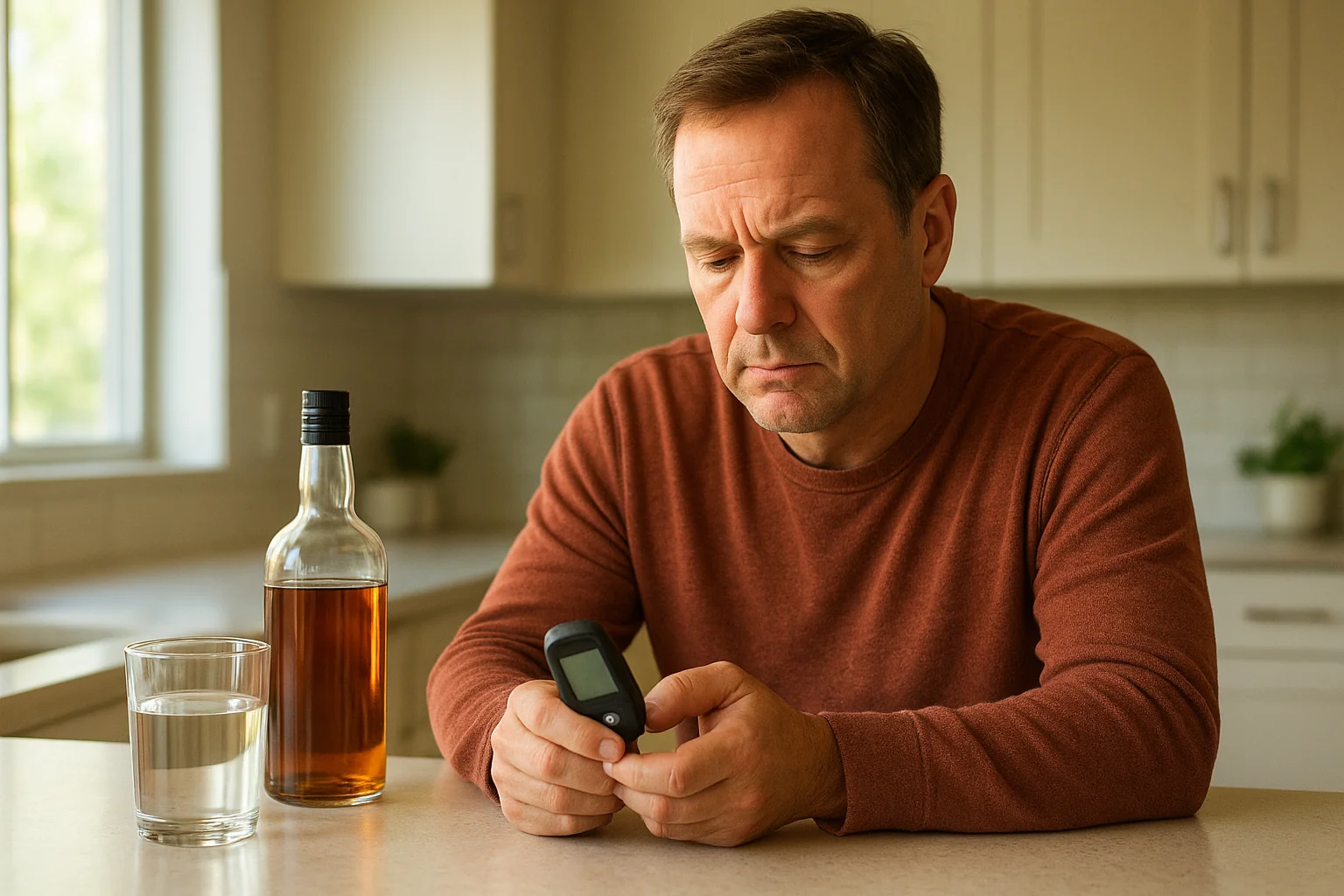
If your last fasting glucose test came back at 100-125 mg/dL, you've entered prediabetes territory. Your pancreas is already working overtime to manage blood sugar. What you drink matters more than you think.
Alcohol doesn't just provide empty calories.
As research on alcoholism and diabetes mellitus demonstrates, it actively disrupts how your body processes glucose, making it one of the fastest ways to accelerate the slide from normal blood sugar to full type 2 diabetes.
Yet most people diagnosed with prediabetes never connect their drinking habits to their lab results.
The good news: prediabetes is reversible. Reducing alcohol consumption is one of the most direct ways to restore insulin sensitivity and bring blood sugar back into healthy range.
How Alcohol Impairs Glucose Metabolism
Your liver does two critical jobs at the same time: it stores glucose (as glycogen) and it breaks down alcohol. When alcohol is present, your liver prioritizes elimination of the toxin over maintaining blood sugar balance.
When you drink, your liver halts gluconeogenesis (the process of releasing stored glucose into the bloodstream).
This causes an immediate dip in blood glucose. Your body panics and releases counter-regulatory hormones like adrenaline and cortisol to raise blood sugar back up.
The problem worsens with repeated drinking. Heavy alcohol consumption leads to fatty liver disease, which dramatically reduces the liver's ability to regulate glucose at all.
Fat accumulation inside liver cells impairs the liver's signaling pathways, making it harder to sense when glucose levels are dropping.
This creates a dangerous cycle. Your pancreas must pump out more insulin to handle the same amount of sugar because your cells have become insulin resistant. Over time, your beta cells (the ones that make insulin) become exhausted and burn out.
Alcohol and Insulin Resistance
Insulin resistance is the hallmark of prediabetes. Your muscle and fat cells stop responding to insulin signals, so glucose stays trapped in your bloodstream instead of entering cells for energy.
Alcohol directly causes insulin resistance through multiple mechanisms. First, alcohol damages mitochondria (the energy factories of your cells), making cells less able to take up glucose efficiently.
Research on alcohol's influence on intestinal nutrient absorption shows how chronic consumption impairs metabolic function broadly.
Second, alcohol triggers inflammation in adipose (fat) tissue, which releases inflammatory cytokines that interfere with insulin signaling.
A study on moderate alcohol consumption and insulin sensitivity found that moderate to heavy drinkers show significantly elevated fasting insulin levels compared to non-drinkers, even when their blood glucose appears normal.
This elevated insulin is a red flag that your cells are resisting insulin's effects.
The research is clear. Studies consistently show that people who drink more than one or two drinks per day have a 30-70% higher risk of developing prediabetes compared to moderate drinkers or abstainers.
This risk jumps even higher for binge drinkers.
The Blood Sugar Roller Coaster
One drink sets your blood sugar on a chaotic journey. Within 30 minutes of consuming alcohol on an empty stomach, your blood glucose can drop significantly as your liver deprioritizes glucose release.
This causes the lightheaded, shaky feeling some people experience when drinking.
If you eat while drinking, your liver is flooded with both glucose from food and alcohol to process.
The liver can only effectively handle one at a time. Glucose absorption from food gets delayed, then hits your bloodstream all at once as alcohol processing slows.
You experience a spike.
Three to five hours after drinking stops, your glucose can spike unexpectedly as your liver finally releases the glucose it's been storing.
Your pancreas overreacts and dumps insulin to bring it back down. You crash again, experiencing fatigue and renewed cravings for more food or more drinks.
This blood sugar chaos causes the next-day symptoms many drinkers experience. The fatigue, shakiness, irritability, and difficulty concentrating are partially due to blood sugar destabilization.
Your brain is starved for fuel while insulin drives glucose into cells.
Repeat this cycle several times per week (or daily for heavy drinkers), and your blood sugar regulation completely destabilizes. Your pancreas becomes exhausted.
Your cells become less responsive to insulin signals. Your fasting glucose creeps up. The small fluctuations in blood sugar during the hangover period become larger fluctuations.
You're genuinely becoming prediabetic from the repeated metabolic abuse.
The vicious cycle is that wild blood sugar swings drive cravings for more alcohol, more sugary foods, or more carbs to stabilize the crash. The very symptoms of alcohol-induced blood sugar chaos drive the behaviors that worsen it.
Prediabetes Risk in Moderate to Heavy Drinkers
Most people don't realize they're at risk until their doctor delivers the prediabetes diagnosis. By then, years of alcohol-driven insulin resistance have accumulated.
Moderate to heavy drinking (more than 2 drinks per day for men, more than 1 drink per day for women) is associated with increased prediabetes prevalence across numerous populations.
The effect appears strongest in people who already carry excess body weight or have a family history of diabetes.
The inflammation triggered by regular alcohol use accelerates insulin resistance. Alcohol also interferes with adiponectin secretion, a hormone that normally improves insulin sensitivity.
Without adequate adiponectin, your cells become increasingly resistant.
Drinking also disrupts sleep quality, and poor sleep is an independent risk factor for insulin resistance. The cycle compounds.
Alcohol worsens sleep, poor sleep increases insulin resistance, insulin resistance leads to weight gain, weight gain increases diabetes risk.
How Reducing Alcohol Reverses Prediabetes Markers
The encouraging part: these changes are reversible. Your body is remarkably good at recovering glucose control once you stop battering your metabolism with alcohol.
Studies show that reducing alcohol intake improves insulin sensitivity within weeks. In clinical trials, patients who cut back on drinking showed measurable improvements in fasting glucose and insulin levels.
These improvements appear within 4 weeks of reducing alcohol consumption.
This improvement happens even without major diet changes or weight loss (though those help too). Your liver begins to restore normal glucose metabolism. Your cells become more responsive to insulin. Your pancreas gets a chance to recover.
Research published in major medical journals shows that modest reductions in alcohol consumption (from heavy to moderate drinking) produce significant metabolic improvements.
Even cutting back from daily drinking to a few days per week triggers measurable changes in insulin sensitivity.
For prediabetics, this means you can actually reverse your diagnosis. Most people who reduce alcohol substantially, maintain reasonable weight, and exercise moderately can return to normal glucose tolerance within 6-12 months.
The Recovery Timeline
Your body starts recovering glucose control immediately once alcohol consumption decreases. Within the first week, your liver begins restoring normal gluconeogenesis.
Your blood sugar stops swinging as wildly. The extreme energy crashes and racing heart sensations related to blood sugar dysregulation begin improving.
Within 2-4 weeks, your fasting glucose and insulin levels show improvement if you're consistent with reduced drinking.
Your cells start responding more effectively to insulin signals. You notice you need fewer energy boosts throughout the day because your blood sugar is more stable.
By week 3-4, many people report that their afternoon energy crash has resolved. That 3 PM slump that used to hit hard? It's gone. This is not placebo. This is your stabilized blood sugar allowing consistent energy throughout the day.
Within 8-12 weeks, substantial improvements become visible on lab work. Many people see their fasting glucose drop by 10-15 mg/dL or more, enough to move them from prediabetic back to normal range.
Your HbA1c starts dropping as your average blood glucose improves.
The timeline varies based on how much you drank, your genetics, your weight, and other lifestyle factors.
Heavy drinkers who quit completely see faster improvements than moderate drinkers who simply cut back.
But even gradual reduction shows measurable benefit.
One study found that people who reduced alcohol from daily drinking to 1-2 times per week saw fasting glucose improvements of 15 mg/dL on average within 12 weeks.
Those who completely abstained saw even larger improvements. The point is that meaningful reduction produces meaningful improvement, even without extreme measures.
Practical Steps Forward
Start by tracking how much you're actually drinking. Many people underestimate their intake. Honest tracking is the first step to meaningful reduction.
Use a notebook or phone app to record every drink for one week without judgment. You're gathering data, not criticizing yourself.
Next, identify your trigger patterns. Track whether you drink more on certain days, at certain times, or with certain people.
Understanding triggers helps you develop a replacement strategy. Common triggers include stress after work, social situations, boredom, or difficulty managing emotions.
Replace some drinking occasions with non-alcoholic alternatives. This isn't about deprivation. It's about redirecting your routine so drinking happens less frequently.
Sparkling water with lime, alcohol-free beer, or herbal tea can replace wine at dinner.
Consider moving toward the 0-1 drink per day range if you're currently at 2-3+ drinks daily. This substantial reduction will begin shifting your metabolic recovery.
You don't have to cut to zero immediately. Even reducing by 50% produces measurable metabolic benefits.
Also address the other side of the equation. Improve sleep quality, move your body regularly, manage stress, and eat a diet higher in whole foods and lower in refined carbohydrates.
These compound alcohol reduction's metabolic benefits. Exercise is particularly powerful because it improves insulin sensitivity directly.
Eating balanced meals with protein, healthy fats, and complex carbohydrates helps stabilize blood sugar while reducing alcohol.
Avoid sugary foods and drinks, which create additional glucose spikes. Include plenty of leafy greens, which contain magnesium and other minerals that support glucose metabolism.
Testing Your Progress
Ask your doctor for a repeat fasting glucose test and HbA1c test 8-12 weeks after you've reduced your drinking.
These tests show how effectively your glucose metabolism has recovered. Bring your original test results so your doctor can compare side by side.
Fasting glucose below 100 mg/dL is normal. Between 100-125 is prediabetic. Above 125 indicates diabetes. Many people moving from prediabetic range see their fasting glucose drop 10-20 points within 8-12 weeks of reduced drinking.
HbA1c is particularly useful because it reflects your average blood glucose over 3 months, smoothing out day-to-day variation.
This is more reliable than a single fasting test because it captures the aggregate effect of your metabolism over weeks. A normal HbA1c is below 5.7%. A prediabetic HbA1c is typically 5.7-6.4%.
Moving below 5.7% confirms you've successfully reversed your prediabetes risk.
Some doctors also measure fasting insulin, C-peptide, or use advanced testing like continuous glucose monitors (CGMs) that show real-time glucose trends.
These more detailed tests can reveal insulin resistance even when fasting glucose appears normal.
Also pay attention to how you feel. Reduced prediabetes often brings clearer thinking, more energy, better sleep, and fewer afternoon energy crashes.
You'll notice you stop needing that 3 PM coffee or sugary snack to push through fatigue. These subjective improvements often appear before lab improvements become visible, so they're a good early sign your metabolic recovery is working.
When Professional Support Helps
If you've tried cutting back on your own without success, professional support can make the difference. Many people benefit from medications like naltrexone, which reduces alcohol's rewarding effects and makes it easier to drink less consistently.
Naltrexone works by blocking opioid receptors in the brain, reducing the pleasurable sensation associated with drinking.
This makes it easier to maintain reduced drinking without white-knuckling through constant cravings. The medication is FDA-approved and has been used safely since 1994.
Choose Your Horizon offers an online Alcohol Use Assessment that evaluates your situation and helps determine if medication could support your recovery.
Our clinical team works with people at every stage of reducing alcohol consumption. We've helped over 8,000 patients achieve meaningful reduction in their drinking.
With support, most people reduce their drinking substantially within weeks. Clinical data shows that 86% of patients drink less when using evidence-based approaches, with an average 75% reduction in heavy drinking days.
The combination of reduced alcohol, medication support when needed, and lifestyle changes creates the conditions where your metabolic recovery accelerates.
Many patients report improved blood sugar markers within 4 weeks of consistent reduction.
The Prediabetes Reversal Is Within Your Control
Prediabetes feels scary when you first hear the diagnosis. But unlike type 2 diabetes, which often requires ongoing medication, prediabetes is highly reversible through behavioral change.
And the biggest behavioral change you can make is addressing your alcohol consumption. If you're a moderate to heavy drinker with prediabetes, reducing alcohol is not optional. It's the single most direct path to restoring normal blood sugar.
The metabolic damage from alcohol happens gradually. The recovery happens gradually too. But it happens faster and more completely than most people expect, especially when you commit to consistent reduction.
Your pancreas can recover. Your cells can regain insulin sensitivity. Your blood sugar can stabilize. It all starts with the decision to drink less.
Take the next step toward metabolic recovery. Complete our online Alcohol Use Assessment to learn how reducing alcohol can help reverse your prediabetes markers and restore your health. Start your assessment