A 2 minute assessment to get a personalized mental health or alcohol recovery plan.

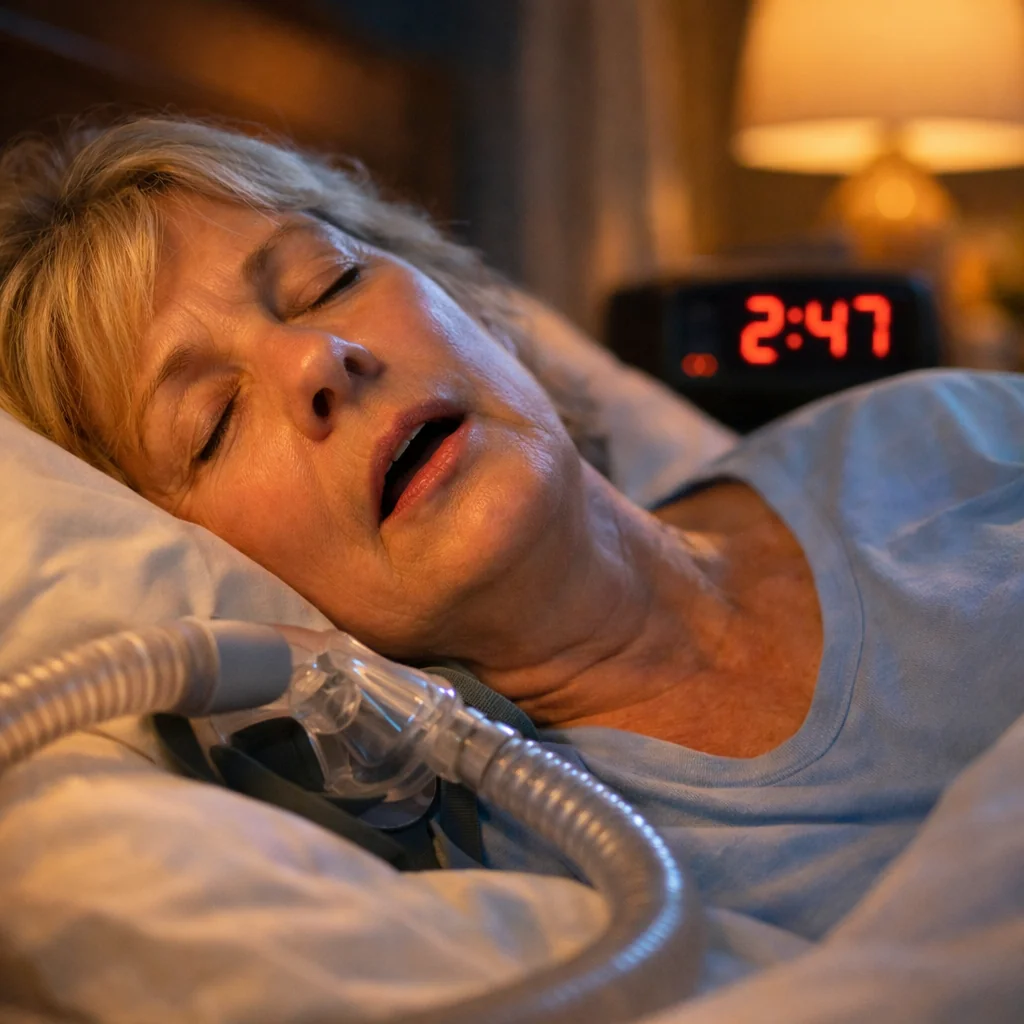
A nightcap can feel like it helps you drift off, but for your airway it often does the opposite, loosening the muscles that keep you breathing smoothly all night.
What You'll Discover:
• How alcohol relaxes the upper airway and worsens obstructive sleep apnea.
• Why drinking lowers your overnight oxygen levels.
• The reason a few drinks makes snoring louder.
• How alcohol fragments your sleep stages and steals deep rest.
• What tends to improve when you stop drinking before bed.
You fall asleep fast after a couple of drinks, then wake up at 3 a.m. feeling wired and dry. By morning you are dragging, even though you spent eight hours in bed.
That pattern is common, and alcohol is often a big part of it. The drink that seemed to help you nod off is the same drink quietly working against you a few hours later.
For anyone who already snores or has obstructive sleep apnea, an evening drink can make the night worse. It loosens the airway, lowers your oxygen, and chops your sleep into shallow pieces.
The good news is that this one is very responsive to change. Cut back on drinking close to bedtime and your airway, your oxygen, and your energy often respond within days.
How Alcohol Relaxes Your Upper Airway
Obstructive sleep apnea happens when the soft tissue at the back of your throat collapses during sleep and blocks airflow. The muscles around that airway are supposed to keep just enough tone overnight to let you breathe smoothly.
Alcohol is a sedative. It relaxes those muscles along with the rest of you, so the tissue that should stay firm goes slack instead.
The National Heart, Lung, and Blood Institute lists drinking as a risk factor for sleep apnea. It explains that alcohol relaxes the muscles of the mouth and throat, which can close the upper airway.
When that airway narrows or collapses, airflow stops for a few seconds at a time. Your brain senses the drop and nudges you toward a lighter stage of sleep to reopen the passage.
You may not remember any of it. But it happens over and over across the night, and each episode pulls you out of the deep sleep you actually need.
A pooled review of the research backs this up. A systematic review and meta-analysis found that people who drank had roughly double the odds of obstructive sleep apnea compared with people who did not.
The more relaxed the airway, the more often it gives way. That is why a single evening of drinking can turn light snoring into full obstructive events for some people.
The Overnight Oxygen Problem
Every time the airway closes, your breathing pauses and the oxygen level in your blood dips. Short, occasional dips are normal. Frequent, deeper dips are not, and they are part of what makes sleep apnea hard on the body.
Alcohol makes those dips worse in two ways. It relaxes the airway so the pauses happen more often, and it blunts the reflexes that would normally wake you to catch a breath.
With those reflexes dulled, each pause can run a little longer before your body forces a recovery breath. The result is lower oxygen for more of the night.
A clinical report describes how alcohol increases the frequency of obstructive episodes and deepens the drop in blood oxygen. The effect is strongest in the first hour or two of sleep, when alcohol levels are highest.
Lower overnight oxygen is part of why you can wake up with a headache, a racing heart, or a heavy fog that coffee does not fix. Your body spent the night working harder than it should have just to keep breathing.
Over time, those repeated dips also strain your heart and blood pressure. That is one reason sleep apnea is taken seriously even when the daytime tiredness feels manageable.
Why a Nightcap Makes Snoring Louder
Snoring is the sound of air squeezing past relaxed, vibrating tissue in a narrowed airway. The more relaxed the tissue, the more it vibrates, and the louder the sound.
Alcohol relaxes that tissue more than usual. So people who snore lightly when sober often snore loudly after drinking, sometimes loudly enough to wake a partner across the room.
Partners usually notice it first. It is one of the most common ways people connect their drinking to their sleep, often after years of assuming the two were unrelated.
Snoring is not just a nuisance. For many people it sits on the same spectrum as sleep apnea, and loud snoring after drinking can be an early sign that the airway is struggling.
If the snoring only shows up on nights you drink, that pattern is worth paying attention to. We cover the broader picture in our guide to sleeping and alcohol.
How Alcohol Breaks Up Your Sleep Stages
Healthy sleep moves through cycles of light sleep, deep slow-wave sleep, and REM sleep. You need all of them, in the right order, to wake up restored.
Alcohol scrambles that order. It front-loads your night with sedation and steals from the back half.
A review of alcohol and sleep disturbances explains the pattern. Drinking shortens the time it takes to fall asleep and boosts deep sleep early on, then suppresses REM and fragments the second half of the night as the alcohol wears off.
That is the 3 a.m. wake-up. The early sedation fades, your body rebounds, and the back half of your night turns shallow and broken.
You end up spending hours in bed without the restorative sleep you actually came for. The clock says eight hours, but your brain logged far less real rest.
If you have ever wondered why a few drinks knock you out so fast, we explain the chemistry in our article on why alcohol makes you sleepy.
Here is how a nightly drink pushes on each of the main drivers of sleep apnea and poor rest.
Why Evening Drinking Matters Most
Timing is a big part of this. Alcohol has its strongest effect on your airway and your sleep stages while it is still in your system.
That window is usually the first few hours after your last drink, which often overlaps with your first few hours of sleep.
A drink with dinner several hours before bed clears more before you fall asleep. A drink right before bed peaks exactly when your airway is most vulnerable.
That is why a late nightcap tends to do the most damage. It puts the highest alcohol level in your body at the very moment your airway is trying to settle.
This is also why people who shift their drinking earlier, or skip the last drink of the night, often notice a difference before they cut their total amount at all. We walk through the mechanics in our piece on how alcohol affects sleep.
What Improves When You Cut Back
The encouraging part is that the airway responds quickly. Drinking is a modifiable risk factor, which means changing it actually changes your nights.
When you stop drinking close to bedtime, your airway muscles keep more of their natural tone. There are fewer collapses and fewer breathing pauses.
Overnight oxygen stays steadier, so your heart and brain get the supply they need while you sleep. The snoring usually gets quieter, too.
Your sleep stages settle back into a normal rhythm. That means more REM, fewer 3 a.m. wake-ups, and more of the deep sleep that leaves you actually rested.
People often report the payoffs within a week or two. Steadier energy, clearer mornings, a calmer heart rate, and a partner who finally sleeps through the night.
More benefits of drinking less alcohol show up across mood, focus, and overall health, which tends to make the change easier to keep.
You do not have to quit entirely to feel this. Even shifting drinks earlier or trimming the last one or two can move the needle on your breathing and your rest.
Where Naltrexone Can Fit
If you want to drink less but find that evening drinks are hard to skip, naltrexone is one option worth knowing about. At Choose Your Horizon it is offered as an oral medication, taken as a 50mg tablet.
Naltrexone reduces the reward and craving that can make "just one more" feel automatic. It softens the pull that turns a single drink into three.
By easing that pull, naltrexone makes it easier to stop after one drink, or to skip the nightcap altogether. That is exactly the change your airway responds to.
It works alongside the habits above, not instead of them. The medication lowers the craving while you build the routine that protects your sleep.
For many people, that combination is what finally makes earlier nights and quieter sleep feel doable rather than like a constant fight with willpower.
Signs Your Drinking Is Affecting Your Breathing
You do not need a sleep lab to notice the connection. A few patterns tend to give it away, especially when they cluster on the nights you drink.
Watch for snoring that only shows up after drinking, or that gets noticeably louder. A partner who reports gasping, choking, or long pauses is a strong signal worth acting on.
Morning headaches, a dry mouth, and a heart that feels like it is pounding when you wake are also common. So is daytime sleepiness that no amount of coffee seems to touch.
If you notice these mostly on drinking nights, that is useful information. It points to a change you can test by simply moving your last drink earlier or skipping it.
None of this replaces a medical evaluation. If the symptoms are frequent or severe, a clinician can arrange a sleep study and rule out apnea that needs treatment on its own.
A Simple Plan to Test the Difference
You can run a small experiment on yourself over a week or two. The point is to feel the change, not to overhaul your life overnight.
Start by moving your last drink to three or four hours before bed. That alone gives your body time to clear more alcohol before your airway settles in for the night.
Next, try a few alcohol-free evenings and notice how you feel the next morning. Many people are surprised by how much steadier their energy is after just one dry night.
Keep a quick note of how you slept and how loud the snoring was, ideally with input from a partner. Patterns show up fast when you write them down.
If skipping or stopping early is the hard part, that is a sign craving is doing some of the driving. That is where extra support can make the difference between trying and sticking with it.
Frequently Asked Questions
Does alcohol cause sleep apnea or just make it worse?
Alcohol can do both. It worsens existing obstructive sleep apnea by relaxing the airway, and research links drinking to higher odds of developing it. Even people without a diagnosis can have obstructive events after drinking.
How long before bed should I stop drinking?
Earlier is better, and many people aim to finish drinking at least three to four hours before bed. The closer a drink is to bedtime, the more it affects your airway while you sleep.
Will quitting alcohol cure my sleep apnea?
Cutting back can meaningfully reduce the severity of apnea and snoring, but it is not always a complete cure. If you have ongoing symptoms, talk with a clinician about a sleep evaluation.
Why do I wake up at 3 a.m. after drinking?
As alcohol wears off in the second half of the night, your sleep rebounds and becomes lighter and more broken. That rebound, plus airway disruption, often shows up as an early-morning wake-up.
Does drinking less really improve my oxygen overnight?
Yes. With less alcohol in your system, your airway stays more open and breathing pauses are shorter. Overnight oxygen levels tend to stay steadier and the dips become less severe.
A Calmer, Clearer Night Is Within Reach
Alcohol and sleep apnea feed each other. Drinking relaxes the airway, lowers overnight oxygen, turns up snoring, and breaks your sleep into shallow pieces, with evening drinks doing the most harm.
The flip side is real and fast. Cut back on drinking before bed and your airway holds open better, your oxygen steadies, the snoring quiets, and your mornings get clearer.
You do not need to hit a low point to deserve more rest. You just need a change that fits your life, on goals you set for yourself.
If evening drinks are the hard part, support can help. You can take an online Alcohol Use Assessment with Choose Your Horizon to see whether naltrexone could be a good fit for you.