A 2 minute assessment to get a personalized mental health or alcohol recovery plan.


You promised yourself you would skip tonight, then poured one anyway. That is not weakness. There is a way out that does not run on willpower.
What You'll Discover:
• Why drinking against your own goals is so common, and so human.
• The brain science of reward-now versus the-life-you-want-later.
• How shame fuels the loop, and why self-compassion breaks it.
• A simple plan that holds when willpower runs low.
• How naltrexone changes the math so future-you wins more often.
You set the alarm for a morning workout. You told yourself two drinks, tops, because of the early meeting. You meant it.
Then the evening arrived. Somewhere between the first pour and the third, the plan quietly dissolved. Morning came with a skipped workout and a familiar sting.
If that cycle sounds like you, hear this first. You are not lazy, weak, or broken. You are running into one of the best-documented quirks of the human brain.
And once you understand the quirk, you can stop fighting yourself and start working with how your mind actually operates.
That shift, from fighting yourself to understanding yourself, is where real change tends to start. It is also a good deal kinder, which matters more than most people expect.
What Self-Sabotage With Alcohol Really Is
Self-sabotage is when your actions in the moment work against something you genuinely want. The goal is real. The wanting is real. The follow-through just keeps slipping.
With alcohol it has a signature look. A promise made in the calm of morning, undone in the pull of evening. A future self you keep betting against without meaning to.
It feels like a contradiction, as if you must not really want the goal. But that is not what is happening.
You want both things. You want the workout and the wine, the clear morning and the easy exit tonight. The trouble is that those two wants live on different timelines.
Understanding that is oddly freeing. The problem was never that you did not care enough. It is a timing mismatch, and timing is something you can plan around.
The Promises We Break Most
It helps to name the specific promises, because seeing the pattern is the first step to changing it. A few show up over and over.
The workout. You lay out the clothes and set the alarm, then a few drinks turn a 6am run into a snooze and a shrug.
The early meeting. You know you need to be sharp, and you tell yourself you will stop early. The stopping early is the part that slips.
The dry day. You picked tonight to not drink, then the picking somehow gets renegotiated once the evening is actually here.
The money. You meant to save it, and the tab quietly spends what the plan was protecting.
None of these mean you lack goals. They mean the goals are on tomorrow's timeline, and the drink is on tonight's. That gap is exactly what the next section is about.
Why the Brain Picks Reward Now Over the Goal Later
Your brain is wired to value what it can have now over what it has to wait for. Scientists call this delay discounting. A reward in your hand feels bigger than a better reward down the road.
A drink is the definition of a now-reward. It pays off within minutes. The early workout, the clear head, the promise kept, those all pay off later, so the brain marks them down.
Alcohol tilts the scale even further. Research on alcohol and impulsivity shows that drinking weakens the very self-control that would help you stop.
The same research finds that people who discount the future more steeply tend to drink more. So the first drink makes the second easier.
That is not because you are weak. It is because alcohol quietly turns down the brain system that weighs later against now.
Psychologists sometimes call this the gap between a cold state and a hot state. In the cold, calm morning, the goal is obvious and the choice is easy.
In the hot state of the evening, with a drink in front of you, the goal goes quiet and the urge gets loud. You are simply not the same decider in both moments.
The National Institute on Alcohol Abuse and Alcoholism describes this as part of a cycle that reshapes the brain's reward and control circuits over time. The more the loop runs, the more automatic it becomes.
None of that is a verdict on your character. It is a description of a mechanism, and mechanisms can be changed.
The Self-Sabotage Loop, and How Shame Feeds It
Here is the part that keeps the whole thing spinning. After you break a promise to yourself, you feel bad. And feeling bad is itself a trigger to drink.
Shame says you failed again, that you always do this. That story hurts, and alcohol is right there offering to numb the hurt it helped create.
So the loop closes on itself. You drink, break the promise, feel the shame, then drink to escape the shame. Each lap makes the next one feel more inevitable.
The way out is not a bigger hammer of willpower. It is stepping out of the shame half of the loop. That is where self-compassion comes in.
Why Self-Compassion Beats Willpower
This sounds backward, so let me be plain. Being kind to yourself after a slip makes you more likely to change, not less.
Shame drains the energy you need to try again. It shrinks your world down to how bad you feel, and the fastest exit from that feeling is another drink.
Self-compassion does the opposite. It lets you look at what happened without flinching, learn one thing from it, and get back to the plan tonight instead of next month.
This is not about letting yourself off the hook. It is about staying in the game.
In practice, self-compassion is concrete, not mushy. It sounds like a few plain sentences you can actually say to yourself.
One, this is hard and I am struggling right now. Two, plenty of people struggle with this, so I am not uniquely broken. Three, what is one small kind thing I can do next.
People who treat a slip as information, not identity, are the ones who come back. We dig into that in why the strict two-drink plan so often fails.
The Morning After a Slip
The morning after breaking a promise is where the whole loop gets decided. Handle it well and the cycle breaks. Handle it with shame and it feeds itself.
Start by dropping the word again. A single evening is not a life sentence, and the story that you always do this rarely survives a closer look.
Then get curious instead of critical. What was the real trigger. A hard day, a certain place, a particular person, an empty evening. Triggers are just information for tonight's plan.
Finally, do one small repair. Drink a glass of water, take a short walk, keep the next plan you made. Small actions rebuild the sense that you follow through.
None of this requires you to feel good about the slip. It just keeps the slip from recruiting the next one.
A Plan That Actually Holds
Willpower is a weak plan because it asks the drinking brain to out-argue itself at its weakest moment. A good plan does the deciding earlier, while you are calm.
Decide when sober. Choose the number of drinks, or zero, before the evening starts. A decision made this morning is far easier to keep than one made mid-pour.
Change the environment. Keep less alcohol in the house, and put something you actually like in the fridge. The less the urge fires, the less there is to resist.
Make it if-then. Try "if someone offers a second, then I switch to soda." Pre-loaded plans beat willpower because there is nothing left to decide in the moment.
Expect the romance. Part of the pull is the story alcohol tells about itself. If you notice you romanticize drinking, naming that story takes some of its power away.
Have a script for no. Decide now what you will say when a drink is pushed on you. A simple "I am good with this one, thanks" ends most of it before it starts.
If cutting back feels like a mountain, start smaller than you think you should. Our guide to starting to drink less breaks it into steps that do not rely on heroic self-control.
A Tool That Changes the Math
Even the best plan hits the same wall. In the moment, the now-reward of a drink is loud and the later-reward of your goal is quiet. Naltrexone helps by turning down the loud part.
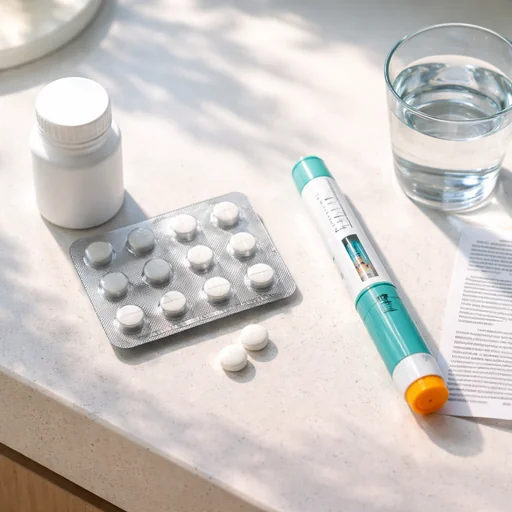
Naltrexone is an oral 50mg tablet that blocks the opioid receptors alcohol uses to create its reward. With those receptors blocked, drinking delivers less of a payoff, so the pull toward the next drink shrinks.
That quietly changes the math of delay discounting. When the now-reward is smaller, the later-reward of the workout and the clear morning finally gets a fair hearing.
It does not make the decision for you. It just softens the craving enough that the plan you made while sober can actually win.
That is a very different experience from grinding through cravings on willpower alone. You feel the pull get quieter, and the plan you already made stops being a fight.
Many people find that naltrexone noticeably reduces cravings within the first few weeks. Paired with self-compassion and a sober-made plan, that is an integrated solution.
At Choose Your Horizon, that combination is the whole idea, grounded in clinical, neurological, and behavioral science.
The Bigger Picture
You are not at war with yourself. You are one person with two timelines, trying to look out for the version of you that wakes up tomorrow.
Every plan kept, even a small one, is a vote for that future self. And every slip met with kindness instead of shame keeps you in a position to cast the next vote.
The goal is not a perfect record. It is a trend that points the right way, held together by tools that do not depend on being strong at 9pm on a hard day.
And the more often future-you wins, the less willpower the whole thing takes. Kept promises compound. Each one makes the next a little more automatic, until the plan stops feeling like a fight.
Frequently Asked Questions
Why do I drink even when I know I have something important tomorrow?
Your brain values immediate rewards more than future ones, and alcohol weakens the self-control that would help you wait. Knowing the goal is not the problem. The in-the-moment pull is, and that part can change.
Is self-sabotage a sign of a deeper problem?
Not necessarily. Often it is ordinary brain wiring plus a habit that has worn a groove. If it keeps happening despite real effort, that is a reason to add support, not proof that something is wrong with you.
Support is not a last resort, just a smarter set of tools.
Does willpower ever work for cutting back?
Willpower helps, but it is unreliable alone because alcohol weakens it right when you need it most. Plans made in advance, a changed environment, and craving support all work better than willpower by itself.
The aim is to lean on it less, not to summon more of it.
How does self-compassion actually help me drink less?
Shame after a slip is itself a trigger to drink, so it feeds the loop. Meeting a slip with kindness keeps you steady enough to return to your plan quickly instead of spiraling.
Can naltrexone help if my problem is breaking my own rules?
It can. Naltrexone lowers the reward from drinking, which shrinks the in-the-moment pull that overrides your plans. That makes the goals you set while sober easier to keep.
What if I slip after doing well for a while?
A slip after a good stretch is normal, and it does not erase your progress. Treat it as one data point, notice what triggered it, and return to your plan. The streak was never the point, the direction is.
Take the Next Step
Breaking a promise to yourself does not mean you lack discipline. It means you have been leaning on the one tool, willpower, that alcohol is best at defeating.
You are allowed to set that tool down. With a plan made in calm, a little self-kindness, and some craving support, future-you starts winning more often than not.
Take a quick, discreet online Alcohol Use Assessment to see if naltrexone could be a good fit for you.