A 2 minute assessment to get a personalized mental health or alcohol recovery plan.

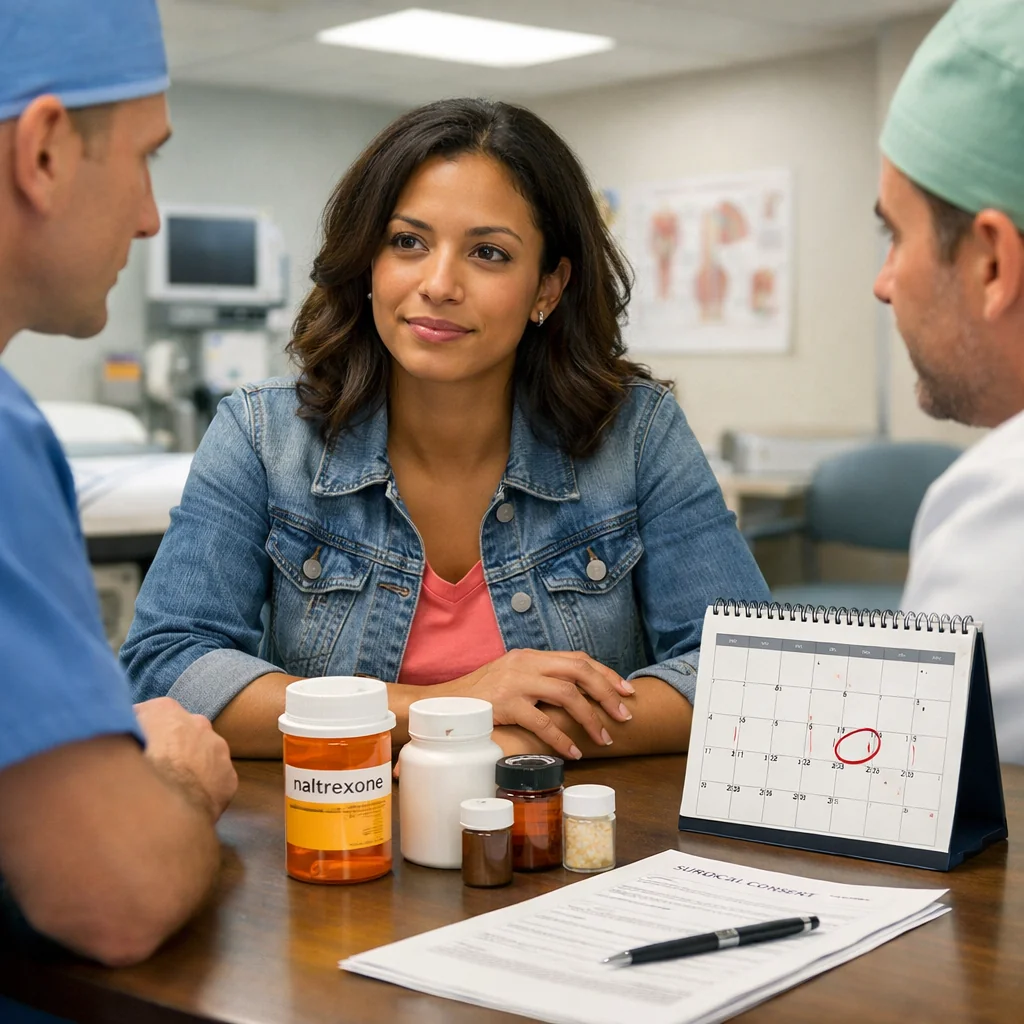
Oral naltrexone blocks opioid painkillers, so when you have surgery coming up you will usually stop it a few days ahead and tell both your surgeon and your anesthesiologist.
What You'll Discover:
• Why naltrexone and surgery need a plan ahead of time.
• How many days before a planned surgery to stop oral naltrexone.
• Who on your care team needs to know you take it.
• What changes when surgery is an emergency.
• When it is safe to restart naltrexone afterward.
If you take oral naltrexone to drink less or stay sober, a surgery date can bring up a lot of questions. The reassuring part is that surgeons and anesthesiologists manage this situation all the time.
The main idea is simple. Naltrexone blocks the same receptors that many strong pain medicines and parts of anesthesia rely on. So the timing of your last dose matters.
This guide walks through the steps, the timing, and what to do if surgery cannot wait. Your own surgical team will give you instructions for your specific case.
Why Naltrexone and Surgery Need a Plan
Naltrexone is an opioid antagonist. In plain terms, it sits on the opioid receptors in your brain and body and blocks them, which is also part of how naltrexone works to reduce alcohol cravings.
The catch is that surgery often uses opioid pain medicine. With naltrexone in your system, those painkillers may not work the way they should.
A peer-reviewed review of perioperative care for patients on naltrexone explains that the medication blocks the receptors opioid painkillers act on, so normal doses can fail to control pain.
That is the whole reason for stopping it ahead of time. It is not that naltrexone is dangerous during surgery. It is that it can make pain control much harder if it is still active.
There is a second wrinkle. If a provider pushes larger and larger opioid doses to get past the block, the risk of side effects like slowed breathing climbs. Planning ahead avoids that situation completely.
It also helps to know that not every procedure leans on opioids. Some surgeries are managed mostly with numbing medicine and non-opioid drugs, and in those cases the naltrexone question looks different.
That is exactly why the plan is built around your specific operation, not a blanket rule. The size of the surgery and the expected pain afterward shape what your team recommends.
How Far in Advance to Stop Oral Naltrexone
For planned surgery, the usual advice is to stop oral naltrexone so it clears your system first. Most clinical recommendations point to stopping it roughly 48 to 72 hours ahead.
A single 50mg tablet is mostly active for about a day, but the medication and its byproducts can linger longer. Giving it a 2 to 3 day window helps make sure the block has worn off before anesthesia.
The peer-reviewed literature on managing opioid-tolerant surgical patients describes holding oral naltrexone for about 72 hours before a planned procedure so opioid pain control can work normally.
Here is the part that matters most. Do not guess. Confirm the exact stop date with your surgeon and the prescriber who manages your naltrexone, because your dose, your health, and the procedure all factor in.
This is the same kind of timing care that comes up with other naltrexone drug interactions, where the goal is to keep two medications from working against each other.
One practical tip is to mark the stop date on a calendar as soon as your surgery is scheduled. It is easy to lose track of a 2 to 3 day window when there is a lot going on before a procedure.
If your surgery date moves, your stop date moves with it. A delay of even a day or two is worth a quick message to your prescriber so the timing stays right.
And if you take naltrexone as needed rather than daily, the same logic applies. Simply do not dose in the days leading up to surgery, and let your team know your usual pattern.
Tell Both Your Surgeon and Your Anesthesiologist
This is the step people most often skip, and it is the most important one. Naltrexone needs to be on your medication list, and both your surgeon and your anesthesiologist need to know.
The surgeon plans the procedure and your recovery. The anesthesiologist plans how you are sedated and how your pain is controlled. Both of those decisions depend on whether naltrexone is in your system.
You can keep it simple. Something like "I take naltrexone for alcohol use, here is my last dose date, and I want pain control planned around that" gives them exactly what they need.
The clinical guidance is clear that the whole care team should know the timing of your last naltrexone dose so the pain plan can be built correctly. Saying it out loud at pre-op is worth it.
If you are not sure whether naltrexone applies in a given situation, that overlaps with the broader topic of naltrexone contraindications, which your prescriber can walk through with you.
It is worth remembering that dentists and proceduralists count too. A wisdom tooth extraction, a colonoscopy with sedation, or a minor outpatient procedure can all involve medicines that interact with naltrexone.
So the rule is broad. Anyone who might give you sedation or prescribe pain medicine should hear that you take naltrexone, not just the lead surgeon.
If you have a regular pharmacy, it can help to make sure naltrexone is listed there as well. That gives one more place where the information is on record if it is ever needed quickly.
What Happens With Emergency or Unplanned Surgery
Sometimes there is no time to stop naltrexone in advance. Emergencies happen, and surgical teams are ready for them.
If you cannot stop ahead of time, the most useful thing you can do is tell the team you take naltrexone and when you last took it. If you cannot speak, a medical ID, a pharmacy record, or a family member can pass that along.
In an emergency, providers lean on opioid-sparing pain control. That can include regional anesthesia, numbing blocks, and non-opioid medicines, so they do not have to fight the block with high opioid doses.
When opioids are truly needed despite the block, the team watches you closely, because the response to those medicines can be less predictable while naltrexone is active.
The bottom line is reassuring. Even unplanned, this is a known scenario with known strategies. Your job is mainly to make sure someone knows you take it.
One small step makes a big difference here. Carrying a card or a note in your phone that lists naltrexone and your typical dose means the information travels with you even if you cannot explain it yourself.
If you live with family or a partner, it helps to tell them too. In a true emergency, the person beside you may be the one who tells the team what you take.
Naltrexone and Surgery Scenarios at a Glance
Different situations call for different steps. This table gives you a quick way to scan the common scenarios and what each one usually means for your naltrexone.
Use this as a starting point for the conversation, not as a stand-in for your surgeon's instructions. Every plan should be confirmed with your own care team.
When and How to Restart Naltrexone After Surgery
Restarting comes down to one thing. The opioid painkillers need to be fully out of your system first. Starting naltrexone too soon, while opioids are still on board, can trigger sudden withdrawal.
Because naltrexone is a strong opioid blocker, the standard caution described in the StatPearls overview of naltrexone is to be opioid-free before taking it again. Your prescriber will confirm the right gap for you.
In practice, that means waiting until you have stopped any opioid pain medicine and enough time has passed for it to clear. For many people that is several days after the last opioid dose, but the exact number is a clinician's call.
Do not restart on your own timeline just because you feel ready. This is a moment to message your prescriber, confirm you are fully off opioids, and get the green light.
Once you restart, you are back to your normal routine. If you notice any return of mild naltrexone side effects like nausea or headache, those usually settle as your body readjusts.
There is no need to ramp back up slowly in most cases. Once you are cleared, you typically pick up at your usual 50mg dose, but your prescriber will tell you if anything should change.
If your surgery involved a longer course of pain medicine, the gap before restarting may be a bit longer. That is normal and simply reflects how long the opioids stay in your system.
The key idea stays the same throughout. Opioids and naltrexone do not mix well at the same time, so the order is always opioids first, then a clear window, then naltrexone.
Staying Steady While You Are Off Naltrexone
The stretch around surgery, when you are off naltrexone, can feel vulnerable. Without the medication, old cravings can resurface, and recovering from surgery is already stressful.
It helps to plan for this in advance. The pause is temporary and medically necessary. It is not a setback or a failure.
Lean on the supports that do not depend on the pill. That can be a coach, a daily check-in, a trusted person, or simply keeping alcohol out of the house while you heal.
If cravings build during the off period, that is normal and expected. Naming it ahead of time makes it far less likely to catch you off guard, and you can restart naltrexone as soon as you are cleared.
It can also help to set up your environment before the procedure. Stocking the fridge with non-alcoholic options and lining up a friend to check in can carry you through the recovery window.
Recovering from surgery often means rest, downtime, and discomfort, which are the exact moments cravings tend to surface. A little preparation turns a risky stretch into a manageable one.
And remember, the off period has an end date. The moment you are off opioid painkillers and cleared by your prescriber, you can pick your routine right back up.
You Can Plan This Out Calmly
Naltrexone and surgery sound complicated, but the plan is short. Stop oral naltrexone a couple of days before a planned procedure, tell both your surgeon and your anesthesiologist, and restart only once you are fully off opioid painkillers.
For emergencies, it is even simpler. Make sure someone knows you take it and when you last took it, and the team handles the rest.
None of this changes the bigger picture. Naltrexone is a tool to help you drink less or stay sober, and a surgery is just a short, manageable pause in that routine.
Frequently Asked Questions
Do I have to stop naltrexone before every surgery?
Not always, but you usually do when opioid pain control is likely. Some minor procedures use non-opioid pain plans. Your surgeon and anesthesiologist make the call based on the operation.
How long before surgery should I stop oral naltrexone?
The common window is about 48 to 72 hours before a planned procedure. Confirm the exact timing with your prescriber and surgical team, since your situation may differ.
What if I forget to mention I take naltrexone?
Tell the team as soon as you remember, even at the last minute. They can adjust the pain plan, often with opioid-sparing options. Speaking up is always better than staying quiet.
Will my pain be controlled if I am on naltrexone during emergency surgery?
Yes. Teams use regional anesthesia, numbing blocks, and non-opioid medicines, and they monitor you closely if opioids are needed. These situations are well understood.
When can I restart naltrexone after surgery?
Once you are completely off opioid painkillers and your prescriber confirms it is safe. Restarting too early can cause sudden withdrawal, so this is a clinician-guided step.
If you are weighing whether naltrexone fits into your life, you can take a quick, discreet online Alcohol Use Assessment to see if Choose Your Horizon's naltrexone program makes sense for you.