A 2 minute assessment to get a personalized mental health or alcohol recovery plan.

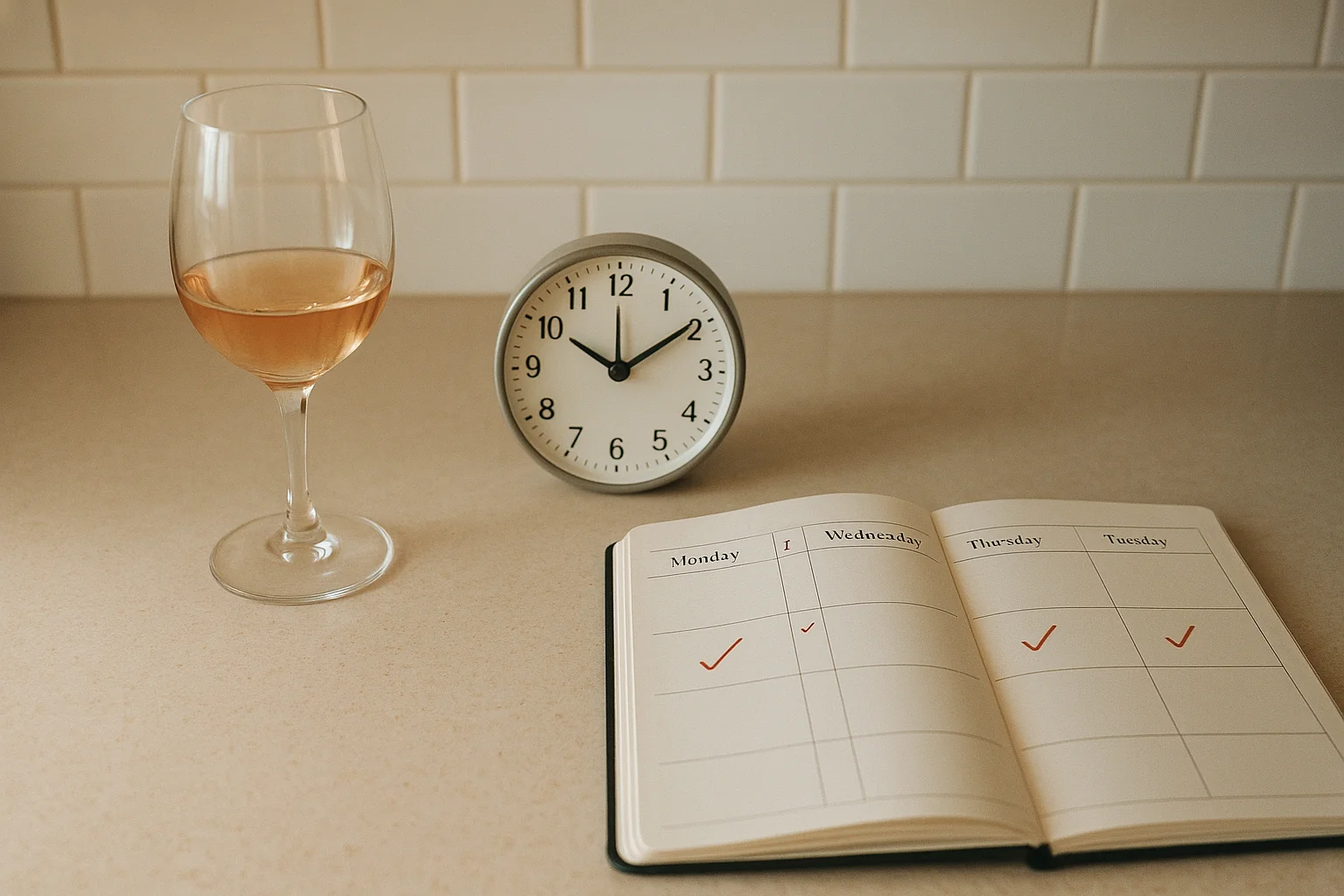
The 1-2-3 rule offers a straightforward framework for keeping alcohol consumption within safer limits. Here's what each number means and how to apply it.
What You'll Learn:
• The exact definition of the 1-2-3 rule for drinking.
• Why each number in the rule matters for your health.
• How to apply this rule in everyday situations.
• Common mistakes that undermine the rule's effectiveness.
• What to do when the rule isn't enough.
The 1-2-3 rule is one of the simplest guidelines for moderate drinking. If you've heard the term but aren't sure what it means, or you're looking for a practical framework to reduce your alcohol intake, this rule offers a clear starting point.
Unlike vague advice to "drink responsibly," the 1-2-3 rule gives you specific numbers to follow. It's not a perfect solution for everyone, but it provides structure for people who want to be more intentional about their drinking without necessarily quitting entirely.
What the 1-2-3 Rule Actually Means
The 1-2-3 rule sets three clear limits:
1 – No more than one standard drink per hour.
2 – No more than two drinks on any single day.
3 – At least three alcohol-free days per week.
Some versions include a zero at the beginning, making it the 0-1-2-3 rule. The zero represents situations where no alcohol should be consumed at all: during pregnancy, when taking certain medications, before driving, or if you have a history of alcohol problems.
The rule is designed to work together as a system. Following just one or two of the numbers while ignoring the others reduces its effectiveness. For example, limiting yourself to two drinks per day but drinking every single day of the week still puts you at higher risk than someone who includes those alcohol-free days.
The Science Behind Each Number
Each part of the 1-2-3 rule has a reason behind it.
Why one drink per hour?
The average human body metabolizes alcohol at a rate of roughly one standard drink per hour. This rate varies somewhat based on body weight, sex, liver function, and other factors, but one drink per hour is a reasonable average.
When you drink faster than your body can process alcohol, your blood alcohol concentration rises. Higher BAC means greater impairment, worse decision-making, and increased risk of accidents and injuries. By limiting intake to one drink per hour, you give your body time to process what you've consumed before adding more.
This pacing also helps you stay aware of how alcohol is affecting you. When drinks are consumed rapidly, the effects hit all at once, which makes it harder to recognize when you've had enough.
Why two drinks per day maximum?
The two-drink limit aligns with what the Dietary Guidelines for Americans describe as moderate drinking for men. For women, the official guideline is actually one drink or less per day due to differences in body composition and alcohol metabolism.
The 1-2-3 rule uses two as a simple, memorable number that provides a conservative limit for most adults. Staying at or below this level significantly reduces the risk of developing alcohol-related health problems compared to heavier consumption.
Research from the National Institute on Alcohol Abuse and Alcoholism shows that only about 2 in 100 people who drink within low-risk limits meet the criteria for alcohol use disorder. The risks increase substantially above these thresholds.
Why three alcohol-free days?
The requirement for alcohol-free days serves several purposes.
It prevents daily drinking from becoming automatic. When you drink every day, alcohol becomes woven into your routine. Taking regular breaks disrupts this pattern and keeps drinking a conscious choice rather than a habit.
It gives your liver recovery time. While moderate drinking doesn't cause the severe liver damage associated with heavy use, even low-level processing takes a toll. Alcohol-free days let your liver catch up on other functions.
It reduces your weekly total. Three alcohol-free days means drinking a maximum of four days per week. Even if you have two drinks on each of those days, your weekly total stays at eight or fewer, which keeps you within low-risk guidelines.
What Counts as a Standard Drink?
For the 1-2-3 rule to work, you need to know what qualifies as one drink. Many people underestimate their consumption because they don't realize how much alcohol is actually in their glass.
A standard drink contains about 14 grams of pure alcohol. This translates to:
• 12 ounces of regular beer (5% alcohol)
• 5 ounces of wine (12% alcohol)
• 1.5 ounces of distilled spirits (40% alcohol)
The problem is that many drinks don't match these standard sizes. A craft IPA might be 8% alcohol instead of 5%, meaning a 12-ounce pour is actually closer to 1.5 standard drinks. A generous wine pour at a restaurant often exceeds 5 ounces. A cocktail may contain two or more shots of liquor.
To follow the 1-2-3 rule accurately, you need to account for these variations. That strong IPA counts as more than one drink. The large glass of wine might be nearly two drinks. The double old-fashioned is definitely two drinks.
For a deeper look at how different drinking rules compare, including alternatives like the 80/20 rule and 20-minute rule, our comprehensive guide breaks down all the popular moderation frameworks.
How to Apply the Rule in Real Life
Knowing the rule and following it are two different things. Here's how to put each component into practice.
Pacing to one drink per hour:
• Check the time when you start each drink.
• Alternate alcoholic drinks with water or non-alcoholic beverages.
• Choose drinks that take time to consume. Sipping a cocktail lasts longer than downing a shot.
• Keep your glass in sight so you can gauge how quickly you're drinking.
Limiting to two drinks per day:
• Decide before you start drinking how many you'll have.
• Tell someone your limit so there's accountability.
• Don't keep more than two drinks' worth of alcohol easily accessible at home.
• When you hit your limit, switch to non-alcoholic options.
Maintaining three alcohol-free days:
• Plan which days of the week will be alcohol-free in advance.
• Remove alcohol from visible spots at home on those days.
• Find alternative evening rituals that don't involve drinking.
• Track your days on a calendar so you have a visual record.
Common Mistakes That Undermine the Rule
Several pitfalls can make the 1-2-3 rule less effective.
Saving up drinks. The rule doesn't work like a weekly allowance. You can't skip drinking for three days and then have six drinks on the fourth day. The daily limit matters because it prevents the binge drinking pattern that carries the highest short-term risks.
Ignoring drink strength. If you're drinking high-alcohol beverages without adjusting, you're consuming more than you think. A 9% ABV double IPA in a pint glass is roughly 2.5 standard drinks. A wine pour from a restaurant can easily be 7-8 ounces.
Not counting accurately. Homemade cocktails are especially tricky. Without measuring, a generous pour can turn what feels like one drink into two or three. Consider using a jigger or measuring cup.
Making exceptions too often. Special occasions are fine occasionally. But if every weekend becomes an exception, the rule isn't really governing your behavior. Be honest about how often you're actually following the guidelines.
Focusing on one number only. The rule works as a system. Someone who never exceeds two drinks per day but drinks every single day is still at higher risk than someone who follows all three components.
When the 1-2-3 Rule Isn't Enough
The 1-2-3 rule is designed for people who can moderate their drinking with conscious effort. It's not appropriate for everyone.
Signs that you may need more than a moderation rule:
• You repeatedly set limits and then exceed them.
• You find yourself thinking about drinking frequently, even on alcohol-free days.
• Stopping at one or two drinks feels genuinely difficult.
• You've experienced consequences from drinking but continued anyway.
• People close to you have expressed concern about your drinking.
These patterns may indicate that your relationship with alcohol has moved beyond what simple rules can address. Alcohol use disorder exists on a spectrum, and even mild forms can make moderation rules ineffective.
If this sounds familiar, medication-assisted treatment may help. Naltrexone is an FDA-approved medication that reduces alcohol cravings and blocks some of the pleasurable effects of drinking. It doesn't require complete abstinence and can support both moderation and quitting goals.
Who the 1-2-3 Rule Works Best For
This rule tends to be most effective for:
• People who want to cut back from higher consumption levels to moderate drinking.
• Those who drink habitually but haven't developed significant dependence.
• Anyone looking for a structured approach after a break from alcohol.
• People whose drinking has crept up and who want to reset to healthier patterns.
It's less likely to work for people with established alcohol use disorder, those who have previously tried moderation without success, or anyone whose drinking has already caused significant health or relationship problems.
Being honest with yourself about which category you fall into is crucial. The rule can be a helpful tool, but it's not a treatment for alcohol problems.
Summary
The 1-2-3 rule provides a simple, memorable framework for moderate drinking:
• 1 drink per hour maximum to stay within your body's processing capacity.
• 2 drinks per day maximum to stay within low-risk health guidelines.
• 3 alcohol-free days per week to prevent habitual daily drinking.
The rule works best when all three components are followed together. It requires accurate understanding of what counts as a standard drink, honest tracking of consumption, and awareness of common pitfalls that undermine effectiveness.
For some people, the 1-2-3 rule provides sufficient structure to maintain healthy drinking habits. For others, it may reveal that moderation isn't achievable without additional support. If you find yourself consistently unable to follow the rule despite genuine effort, that's valuable information about where you stand with alcohol.
Want to explore whether medication could help you stick to your drinking goals? Take an Alcohol Use Assessment to learn if naltrexone might be right for you.