A 2 minute assessment to get a personalized mental health or alcohol recovery plan.

A 1.5-ounce pour of 80-proof gin contains roughly 97 calories with zero carbs, but the moment you add tonic water, juice, or flavored syrups, that number can triple or quadruple.
What You'll Learn:
• How many calories are in a standard shot of gin
• Why higher-proof gins carry more calories per pour
• How gin compares to vodka, whiskey, tequila, and rum on calories
• Why the gin and tonic is a common calorie trap
• Calorie counts for popular gin cocktails from lightest to heaviest
• Practical ways to keep gin drinks low in calories
Gin has a reputation as a clean, botanical spirit. But when it comes to calories, gin follows the same rules as every other distilled spirit. The calories come from the alcohol itself, and what you mix it with determines whether your drink stays light or becomes a calorie bomb.
This guide breaks down the calories in a straight pour of gin, explains how proof affects the count, compares gin to other spirits, and ranks popular gin cocktails from lightest to heaviest. We will also cover the mixer trap that catches most people off guard.
How Many Calories Are in a Shot of Gin
A standard 1.5-ounce shot of 80-proof gin contains approximately 97 calories. Those calories come entirely from the ethanol. Gin has zero carbohydrates, zero sugar, zero fat, and zero protein.
According to the National Institute on Alcohol Abuse and Alcoholism, a standard drink in the United States contains about 14 grams of pure alcohol. Pure alcohol delivers about 7 calories per gram, which works out to roughly 98 calories per standard drink regardless of spirit type.
The botanical infusions that give gin its juniper-forward flavor do not meaningfully change the calorie count. Whether you are drinking a London Dry, a Plymouth, or a contemporary style, the calories at the same proof are virtually identical.
How Proof Affects Gin Calories
Not all gins are bottled at the same strength, and the proof directly affects the calorie count. Higher proof means more alcohol per ounce, which means more calories.
Here is how the numbers shift across common gin proof levels for a standard 1.5-ounce pour:
• 80 proof (40% ABV): approximately 97 calories
• 86 proof (43% ABV): approximately 105 calories
• 90 proof (45% ABV): approximately 110 calories
• 94 proof (47% ABV): approximately 116 calories
• 100 proof (50% ABV): approximately 124 calories
• 114 proof (57% ABV), Navy Strength: approximately 140 calories
Most mainstream gins sit at 80 to 94 proof. Navy Strength gins run 114 proof or higher, adding about 43 extra calories per shot compared to a standard 80-proof pour.
For a deeper look at how proof-to-calorie math works across all spirit types, our guide to vodka calories covers the same principles in detail. The underlying formula is consistent: more alcohol per ounce always means more calories per ounce.
Gin vs. Other Spirits: A Calorie Comparison
One of the most common questions about gin calories is whether gin is lighter or heavier than other spirits. The short answer is that at the same proof, all distilled spirits contain essentially the same number of calories.
Here is how a 1.5-ounce pour at 80 proof compares across the major spirit categories:
• Gin: approximately 97 calories
• Vodka: approximately 97 calories
• Tequila: approximately 97 calories
• Rum (unflavored): approximately 97 calories
• Whiskey: approximately 97 calories
• Brandy: approximately 97 calories
The reason is straightforward. Distillation strips away virtually all residual sugars and carbohydrates. What remains is ethanol, water, and trace flavor compounds that contribute taste but not meaningful calories.
Choosing gin over vodka or whiskey over rum does not save you any calories at the same proof. As we break down in our guide to whiskey calories, even barrel-aged spirits that develop complex flavors over years still land in the same narrow calorie range at standard proof.
The one exception to watch for is flavored gins. Some brands add sugar, honey, or fruit-based sweeteners after distillation. These flavored varieties can carry 10 to 30 extra calories per serving. If the label mentions added sugar or natural flavors, the calorie count may be higher than the standard 97.
The Gin and Tonic Trap
If there is one gin drink that catches calorie-conscious drinkers off guard, it is the gin and tonic.
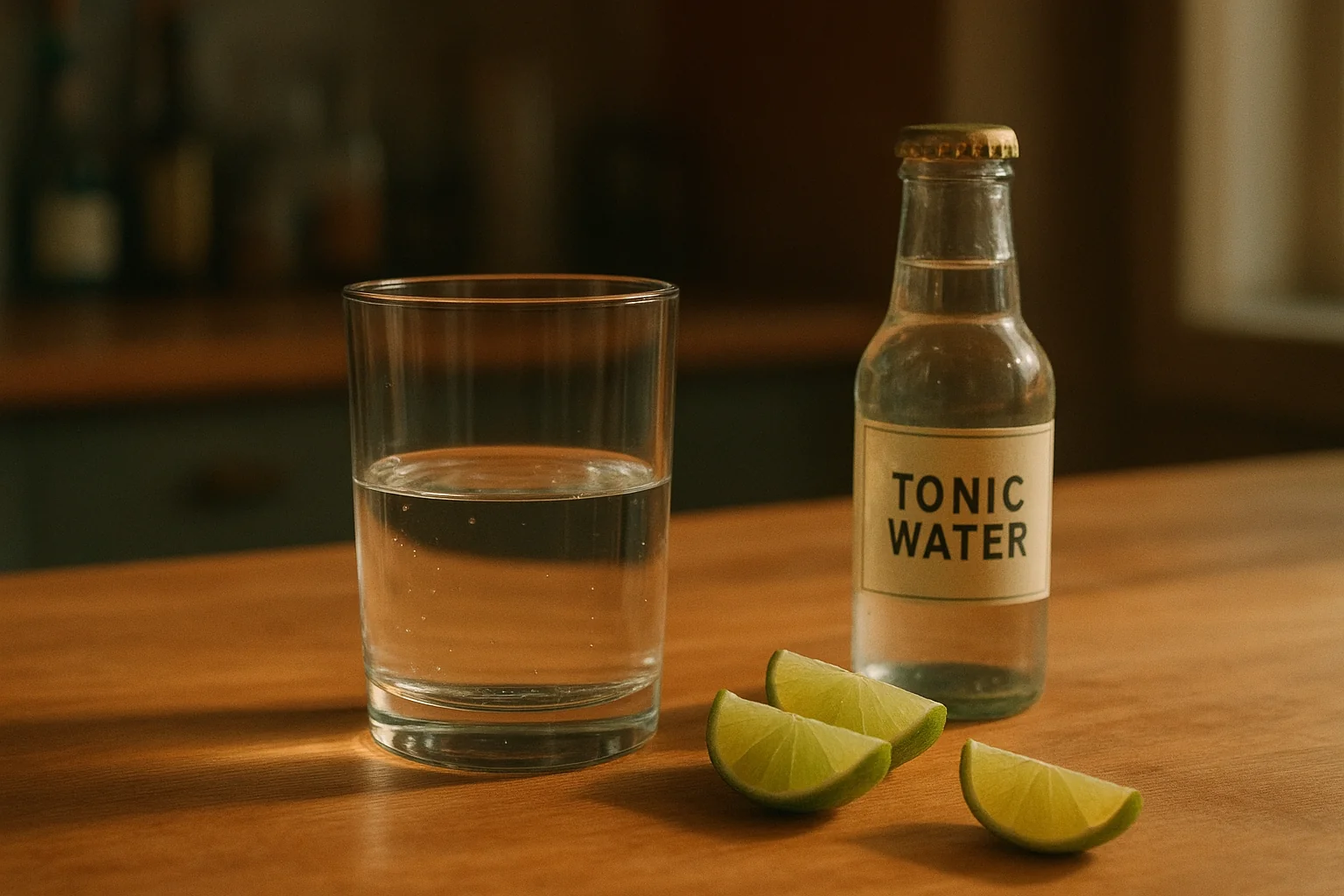
A gin and tonic sounds simple and light. But regular tonic water contains a surprising amount of sugar. Most gin and tonics use 5 to 8 ounces of tonic, and the mixer alone can contribute 43 to 70 calories.
Here is the breakdown for a typical gin and tonic:
• Gin (1.5 oz, 80 proof): 97 calories
• Tonic water (6 oz): approximately 52 calories
• Lime wedge: approximately 2 calories
• Total: approximately 151 to 171 calories
That is nearly double the calories of a gin and soda water. Regular tonic water contains about 7 to 8 grams of sugar per 4-ounce serving, putting it in the same range as many soft drinks.
According to the Centers for Disease Control and Prevention, many people underestimate the calorie content of alcoholic beverages in part because they do not account for the mixers. Tonic water is a perfect example. It looks and sounds like water, but it is essentially a sweetened carbonated beverage.
The fix is simple. Diet tonic water has zero or near-zero calories and tastes nearly identical in a mixed drink. Alternatively, soda water with a squeeze of fresh lime delivers the fizz and citrus without any added sugar.
Calorie Counts for Popular Gin Cocktails
Gin is a foundation spirit in dozens of classic cocktails, and the calorie range across those drinks is enormous. Here are approximate counts for standard servings, ranked from lightest to heaviest:
• Gin and soda water with lime: approximately 97 calories
• Gin Rickey (gin, soda water, lime juice): approximately 115 calories
• Gimlet (gin, lime juice, touch of simple syrup): approximately 135 calories
• Martini (gin, dry vermouth): approximately 120 to 140 calories
• Gin and tonic (regular tonic): approximately 151 to 171 calories
• Negroni (gin, Campari, sweet vermouth): approximately 180 calories
• Tom Collins (gin, lemon juice, simple syrup, soda): approximately 175 to 200 calories
• French 75 (gin, champagne, lemon juice, sugar): approximately 200 to 225 calories
• Gin Fizz (gin, lemon juice, sugar, soda, egg white): approximately 200 to 230 calories
• Bramble (gin, lemon juice, simple syrup, creme de mure): approximately 210 to 240 calories
• Singapore Sling (gin, cherry liqueur, Cointreau, Benedictine, juices): approximately 280 to 350 calories
• Gin-based tropical cocktail (multiple juices, syrups, liqueurs): 300 to 500 calories
The pattern is consistent across every drink on this list. Gin with soda water is the lightest option. Each additional ingredient, whether it is simple syrup, fruit juice, a liqueur, or cream, adds calories. By the time you reach a multi-ingredient tiki-style gin drink, you are looking at three to five times the calories of a simple gin and soda.
The Martini deserves a specific note. A classic gin Martini with dry vermouth is one of the lower-calorie cocktail options at 120 to 140 calories. A "dirty" Martini with olive brine adds only about 5 to 10 calories, while a "sweet" Martini using sweet vermouth can push the count toward 160 to 180 calories.
Where the Calories Really Come From
Understanding the building blocks helps you make better decisions at any bar.
The gin itself contributes a fixed amount based on proof and pour size. At 80 proof, it is 97 calories per 1.5 ounces. This is the baseline that every gin drink starts from.
Simple syrup is one of the biggest calorie drivers in cocktails. One ounce of simple syrup contains about 65 calories. Many classic gin cocktails call for 0.5 to 1 ounce, adding 33 to 65 calories per drink.
Fruit juices add natural sugars. An ounce of lemon or lime juice adds about 7 to 8 calories. An ounce of orange juice adds about 14 calories. An ounce of pineapple juice adds about 17 calories. These sound small individually, but cocktails often use 2 to 4 ounces of juice per drink.
Liqueurs are a significant calorie source that many people overlook. Triple sec adds about 85 calories per ounce. Creme de mure (blackberry liqueur) adds about 70 calories per ounce. Sweet vermouth adds about 47 calories per ounce. When a recipe calls for one or two of these alongside the base spirit, the total climbs quickly.
Tonic water, ginger beer, and other sweetened sodas contribute 40 to 80 calories per typical pour. As noted above, these can be easily swapped for diet or zero-calorie versions.
Our guide to tequila calories illustrates this same dynamic from a different angle. A straight shot of tequila is 97 calories, but a standard margarita made with triple sec and sweetened lime juice climbs past 275. The spirit is not the problem. It is what surrounds it.
How to Keep Your Gin Drinks Light
If you enjoy gin and want to keep calories in check, a few reliable strategies work in almost any setting.
Default to gin and soda water. This is the simplest low-calorie gin drink you can order anywhere. Add a squeeze of fresh lime, a few cucumber slices, or a sprig of fresh herbs for flavor without meaningful calories. You stay at roughly 97 calories every time.
Use diet tonic instead of regular. If you prefer the slightly bitter, quinine-forward flavor of a gin and tonic, switching to diet tonic saves you 43 to 70 calories per drink. Most bars and restaurants carry at least one diet tonic option.
Order a classic gin Martini. At 120 to 140 calories, a well-made Martini is one of the most calorie-efficient cocktails on any bar menu. It also tends to be sipped more slowly than a tall, fizzy drink, which can help with pacing.
Ask for modifications. Many bartenders are willing to adjust recipes. A Tom Collins made with half the simple syrup still tastes balanced and saves you 30 calories. A Negroni made with a slightly lighter pour of sweet vermouth trims the total without fundamentally changing the drink.
Watch the number of drinks, not just the type. Two gin and sodas across an evening is 194 calories. Five gin and sodas is 485 calories. The calorie savings of choosing a lighter drink can be entirely undone by simply having more of them. This is one of the most overlooked aspects of calorie-conscious drinking.
Gin, Weight, and the Bigger Picture
If you are reading this article as part of an effort to manage your weight, the calorie content of gin is worth knowing. But it is also worth understanding how alcohol calories behave differently in your body compared to food calories.
Your liver treats alcohol as a priority substance. When you drink, your liver shifts its focus to metabolizing the ethanol first, essentially pausing its other functions, including fat burning. Research published in The American Journal of Clinical Nutrition has shown that even moderate alcohol consumption significantly reduces the body's ability to oxidize fat.
In practical terms, the food you eat alongside your gin drinks is more likely to be stored as body fat because your liver is busy processing the alcohol. This metabolic reality means that alcohol's impact on your body goes beyond the calorie number printed on a label.
Alcohol also increases appetite. Multiple studies have shown that drinking lowers inhibitions around food choices and makes high-calorie foods more appealing. The two gin and tonics before dinner may not seem like much at 340 calories, but the appetizers, larger entree, and dessert you order because your guard is down can add hundreds more.
The cumulative effect over time is significant. Two gin drinks four nights a week adds roughly 800 to 1,400 calories to your weekly intake depending on what you are drinking. Over a month, that is 3,200 to 5,600 extra calories. Over a year, it adds up to roughly 42,000 to 73,000 surplus calories. These numbers explain why people who eat well and exercise regularly can still struggle with weight when consistent drinking is part of the picture.
For a deeper look at this relationship, our guide to alcohol and weight gain covers the full metabolic picture, including how alcohol specifically contributes to visceral fat storage around the midsection.
When the Calorie Conversation Leads Somewhere Deeper
Sometimes the search for "calories in gin" starts as a straightforward nutrition question and ends up revealing something more personal. You might notice that the calorie math only concerns you because the number of drinks has been creeping up. Or that you have been thinking about cutting back but finding it harder than expected.
That realization is not unusual. It is actually one of the more common ways people begin to reconsider their relationship with alcohol. According to a study published in the National LIbrary of Medicine, alcohol consumption increased significantly across the U.S. population in recent years. Many people developed heavier drinking patterns gradually and without fully recognizing the shift.
If you have been counting calories, adjusting your diet, and exercising consistently but still not seeing the results you want, your drinking pattern may be a larger factor than you realized. And if you have tried to cut back on drinking on your own without lasting success, that experience is not a reflection of willpower. Alcohol affects the brain's reward pathways in ways that make moderation genuinely difficult for many people. That is a neurological reality, not a character flaw.
Support That Fits Your Life
You do not need to be in crisis, and you do not need to give yourself any label. Wanting to feel better, lose weight, sleep more soundly, or simply feel more in control of your choices is reason enough to explore your options.
For many people, willpower alone is not enough over the long term. That is why evidence-based approaches exist. Naltrexone is an FDA-approved medication that works by reducing the pleasurable effects of alcohol in the brain. It does not make you sick if you drink. It gradually lowers the reward signal, helping many people naturally drink less over time.
According to a large-scale meta-analysis published in JAMA covering more than 20,000 participants across 118 clinical trials, naltrexone was shown to significantly reduce heavy drinking days and overall alcohol consumption.
Choose Your Horizon offers naltrexone-assisted treatment that is entirely online, physician-supervised, and private. There are no clinic visits, no mandatory group sessions, and no one-size-fits-all rules about your goals. Whether you want to cut back to weekends, reduce from four drinks to one, or stop entirely, the program adapts to you.
If you are curious whether this kind of support could help, you can take a quick, free online Alcohol Use Assessment to see if naltrexone might be a good fit. It takes just a few minutes, it is completely private, and there is no obligation.
Key Takeaways
A standard 1.5-ounce shot of 80-proof gin contains about 97 calories, all from the alcohol itself. Gin has zero carbs, zero sugar, and zero fat. At the same proof, gin is calorically identical to vodka, tequila, rum, whiskey, and brandy.
The calorie difference between gin drinks comes almost entirely from the mixers. A gin and soda water is 97 calories. A gin and tonic with regular tonic is roughly 170 calories. A multi-ingredient gin cocktail with syrups, juices, and liqueurs can easily reach 300 or more.
The simplest strategy for keeping gin calories low is to pair it with a zero-calorie mixer and fresh citrus. If you prefer tonic, switch to diet tonic. And if counting calories has also made you more aware of how much and how often you are drinking, that awareness is worth honoring. Every step toward a healthier relationship with alcohol, whether it is a smarter drink order or a decision to drink less, is a step worth taking.