A 2 minute assessment to get a personalized mental health or alcohol recovery plan.

Waiting 20 minutes between drinks gives your body time to process alcohol and your brain time to recognize its effects. Here's how this simple pacing rule works.
What You'll Learn:
• What the 20-minute rule is and why it works.
• The science behind alcohol absorption timing.
• Practical ways to implement the rule in social settings.
• How pacing compares to other moderation strategies.
• When pacing alone isn't enough.
One of the easiest ways to drink less without counting every ounce is simply to slow down. The 20-minute rule is a pacing strategy that helps prevent overconsumption by creating built-in pauses between drinks. It's less about math and more about giving your body and brain time to catch up with what you've consumed.
If you've ever found yourself surprised by how drunk you got, despite not feeling it while drinking, the 20-minute rule addresses exactly that problem.
What the 20-Minute Rule Means
The rule is simple: wait at least 20 minutes between finishing one drink and starting another.
That's it. No counting units, no calculating percentages, no complicated formulas. Just a pause.
During those 20 minutes, you might drink water, have a conversation, eat something, step outside, or do anything else that isn't drinking alcohol. The point is to interrupt the continuous flow of alcohol into your system.
Why 20 Minutes Matters
Alcohol doesn't affect you immediately. After you swallow a drink, it travels to your stomach and small intestine, gets absorbed into your bloodstream, and eventually reaches your brain. This process takes time.
The full effects of a drink typically aren't felt for 15 to 30 minutes after consumption, depending on factors like:
• Whether your stomach is empty or full
• The alcohol concentration of the drink
• Your body size and composition
• How quickly you drank it
When you consume drinks rapidly, you're adding alcohol to your system faster than you can perceive its effects. By the time you feel drunk, you may have already consumed far more than intended. The drinks you had 10 and 20 minutes ago are still being processed.
The 20-minute pause lets your body catch up. By the time you consider another drink, you have a more accurate sense of how the previous one is affecting you.
How the Rule Reduces Total Consumption
Beyond preventing accidental intoxication, the 20-minute rule naturally limits how much you consume in a given timeframe.
Consider a typical two-hour dinner:
Without the rule: You might finish a drink every 20-25 minutes, consuming 5-6 drinks over the evening.
With the rule: You finish a drink, wait 20 minutes, then start the next. Even if you drink fairly quickly once you start, you're limited to about 3-4 drinks maximum.
Over a longer evening, say four hours at a party, the difference becomes even more significant.
This natural ceiling works because time is finite. You can't speed up the clock to fit more drinks in. The rule converts time into a limiting factor without requiring conscious counting.
Practical Ways to Apply the Rule
Knowing the rule and actually following it in social situations are different things. Here's how to make it work.
Use water as a spacer. After finishing an alcoholic drink, order water or a non-alcoholic beverage. Sip that while you wait. Having something in your hand reduces the urge to order another drink and makes the pause feel natural.
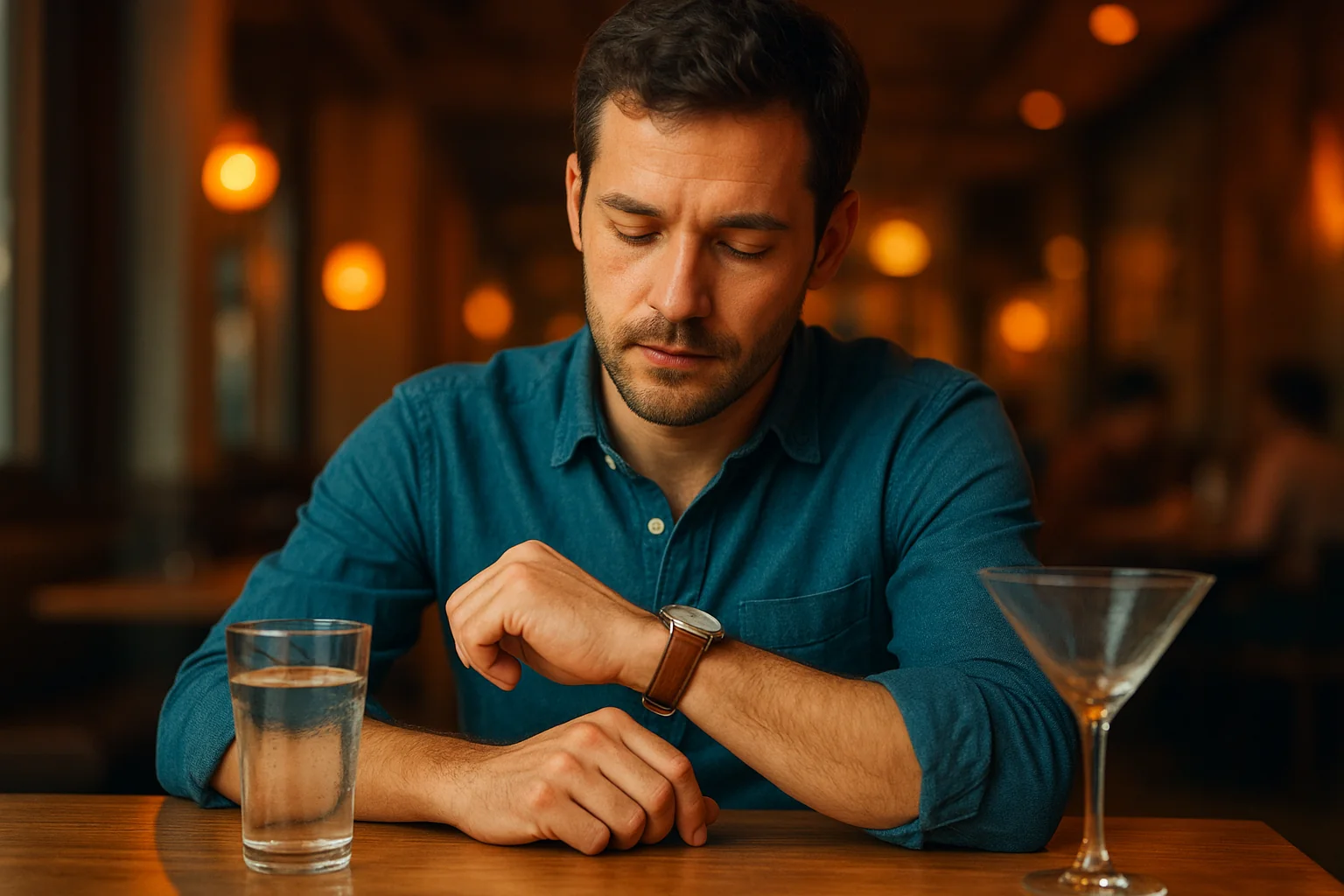
Check the time. Glance at your phone or watch when you finish a drink. Don't order another until at least 20 minutes have passed. This creates an external trigger rather than relying on feeling.
Slow down your drinking speed. If you finish drinks quickly, you spend more of your time waiting. Ordering drinks that take longer to consume, such as cocktails with ice or drinks you sip rather than shoot, extends each round and reduces total consumption.
Order food. Eating during the waiting period accomplishes several things. It occupies your hands and mouth, slows alcohol absorption, and extends the social activity beyond just drinking.
Change your environment briefly. Step outside, walk to the bathroom, or move to a different part of the venue. Physical movement creates a natural break in drinking rhythm.
The 20-minute rule pairs well with other drinking rules and moderation strategies. Using it alongside the 1-2-3 rule's daily limits creates multiple layers of structure.
Why Pacing Works Psychologically
Beyond the physiological benefits, the 20-minute rule changes your relationship with drinking in the moment.
It creates decision points. Instead of drinking on autopilot, you have a pause where you actively choose whether to continue. This brief interruption is often enough to break the momentum of consumption.
It separates drinking from socializing. When you're forced to not drink for stretches of time, you experience the social event without a glass in your hand. This can reveal whether you're drinking for enjoyment or out of nervous habit.
It reduces social pressure. When someone offers you a drink and you just finished one, you have a ready reason to decline: you're pacing yourself. This is easier than explaining that you're trying to drink less.
It allows for genuine satisfaction. Rapid consumption often bypasses satisfaction. When you pause and let a drink's effects register before having another, you may find that one or two drinks actually feel like enough.
When the 20-Minute Rule Falls Short
Pacing is a useful tool, but it has limitations.
It doesn't address daily or weekly totals. You could follow the 20-minute rule perfectly and still consume too much if you drink frequently. If you're drinking four days a week, even paced consumption adds up.
It's harder to maintain as the night goes on. Alcohol impairs judgment. After a few drinks, the resolve to wait 20 minutes tends to weaken. The rule works best in the early part of a drinking session.
It doesn't work for rapid social drinking situations. At a tasting event, a round of shots, or a drinking game, the 20-minute rule simply doesn't fit. In these contexts, you need a different approach.
It doesn't address dependence. If you've developed physical dependence on alcohol, the problem isn't the pace of drinking. It's the neurological adaptation that makes your brain expect and demand alcohol.
It still requires conscious effort. Every time you finish a drink, you have to remember and choose to apply the rule. That's easier when you're sober and harder as the evening progresses.
Combining Pacing with Other Strategies
The 20-minute rule works best as part of a broader approach to managing drinking.
Pair it with a hard limit. Decide before you start that you'll have no more than two or three drinks regardless of how much time passes. The 20-minute rule then helps you spread those drinks out rather than front-loading them.
Use alcohol-free alternatives. During your waiting periods, try drinks designed to provide some of the ritual without the alcohol. Non-alcoholic beers, mocktails, or functional beverages can satisfy the desire to have a drink in hand.
Plan alcohol-free days. The 20-minute rule helps during drinking occasions, but having regular alcohol-free days addresses overall consumption patterns.
Consider medication if rules keep failing. If you've tried pacing and other moderation strategies without success, the issue may be beyond what behavioral techniques can address. Naltrexone works at a neurological level to reduce cravings and diminish alcohol's rewarding effects, making moderation more achievable.
Who the 20-Minute Rule Works Best For
This pacing strategy tends to be most effective for:
• Social drinkers who consume most of their alcohol in group settings where momentum builds.
• People who drink faster than they realize and are often surprised by their level of intoxication.
• Those who want to participate in drinking occasions but want to consume less while doing so.
• Anyone new to moderation efforts who wants a simple, specific rule to start with.
It's less likely to help people who:
• Drink alone, where the social pacing pressure doesn't exist.
• Drink specifically to get drunk, where slowing down defeats the perceived purpose.
• Have significant physical dependence or alcohol use disorder.
Summary
The 20-minute rule is a pacing strategy: wait at least 20 minutes between finishing one drink and starting another.
It works because alcohol takes 15-30 minutes to fully affect you. Pausing lets your body catch up so you can make informed decisions about whether to continue drinking.
The rule naturally limits consumption by making time a limiting factor. In a two-hour dinner, it caps you at roughly 3-4 drinks instead of 5-6.
Practical implementation includes using water as a spacer, checking the time, ordering food, and taking brief breaks from drinking areas.
The rule has limits. It doesn't address weekly totals, becomes harder to follow after several drinks, and doesn't work for people with alcohol dependence.
For best results, combine pacing with hard limits, alcohol-free days, and awareness of when behavioral strategies aren't enough.
If you've tried pacing and other rules without success, medication-assisted treatment may offer what willpower alone can't. Take an Alcohol Use Assessment to explore whether naltrexone could help you meet your drinking goals.