A 2 minute assessment to get a personalized mental health or alcohol recovery plan.

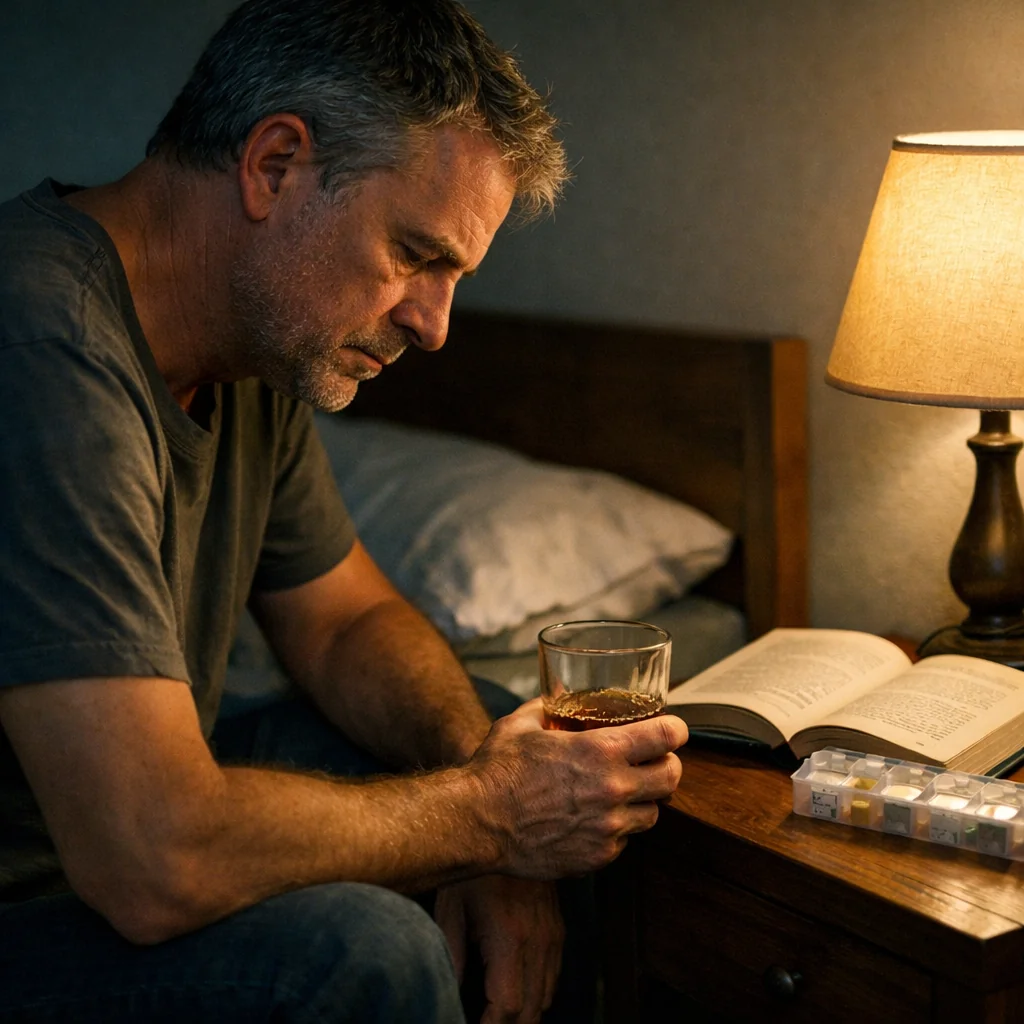
Alcohol can feel like it quiets the symptoms of PTSD, but over time it tends to make sleep, anxiety, and hypervigilance worse rather than better.
What You'll Discover:
• Why alcohol and PTSD so often go together.
• How drinking to cope turns into a loop.
• The way alcohol affects PTSD sleep over time.
• What medication-supported care can offer.
• Why professional trauma support matters too.
If you live with the aftermath of trauma, you already know how loud the nights can get. The racing thoughts, the jumpiness, the sense of being on guard even when nothing is wrong.
A drink can seem to turn the volume down. For a little while, the edges soften and sleep feels closer. That relief is real, and reaching for it is understandable.
This is not a character flaw. Using alcohol to manage symptoms of post-traumatic stress is one of the most common and human responses there is.
The hard part is that the relief is short, and over time alcohol tends to deepen the very symptoms it seemed to ease. Understanding that pattern is the first step toward a way out that does not rely on white-knuckling.
Why Alcohol and PTSD So Often Travel Together
The overlap between PTSD and heavy drinking is not a coincidence, and it is not rare. The two conditions feed each other.
According to the National Institute on Alcohol Abuse and Alcoholism, PTSD and alcohol use disorder commonly co-occur, and each one raises the risk of the other.
Research on the epidemiology of the two conditions, published in Alcohol Research: Current Reviews, found that a large share of people with PTSD also meet criteria for an alcohol use disorder at some point in their lives.
The reason comes down to what trauma does to the nervous system. PTSD keeps the body in a state of high alert. Sleep is broken, the startle response is dialed up, and intrusive memories arrive without warning.
That constant alert state is exhausting. The body was built to return to calm after a threat passes, but trauma can leave the alarm stuck in the on position.
Living like that for months or years wears a person down. It is no surprise that anything offering even brief relief becomes hard to set aside.
Alcohol is a depressant. In the short term it can blunt that arousal, which is exactly why so many people reach for it. The drink does something the symptoms will not let them do on their own.
That is the self-medication pattern. It is well documented, and naming it is not a judgment. It simply describes a real attempt to feel better with the tool that is closest at hand.
How a Coping Drink Becomes a Loop
The trouble is that alcohol does not stay a one-way street. The same drink that quiets symptoms tonight tends to amplify them tomorrow.
Here is how the loop tends to form.
You drink to take the edge off. It works for a few hours, and you get some relief or some sleep.
As the alcohol wears off, the body rebounds. Anxiety climbs, the heart races, and the hypervigilance comes back stronger than before. We cover this rebound in our guide to post-alcohol anxiety.
Those worse symptoms make the next drink feel even more necessary. So you drink again, and the cycle tightens.
Over time the brain learns to expect alcohol as the off switch. The natural ability to self-soothe gets weaker, and the dependence on drinking gets stronger.
This is why willpower alone so often falls short here. The loop is not about weakness. It is a learned pattern reinforced night after night by real relief followed by real rebound.
Each turn of the cycle makes the next one a little more automatic. The brain files alcohol away as the fastest route to relief, and over time that shortcut becomes the default.
That is also why a plan that only says try harder rarely works. The pattern needs to be interrupted, not just resisted.
What Alcohol Actually Does to PTSD Symptoms
It helps to look symptom by symptom at the gap between the short-term effect and what happens over time.
Sleep is the clearest example. Alcohol can help you fall asleep faster, but it disrupts the deeper stages of sleep your brain needs.
The result is lighter, more broken rest and more time awake in the night. Our deeper look at sleeping and alcohol explains why the trade is a bad one.
For someone with PTSD, that matters even more. Poor sleep makes the nervous system more reactive, which makes the next day's symptoms harder to manage.
The numbing effect carries a similar cost. Alcohol can flatten painful feelings, but it tends to flatten the good ones too, and low mood often deepens.
This overlap with depression is real, and our article on alcohol and depression goes further into it.
Why the Two Conditions Make Each Other Harder
When PTSD and heavy drinking sit side by side, they do not simply add up. They tend to multiply.
The functional toll of having both has been studied directly. Research in Alcohol Research: Current Reviews found that people with both conditions tend to have greater disability and poorer health than people with either condition alone.
Part of the reason is the overlap in symptoms. The racing heart and heightened arousal of alcohol withdrawal can look and feel a lot like PTSD-driven hyperarousal.
That makes it hard to tell where one condition ends and the other begins. The body cannot easily separate the two, so the distress compounds.
Sleep sits at the center of it. Alcohol disrupts sleep, poor sleep worsens PTSD, worse PTSD drives more drinking, and the loop keeps turning.
Breaking it usually means addressing both sides. Lowering the drinking helps the trauma symptoms settle, and treating the trauma reduces the pull toward alcohol.
Signs the Coping Pattern Has Taken Hold
It can be hard to see the loop from inside it. A few patterns tend to show up when alcohol has become a main tool for managing trauma.
You might find you cannot wind down or get to sleep without a drink. The evening feels unmanageable until the first one is in hand.
You may notice you are drinking earlier, or more, just to get the same quieting effect you used to get from less. The body adapts, so the dose creeps up.
Mornings often bring a wave of anxiety or dread that only settles later in the day. That rebound is the nervous system swinging back after the alcohol clears.
You might also notice you are pulling away from people, or that the things that used to help, like exercise or connection, have faded into the background.
None of this means you have failed at anything. It means a coping strategy that gave real relief has started to cost more than it gives. Recognizing that is the opening for a different approach.
How Medication-Supported Care Can Help
Stepping out of this loop is hard to do by sheer effort, because the loop is built into how the brain has learned to cope. This is where medication-supported care can make a real difference.
Naltrexone is an oral medication that blocks the rewarding, reinforcing effects of alcohol. It does not sedate you and it does not treat the trauma directly. What it does is take some of the pull out of drinking.
When the reward shrinks, the automatic reach for a drink loosens. That can make it easier to drink less without relying on willpower in the moment.
There is direct evidence for using naltrexone alongside trauma work. A randomized clinical trial of naltrexone with prolonged exposure therapy studied people with both PTSD and alcohol dependence.
In that trial, naltrexone reduced drinking, and importantly, the trauma therapy did not make drinking worse.
That last point matters. It pushes back on the old fear that you have to fully stop drinking before you can begin trauma treatment. The two can move forward together.
If you have been leaning on alcohol as a tool to get through, our guide on how to stop using alcohol as self-medication walks through practical first steps.
Why Professional Trauma Support Still Matters
Reducing drinking is one half of the picture. The trauma underneath does not disappear just because the alcohol does, and it deserves care of its own.
Medication can lower the volume on drinking, but it is not a substitute for working through what happened with a qualified professional. Trauma-focused therapies exist precisely for this.
A trauma-informed clinician can help you process memories at a pace that feels safe, build skills for managing arousal, and address the sleep problems that keep the cycle going.
There are well-studied trauma therapies designed for exactly this. They work by helping the nervous system learn that the danger has passed, so the alarm can finally quiet down.
When the underlying arousal eases, the urge to drink it away tends to ease with it. That is why treating the trauma is not separate from the drinking, it is part of the same recovery.
For many people, the most durable progress comes from pairing the two. Care that lowers the drinking and care that treats the trauma, working alongside each other.
If your symptoms feel overwhelming, or if you have thoughts of harming yourself, please reach out to a professional or a crisis line right away. You do not have to manage that alone, and immediate help is available.
A Gentler Way to Think About Cutting Back
If alcohol has been your way of getting through, the idea of stopping can feel like losing your only relief. That fear is valid, and it deserves a kinder answer than just quit.
The goal does not have to be all or nothing on day one. Many people start by drinking less and notice their sleep and mood begin to recover as they do.
As the rebound anxiety softens and rest improves, the loop loosens its grip. Each small change makes the next one a little easier to reach.
Support helps this go faster. Care that lowers the pull of alcohol, alongside professional help for the trauma, gives you more than willpower to lean on.
You are not trying to white-knuckle your way through. You are giving your nervous system a real chance to settle, with tools that do some of the work for you.
Frequently Asked Questions
Why do people with PTSD drink so much?
Alcohol can briefly quiet PTSD symptoms like hypervigilance, anxiety, and trouble sleeping. That short-term relief is why drinking to cope is so common, even though it tends to worsen those same symptoms over time.
Does alcohol make PTSD worse?
Over time, yes. Alcohol disrupts sleep, triggers rebound anxiety as it wears off, and can deepen low mood, all of which make PTSD symptoms harder to manage.
Can you treat PTSD and drinking at the same time?
Yes. Research shows medication that reduces drinking can be combined with trauma-focused therapy, and the trauma work does not have to make drinking worse. Many people benefit from addressing both together.
Does alcohol help you sleep with PTSD?
It can help you fall asleep faster, but it fragments sleep and reduces deep rest. For someone with PTSD, that poorer sleep usually makes the next day's symptoms worse.
Is using alcohol to cope a sign of a problem?
Reaching for alcohol to manage trauma symptoms is common and understandable, not a moral failing. If it has become a regular tool or is hard to cut back on, that is a sign it may be worth getting support.
The Takeaway
Alcohol can feel like relief when PTSD makes the days and nights hard to bear. That relief is real, which is exactly why the pattern is so easy to fall into.
The catch is that over time alcohol tends to worsen sleep, anxiety, and arousal, tightening the loop it seemed to loosen. The two conditions make each other harder, and breaking the cycle usually means addressing both.
Medication-supported care can take the pull out of drinking, and trauma-focused professional support can help heal what sits underneath. Together they offer a way forward that does not depend on willpower alone.
If alcohol has become your main tool for getting through, that is information, not a verdict. It points to where support could make the biggest difference.
You deserve care that treats the whole picture with respect.
If you want to explore whether reducing alcohol with naltrexone could fit alongside your other support, take an online Alcohol Use Assessment to see if Choose Your Horizon's integrated solution makes sense for you.