A 2 minute assessment to get a personalized mental health or alcohol recovery plan.

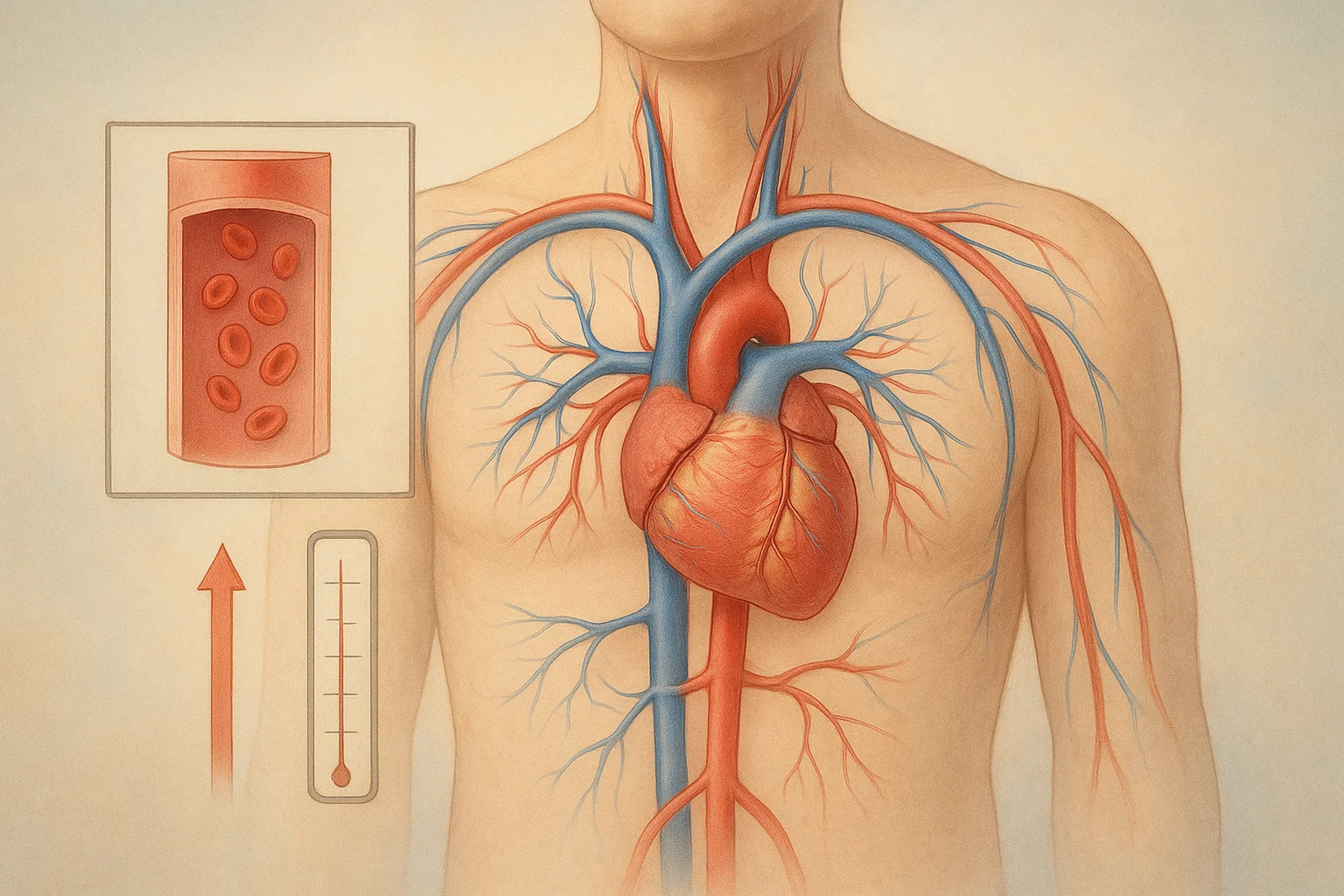
Yes, alcohol increases blood pressure, and the amount of increase is both measurable and significant. Understanding exactly how much your blood pressure rises at different drinking levels could change how you think about your next drink.
What You'll Discover:
• Exactly how much blood pressure increases at different drinking amounts.
• How fast the increase starts and how long it lasts.
• The difference between acute spikes and chronic baseline elevation.
• Who experiences the largest increases.
• How reducing alcohol lowers blood pressure by specific amounts.
Yes, alcohol increases blood pressure in ways that are measurable and predictable. The increases are not trivial.
Research from the National Institutes of Health shows that alcohol affects blood pressure through multiple mechanisms, creating both immediate spikes and sustained chronic elevation. The magnitude of these effects scales directly with the amount and frequency of drinking.
When you see that three drinks raises your blood pressure by 5 to 8 mm Hg for 24 hours, the health impact becomes real rather than theoretical.
How Much Does Blood Pressure Increase From Drinking?
The increase is dose-dependent. More alcohol creates larger increases.
One drink - Minimal immediate effect. Blood pressure increases by approximately 1 to 2 mm Hg. This resolves within a few hours for occasional drinkers.
Two drinks - Measurable increase of 2 to 4 mm Hg. The effect begins within an hour and persists for 6 to 12 hours. Someone at 120/80 might temporarily reach 124/82.
Three or more drinks - Clinically significant increases. Three to four drinks raise systolic pressure by 5 to 8 mm Hg during the acute phase. A baseline of 118/78 might spike to 135/86.
Binge drinking - Four or more drinks for women or five or more for men within two hours creates spikes of 8 to 10 mm Hg or more. These elevations last approximately 24 hours. Pressure of 120/80 before drinking might reach 135/90 the next morning.
Heavy daily drinking - Four or more drinks daily creates chronic baseline elevation. Heavy drinkers typically have blood pressure that is 10 to 15 mm Hg higher than it would be without alcohol. According to Mayo Clinic, this sustained elevation significantly increases cardiovascular risk.
A 10 mm Hg increase in systolic blood pressure is associated with approximately 20% higher risk of heart attack and 30% higher risk of stroke.
How Fast Does Alcohol Increase Your Blood Pressure?
The timeline follows a predictable pattern.
Blood pressure begins rising within 30 to 60 minutes of your first drink. As alcohol enters your bloodstream, it triggers sympathetic nervous system activation and releases hormones that constrict blood vessels.
The increase peaks approximately 2 to 4 hours after you start drinking. This is when blood alcohol concentration is highest. If you start drinking at 7 PM, your blood pressure will likely peak between 9 PM and 11 PM.
The elevation persists throughout the metabolization period. Your body processes alcohol at approximately 0.015% blood alcohol concentration per hour. Blood pressure remains elevated throughout this entire period.
After metabolism completes, blood pressure gradually returns to baseline over the next several hours. For a moderate drinking session, readings typically normalize within 12 to 24 hours after the last drink.
However, this return to baseline only occurs for people who drink occasionally. Chronic drinkers never return to their true baseline because they consume alcohol again before the previous session's effects fully resolve.
The Difference Between Acute Spikes and Chronic Elevation
Understanding this distinction is crucial.
Acute spikes refer to temporary blood pressure increases from single drinking sessions. These are the 5 to 10 mm Hg elevations that occur when you drink and resolve over the following 24 hours.
Someone with baseline blood pressure of 118/76 has four drinks on Friday evening. Their blood pressure measures 132/84 on Saturday morning, representing an acute spike of 14/8 mm Hg. By Sunday evening, assuming no further drinking, pressure returns to approximately 120/78.
Chronic elevation is fundamentally different. This refers to sustained increases in baseline blood pressure that persist even when you're not actively drinking.
That same person drinks heavily every Friday and Saturday for six months. Initially, their baseline Monday pressure was 118/76. Six months later, their Monday morning baseline has shifted to 132/84. Blood pressure is now elevated all the time, not just on drinking days.
The mechanisms behind chronic elevation involve long-term changes to blood vessels, hormonal regulation, and nervous system function.
Why does this matter? Chronic elevation is the bigger health risk. Brief acute spikes stress your cardiovascular system temporarily. Chronic elevation creates sustained damage to arteries, heart, kidneys, and brain.
Blood Pressure Increases Across Different Drinking Patterns
Different drinking patterns create different blood pressure profiles.
Weekend Binge Drinkers
Five or more drinks Friday evening creates an 8 to 10 mm Hg spike that persists through Saturday. Another heavy session Saturday evening extends the elevation through Sunday and often into Monday.
The weekly average blood pressure for weekend bingers is approximately 5 to 7 mm Hg above their true baseline. Even though blood pressure normalizes midweek, the repeated weekend spikes create cumulative cardiovascular stress.
Daily Moderate Drinkers
One to two drinks every evening creates constant low-level elevation. Blood pressure stays consistently 4 to 6 mm Hg above baseline. The elevation never resolves because drinking occurs daily.
Someone drinking two glasses of wine every night might have baseline pressure that would be 118/76 without alcohol, but instead consistently measures 126/82.
Heavy Daily Drinkers
Four or more drinks daily maintains chronic elevation of 10 to 15 mm Hg or more. Someone whose genetic baseline would be 120/78 instead consistently measures 135/90 or higher, meeting clinical criteria for Stage 1 hypertension.
At this level, blood pressure is elevated 24/7. There are no recovery periods.
Who Experiences the Largest Blood Pressure Increases From Alcohol?
While alcohol raises blood pressure in everyone who drinks, the magnitude varies significantly.
Age - Older adults experience approximately twice the blood pressure increase as younger adults for the same amount of alcohol. A 60-year-old drinking three drinks might see an 8 mm Hg increase, while a 30-year-old sees only 4 mm Hg.
Blood vessels become stiffer with age, making them more reactive to factors that raise pressure.
Sex - Women experience 20 to 30% greater blood pressure increases than men for equivalent alcohol consumption. This occurs because women generally have lower body water content, leading to higher blood alcohol concentrations from the same number of drinks.
Existing hypertension - People with borderline high blood pressure experience more pronounced increases than those with optimal baseline pressure. This creates a vicious cycle.
Body weight - Research from Harvard Health shows that smaller individuals experience larger blood pressure increases from the same absolute amount of alcohol.
Genetics - Variations in alcohol metabolism enzymes and blood pressure regulation systems create 1.5 to 2-fold differences in sensitivity between individuals.
How Much Does Blood Pressure Decrease When You Stop Drinking?
Blood pressure decreases measurably and predictably when alcohol consumption stops or reduces significantly.
Week 1 - Most people see systolic blood pressure decrease by 2 to 3 mm Hg within the first week of stopping. Diastolic pressure typically decreases by 1 to 2 mm Hg.
Week 2 - Total decreases reach approximately 4 to 6 mm Hg systolic and 3 to 4 mm Hg diastolic compared to baseline drinking levels.
Weeks 3-4 - Blood pressure stabilizes at a new lower baseline. The total reduction for moderate to heavy drinkers typically reaches 5 to 8 mm Hg systolic and 4 to 6 mm Hg diastolic by one month. Someone consistently measuring 136/88 while drinking might stabilize around 128/82 after one month of abstinence.
Heavy drinkers - People consuming four or more drinks daily can see reductions of 10 to 15 mm Hg or more. Mayo Clinic data shows average reductions of approximately 5.5 mm Hg systolic and 4 mm Hg diastolic.
A 5 mm Hg decrease in systolic blood pressure reduces heart attack risk by approximately 10% and stroke risk by approximately 14%. These are substantial benefits achieved without medication.
The reductions occur regardless of whether you stop completely or reduce from heavy to moderate drinking. Cutting consumption from six drinks daily to two drinks daily provides nearly as much benefit as stopping entirely.
For heavy drinkers considering stopping, alcohol withdrawal can be dangerous. Medical supervision is necessary for anyone drinking heavily for extended periods.
Calculating Your Personal Blood Pressure Risk From Alcohol
You can estimate alcohol's impact on your blood pressure using a basic calculation.
A rough formula: Take your baseline blood pressure and add approximately 0.5 mm Hg for each standard drink consumed per week.
Light drinker - 4 drinks per week adds approximately 2 mm Hg. Baseline of 118/76 becomes actual average of 120/78.
Moderate drinker - 14 drinks per week (two per day) adds approximately 7 mm Hg. Baseline of 115/75 becomes actual average of 122/80.
Heavy drinker - 35 drinks per week (five per day) adds approximately 17 mm Hg. Baseline of 120/78 becomes actual average of 137/88, meeting criteria for Stage 1 hypertension.
This formula provides estimates, not precise predictions. However, the principle holds: alcohol consumption predictably and proportionally increases blood pressure.
Every 20 mm Hg increase in systolic pressure doubles the risk of heart attack and stroke. Someone whose alcohol consumption raises blood pressure from 118/76 to 128/82 has increased their 30-year cardiovascular risk by approximately 25%.
Why Standard Drink Measurements Matter For Accurate Calculations
Most people significantly underestimate how much they actually drink.
A standard drink contains 14 grams of pure alcohol:
• 12 ounces of regular beer (5% alcohol)
• 5 ounces of wine (12% alcohol)
• 1.5 ounces of distilled spirits (40% alcohol)
Actual servings rarely match these standard measurements.
Restaurant wine - A typical pour is 6 to 8 ounces, not 5. This means one glass equals 1.2 to 1.6 standard drinks. Someone having "two glasses" with dinner is actually consuming 2.4 to 3.2 standard drinks.
Home wine - Home pours are often 8 to 10 ounces, making each glass equal to 1.6 to 2 standard drinks.
Craft beer - A 16-ounce pint of 7% IPA contains approximately 1.9 standard drinks. Someone having "three beers" at a brewery is actually consuming close to six standard drinks.
Mixed drinks - Home cocktails often contain 2 to 3 ounces of spirits instead of 1.5 ounces. A home-made gin and tonic might contain 2 to 4 standard drinks.
These discrepancies mean someone who thinks they drink "moderately" might actually be a heavy drinker. The difference between perceived intake and actual intake can easily be 100%.
For accurate blood pressure risk assessment, measure your actual consumption for one week using measuring cups or glasses with measurement lines.
What To Do If Alcohol Is Increasing Your Blood Pressure
Several steps help quantify the effect and address it.
Home monitoring - Purchase an upper arm monitor and track your readings for two weeks while drinking normally. Record blood pressure every morning before coffee or exercise, along with how much you drank the previous day.
You'll likely see a clear pattern. Days following drinking show higher readings. Days following abstinence show lower readings.
Two-week abstinence test - After establishing your baseline while drinking, stop completely for two weeks while continuing daily blood pressure monitoring. Most people see readings decrease by 5 to 8 mm Hg.
If your systolic pressure drops by 5 mm Hg or more, alcohol was clearly raising your blood pressure significantly.
Medical supervision - Anyone consuming four or more drinks daily risks dangerous withdrawal symptoms when stopping. A healthcare provider can assess withdrawal risk and provide appropriate support.
Medication-assisted treatment - Naltrexone provides a practical solution for people who struggle with willpower-based approaches.
Naltrexone is an FDA-approved medication that blocks opioid receptors involved in alcohol's rewarding effects. When you drink while taking naltrexone, you don't experience the same pleasurable feeling.
Over weeks to months, this weakens the psychological reinforcement driving continued drinking. Many people find they naturally drink less or stop entirely with naltrexone support.
The medication doesn't make you sick if you drink. It simply removes the reward, making alcohol feel neutral.
Understanding how naltrexone works helps explain why medication-assisted treatment has better success rates than willpower alone.
Why Knowing The Numbers Isn't Enough To Change Behavior
You might now understand exactly how much alcohol raises your blood pressure. You know that every drink adds 0.5 mm Hg. You've calculated that your consumption is elevating your pressure by 10 mm Hg and increasing your stroke risk by 30%.
Despite this intellectual understanding, you might continue drinking anyway.
Alcohol creates powerful neurological changes that override intellectual knowledge. When you drink, dopamine floods the nucleus accumbens, your brain's primary reward center. This creates immediate positive reinforcement that your brain prioritizes over abstract future health risks.
The reward happens now. The cardiovascular complications happen years later. Your brain weights immediate rewards exponentially higher than delayed consequences.
Many people feel shame about continuing to drink despite knowing the health impact. This shame often becomes another trigger for drinking, creating a destructive cycle.
Willpower alone is often insufficient because the tool you need to quit (self-control) is undermined by the substance you're trying to quit. Alcohol impairs judgment and impulse control.
This is why medication-assisted treatment can make the difference. Rather than fighting brain chemistry with determination, medication changes the chemistry itself.
Conclusion
Alcohol increases blood pressure measurably and predictably. The increases scale with consumption, ranging from 1 to 2 mm Hg for light drinking to 10 to 15 mm Hg chronic elevation for heavy daily drinking. These increases are clinically significant, raising cardiovascular risk substantially.
Blood pressure decreases quickly when drinking stops or reduces. Most people see reductions of 5 to 8 mm Hg within three to four weeks. Heavy drinkers can see decreases of 10 to 15 mm Hg.
For people who understand alcohol is raising their blood pressure but struggle to reduce consumption, the issue is brain chemistry, not willpower. Medication-assisted treatment with naltrexone changes the neurological reward system driving drinking, making sustained reduction possible without constant struggle.
Take the online Alcohol Use Assessment to see if naltrexone could help you reduce alcohol consumption and allow your blood pressure to decrease to healthier levels.