A 2 minute assessment to get a personalized mental health or alcohol recovery plan.

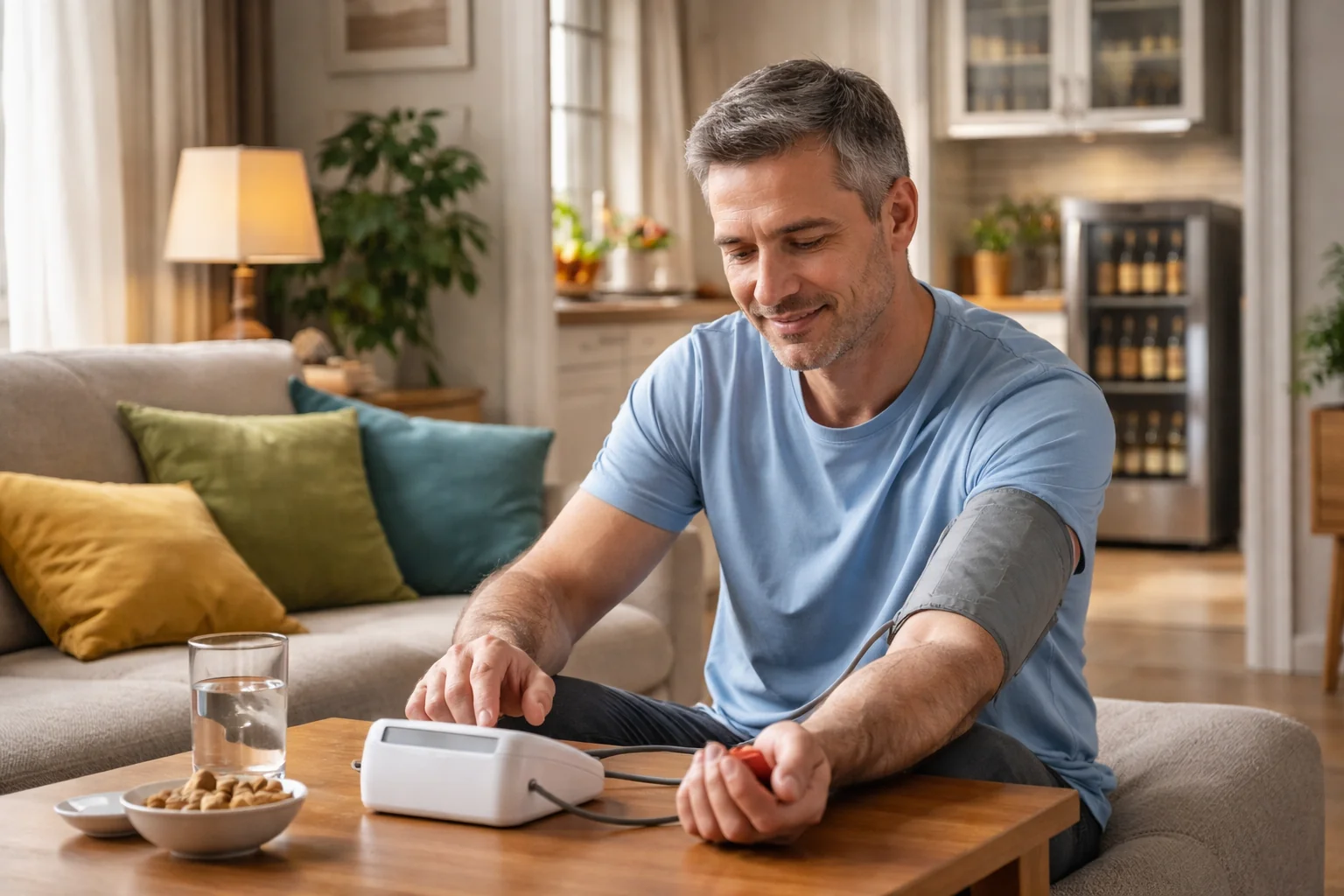
No, beer doesn't lower blood pressure. Beer raises blood pressure through the same mechanisms as wine and spirits. Any temporary blood pressure drop during drinking is followed by a rebound increase that exceeds the initial drop.
What You'll Discover:
• Why beer raises blood pressure, not lowers it.
• Where the misconception about beer lowering blood pressure comes from.
• How much beer increases blood pressure by specific amounts.
• Why beer often leads to higher consumption than other alcohol.
• Whether light beer is better for blood pressure than regular beer.
No, beer does not lower blood pressure. Beer raises blood pressure through the same biological mechanisms as all alcoholic beverages.
The misconception likely comes from alcohol's initial vasodilation effect. Blood pressure may drop temporarily for 1 to 2 hours after drinking, but this is followed by a rebound increase that lasts 12 to 24 hours.
Research from the National Institutes of Health shows alcohol affects blood pressure in a biphasic pattern. The net effect over 24 hours is blood pressure increase, not decrease.
Where the Misconception Comes From
The belief that beer might lower blood pressure stems from alcohol's initial vasodilation effect.
When you first drink beer, the alcohol causes your blood vessels to relax and widen. This is why some people feel warm or flushed when drinking. Wider blood vessels create less resistance to blood flow, which temporarily lowers blood pressure.
This effect begins within 30 to 60 minutes and can last for 1 to 2 hours. If you check your blood pressure during this window, you might see readings lower than your baseline.
After approximately 2 to 4 hours, blood pressure begins rising. The rebound elevation lasts for 12 to 24 hours, significantly longer than the initial drop.
People who check their blood pressure a few hours after drinking beer and see lower readings might incorrectly conclude that beer lowers blood pressure. They're missing the prolonged rebound that follows.
The net effect over 24 hours is blood pressure increase. The brief lowering phase is overwhelmed by the extended elevation phase.
How Beer Actually Affects Blood Pressure
Beer raises blood pressure through multiple biological mechanisms.
Ethanol activates your sympathetic nervous system. This increases heart rate and causes blood vessels to constrict after the initial vasodilation period ends.
Ethanol triggers the renin-angiotensin system. This hormonal pathway causes blood vessels to narrow and signals your kidneys to retain more sodium and water. Both effects increase blood volume and raise pressure.
Ethanol impairs baroreceptors, specialized sensors that detect blood pressure changes. When these don't function properly, your body loses ability to regulate blood pressure effectively.
The timeline: Blood pressure may drop slightly in the first 1 to 2 hours after drinking. Then it rises above baseline and remains elevated for 12 to 24 hours.
The elevation phase lasts 6 to 12 times longer than the lowering phase.
For someone who drinks beer daily, this creates constant elevation. Blood pressure drops briefly during drinking, then spends most of each day elevated before the next session begins the cycle again.
How Much Does Beer Increase Blood Pressure?
Beer increases blood pressure in amounts that scale with consumption.
One 12-ounce beer (5% ABV) - Creates a net increase of approximately 1 to 2 mm Hg over 24 hours. This accounts for both the initial drop and the rebound.
Two beers - Raises blood pressure by approximately 2 to 4 mm Hg. Someone with baseline pressure of 120/80 might see 124/82 the next day.
Three or more beers - Creates increases of 5 to 8 mm Hg. This becomes clinically significant for someone with existing hypertension.
Six-pack in one session - Produces acute spikes of 8 to 12 mm Hg. Someone starting at 118/76 might see 130/85 the next morning.
Daily beer consumption - One to two beers every evening creates chronic baseline elevation of 4 to 6 mm Hg. Blood pressure remains constantly elevated.
These are averages. Older adults, women, people with existing hypertension, and those with certain genetic variants experience larger increases.
Individual variation examples:
• A 60-year-old drinking three beers might see an 8 mm Hg increase
• A 30-year-old drinking the same amount might see only 4 mm Hg
• Women experience 20-30% greater increases than men for equivalent consumption
Why Beer Often Leads to Higher Total Consumption
Beer's characteristics make it easy to consume more total alcohol than with wine or spirits.
Volume creates casual overconsumption - Having "a few beers" feels casual and moderate. In practice, "a few" often means three to six. The volume makes it easy to drink multiple servings without feeling like you're drinking heavily.
16-ounce pints are common - Many bars serve beer in 16-ounce pints rather than standard 12-ounce servings. A 16-ounce beer at 5% ABV contains 1.3 standard drinks. Three pints equals four standard drinks.
Craft beers have higher alcohol content - Imperial IPAs and barrel-aged stouts often contain 7% to 12% ABV. A 16-ounce pint at 8% ABV contains nearly 2 standard drinks. Someone having "three craft beers" is actually consuming close to 6 standard drinks.
Social settings encourage more consumption - Beer is often consumed in social settings where having multiple drinks over several hours feels normal.
This pattern means beer drinkers often consume more total alcohol than they realize, creating larger blood pressure effects than expected.
Tracking actual beer consumption accurately:
Keep a log for one week noting exact serving sizes and ABV percentages. Multiply ounces by ABV and divide by 0.6 to get standard drinks. A 16-ounce beer at 7% ABV is (16 × 0.07) ÷ 0.6 = 1.87 standard drinks.
Many people discover they're consuming 50% to 100% more alcohol than they estimated. Someone who thinks they drink "two beers most nights" might actually be consuming three to four standard drinks nightly if those beers are craft pints.
This level of consumption creates chronic blood pressure elevation that wouldn't occur with actual moderate drinking. The underestimation means the health impact exceeds expectations, and blood pressure readings reflect actual consumption, not perceived consumption.
Light Beer Versus Regular Beer for Blood Pressure
Light beer provides minimal blood pressure advantage over regular beer.
Light beer typically contains 4.2% alcohol by volume, compared to regular beer at 5% ABV. This 0.8% difference represents about 16% less alcohol per serving.
One 12-ounce light beer contains approximately 0.84 standard drinks instead of 1.0 standard drinks. The blood pressure increase from light beer is about 15% to 20% less.
The practical difference is small. Light beer might raise blood pressure by 1 to 1.5 mm Hg instead of 1.5 to 2 mm Hg.
Many people compensate by drinking more light beer. If you drink four light beers instead of three regular beers, you've consumed more total alcohol despite choosing the "lighter" option.
The meaningful choice isn't light beer versus regular beer. The meaningful choice is drinking less beer overall, regardless of type.
So does light beer lower blood pressure? No. It raises blood pressure slightly less than regular beer, but the difference is minimal and often negated by increased consumption.
Craft Beer and High-ABV Beers
High-alcohol craft beers create particularly large blood pressure increases.
Imperial IPAs - Typically 8% to 10% ABV. A 16-ounce pint contains 1.7 to 2.1 standard drinks.
Double IPAs - Often 9% to 12% ABV. A single pint can contain more than 2 standard drinks.
Barrel-aged stouts and porters - Frequently 10% to 14% ABV. These are closer to wine in alcohol content than to regular beer.
Someone having "three craft beers" at a brewery might actually consume 5 to 6 standard drinks. The large serving sizes and high alcohol content compound to create effects that exceed expectations.
According to Mayo Clinic, heavy drinking significantly raises blood pressure. Three high-ABV craft beers qualify as heavy drinking even though it's "just three beers."
The blood pressure spike from three craft beers (6 standard drinks) can reach 10 to 15 mm Hg for someone with existing hypertension. This moves readings from normal into hypertensive ranges temporarily.
Common craft beer examples and their actual alcohol content:
Regular Budweiser (12 oz) = 1.0 standard drink (5% ABV)
Sierra Nevada Pale Ale (12 oz) = 1.12 standard drinks (5.6% ABV)
Stone IPA (12 oz) = 1.4 standard drinks (6.9% ABV)
Lagunitas IPA (12 oz) = 1.24 standard drinks (6.2% ABV)
Sierra Nevada Bigfoot Barleywine (12 oz) = 1.95 standard drinks (9.6% ABV)
Founders KBS Stout (12 oz) = 2.4 standard drinks (12% ABV)
These differences accumulate quickly. Someone drinking three "beers" of Founders KBS is actually consuming more than 7 standard drinks, creating blood pressure spikes comparable to heavy binge drinking.
The craft beer boom has increased average beer alcohol content substantially. What qualified as "three beers" in 1990 might now represent five to six standard drinks depending on what you're drinking.
Beer and Sodium Content
Some beers contain modest amounts of sodium that can compound blood pressure effects.
Regular beer typically contains 10 to 20 milligrams of sodium per 12-ounce serving. Light beer contains similar amounts.
For someone managing hypertension with sodium restriction, this adds up with multiple beers. Six beers would contribute 60 to 120 mg of sodium. While not enormous, it's additional sodium that compounds alcohol's blood pressure effects.
The alcohol content matters far more than sodium for blood pressure. But for someone strictly limiting sodium, beer's sodium content is worth considering.
Most beer labels don't list sodium content, making it difficult to know exact amounts.
If You Have High Blood Pressure and Drink Beer
If you have hypertension and drink beer, certain approaches minimize blood pressure impact.
Limit to one 12-ounce beer maximum - One standard beer creates modest increases that typically resolve within 24 hours.
Choose standard-strength beer (5% ABV), not high-ABV craft beer - This keeps alcohol content predictable.
Track actual consumption honestly - Count pints as 1.3 drinks. Count craft beers based on actual ABV. Don't round down.
Monitor your blood pressure the next day - Home monitoring shows you directly how beer affects your readings. Check your pressure the morning after drinking and compare it to days you don't drink.
Seeing readings of 136/84 after beer versus 120/78 without makes the effect concrete. This direct feedback is more motivating than abstract health warnings.
Create a simple log tracking beer consumption and next-morning blood pressure for two weeks. The correlation typically becomes obvious. Days after 2+ beers show readings 8-15 mm Hg higher than days without drinking.
This data helps demonstrate that the effect is real and personally relevant, not just a population statistic.
Consider reduction or elimination instead of switching to light beer - Research from the American Heart Association shows that any alcohol consumption raises blood pressure in people with hypertension.
Reducing total consumption provides more benefit than switching beer types.
When Beer Moderation Isn't Working
Many people understand they should reduce beer consumption for blood pressure reasons but struggle to maintain reduction.
Beer consumption, particularly in social settings, is reinforced by strong cultural associations. "Having a beer with friends" or "beer after work" becomes ingrained in routines.
The brain chemistry driving continued consumption overrides intellectual understanding of health consequences. Alcohol triggers dopamine release that creates powerful reinforcement.
Naltrexone provides a solution by changing the neurological equation. It's an FDA-approved medication that blocks opioid receptors involved in alcohol's rewarding effects.
When you drink beer while taking naltrexone, you don't experience the same pleasurable feeling. Over time, this weakens the reinforcement driving continued drinking.
The medication doesn't make you sick if you drink. It simply removes the reward, making beer feel neutral rather than appealing.
Understanding how naltrexone works helps explain why medication-assisted treatment has better success rates than willpower-based approaches.
Conclusion
Beer does not lower blood pressure. Beer raises blood pressure through the same biological mechanisms as wine and spirits.
Any initial blood pressure drop is temporary and followed by a prolonged rebound increase. The net effect over 24 hours is blood pressure elevation.
Beer's volume and social consumption patterns often lead to higher total alcohol intake than wine or spirits. This makes beer particularly problematic for blood pressure despite not being inherently worse per standard drink.
Switching from regular beer to light beer provides minimal benefit. Reducing total beer consumption provides substantial blood pressure improvements regardless of beer type.
For people who struggle to reduce beer consumption, medication-assisted treatment with naltrexone changes the brain chemistry driving drinking behavior, making sustained reduction possible.
Take the online Alcohol Use Assessment to see if naltrexone could help you reduce beer consumption and allow your blood pressure to improve.