A 2 minute assessment to get a personalized mental health or alcohol recovery plan.


Turning down a drink from your own mother is awkward. Turning one down from your partner's father, in his house, on the holiday he has hosted for thirty years, is a different sport entirely.
What You'll Discover:
• Why in-law drinking pressure is harder to manage than pressure from your own family.
• The conversation to have with your partner before the car doors close.
• Scripts that land as warm instead of as a boundary announcement.
• What to do when a host takes a declined drink personally.
• How to survive a multi-day visit where leaving early is not an option.
With your own family you have history, and history buys you credit.
You can tell your brother "I'm not drinking tonight, drop it" and absolutely nothing bad happens. He has known you since you were four. He will get over it before dessert.
With your in-laws, every sentence is a first impression that somehow never stops being one, even ten years in.
That is the actual difficulty, and it has very little to do with alcohol. It is a relationship where you are still, on some level, auditioning.
Why In-Laws Are Harder Than Your Own Family
You Have Less License to Be Blunt
Bluntness inside your own family is normal, because decades of context sit underneath it. Everybody knows you did not mean it that way.
In-laws do not have that buffer. A short answer from you can read as coldness, and there is no shared history around to soften it.
So the tools that work on your own parents (a flat no, an eye roll, a hard subject change) are simply not available. You need warmer instruments.
You Want to Be Liked, and That Is Reasonable
There is a version of this advice that treats wanting your in-laws' approval as a character flaw. That framing is neither useful nor accurate.
You want to be liked by the people who raised your partner because you love your partner. That is a healthy motive, and it is exactly what makes declining a drink feel risky.
Naming it honestly makes everything after it easier. The goal stops being "hold a boundary" and becomes "stay warm while doing what I already decided."
The Tradition Has a Drink Built Into It
Most families have one. The bottle that only comes out on Christmas Eve. The eggnog recipe that belongs to one specific aunt. The toast that has happened every year since before you existed.
None of that is really about alcohol. It is about continuity, and being handed a glass is how you get folded into the continuity.
Declining can read as declining membership, which is a much larger thing than declining a drink.
The Host Who Refills Without Asking
The refill is the single hardest moment of the visit, because there is no question to answer. Your glass is just full again.
For a lot of hosts, keeping glasses full is the definition of hosting well. Stopping them means interrupting something they experience as generosity, in their own home, in front of everyone.
The Partner Conversation Comes First
Almost the entire weekend gets easier or harder based on one conversation, and it needs to happen before you pull into the driveway.
Pre-Agree the Actual Plan
Tell your partner the plan in plain numbers. "Two on Christmas Eve, none on the drive day." Not "I'm going to take it easy."
Specific gives your partner something concrete to protect. Vague gives them nothing, and puts them in the position of guessing what you want in real time while their mother is standing right there.
Decide Who Explains What
This is the step people skip, and then argue about in the car on the way home.
Agree in advance on who says something, what exactly gets said, and how much detail is genuinely anyone's business. If your partner's mother asks your partner why you are not drinking, your partner should already know the answer.
If the two of you are in different places about drinking in general, that is worth working through separately. Our guide to quitting drinking when your partner still drinks gets into that dynamic properly.
Agree on an Exit Signal
Pick a phrase. Something completely ordinary, like asking whether they remembered to text the neighbor about the dog.
It means "I want out of this room" or "help me here," and it lets you tap out of a conversation without a single person at the table noticing anything happened.
What the Research Says About Family Drinking Pull
The sense that a household's drinking level pulls on you is not imagination. It has been measured.
Researchers following more than 12,000 people in the Framingham Heart Study found that alcohol consumption spreads through social networks of friends, siblings, spouses, coworkers, and neighbors.
Clusters of drinkers and abstainers showed up at every time point and extended out to three degrees of separation. An in-law holiday concentrates a large number of those ties into one house for several days.
The NIAAA splits the pressure into two kinds in its guidance on building drink refusal skills. Direct pressure is somebody offering you a drink. Indirect pressure is just being surrounded by people drinking.
In-law holidays run heavy on both, and the indirect kind is the one people underestimate, because there is nothing to decline. It just works on you quietly across four hours.
Research on drink refusal self-efficacy found that believing you can say no in a specific setting predicts both consumption and alcohol-related problems. Confidence in the moment is trainable, and most of the training is deciding beforehand.
The In-Law Moment vs a Warm Response
Scripts That Are Warm, Not Defensive
The most common mistake by a wide margin is over-explaining.
A long explanation signals that the topic is open for discussion, and it invites exactly the follow-up questions you were hoping to skip. Short and warm closes the subject. Long and earnest opens it.
A few that work in an in-law kitchen:
• "I'm good with this one, thank you."
• "I'm driving us back tomorrow, so I'm going slow."
• "This is perfect, honestly."
• "Ask me again after dinner."
That last one is quietly excellent. It accepts the offer socially while declining it practically, and almost nobody ever circles back.
Tone does more work than wording here. The same sentence delivered with a smile and delivered flatly are two completely different messages, and only one of them creates a problem.
Our guides on how to say no to a drink and how to explain not drinking go deeper on the wording, including what to do when someone keeps pushing after the first no.
When the Host Takes It Personally
Some hosts hear a declined drink as a declined welcome. That reaction is almost never actually about you.
For a person who has built part of their identity around feeding people and pouring for people, an empty glass at their table registers as a failure of hospitality.
So give the hospitality somewhere else to go. Ask for a second helping. Ask how they make the stuffing. Accept a coffee, a cider, a plate, a tour of the garage.
Praise the thing they made. Sit in their kitchen while they cook. Let them take care of you in a way that has nothing to do with a bottle, and the pressure usually dissolves inside an hour.
If someone stays visibly hurt, one sentence from your partner beats five from you. "He's fine, he's just not drinking much this year," said casually by their own child, ends the topic for good.
Keeping the Ritual Without the Alcohol
The tradition matters far more than the liquid, and most traditions survive the swap without anyone noticing.
Take the pour at the toast and set the glass down after a sip. Be the person who makes coffee after dinner. Volunteer for the drive so the role is visible and useful.
The move is to stay inside the ritual rather than opt out of it. Nobody feels rejected by someone who is obviously participating.
The Multi-Day Visit
A single dinner you can plan around. A five-day stay is a genuinely different problem, because the usual escape hatch of leaving early does not exist.
Day one is easy. Day three is where plans quietly come apart, and it is almost always fatigue rather than temptation that does it.
So build in something that gets you out of the house every single day. A walk, a run to the store, taking the dog around the block. Twenty minutes of not being observed resets more than most people expect.
Keep an eye on the cumulative math too. Four days at three drinks a day is twelve drinks across a long weekend that nobody would describe as heavy.
For reference, the CDC counts four or more drinks for women or five or more for men in one sitting as binge drinking, and holiday days clear that quietly.
If the deeper issue is a family culture where drinking is simply the default setting, our guide to being sober in a drinking family applies to in-laws too. The structural problem is identical, only the social license changes.
Where Naltrexone Fits
For a lot of people, the plan plus the partner conversation is genuinely enough. The scripts hold, the weekend goes fine, nobody notices anything.
For other people the plan holds right up until the second drink and then quietly stops being the plan. That is not weakness, and a better script does not fix it.
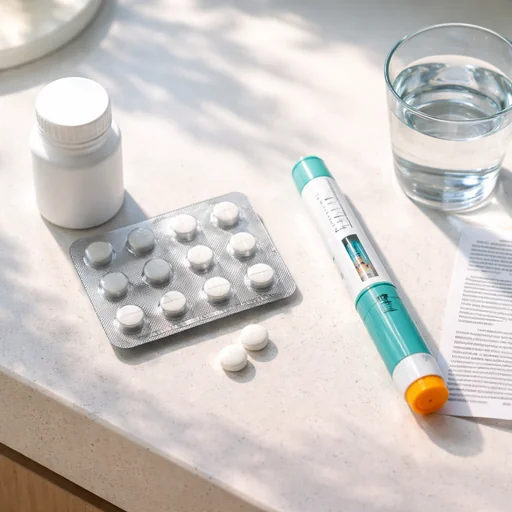
Naltrexone is an oral medication, typically 50mg tablets, that blocks the opioid receptors alcohol acts on. It dampens the reward response that makes the next drink feel necessary.
In practice that means the number you agreed on in the car is easier to hold at the table, without spending the evening negotiating with yourself.
Some people take it daily and some take a targeted dose before a known occasion. Which one fits depends on your drinking pattern and your health history, so it belongs in a conversation with a prescribing physician.
Choose Your Horizon combines naltrexone with coaching and physician-guided care rooted in clinical, neurological, and behavioral science, for people who want to drink less and for people who want to stop entirely.
The Weekend Is Winnable
In-laws are harder than your own family because you have less license and more to lose socially. That is real, and it deserves a plan rather than raw willpower.
Talk to your partner first and get specific. Agree on the number, the story, and the signal.
Keep every response short and warm. Give the host somewhere else to aim their generosity. Stay inside the traditions instead of stepping out of them.
Almost nobody will notice you did any of it, which is precisely the outcome you are after.
Frequently Asked Questions
How do I tell my in-laws I'm not drinking?
One short, warm sentence, said once. "I'm taking it easy tonight" covers it completely. You do not owe an explanation, and a long one usually invites more questions than it settles.
What if my father-in-law keeps refilling my glass?
Keep the glass more than half full so there is nothing to top up, and thank him warmly each time he tries. Redirecting his generosity toward food or coffee works far better than refusing outright.
Should my partner explain for me?
Often yes. One casual sentence from their own child lands better than five from you, so agree in advance on exactly what gets said and who says it.
What should I drink at my in-laws' house instead?
Anything that looks like a normal drink and stays in your hand. Sparkling water, cider, non-alcoholic beer, or coffee after dinner all work and quietly stop the offers.
How do I get through a five-day visit rather than one dinner?
Plan for day three rather than day one, because fatigue is what breaks most plans. Get out of the house briefly every day and keep your number identical across all five days.
Can naltrexone help with a specific holiday visit?
Some people take a targeted dose before a known occasion and others take it daily for steady coverage. Which approach fits depends on your pattern and health history, so it is a question for a prescribing physician.
You do not have to spend another holiday hoping the plan holds. Take the online Alcohol Use Assessment to find out whether naltrexone could make the visit easier.