A 2 minute assessment to get a personalized mental health or alcohol recovery plan.

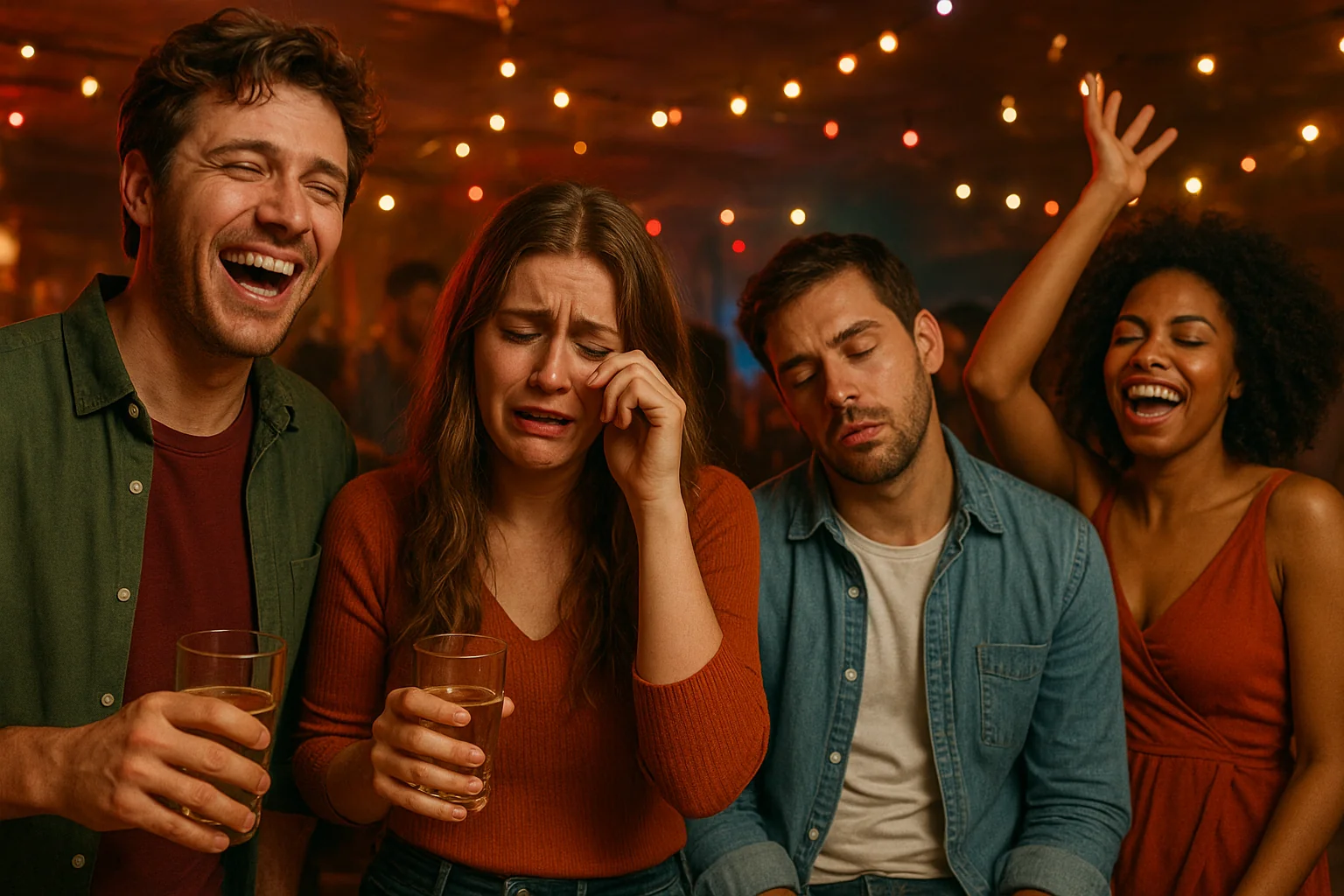
Research has identified distinct drunk personality types based on how alcohol changes behavior. Understanding which type you are helps explain why you act certain ways when drinking and when those changes might signal a problem worth addressing.
What You'll Discover:
• The four scientifically identified drunk personality types.
• Other common drunk types and what causes them.
• Why alcohol changes personality and behavior.
• The neuroscience behind drunk behavior.
• When your drunk type becomes concerning.
• What your drunk type reveals about your relationship with alcohol.
Most people notice that alcohol changes their personality. Some become more outgoing. Others become emotional, aggressive, or sloppy. These aren't random variations. Research has identified patterns in how alcohol affects different people.
Understanding drunk types goes beyond party conversation. Your drunk personality reveals something about how alcohol affects your brain and whether your drinking patterns might warrant attention.
The Four Scientific Drunk Types
A 2015 study published in the journal Addiction Research & Theory identified four primary drunk personality types. Researchers at the University of Missouri analyzed how alcohol changes the "Big Five" personality traits: extraversion, agreeableness, conscientiousness, openness, and emotional stability.
The study surveyed 374 participants about their sober and drunk personalities, then used cluster analysis to identify distinct patterns of change.
The Hemingway
Named after Ernest Hemingway, who famously claimed he could "drink hells any amount of whiskey without getting drunk," Hemingways are people whose personalities change very little when drinking.
Their conscientiousness and intellect remain mostly intact. They may feel the physical effects of alcohol, but their behavior stays relatively consistent with their sober selves. They don't become noticeably more outgoing, emotional, or impulsive.
Surprisingly, Hemingways make up about 40% of drinkers. This is the most common drunk type. Despite cultural portrayals of dramatic personality transformation when drinking, many people simply don't change that much.
Hemingways might drink the same amount as others but show less obvious behavioral change. This could reflect differences in how their brains respond to alcohol, or it might indicate drinking amounts that don't significantly impair function.
The Mary Poppins
Mary Poppins types become especially cheerful, friendly, and agreeable when drinking. Named after the famously pleasant Disney character, these drinkers show large increases in extraversion while maintaining conscientiousness.
They become more outgoing and sociable without becoming sloppy or irresponsible. They're often described as "happy drunks" who become more fun and engaging versions of themselves. Their social inhibitions decrease, but their judgment stays relatively intact.
Research suggests Mary Poppins types experience fewer alcohol-related problems. Their drunk behavior tends to be positive and doesn't create conflict or consequences. If anything, their drunk personality is an enhancement rather than a liability.
This type is relatively rare. Most people who become more extraverted when drinking also show decreases in conscientiousness.
The Nutty Professor
The Nutty Professor represents the classic introvert who transforms into a social butterfly after drinking. Named after the character who invents a potion that changes his personality, these drinkers show the most dramatic increase in extraversion.
Sober, they might be quiet, reserved, or socially anxious. After a few drinks, they become talkative, outgoing, and confident. The change can be dramatic enough that friends describe them as "different people" when drinking.
Nutty Professors also show the greatest decrease in conscientiousness when drinking. They become less inhibited and more impulsive along with more social. This combination of changes represents the largest overall personality shift of any type.
This type is common among people who describe themselves as shy or introverted when sober. Alcohol removes the mental barriers that normally constrain their social behavior.
The Mr. Hyde
The Mr. Hyde type is associated with problematic changes in behavior. Named after the violent alter ego in Dr. Jekyll and Mr. Hyde, these drinkers experience significant decreases in conscientiousness, agreeableness, and intellect when intoxicated.
Mr. Hyde types may become aggressive, argumentative, hostile, or erratic. They're the "mean drunks" or "angry drunks" who pick fights, say hurtful things, or engage in risky behavior they wouldn't consider sober. They may also become emotionally volatile, swinging between anger and tearfulness.
This type is most strongly associated with alcohol-related problems including conflicts, injuries, legal issues, and relationship damage. If you or others describe your drunk personality as angry, aggressive, or problematic, you likely fall into this category.
The Mr. Hyde type represents about 23% of drinkers according to the research. It's the most concerning type from a harm perspective.
Other Common Drunk Types
Beyond the four research-based categories, people commonly identify other drunk behavior patterns.
The Affectionate Drunk - Some people become extremely loving and touchy when drinking. They hug everyone, tell people they love them, and become physically affectionate in ways they wouldn't sober. This happens because alcohol lowers inhibitions around physical contact and emotional expression. Some people have strong affectionate impulses that only emerge when their normal social restraints are reduced.
The Sloppy Drunk - Sloppy drunks lose coordination, speak unclearly, and engage in embarrassing behavior. They may spill drinks, stumble, trip, or become generally disheveled. This typically indicates drinking past the point where the brain can maintain normal motor function. Everyone becomes a sloppy drunk at high enough blood alcohol levels.
The Sad Drunk - Some people become tearful, melancholy, or depressed when drinking. They might cry, dwell on past regrets, or become emotionally vulnerable about things they usually keep private. Since alcohol is a depressant that affects mood-regulating neurotransmitters, some people experience depressive symptoms when intoxicated. This is more common in people who have underlying depression or unresolved emotional issues.
The Philosophical Drunk - These drinkers become contemplative, wanting to discuss deep topics, life meaning, or existential questions. Alcohol's effects on inhibition can make people more willing to explore topics they usually avoid. The reduced self-consciousness can feel freeing for intellectual exploration.
The Blackout Drunk - People who frequently drink to the point of memory loss. They function during drinking, walking, talking, and interacting, but have no recall afterward. This indicates drinking that severely impairs brain function and is a significant warning sign for alcohol use disorder.
Why Alcohol Changes Personality
Alcohol affects brain chemistry in ways that predictably alter behavior and personality.
Prefrontal cortex suppression - The prefrontal cortex manages impulse control, judgment, and social behavior regulation. This region is responsible for the filter between thoughts and actions. Alcohol suppresses prefrontal cortex activity, reducing your ability to filter thoughts before speaking, resist impulses, or consider consequences. This explains why drunk people say and do things they wouldn't sober.
GABA enhancement - Alcohol increases the activity of GABA, an inhibitory neurotransmitter. This calms brain activity generally, reducing anxiety and social inhibitions. The result is often increased sociability and willingness to engage with others. For socially anxious people, this effect can feel liberating.
Dopamine release - Drinking triggers dopamine release in reward circuits, creating pleasurable feelings. This contributes to the mood elevation many people experience and the increased confidence some drinkers report. The dopamine surge also reinforces drinking behavior.
Reduced emotional regulation - Alcohol impairs the brain regions that regulate emotional responses. This can intensify whatever emotions are present, making happy people happier, sad people sadder, and angry people angrier. Emotions that are usually contained may spill out.
Research from the National Institutes of Health confirms that people consistently report personality changes when drinking, though outside observers note that the changes are often less dramatic than drinkers themselves perceive.
The Neuroscience of Aggressive Drunk Behavior
The Mr. Hyde drunk type has received particular scientific attention because of its association with violence and harm.
Research shows that alcohol affects the brain's ability to read social cues accurately. When intoxicated, people may misinterpret neutral or friendly facial expressions as threatening. They respond to perceived threats that don't actually exist, leading to defensive or aggressive behavior that seems unprovoked to observers.
Alcohol also reduces activity in brain regions that inhibit aggressive impulses. The combination of seeing threats that aren't there and having less capacity to restrain aggressive responses creates conditions for violence.
Men appear more susceptible to alcohol-induced aggression than women. Brain imaging studies show that alcohol affects the prefrontal cortex differently in males, potentially explaining higher rates of drunk aggression among men. Cultural factors also play a role in expectations about male behavior when drinking.
For people who become aggressive when drinking, this isn't simply a character flaw revealing their "true self." It's a neurological response to alcohol that some brains are more prone to than others. However, understanding the mechanism doesn't excuse the behavior. It does suggest that the drinking itself needs to be addressed rather than trying to control behavior through willpower while intoxicated.
When Your Drunk Type Becomes Concerning
Some drunk types are more problematic than others, but any pattern can become concerning depending on frequency and consequences.
Signs your drunk type is problematic:
• You've damaged relationships through drunk behavior
• You've done things drunk that you deeply regret sober
• Others have expressed concern about how you act when drinking
• You've experienced legal, professional, or health consequences
• Your drunk personality is drastically different from your sober self
• You drink specifically to become your drunk personality
• Drunk behavior is getting worse over time
• You've experienced injuries or put yourself in danger while drunk
The Mr. Hyde type is most obviously concerning because of its association with aggression and conflict. But any drunk type becomes problematic if the behaviors create negative consequences or if drinking to achieve that personality becomes a pattern.
Even seemingly positive types like the Nutty Professor can be concerning if you rely on alcohol to be social, if the personality change indicates you're drinking heavily, or if the decreased conscientiousness leads to regrettable decisions.
What Your Drunk Type Reveals
Your drunk type provides information about your relationship with alcohol.
If you're a Hemingway - Your personality is relatively stable when drinking. This might indicate moderate consumption, high tolerance, or simply how your brain processes alcohol. It suggests alcohol isn't creating dramatic behavioral problems, though it doesn't mean drinking is without health consequences.
If you're a Mary Poppins - Alcohol enhances your sociability without significant downsides. This is the "best case" drunk type, associated with fewer problems. However, relying on alcohol for positive social experiences can still become problematic over time.
If you're a Nutty Professor - You may be using alcohol to overcome social inhibitions or anxiety. The dramatic transformation suggests you're drinking enough to significantly affect brain function. Consider whether you need alcohol to feel comfortable socially and whether that reliance is healthy.
If you're a Mr. Hyde - Your drunk type is directly harmful. Aggressive, hostile, or problematic drunk behavior damages relationships and can create serious consequences. This type most clearly indicates that drinking patterns need to change.
If you drink to blackout - Memory loss from drinking indicates severe intoxication that impairs brain function. This pattern is dangerous and strongly associated with alcohol use disorder.
Addressing Problematic Drunk Types
If your drunk type concerns you, the solution isn't trying to be a different type of drunk. It's addressing the drinking itself.
For people whose drinking has become problematic, medication-assisted treatment with naltrexone offers an evidence-based approach to reduction.
Naltrexone blocks opioid receptors involved in alcohol's rewarding effects. When you drink while taking it, alcohol produces less pleasurable feeling. Over time, this weakens the reinforcement driving continued drinking.
The medication doesn't require abstinence. You can take naltrexone and continue drinking while consumption naturally decreases. For many people, reducing consumption means the problematic drunk behaviors never have a chance to emerge because they're drinking less overall.
The goal isn't to become a different drunk type. It's to reduce drinking enough that alcohol-induced personality changes stop causing problems or that you rarely drink enough to experience significant personality changes at all.
Can You Change Your Drunk Type?
Many people wonder if they can learn to be a different type of drunk while continuing to drink the same amount.
The short answer is no. Your drunk type reflects how your specific brain responds to alcohol. You can't will yourself into being a Mary Poppins when your brain's response pattern makes you a Mr. Hyde.
The only reliable way to change your drunk type is to change your drinking. Drinking less means less extreme personality changes regardless of type. For many people, moderate drinking produces minimal personality change, similar to the Hemingway type, simply because the brain isn't impaired enough to dramatically alter behavior.
If you don't like who you become when drunk, the solution isn't trying to become a different drunk. It's drinking less or not at all.
Conclusion
Research identifies four primary drunk personality types: the Hemingway (little change), the Mary Poppins (happier and friendlier), the Nutty Professor (dramatic increase in extraversion), and the Mr. Hyde (aggressive or problematic).
These types reflect how alcohol affects different brains differently, particularly changes in the prefrontal cortex, emotional regulation systems, and social processing areas.
Your drunk type provides information about your relationship with alcohol. While some types are more immediately concerning than others, any pattern that creates negative consequences or indicates heavy consumption deserves attention.
If your drunk personality worries you or has created problems, addressing your drinking is more effective than trying to change how you act when drunk.
Take the online Alcohol Use Assessment to see if medication-assisted treatment could help you reduce drinking and the drunk behaviors that come with it.