A 2 minute assessment to get a personalized mental health or alcohol recovery plan.

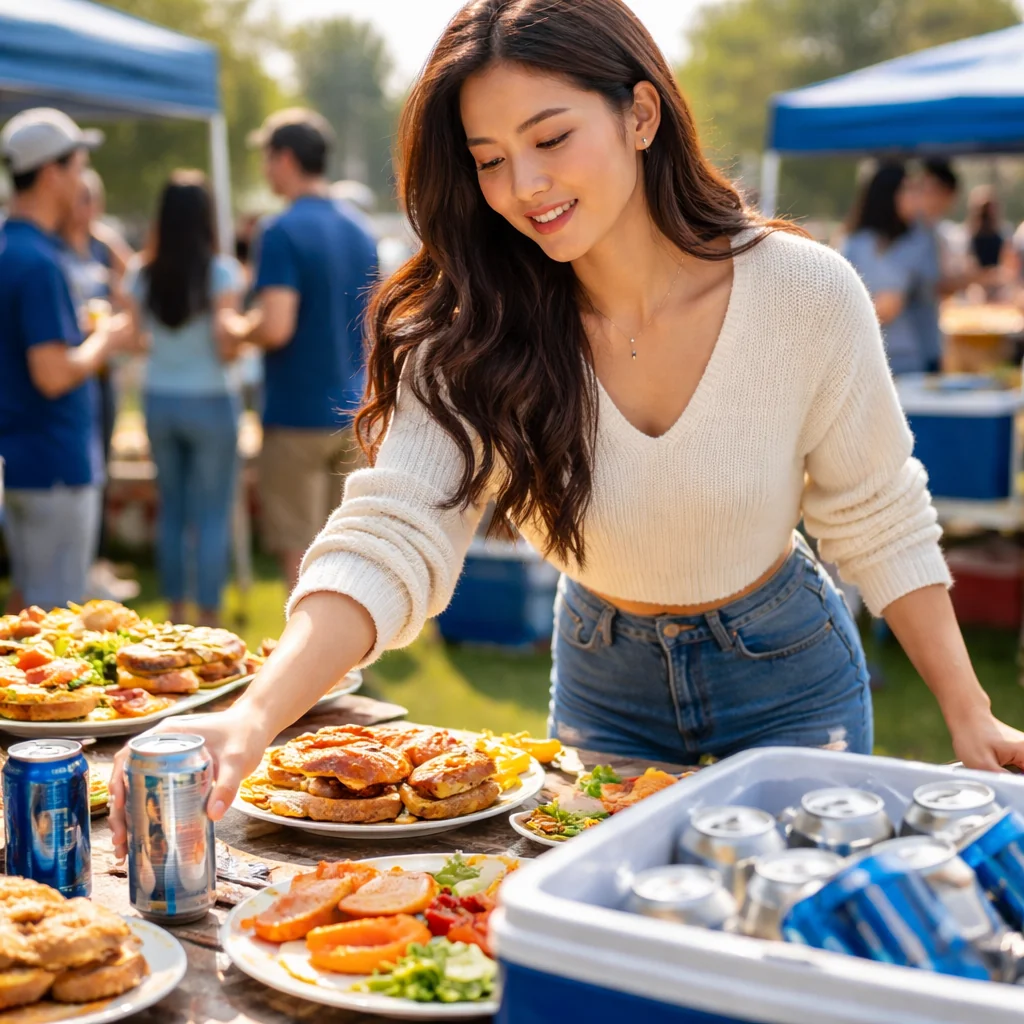
Football is the longest drinking occasion on the American calendar, and the fix is not giving it up. The fix is running the day with a plan.
What You'll Discover:
• Why football drinking outruns almost every other social occasion.
• What an eight-hour session actually does to your sleep and your Monday.
• The tailgate food strategy that changes the shape of the whole day.
• A quarter-by-quarter pacing plan that still feels like football.
• Where a targeted naltrexone dose fits before a big game day.
Nobody drinks at a football game the way they drink at dinner. Dinner has a beginning and an end.
Football has a pregame, a first half, a halftime, a second half, a postgame, and then a night game with your fantasy flex still playing.
That structure is the whole story. The problem with football season is almost never the beer itself. It is the clock.
So this is not a piece about giving up your Sundays. It is about keeping the parts you love (the tailgate, the group chat, the fourth-quarter comeback) and losing the part where Monday costs you something.
Why Football Is One of the Heaviest Drinking Rituals of the Year
The Session Runs Eight Hours, Not Two
The early window kicks at 1pm Eastern. The late window starts at 4:25. Sunday night runs until almost midnight.
Someone who watches all three is sitting inside a ten-hour window with a beer in reach the entire time. Add a tailgate and it starts at 9am.
Compare that to how heavy drinking is normally measured. The National Institute on Alcohol Abuse and Alcoholism defines binge drinking as the pattern that brings blood alcohol concentration to 0.08%.
For most adults that works out to about five drinks for men or four for women in roughly two hours.
Football spreads that same volume across eight hours instead of two. It never feels like a binge because you are never drunk fast. You are just drinking continuously.
The total lands somewhere past twelve, and because your blood alcohol never spiked hard, your brain files the day under "normal."
The Product Is Built Around Beer
The pairing is not an accident. Alcohol has been fused to football commercially for decades, and the exposure adds up.
A systematic review pooling seven studies and 12,760 participants found consistent positive associations between alcohol sports sponsorship and drinking, including hazardous drinking among adult sportspeople.
That does not mean an ad makes you drink. It means the environment you are sitting in has been designed, carefully, so that beer and football feel like the same thing.
The Group Sets the Pace, Not You
At a tailgate, nobody asks whether you want another one. Somebody hands you a cold can because that is what hospitality looks like in a parking lot.
Rounds move at the pace of the fastest drinker in the group. If one guy is on his fifth by kickoff, the whole cooler is moving at his speed.
Fantasy leagues stretch it further. A blowout used to mean you could leave. Now you stay because your running back is playing in a game nobody else cares about.
Emergency departments see the pattern in the data. An Australian cohort study of 5,792 alcohol-related presentations found nine percent landed on public holiday or sporting event days, a real concentration for a small slice of the calendar.
What an Eight-Hour Session Actually Does
Sleep Is the First Thing You Lose
This is the part people misread. Alcohol makes you fall asleep faster, so it feels like it helped.
In a controlled sleep lab study, an evening of binge drinking (four to five drinks in under two hours) cut REM sleep from about 20% of the night down to 15% and pushed participants into more light stage II sleep instead.
REM is where a lot of emotional processing and memory consolidation happens. Lose a chunk of it and you wake up technically rested and functionally flat.
You did not sleep badly on Sunday night. You slept shallowly, which is different and harder to notice.
Monday Morning Starts in the Third Quarter
The same study measured what happened the next morning. Resting heart rate came in higher after the drinking night, around 65 beats per minute compared to 58 after the control night.
Cardiovascular reflexes were blunted too. That is the physiological version of the feeling everyone describes as being underwater until about 11am.
Fluid loss showed up as well. Participants produced 2.9 liters of urine on the drinking night versus 2.1 liters on the control night.
That is most of a liter of extra fluid gone out of a body that already spent eight hours in a lawn chair, and it is why the headache arrives before the alarm does.
In a separate study, healthy volunteers given a weight-based binge dose showed something else worth knowing. Seven of ten took an unscheduled nap afterward, and the nappers showed measurable shifts in immune signaling that the non-nappers did not.
The 4pm couch coma is not laziness. It is a physiological event, and it also eats the rest of your Sunday.
The wider pattern of heavy weekend drinking is worth understanding on its own, which we cover in our guide to the health effects of weekend binge drinking.
The Calories Nobody Is Counting
Everyone tracks the wings. Almost nobody tracks the twelve-pack.
Beer is not a rounding error across an eight-hour day. A full Sunday of drinking can quietly outweigh every plate of food you ate around it.
The reason it hides so well is that liquid calories do not register as eating. You never sat down, so it never felt like a meal.
The Default Game Day vs a Game Day With a Plan
Here is the same Sunday, run two ways. Nothing in the right column requires you to skip the game or leave the party.
How to Enjoy the Season Without the Session
Eat Before the First Beer, Not After the Fourth
Tailgate food usually arrives an hour after tailgate beer, which is exactly backwards.
Food in your stomach slows how fast alcohol hits your bloodstream. Protein and fat slow it more than chips do.
So the move is simple. Eat something substantial before the cooler opens, not once you are already three deep and suddenly ravenous.
The practical version: bring or buy the food that gets eaten standing up. Brisket, sausage, eggs, cheese, anything with real protein in it.
Give Yourself a Number Before You Give Yourself a Beer
Deciding how much to drink while you are drinking has never worked for anyone. The decision has to happen before kickoff.
Pick a number for the day and pick it in the car. Six across ten hours is a completely different day than twelve across ten hours, and both still feel like football.
Then track it somewhere that is not your memory. A note on your phone, a tally, a photo of each empty. Anything external.
The tracking matters more than the number. People who count reliably drink less than people who estimate.
Alternate, and Make the Alternate Worth Drinking
Water between beers is the oldest advice in the book, and it fails for one reason. Water is boring and holding it feels like an announcement.
So alternate with something that looks like a drink. Sparkling water with lime, a good non-alcoholic beer, a cold soda in a koozie.
Non-alcoholic beer is genuinely good now, and most stadiums and grocery stores stock several. Holding one ends the conversation before it starts.
If a friend does push, you do not need a speech. Our guide on how to say no to a drink has short lines that work in a parking lot without making anything weird.
Not Every Sunday Is a Big Sunday
Seventeen weeks of regular season plus playoffs is a long stretch to run at full speed. Very few people can drink hard every weekend from September to February without it showing up somewhere.
So pick your games. Three or four Sundays a season are genuinely big ones. The rivalry game, the road trip, the playoff run.
The rest can be normal Sundays where you watch football and have two beers and go to bed at a reasonable hour.
That single decision, made in August, removes more drinking from your season than any in-the-moment willpower ever will.
Stand Somewhere That Is Not the Cooler
Proximity does a shocking amount of the work. If the cooler is at your feet, you will drink at the speed of your own arm.
Put it across the tailgate. Sit on the other side of the room. Make each drink cost you thirty seconds of walking.
It sounds too small to matter. It reliably cuts a couple of drinks off a long day, because most of the drinks in hour six were never decisions in the first place.
Where Naltrexone Fits on a Big Game Day
Some people do everything above and still find that once they start on a Sunday, stopping is not really available to them. That is not a character problem. It is a wiring problem.
Alcohol triggers an endorphin release that hits opioid receptors in the brain, which drives the dopamine surge that makes drink two want to become drink three. Naltrexone blocks those receptors.
With those receptors blocked, the drink still tastes like a beer. It just stops delivering the escalating reward that turns a six-beer day into a twelve-beer day.
That mechanism is why naltrexone works well for exactly this situation. It targets the pull to keep going, not the first drink.
It also comes in a targeted form. Some people take 50mg daily, and others take a dose about an hour before a known drinking occasion, which is what a 1pm kickoff is.
Beer drinkers in particular tend to describe the effect the same way, and we go deeper into that in our piece on naltrexone for beer drinkers.
Naltrexone has been FDA-approved for alcohol use disorder since 1994, and dosing and timing should be worked out with a physician who knows your health history.
The Social Layer Nobody Talks About
Football drinking is not really about beer. It is about belonging.
The group chat, the same seats, the guy who always brings the wrong dip. Drinking is the thing everybody does together, so drinking less can feel like opting out of the group.
It is not, but it takes a couple of weeks to stop feeling that way. The first Sunday you run at half speed will feel strange around the third quarter.
By the third or fourth week, most people report the opposite. They remember the game, they have opinions about the game, and they are not reconstructing the fourth quarter from a group chat.
Staying in the room without matching the room is a skill, and it is learnable. Our guide on how to socialize without alcohol covers the practical version.
A Game Day Plan You Can Actually Run
Put together, the whole thing takes about ninety seconds of planning in the driveway.
Eat before the first drink. Pick your number in the car. Alternate with something that looks like a drink. Keep the cooler out of arm's reach. Decide in advance whether the Sunday night game is a drinking game or a watching game.
That is it. No abstinence, no announcement, no lecture to your friends.
The measure of whether it worked is not how the third quarter felt. It is how Monday at 7am feels.
The Season Is Long. Your Sundays Do Not Have To Be.
Football season is one of the best stretches of the year, and it is also the single longest-format drinking occasion most Americans participate in.
Eight to ten hours of steady drinking does real things to your sleep, your resting heart rate, and the next thirty-six hours of your life. None of that requires giving up the season.
What it requires is deciding the shape of the day before the day starts. Food first, a number, alternates that do not feel like punishment, and a cooler you have to walk to.
If you have tried all of that and the pull to keep drinking is still stronger than the plan, that is useful information rather than a failure. It usually means the reward loop is doing more work than willpower can undo, and that loop is treatable.
Choose Your Horizon works with people who want to drink less and people who want to stop entirely, using naltrexone alongside coaching and physician-guided care grounded in clinical, neurological, and behavioral science.
Frequently Asked Questions
How many drinks is too many on a football Sunday?
There is no universal number, but the standard benchmark helps. About five drinks for men or four for women in roughly two hours puts most adults at 0.08% blood alcohol concentration.
Spreading twelve drinks over ten hours avoids that spike and still delivers a heavy total dose.
Does eating before drinking actually help?
Yes. Food in the stomach slows how quickly alcohol reaches your bloodstream, which flattens the peak and usually slows your pace. It does not reduce the total amount of alcohol your body has to process.
Can I take naltrexone just on game days?
Some people do use it that way, taking a dose roughly an hour before a known drinking occasion. Others take it daily so it is always in their system. Which approach fits you is a conversation for a prescribing physician.
Why do I feel worse after a slow all-day session than a fast night out?
Duration is doing the damage. An eight-hour session usually means a higher total volume, more fluid loss, and drinking closer to bedtime, all of which disrupt sleep and next-morning recovery more than a shorter night would.
Will non-alcoholic beer make me want a real one?
For most people it does the opposite. It occupies your hands, matches the ritual, and removes the social prompting, which is usually what drives the next drink at a tailgate.
Is it possible to drink less without telling my friends?
Almost always. Alternating, standing away from the cooler, and holding something that looks like a drink handle it quietly. Most people around you are tracking their own drinks, not yours.
Football season does not have to cost you your Mondays. Take the online Alcohol Use Assessment to find out whether naltrexone could help you enjoy the season without the session.