A 2 minute assessment to get a personalized mental health or alcohol recovery plan.


Lean mass is the thing most people on a GLP-1 are working hardest to protect, and alcohol undermines it through a mechanism that has nothing to do with calories.
What You'll Discover:
• Why some lean mass loss happens during any rapid weight loss, medication or not.
• What the body composition data actually shows, including the part that gets quoted carelessly.
• How alcohol blunts muscle protein synthesis after training.
• Why the two effects compound rather than simply adding up.
• The three levers that genuinely protect lean mass.
• How to adjust drinking around training without quitting.
Muscle preservation has taken over the GLP-1 conversation, and for good reason. Losing weight is the goal. Losing the tissue that holds up your strength and your metabolism is not.
Most of the advice stops at two items. Eat protein. Lift weights.
Both are right. Both leave out a variable a lot of people are quietly carrying, which is how much they drink and when they drink it.
Alcohol affects muscle through a pathway that has nothing to do with calories. That is exactly why it stays invisible in a food log.
Why Lean Mass Falls During Any Rapid Weight Loss
This part is not specific to GLP-1 medications at all.
When you lose weight quickly, some of what comes off is lean tissue. That includes muscle, but also water, glycogen, connective tissue, and the metabolically active mass of organs that shrink somewhat as body size drops.
The body does this for reasons that made sense historically. Lean tissue is expensive to maintain, and a sustained energy deficit reads as a signal to cut running costs.
The faster the deficit, the larger the lean share tends to be. That relationship holds across diet studies, surgical weight loss, and pharmacological weight loss alike.
So the question was never whether lean mass would change. It is how much of it changes, and what you do about the ratio.
What the Body Composition Data Actually Shows
Care is needed here, because these numbers get thrown around loosely.
A review of muscle loss and GLP-1 receptor agonist use walks through the body composition findings from the major trials.
Reported figures for the lean share of total weight lost vary meaningfully depending on the trial, the population, and the measurement method. Estimates commonly land somewhere between roughly a quarter and 40 percent.
That spread is not a rounding issue. Different studies used different DXA protocols and different definitions of lean tissue, so a single confident percentage should raise your eyebrows wherever you see one.
The fair counterpoint matters just as much. In the major semaglutide body composition work, fat loss substantially outpaced lean loss, so the proportion of the body made up of lean mass actually went up.
Absolute lean mass fell while overall body composition improved. Both things are true at once, and anything reporting only one of them is being selective.
None of that makes the concern misplaced. It means the job is to shift the ratio further in your favor, which is where protein, training, and pace come in.
What Alcohol Does to Muscle Protein Synthesis
Now the part that almost never appears in GLP-1 content.
In a controlled human trial, researchers had trained men complete resistance exercise followed by cycling, then gave them either protein alone, alcohol with protein, or alcohol with carbohydrate.
The study on alcohol ingestion and maximal post-exercise rates of myofibrillar protein synthesis measured what happened next.
Muscle protein synthesis fell by 24 percent when alcohol was co-ingested with protein, and by 37 percent with alcohol and carbohydrate, compared with protein alone.
The 24 percent figure is the one that matters. Protein did not rescue the effect.
That is the single most useful thing to take from this research. Eating well around a night of drinking reduces the damage, and it does not neutralize it.
Timing compounds it. The hours after training are when the muscle-building response peaks, which is precisely when a post-workout drink tends to land.
The Chronic Picture, Beyond One Night
Single sessions are one thing. Sustained intake is another.
A review of alcohol and skeletal muscle protein metabolism describes alcohol disrupting both sides of the equation, suppressing anabolic signaling while raising catabolic activity.
At the heavy end this becomes a recognized clinical picture. Chronic alcohol-related myopathy involves selective atrophy of type II muscle fibers, the fibers most responsible for strength and power.
The association shows up in population data too. A systematic review and meta-analysis of alcohol consumption and sarcopenia risk examined the relationship between drinking and age-related muscle loss.
Most people reading this are nowhere near the clinical end of that spectrum. The useful point is directional. The effect is dose-related, and it does not switch on only for heavy drinkers.
Our guide to alcohol and muscle growth covers the training side in more detail.
Why the Two Compound
Separately, each effect is manageable. Together they push from opposite ends of the same problem.
A GLP-1 creates an energy deficit, which by itself raises the pressure on lean tissue. It also reduces total food intake, and protein is usually the first thing squeezed out of a smaller appetite.
Alcohol then blunts the anabolic response to the training that is supposed to offset all of that.
It degrades sleep quality as well, and sleep is when most recovery and adaptation actually happen.
Then there is the displacement problem, which is underrated on a GLP-1 specifically. When you can only comfortably eat 1,400 calories in a day, 400 of them arriving as wine is not a neutral swap.
Alcohol calories do not add to your intake on a suppressed appetite. They replace food you needed, and the food they replace is usually protein.
Our piece on whether drinking alcohol stalls GLP-1 weight loss covers the broader intake picture.
The Second-Order Cost: Training You Do Not Do
The biochemistry is only part of it. The bigger practical cost for most people is simpler than that.
Sessions get skipped. Or they happen, but at 70 percent of the load you would have handled otherwise.
Alcohol fragments the second half of the night, and fragmented sleep shows up the next day as lower output, worse coordination, and a much lower tolerance for hard sets.
Over a month, four skipped or degraded sessions matter more to lean mass than the direct suppression of muscle protein synthesis on any one evening.
This is the part that compounds quietly. A deficit is already making training feel harder on a GLP-1, and alcohol removes the recovery capacity that was helping you push through it.
It is also the most fixable piece. Moving drinking away from the nights before your two hardest sessions recovers most of that cost without changing anything else.
Lean Mass Protectors vs What Alcohol Does
The Three Levers That Actually Work
Protein
This is the highest-leverage variable and the one most often missed on a GLP-1.
A randomized trial of higher versus lower protein during an energy deficit with intense exercise found the higher-protein group gained lean mass and lost more fat than the lower-protein group.
Practically, that means front-loading protein early in the day, before appetite suppression peaks, and treating the target as non-negotiable rather than aspirational.
Shakes count. On a GLP-1, liquid protein is often the only realistic route to hitting a number, and it is a completely legitimate one.
Resistance Training
Training is the signal that tells your body which tissue to hold onto.
Two sessions a week covering the major movement patterns is enough to shift the ratio meaningfully. Three is better. The specific program matters far less than showing up consistently for months.
Cardio is good for you and does very little for this particular problem. Do both, and do not substitute one for the other.
Our article on exercise while taking naltrexone covers training considerations for people managing drinking at the same time.
Pace of Loss
Faster is not better here, and this is the lever people are most reluctant to touch.
If you are losing more than roughly one percent of body weight per week over a sustained stretch, the lean share of that loss tends to climb. Slowing down is a legitimate clinical conversation rather than a failure of ambition.
Alcohol interacts with pace indirectly. Hidden liquid calories often push people to cut food further to compensate, which deepens the deficit in exactly the wrong direction.
Practical Adjustments Around Training
None of this requires quitting. A handful of specific changes carry most of the benefit.
Separate drinking days from training days wherever you can. The post-exercise window is the single worst time for it.
If you are drinking on a training day anyway, train in the morning and drink in the evening rather than the reverse.
Get protein in before the drinking starts. Appetite has a habit of disappearing entirely later in the night, and that is when the protein target gets abandoned.
And keep an honest count of nights, not just drinks. Frequency is what tracks with the chronic effects, more than volume on any single occasion.
The fat oxidation side of all this is covered in our piece on how alcohol stops fat burning.
When to Bring It to a Clinician
If drinking is harder to move than you expected, that is a clinical conversation rather than a discipline problem.
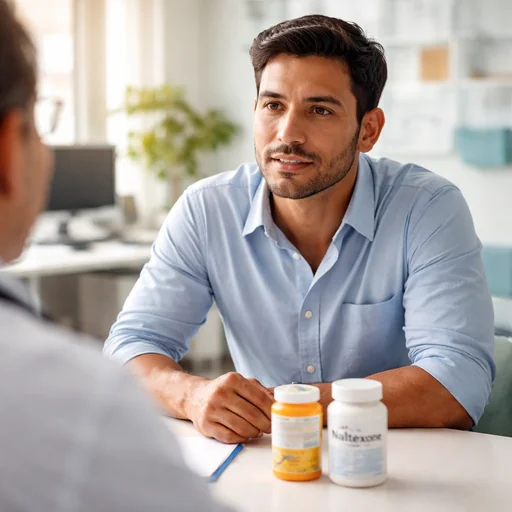
Naltrexone (oral 50mg) is FDA-approved for alcohol use disorder and works on the reward a drink delivers, which is a different lever entirely from appetite.
Some people are candidates for a physician-guided combination of a GLP-1 and naltrexone, which Choose Your Horizon offers where it is clinically appropriate.
Worth saying clearly: GLP-1 medications are not FDA-approved for alcohol use disorder. Using one for drinking is off-label, and the evidence on drinking outcomes is still emerging.
Also worth raising with a prescriber: your protein intake, your current pace of loss, whether side effects are limiting what you can eat, and whether a slower titration would protect lean mass better.
The Takeaway
Some lean mass loss happens during any rapid weight loss, and the reported figures on GLP-1 medications vary enough that no single percentage deserves your full trust.
Alcohol adds a separate, independent hit. It blunts post-exercise muscle protein synthesis by roughly a quarter even when you eat protein alongside it.
The two compound because one creates the deficit and the other weakens your defense against it, and neither shows up in the place most people look.
Protein, resistance training, and a sensible pace of loss are the three levers that work. Drinking less often protects all three at the same time, which makes it unusually efficient as changes go.
Frequently Asked Questions
How much muscle do you actually lose on a GLP-1?
Reported figures vary widely by trial and measurement method, commonly landing between roughly a quarter and 40 percent of total weight lost. Body composition typically still improves overall, because fat loss outpaces lean loss.
Does drinking after a workout undo the workout?
Not entirely, though it measurably blunts the response. One controlled trial found muscle protein synthesis reduced by 24 percent when alcohol was consumed with protein after training.
Will protein powder cancel out the effect of alcohol on muscle?
No. In the trial that tested exactly that question, co-ingesting protein reduced but did not eliminate the suppression of muscle protein synthesis.
Is beer better than spirits for preserving muscle?
Total ethanol matters more than the beverage. Beer brings extra carbohydrate calories, but the muscle effect tracks with the alcohol itself.
How much protein should I aim for on a GLP-1?
That belongs with your prescriber, since it depends on body size, kidney function, and goals. The direction from the research is higher than most people manage on a suppressed appetite.
Does the muscle effect of alcohol reverse if I cut back?
Follow-up studies after people reduce or stop drinking have shown improvement in muscle function, so the picture is not fixed. Training and protein are what drive the rebuild.
If drinking is the piece that keeps undermining work you are putting real effort into, take the online Alcohol Use Assessment to see what Choose Your Horizon physicians would recommend.