A 2 minute assessment to get a personalized mental health or alcohol recovery plan.

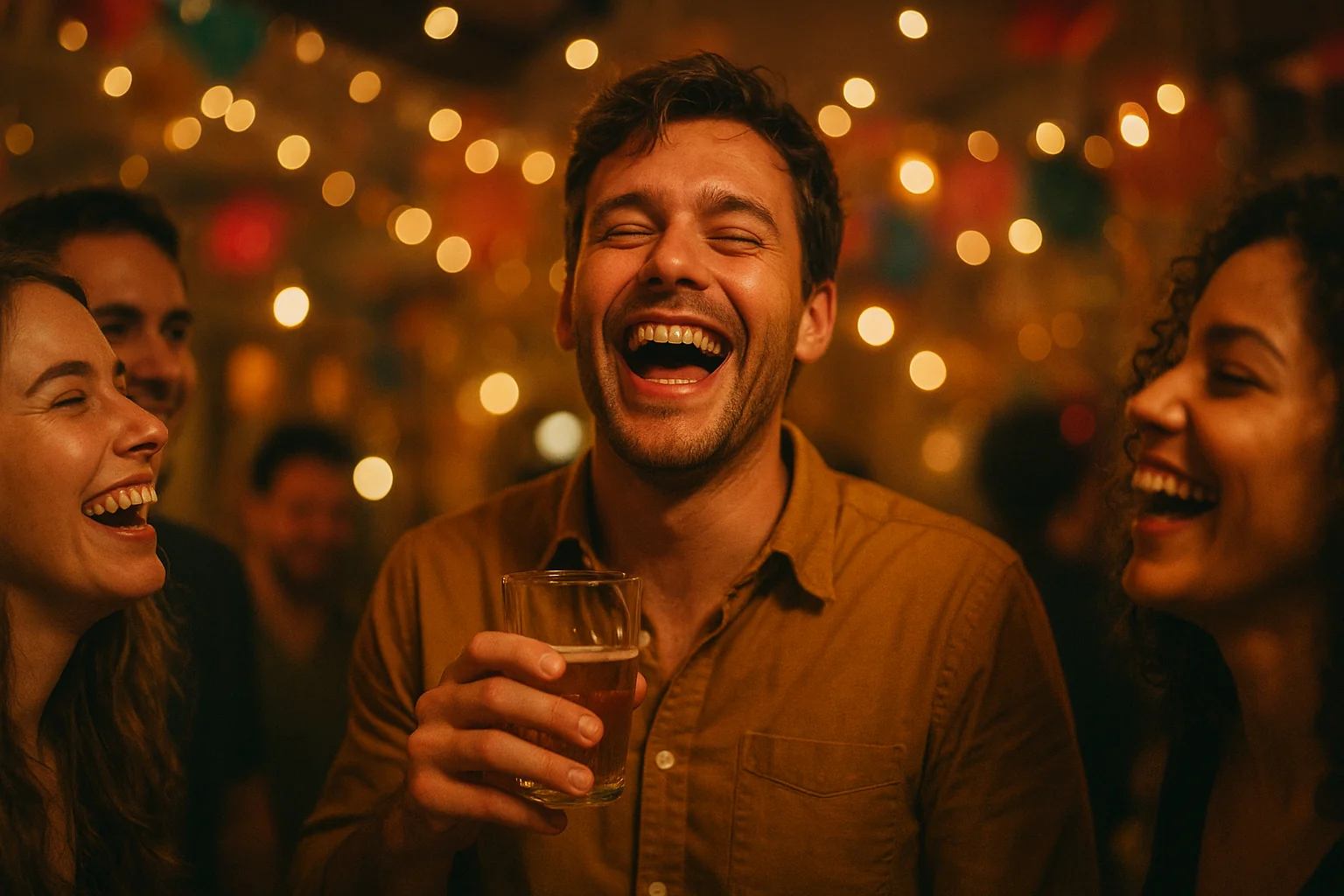
Happy drunks become noticeably cheerful, giggly, and upbeat when drinking. This happens because alcohol enhances dopamine release and reduces inhibitions around expressing positive emotions. While being a happy drunk seems harmless, it can still indicate patterns worth examining.
What You'll Discover:
• Why some people become happy drunks.
• The brain chemistry behind cheerful drunk behavior.
• How happy drunks compare to other drunk personality types.
• When being a happy drunk is harmless versus concerning.
• What this pattern reveals about your relationship with alcohol.
• Whether you can change your drunk type.
The happy drunk is often considered the best kind of drunk to be. These are the people who light up at parties, become giggly and enthusiastic, and generally seem to be having the best time.
But what makes someone a happy drunk? And does this seemingly positive pattern reveal anything worth knowing about your drinking?
What Is a Happy Drunk?
A happy drunk is someone whose mood elevates noticeably when drinking alcohol. They become more cheerful, more sociable, and more positive than their sober baseline.
Common characteristics include:
Increased laughter - Happy drunks laugh more easily and frequently. Things that might produce a smile sober produce full laughter when drinking.
Elevated mood - General mood improves beyond normal range. They seem genuinely happier than usual.
Enhanced sociability - They become more talkative, more engaging, and more interested in conversation.
Optimism and positivity - They express more positive views and seem less affected by worries or concerns.
Energy and enthusiasm - Rather than becoming sedated, they may become more animated and energetic initially.
Reduced complaints - Problems and stressors seem less important or are temporarily forgotten.
Generosity - Happy drunks often become generous, buying drinks for others or offering help and support freely.
The happy drunk pattern is often seen as ideal because it doesn't create the problems associated with angry, sad, or sloppy drunks. Friends typically enjoy being around happy drunks.
The Neuroscience of Happy Drunk Behavior
Several brain mechanisms explain why alcohol makes some people happy.
Dopamine release - Alcohol triggers dopamine release in the brain's reward circuits. Dopamine creates feelings of pleasure and well-being. For some people, this effect is particularly strong, producing noticeable mood elevation.
The degree of dopamine response varies between individuals. Those with stronger responses experience more pronounced mood elevation and are more likely to be happy drunks.
GABA enhancement - Alcohol increases GABA activity, which reduces anxiety and worry. When baseline anxiety decreases, the remaining emotions may be predominantly positive.
For people who carry significant background anxiety, the relief from GABA enhancement can feel euphoric.
Reduced negative filtering - The prefrontal cortex normally filters our emotional expression. When alcohol suppresses this region, both positive and negative emotions emerge more freely. For naturally optimistic people, what emerges may be predominantly positive.
Social reward amplification - Alcohol enhances the rewarding feeling of social interaction. Conversations and connections feel more pleasurable, which increases positive mood.
Endorphin release - Alcohol also triggers endorphin release in some people, adding to the pleasurable feelings.
Research from neuroscience journals confirms that alcohol affects mood through multiple neurotransmitter systems. Individual variation in these systems explains why some people become happy drunks while others become sad or angry.
Happy Drunks Versus Other Drunk Types
Research has identified several distinct drunk personality types. Understanding where happy drunks fit helps contextualize this pattern.
The Hemingway - People who change very little when drinking. Their personality remains stable. About 40% of drinkers fall into this category.
The Mary Poppins - People who become happier and friendlier while maintaining good judgment. This most closely describes the happy drunk. They experience positive changes without significant negative ones.
The Nutty Professor - Introverts who become dramatically more extroverted. They may become happy, but the more notable change is from quiet to talkative.
The Mr. Hyde - People who become aggressive, hostile, or problematic. This is the opposite of the happy drunk.
Happy drunks typically fall into the Mary Poppins or Nutty Professor categories, depending on their sober baseline. The key characteristic is that their changes are positive rather than negative.
Why Some People Are Happy Drunks and Others Aren't
Individual differences determine drunk personality types.
Baseline mood - People with naturally positive dispositions are more likely to become happy drunks. Alcohol amplifies existing tendencies.
Brain chemistry - Variation in dopamine receptors and reward system sensitivity affects how much pleasure alcohol produces.
Drinking context - Happy drunk behavior is more likely in positive settings with friends versus drinking alone when sad.
Amount consumed - Moderate drinking is more likely to produce happy drunk effects. Higher consumption may shift mood negatively as sedation and impairment increase.
Mental health - People with underlying depression or anxiety may not experience the happy drunk pattern even if they expect to.
Genetics - Genetic factors influence how alcohol affects mood and which drunk type someone becomes. Studies suggest these factors are significantly heritable.
Expectations - Cultural and personal expectations about how alcohol should make you feel can influence the experience, though biology sets the basic parameters.
You can't choose to be a happy drunk if your brain chemistry produces different effects. Drunk personality reflects biology, not willpower.
When Being a Happy Drunk Is Harmless
For many people, the happy drunk pattern creates no significant problems.
Signs the pattern is harmless:
• Mood elevation is pleasant for you and others
• You maintain awareness of boundaries and appropriateness
• Happiness doesn't escalate to reckless behavior
• You don't need alcohol to experience happiness
• Friends enjoy your company when you drink
• You drink in moderation
• Happy drunk episodes don't create regrets
• Your drinking frequency isn't excessive
• You can enjoy social situations sober too
In these cases, being a happy drunk may simply reflect how your brain responds to alcohol without indicating any problem.
When Being a Happy Drunk Becomes Concerning
Even positive drunk patterns can become problematic.
You rely on alcohol for happiness - If you feel you need alcohol to be happy, have fun, or enjoy social situations, that dependence is concerning regardless of how pleasant your drunk behavior is.
Happiness masks excessive drinking - Because happy drunks don't create obvious problems, their drinking may go unexamined. You can still be drinking too much even if the behavior seems positive.
It enables continued drinking - Being a happy drunk may encourage more drinking because the experience is pleasant. This can lead to escalating consumption over time.
Others have expressed concern - If people close to you have mentioned concerns about your drinking, their perspective matters even if your drunk behavior seems fine to you.
You drink to access happiness - Using alcohol as a mood enhancer regularly suggests it's serving an emotional function that warrants attention.
Your sober life feels inadequate - If drunk happiness highlights a lack of happiness when sober, that contrast is worth exploring.
Drinking frequency has increased - If you're drinking more often to access the happy state, consumption may be becoming problematic.
What Happy Drunk Behavior Reveals
Your drunk personality provides information about your relationship with alcohol.
Alcohol significantly affects your brain - Noticeable personality change indicates alcohol is substantially altering brain function. Even pleasant changes represent meaningful neurological effects.
Your mood may be suppressible - If you're much happier when drinking, you may be dampening positive emotions when sober. This could reflect stress, depression, social anxiety, or simply learned restraint.
Drinking feels rewarding - Happy drunk experiences strongly reinforce drinking. The pleasure makes you more likely to drink again and potentially more.
Context matters for your drinking - Happy drunk behavior usually occurs in social settings. Understanding when and why you drink happily versus not provides information about your patterns.
You may be self-medicating - If alcohol reliably produces happiness you don't otherwise feel, you may be using it to manage mood without realizing it.
The Danger of "Harmless" Drunk Types
Happy drunks face a specific risk: because their behavior seems positive, problems with drinking can go unrecognized.
Angry drunks know they have a problem because their behavior creates obvious consequences. Sad drunks recognize drinking makes them feel worse. But happy drunks may not question their drinking because the experience is enjoyable.
This can lead to:
Unexamined consumption - Drinking more than intended because it feels good.
Delayed recognition of problems - Not realizing drinking has become excessive until consequences appear.
Others not intervening - Friends may not express concern because your behavior seems fine.
Health effects without behavioral warning signs - Alcohol's physical health effects occur regardless of drunk type. Liver damage, cancer risk, and other consequences don't care whether you're a happy or angry drunk.
Tolerance development - Needing more alcohol to achieve the same happy feeling can drive escalating consumption.
Being a happy drunk doesn't mean drinking isn't affecting your health or that consumption levels are appropriate.
Can You Change Your Drunk Type?
Some people wonder if they can learn to be a happy drunk instead of whatever type they currently are.
The short answer is no. Drunk personality reflects how your brain responds to alcohol. You can't change your neurochemistry through willpower.
The only way to change drunk behavior is to change drinking:
Drink less - Lower consumption produces less dramatic personality changes of any type.
Don't drink - No drinking means no drunk personality at all.
Address underlying issues - If angry or sad drunk behavior reflects underlying problems, addressing those problems may affect drunk behavior indirectly.
Trying to "be different" when drunk while drinking the same amount doesn't work. The behavior emerges from brain chemistry, not conscious choice.
Common Questions About Happy Drunks
Is being a happy drunk genetic?
Partially. Research suggests drunk personality types have a genetic component. However, environment, mental health, and context also influence how alcohol affects your mood.
Can happy drunks become other types?
Yes. As drinking increases, mood effects can change. A happy drunk at two drinks may become a sad or sloppy drunk at six drinks. Consistent happy drunk behavior usually indicates moderate consumption.
Why am I a happy drunk sometimes but not others?
Context matters significantly. Drinking with friends in positive settings is more likely to produce happy drunk effects than drinking alone or when stressed. Mental state before drinking affects the outcome.
Is being a happy drunk better for your health?
Not physically. The health effects of alcohol depend on how much you drink, not your mood while drinking. A happy drunk drinking heavily has the same health risks as any other heavy drinker.
Do happy drunks have lower tolerance?
Not necessarily. Drunk type and tolerance are separate factors. A happy drunk can have high or low tolerance depending on their drinking history and genetics. High tolerance can actually be concerning because it allows for consuming more alcohol before feeling drunk.
Can medication change your drunk type?
Medications like naltrexone that affect alcohol's reward mechanisms may change how you experience drinking. By blocking some of alcohol's pleasurable effects, these medications can reduce the mood elevation that characterizes happy drunks, which is part of how they help reduce overall consumption.
The Happy Drunk in Social Context
Social settings often enable and reinforce happy drunk behavior.
Group dynamics - Being around other happy drunks creates positive feedback loops. Everyone's good mood feeds everyone else's.
Social acceptance - Happy drunks are welcomed at parties and gatherings. This positive reception reinforces the behavior.
Identity formation - Some people come to see being a "fun drunk" as part of their identity, which can complicate recognizing when drinking becomes problematic.
Understanding how social context shapes your drinking can help you make more informed choices about when and how much to drink.
Signs Your Drinking May Need Attention
Regardless of drunk type, certain patterns suggest drinking deserves examination.
• Drinking more than you intend
• Difficulty cutting back when you try
• Drinking regularly to manage mood
• Needing alcohol to feel happy or relaxed
• Others expressing concern
• Negative health effects
• Interference with work, relationships, or responsibilities
For people whose drinking has become concerning, medication-assisted treatment with naltrexone can help reduce consumption.
Naltrexone works by blocking alcohol's pleasurable effects, including the dopamine release that makes happy drunks happy. This gradually reduces the reinforcement driving continued drinking.
Conclusion
Happy drunks become cheerful, giggly, and upbeat because alcohol enhances dopamine release and reduces inhibitions around positive emotional expression. This pattern is generally considered the most socially acceptable drunk type.
However, being a happy drunk doesn't mean drinking is problem-free. Pleasant drunk experiences can mask excessive consumption and delay recognition of drinking issues.
If your happy drunk behavior has made you question your relationship with alcohol, examining your drinking patterns is worthwhile regardless of how pleasant they feel.
Take the online Alcohol Use Assessment to see if medication-assisted treatment could help you reduce drinking regardless of which drunk type you are.