A 2 minute assessment to get a personalized mental health or alcohol recovery plan.

Cutting back on alcohol without quitting entirely is a clinically supported goal, and there are real tools, including medication, that make it achievable.
What You'll Discover:
• Why moderation is a legitimate treatment outcome, not a consolation prize.
• The behavioral strategies that actually hold up when willpower alone has failed.
• What the Sinclair Method is and how pharmacological extinction works.
• How naltrexone helps most people drink less, with or without full abstinence.
• When moderation is the right call and when abstinence is the safer path.
• How to get a physician on your side if your goal is reduction, not sobriety.
If "just stop drinking" has never once felt like useful advice, you are not alone.
Most people who want to change their relationship with alcohol are not after a sober life. They want to feel more in control. They want to wake up without regret.
They want to drink on their own terms rather than because habit or craving decided for them. That goal has a name: moderation. And it is a clinically legitimate treatment outcome.
Why Wanting to Cut Back (Not Quit) Is a Legitimate Goal
For a long time, the dominant message in alcohol treatment was abstinence or nothing. That framing left out a very large group of people.
The National Institute on Alcohol Abuse and Alcoholism defines heavy drinking as more than 4 drinks on any single day, or more than 14 per week for men. For women the thresholds are lower.
Many people who drink above those levels do not have severe dependence. They fall in the mild-to-moderate range of Alcohol Use Disorder, and for that group reduction is a realistic and worthwhile clinical goal.
A 2023 meta-analysis on PubMed pulled together 118 clinical trials covering more than 20,000 participants. It confirmed that medication-assisted treatment measurably reduces both drinking frequency and heavy drinking days.
Trial endpoints were not limited to full abstinence.
So if you want to drink less rather than quit entirely, that is a valid goal to bring to a clinician.
For more on what happens to your body and mood when you cut back, see our piece on the benefits of drinking less alcohol.
Practical Behavioral Strategies That Actually Work
Behavioral change is not enough for everyone. But it is a real foundation, and these strategies have evidence behind them.
Track Every Drink
People consistently underestimate how much they drink when they rely on memory. A drink tracking app, or even a notes app on your phone, changes that fast.
Seeing your actual numbers in real time raises awareness without relying on willpower alone. Count standard drinks, not pour sizes. A standard drink is 12 oz of regular beer, 5 oz of wine, or 1.5 oz of spirits. Most home pours run higher.
Set Alcohol-Free Days
Choosing specific days to skip alcohol builds a pattern of "not drinking" that does not feel like deprivation. It also keeps the daily habit from taking hold.
Start with two alcohol-free days per week and build from there. According to NIAAA alcohol consumption data, even modest reductions in drinking frequency produce measurable health benefits over time.
Slow Your Pace
One drink per hour. Finish your glass before getting another. Alternate with water. These rules create friction, and that friction is the point.
Many people drink fast out of habit, not because they actually want more. Our guide to how to resist alcohol cravings covers additional tactics for managing the urge in real time.
Change Your Environment
Triggers are real. Drinking tends to increase in certain places, with certain people, or at certain times of day.
Identifying your highest-risk contexts and making small adjustments reduces the pull without requiring constant willpower. Showing up later, leaving earlier, or keeping a non-alcoholic drink in hand all count.
The Sinclair Method: A Clinical Protocol for Drinking Less
The Sinclair Method (TSM) is a structured, evidence-based approach to alcohol reduction. It was developed from decades of research into how alcohol affects the brain's reward system.
The core idea is pharmacological extinction. You take naltrexone about one hour before you drink. Naltrexone blocks the opioid receptors that alcohol would normally activate, which blunts the rewarding effect.
Over repeated use, your brain gradually unlearns the association between drinking and pleasure. Cravings reduce. Consumption decreases.
TSM is explicitly a moderation protocol, not an abstinence protocol. It does not require you to stop drinking before you start. It works through the drinking itself.
We cover the full research basis in our detailed guide to the Sinclair Method, including how it differs from daily naltrexone use and what results look like over time.
How Naltrexone Supports Moderation
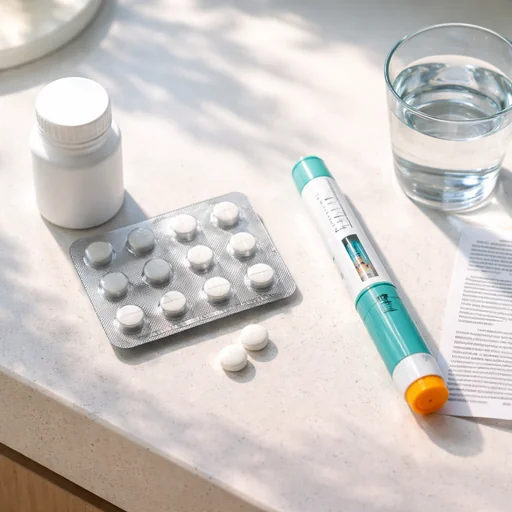
Naltrexone is an FDA-approved medication for Alcohol Use Disorder. It has been on the market since 1994 and has one of the most robust evidence bases in addiction medicine.
According to StatPearls via NCBI, naltrexone works as an opioid antagonist. It binds to the mu-opioid receptors that alcohol would normally activate.
When those receptors are blocked, alcohol produces less of its rewarding effect. The craving for the next drink weakens.
What the Clinical Trials Show
The key point for anyone with a moderation goal is that naltrexone's benefits extend well beyond abstinence rates.
A Canadian clinical trial published on PubMed found that 86% of participants who were drinking at baseline consumed less alcohol by the end of the 12-week treatment period. Thirty-nine percent achieved full abstinence.
The majority reduced their drinking significantly without ever quitting entirely.
That 86% figure is what matters here. Naltrexone helped most people drink less regardless of whether they stopped completely.
How It Works in Daily Life
Naltrexone can be taken daily, which gradually reduces baseline craving. It can also be taken on a targeted basis, meaning shortly before a planned drinking event, as in the Sinclair Method. Both approaches are used clinically.
The medication does not cause sedation and does not interact with alcohol in a dangerous way. The most common complaint is mild nausea in the first week, which typically resolves on its own.
For a deeper look at how naltrexone addresses cravings, see our article on does naltrexone stop alcohol cravings.
For a full overview of mechanism, dosing, and what to expect early on, our guide to what naltrexone is and how it works covers it all.
When Moderation Is Enough vs. When Abstinence Is the Safer Path
Moderation is a realistic goal for many people, but not for everyone. It is worth being honest about that.
Moderation tends to be a good fit when you are in the mild-to-moderate range of Alcohol Use Disorder. It also works well if you do not have a history of severe physical withdrawal.
Your drinking also needs to not have caused irreversible health or life consequences. For people who want to reduce harm while they figure out a longer-term plan, moderation is a reasonable starting point.
Abstinence is often the safer path if you have severe physical dependence, a history of alcohol-related seizures, or significant liver disease.
It is also the smarter choice when past moderation attempts have consistently failed and drinking has kept escalating.
If you have any signs of physical dependence, do not attempt to stop cold turkey without medical supervision. Alcohol withdrawal can be medically serious. A clinician can guide you safely.
All that said, the right goal is the one that improves your life and keeps you safe.
If your goal right now is to reset your tolerance while you figure out next steps, our piece on alcohol tolerance reset explains what happens physiologically when you take a break.
How to Get Medical Support for a Moderation Goal
You do not need to hit a personal low point to deserve medical help with drinking. You do not need to label yourself or want full sobriety.
What you need is a clinician who takes moderation seriously as a treatment goal. Not all do. Traditional treatment has historically focused on abstinence, and some providers still do. That is changing, though.
Physician-guided naltrexone programs are available entirely online. You fill out an assessment, a physician reviews your information, and if you are a candidate, a prescription is sent to your door in discreet packaging. No in-person visits required.
When looking for a program, check whether moderation is supported as a goal (not just abstinence), whether care is led by licensed physicians, and whether ongoing support is included.
Choose Your Horizon is built for people with exactly this goal. The program supports both moderation and abstinence with no judgment either way.
It is physician-led, fully online, and designed for people who want to change their relationship with alcohol on their own terms.
Wanting to drink less without quitting entirely is not a weak goal. It is a specific, clinically supported outcome that real medical treatments are designed to help you reach.
The behavioral strategies here give you a foundation. The Sinclair Method offers a structured pharmacological path to reduction.
And as the clinical evidence shows, naltrexone helps most people who take it drink less, whether or not they ever stop entirely.
You do not have to white-knuckle this. There is a middle path, and medical support makes it far more achievable.