A 2 minute assessment to get a personalized mental health or alcohol recovery plan.

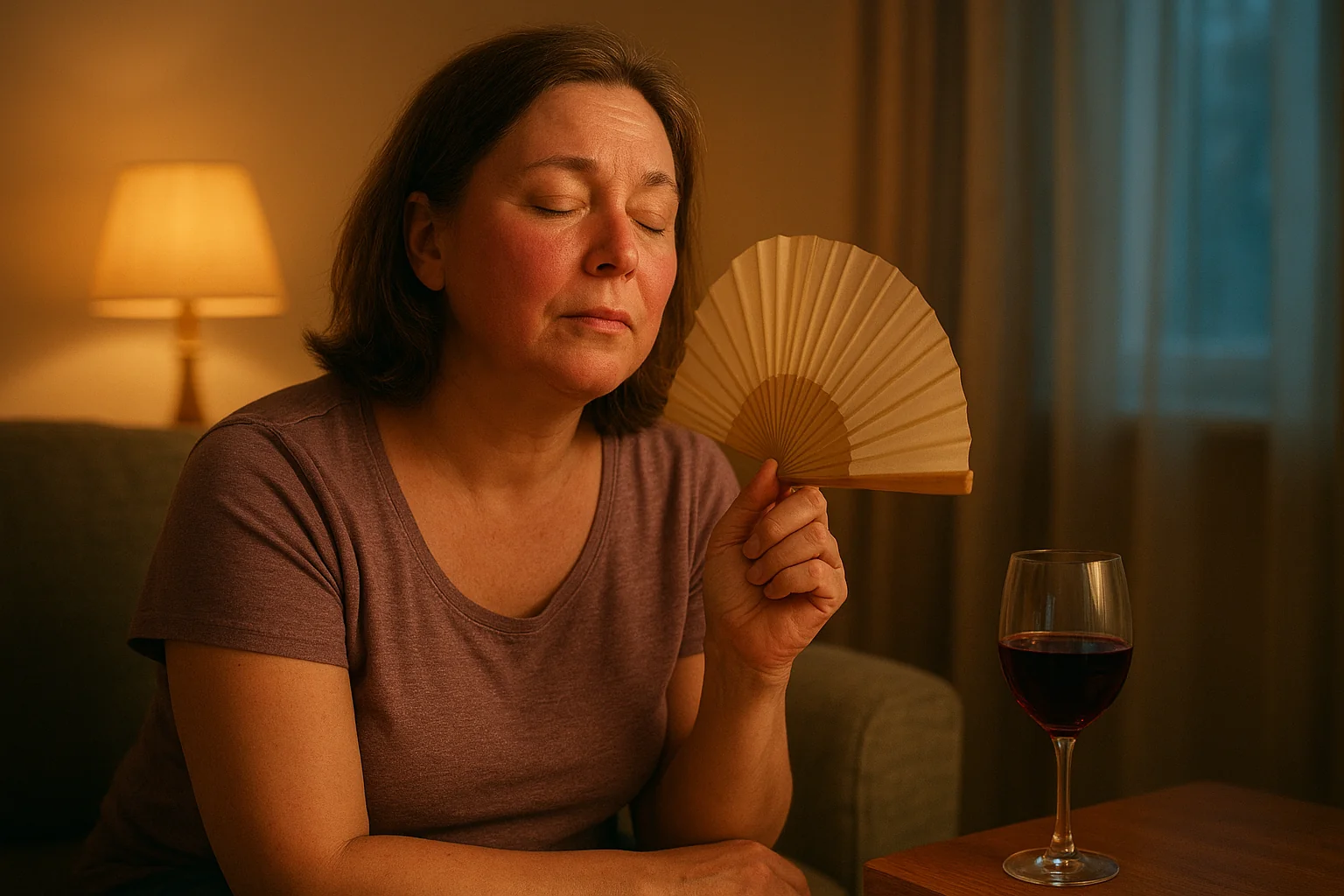
If you have noticed hot flashes getting worse after wine or cocktails, you are not imagining it. Alcohol is one of the most consistent dietary triggers for vasomotor symptoms, and the mechanism is well understood.
What You'll Learn:
• How alcohol triggers a hot flash at the physiological level.
• Why some drinks are more triggering than others.
• What research shows about the dose-response relationship.
• How alcohol and hot flashes interact with sleep and night sweats.
• Practical steps that reliably reduce alcohol-triggered flashes.
Hot flashes are one of the most disruptive features of perimenopause and menopause. They can hit without warning, leave you soaked and exhausted, and wake you at 3 a.m. for weeks on end. Many women notice that certain things reliably make them worse, and alcohol is at the top of that list.
This article explains what actually happens when alcohol triggers a hot flash, how to spot your own pattern, and what changes tend to help most. It is educational, not medical advice.
What Is Actually Happening During a Hot Flash
A hot flash is a short episode of intense heat, usually in the face, neck, and chest, often followed by sweating and sometimes by chills. The underlying mechanism involves the brain's thermoregulation center, which sits in the hypothalamus.
In perimenopause and menopause, estrogen fluctuations narrow the temperature range at which the hypothalamus stays comfortable. Small increases in core body temperature, ones that previously would have gone unnoticed, now trigger an exaggerated cooling response. The body rapidly dilates surface blood vessels and starts sweating. That sudden shift is what you feel as the flash.
According to the North American Menopause Society, up to 75 percent of women experience vasomotor symptoms during this transition, and for roughly a quarter of them, the symptoms are severe enough to disrupt daily life or sleep.
How Alcohol Triggers a Flash
Alcohol affects the system in three overlapping ways.
First, it dilates peripheral blood vessels. That is what makes your face flush after a glass of wine, and it is the same mechanism that drives the vasodilation response in a hot flash. For a hypothalamus already primed to overreact to warmth, adding alcohol-induced vasodilation is like priming the trigger.
Second, alcohol raises core body temperature slightly through metabolic heat. The liver generates heat as it breaks alcohol down, and the redistribution of blood flow to the skin creates a perception of warmth that exceeds the actual body temperature rise.
Third, alcohol disrupts the neurotransmitter systems that the hypothalamus uses to regulate temperature, including norepinephrine and serotonin. Both of these are implicated in vasomotor symptoms independently, and alcohol's effect on them may explain why the reaction often outlasts the drink itself.
The combination produces a predictable outcome. A woman who is already experiencing hot flashes drinks, and the frequency and intensity of flashes rise, often measurably within the same evening.
The Dose-Response Pattern
Research suggests that the relationship between alcohol and hot flashes is dose-dependent. Light drinking, especially in perimenopausal women, has shown mixed effects in population studies, with some women reporting no change and a few reporting a paradoxical decrease. Moderate and heavier drinking, however, is more consistently associated with worse vasomotor symptoms.
A study published in Menopause examined current alcohol use, hormone levels, and hot flashes in midlife women and found that women who drank at moderate to heavier levels reported more frequent hot flashes than lighter drinkers. The effect was not uniform across all subgroups, but the overall direction was clear.
The practical takeaway is that if you are already struggling with flashes, experimenting with meaningfully less alcohol, not just one fewer drink, is usually where the most noticeable relief is found.
Which Drinks Tend to Be Worse
Many women report that red wine is a particularly common trigger. The reason is not the alcohol alone. Red wine contains histamine and tyramine, two compounds that independently trigger vasodilation and can provoke flushing in sensitive individuals. For women whose hot flash threshold is already low, this amplifies the basic alcohol effect.
Spirits are generally less likely to carry these secondary compounds, but they deliver alcohol at higher concentrations in smaller volumes, which can cause faster vasodilation. Beer, wine, and cocktails all trigger hot flashes in some women. There is no safe category. The only reliable predictor is total alcohol intake and your individual sensitivity.
Hot Flashes and Sleep, An Unfortunate Feedback Loop
Night sweats are the nighttime version of hot flashes, and they are particularly disruptive to sleep. Alcohol consumed in the evening makes night sweats more likely and more intense, and the disrupted sleep that results worsens next-day hot flash frequency by keeping the nervous system in a sensitized state.
Many women describe a pattern where a glass or two of wine in the evening helps them fall asleep, at the cost of waking drenched at 3 a.m. with their nervous system wide awake. The sleep debt accumulates, and the body's overall stress response becomes more reactive. As we explain in our article on alcohol and cortisol, this cortisol dysregulation itself lowers the threshold for hot flashes the next day.
The loop is real, and it is why cutting evening drinking often produces disproportionately large improvements in both flash frequency and sleep quality.
What About Non-Alcoholic Wine and Beer
Dealcoholized wine and beer can be useful substitutes for the ritual of an evening drink without the flushing mechanism. They still contain some residual alcohol, typically 0.5 percent or less, but the overall vasodilatory load is much lower. Many women find that switching the evening drink to a non-alcoholic option does a surprising amount of work toward reducing flashes and improving sleep.
If you do go this route, check labels for added sugar and carbohydrate content, especially in non-alcoholic beer, which can sometimes be higher than the traditional version.
Practical Steps That Reliably Help
A few specific moves have the best track record for reducing alcohol-triggered flashes:
• Cut evening drinking first. If you do keep drinking, move it earlier in the day and leave at least four hours before bed.
• Track for two weeks. Write down drinks and flashes each day. The pattern is usually obvious within a week.
• Identify your personal triggers. For some women it is red wine specifically. For others it is any alcohol above one drink.
• Pair any drink with water and food. Both slow absorption and reduce peak intensity.
• Reduce total drinks per week rather than per drink. Fewer drinking evenings with lower-intensity cocktails works better than slightly smaller pours every night.
For women who want to reduce alcohol meaningfully and are finding willpower alone insufficient, naltrexone is a well-studied prescription medication that blunts the pleasure signal alcohol sends to the brain. Most people find cravings drop noticeably over a few weeks. The medication does not interact with hormone replacement therapy or the typical midlife medication list, and it addresses the specific challenge many women face of wanting to drink less but feeling automatically pulled toward a drink each evening.
As we cover in our article on alcohol and menopause, the broader health stakes of drinking during this stage are higher than most women realize, and reducing alcohol tends to produce wide-ranging benefits beyond flash control.
Other Triggers Worth Considering
Alcohol is not the only dietary trigger for hot flashes. Others commonly identified include:
• Spicy foods.
• Caffeine in large amounts.
• Very hot drinks and hot showers.
• High environmental temperatures and poor ventilation.
The list is individual. What matters most is noticing your own pattern rather than trying to eliminate every possible trigger at once.
When to Talk to a Clinician About Hot Flashes
Hot flashes that are disrupting sleep for more than a few weeks, affecting your ability to function at work, or causing significant distress deserve a clinical conversation. Evidence-based options include hormone therapy for appropriate candidates, certain non-hormonal prescription medications that target vasomotor symptoms, and behavioral approaches like cognitive behavioral therapy for insomnia.
The U.S. Food and Drug Administration and major menopause societies have clear guidelines on hormone therapy that most primary care and gynecology clinicians can walk you through.
When to Seek Urgent Care
Hot flashes themselves are not dangerous. But new, severe flushing accompanied by rapid heart rate, chest pain, dizziness, or shortness of breath can signal something other than vasomotor symptoms and deserves urgent evaluation.
If your drinking has reached a level where stopping cold causes tremors, sweating, rapid heartbeat, or confusion, do not stop on your own. Alcohol withdrawal can be dangerous and should be managed in a clinical setting.
Bottom Line
Alcohol is a common, often dominant trigger for hot flashes in women experiencing perimenopause or menopause. The mechanism is straightforward. Alcohol dilates blood vessels, nudges core temperature, and disrupts the neurotransmitter systems the hypothalamus uses to regulate both. Reducing drinking is one of the most cost-effective, evidence-supported things a woman can do to make flashes less frequent and less intense.
If you have been trying to cut back and finding it harder than you expected, our online Alcohol Use Assessment can help clarify where you stand and whether medical support would help you get further.
This article is educational and is not medical advice. Decisions about menopause symptoms, alcohol, or prescription medication should be made with a qualified clinician who knows your full medical history.