A 2 minute assessment to get a personalized mental health or alcohol recovery plan.

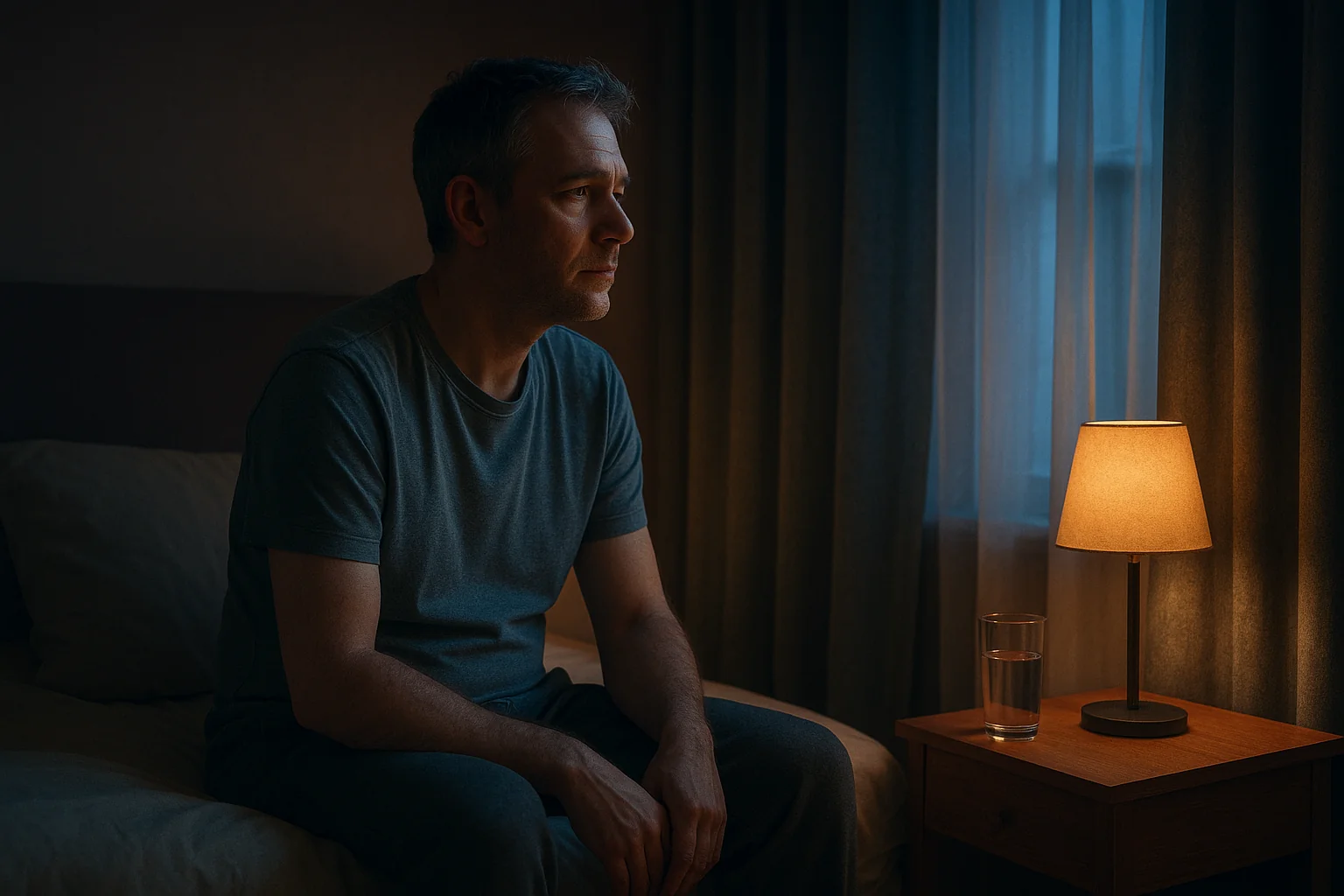
Sleep problems after quitting alcohol are normal, predictable, and temporary. They feel like evidence something is wrong, when really they are evidence your brain is healing.
What You'll Discover:
• Why quitting alcohol disrupts sleep in the first place.
• The specific timeline of sleep disruption in early recovery.
• What REM rebound is and why it causes vivid, sometimes disturbing dreams.
• Practical strategies that actually help.
• When sleep problems are worth discussing with a doctor.
Nobody warns you that quitting alcohol might make your sleep worse before it gets better. Most people expect the opposite. Alcohol makes you drowsy, so stopping it should help you sleep better. For many people, the reality of the first few weeks is the exact opposite of that expectation.
Sleep takes longer to come, feels lighter, and gets interrupted by vivid or unsettling dreams. Understanding why this happens makes it significantly easier to get through.
Why Sleep Gets Worse Before It Gets Better
Alcohol is a central nervous system depressant. Over time, your brain adapts to its presence by ramping up the systems that promote wakefulness to compensate for the sedative effect. When alcohol is removed, those overactive wake-promoting systems are suddenly running without opposition. The result is a brain that is wired to stay alert, struggling to settle into sleep.
There is also a more specific mechanism at work. Research on alcohol and sleep homeostasis shows that alcohol disrupts adenosine signaling in the basal forebrain, a region of the brain central to regulating the sleep-wake cycle. Adenosine is the chemical that builds up during waking hours and creates sleep pressure. Chronic alcohol use impairs the receptors responsible for detecting adenosine, and withdrawal leaves this system dysregulated. The brain has essentially forgotten how to read its own sleepiness signals.
This is not permanent. It does take time for the system to recalibrate, and the timeline is different for different people.
The First Two Weeks: Acute Disruption
The most difficult sleep period after quitting is typically the first ten to fourteen days. This is when the neurochemical overcorrection is at its strongest. The symptoms are predictable and include difficulty falling asleep, frequent waking during the night, and feeling unrested even after several hours in bed.
For people who were drinking heavily, this phase can overlap with broader alcohol withdrawal. Symptoms like elevated heart rate, sweating, and anxiety are part of the same neurological picture as the sleep disruption. The National Institute on Alcohol Abuse and Alcoholism notes that alcohol use disorder affects multiple neurological systems simultaneously, and sleep is one of the most immediately affected.
If withdrawal symptoms are severe, including significant tremors, confusion, or hallucinations, medical supervision is essential. These are different from the ordinary insomnia of early recovery and require a different response. For more on what to expect during this period, our article on how long alcohol withdrawal lasts walks through the full arc.
For most people, acute withdrawal insomnia is uncomfortable but manageable. It peaks around days three to five and begins to ease by the end of the second week.
Weeks Two Through Four: REM Rebound
Once acute withdrawal begins to settle, a different sleep phenomenon often takes over. It is called REM rebound, and it tends to catch people off guard.
Alcohol suppresses REM sleep, the stage associated with dreaming and emotional processing. When you drink regularly, your brain gets less REM sleep than it needs. When alcohol is removed, the brain catches up, dramatically increasing REM sleep in the weeks that follow.
REM rebound produces more vivid, more emotionally intense, and sometimes disturbing dreams than usual. Many people make it through the first hard weeks, sleep finally starts coming more easily, and then they wake up from intense or unsettling dreams every night. This is not a sign of psychological instability. It is a sign of neurological recovery.
The dreams typically become less intense as the weeks progress. By the end of the first month, most people notice the vividness settling down. The brain has caught up on its REM deficit and is returning to a more normal sleep architecture.
Months Two and Three: The Gradual Return to Normal
For most people, sleep in months two and three looks significantly different from the first month. The neurological systems disrupted by chronic alcohol use have had time to recalibrate. Adenosine signaling normalizes. REM rebound fades. The sleep-wake cycle becomes more predictable.
Most people who reach this stage report that their sleep is meaningfully better than it was when they were drinking, not just better than the first weeks of recovery. This makes sense when you understand what alcohol actually does to sleep. Despite its sedative effect, alcohol is a significant disruptor of sleep architecture. It suppresses deep sleep stages and fragments the second half of the night. Without it, the brain can complete a full, restorative sleep cycle.
For a deeper look at how alcohol affects sleep quality during active drinking, our guide on how alcohol affects sleep explains the underlying mechanisms in detail.
For a small percentage of people, sleep disruption persists beyond this window. This is sometimes referred to as post-acute withdrawal syndrome, or PAWS, which can include sleep difficulty among other symptoms for several months. These cases are worth discussing with a clinician, as there are approaches that help.
Why Some People Take Longer
Several factors influence how long sleep disruption lasts after quitting.
Duration and quantity of drinking. The longer and more heavily someone was drinking, the longer the neurological recalibration tends to take. The brain's adaptations run deeper after years of heavy use than after months.
Age. Older adults tend to experience longer and more significant sleep disruption during early recovery. Metabolism slows and the brain's ability to bounce back takes more time.
Pre-existing sleep conditions. Some people have underlying sleep disorders that were masked by alcohol or made worse by it. Once alcohol is removed, these become more apparent and may require their own assessment.
Stress and anxiety. Early recovery is often a stressful period. Anxiety is itself a major driver of insomnia, and the two can reinforce each other. Managing anxiety through the early months of recovery has a direct effect on sleep quality.
It is also worth noting that not everyone who has trouble sleeping after quitting was a heavy drinker. Even moderate regular drinkers can experience a few weeks of disrupted sleep as the brain readjusts.
What Actually Helps
A few practical interventions make a real difference during the sleep disruption of early recovery. None of them require medication, and most people see results within a week or two of consistent effort.
Consistent sleep and wake times. Your brain's internal clock responds to regularity. Going to bed and waking up at the same time every day, even on weekends, helps reinforce the circadian rhythm that alcohol disrupted. Regularity is more important than the specific time you choose.
Reduce light exposure at night. Screens emit blue light that suppresses melatonin production. Dimming screens or switching to night mode in the hour before bed helps your brain register that it is time to sleep. Even dimming overhead lights in the evening makes a measurable difference.
Physical activity earlier in the day. Regular exercise significantly improves sleep quality in recovery. Morning or afternoon exercise works better than evening exercise, which can be stimulating close to bedtime. Even a 20-minute walk counts.
Limit caffeine after midday. Caffeine has a half-life of around six hours, which means a 3 p.m. cup of coffee still has half its stimulant effect at 9 p.m. Afternoon caffeine consumption can significantly interfere with sleep onset that early recovery already makes difficult.
Accept the early disruption without fighting it. Lying in bed frustrated about not sleeping creates a conditioned anxiety around the bed itself. If sleep is not coming after 20 or 30 minutes, getting up briefly and returning when you feel drowsy tends to work better than forcing it.
What to Avoid
Some commonly tried approaches make recovery-related insomnia worse, not better.
Over-the-counter sleep aids. Many contain diphenhydramine, the antihistamine in Benadryl and similar products. It produces tolerance quickly, reduces sleep quality with repeated use, and creates rebound insomnia when stopped. These products provide short-term sedation, not restorative sleep.
Alcohol, even in small amounts. Some people in early recovery use small amounts of alcohol specifically to help with sleep. This delays neurological recalibration, re-establishes the brain's dependence on alcohol for sleep onset, and makes the problem significantly worse over time. One drink may feel like it helps tonight and sets you back a week in recovery terms.
Excessive napping. Short naps of 20 minutes or less in the early afternoon can be restorative. Longer naps or naps late in the day reduce sleep pressure at bedtime and fragment nighttime sleep further. If you are exhausted, a short nap is fine. An hour-long nap at 5 p.m. will cost you at midnight.
When to Talk to a Doctor
Most early recovery insomnia resolves on its own within the first one to three months. There are circumstances where it is worth a conversation with a clinician.
If severe sleep disruption is persisting beyond three months without improvement, underlying causes may be worth evaluating. Sleep apnea, in particular, is significantly more common in people who have been heavy drinkers, and it can persist or even emerge after quitting as the body adjusts.
If insomnia is accompanied by significant anxiety, depression, or physical symptoms that suggest ongoing withdrawal, these require direct attention. Sleep problems are often a symptom of something else, not the root cause itself.
And if you are considering medication for sleep during early recovery, a clinician familiar with addiction medicine can offer guidance on which approaches are appropriate and which create their own complications. This conversation is worth having before reaching for anything.
The Bigger Picture
Sleep disruption in early recovery is uncomfortable and sometimes frightening, particularly when it arrives in the form of vivid or disturbing dreams or nights of lying awake when you expected sleep to finally improve. Understanding that it follows a predictable arc makes it significantly easier to get through.
The NIAAA's overview of alcohol's effects on the body notes that neurological disruption from alcohol use extends to multiple systems, and recovery in those systems takes time. Sleep is one of the clearest examples of that process playing out. The brain is not broken. It is recalibrating.
Most people find that by the end of the third month, their sleep is better than it has been in years. The deep, restorative sleep that alcohol was quietly suppressing all along becomes available again. Getting through the difficult early weeks is a bridge to that outcome, not a detour from it.
For those using naltrexone as part of their recovery approach, our guide on how naltrexone works explains how the medication interacts with the brain's reward system, which overlaps with the same neurological circuits involved in sleep regulation. For many people, addressing the craving cycle directly makes the early weeks of recovery easier to sustain.
All that said, you do not need to figure all of this out alone. If you are navigating early recovery and want to understand your options more fully, you can take a quick, discreet online Alcohol Use Assessment to see whether naltrexone could be a helpful part of your plan. It takes a few minutes and puts you in touch with a clinician who specializes in this area.