A 2 minute assessment to get a personalized mental health or alcohol recovery plan.

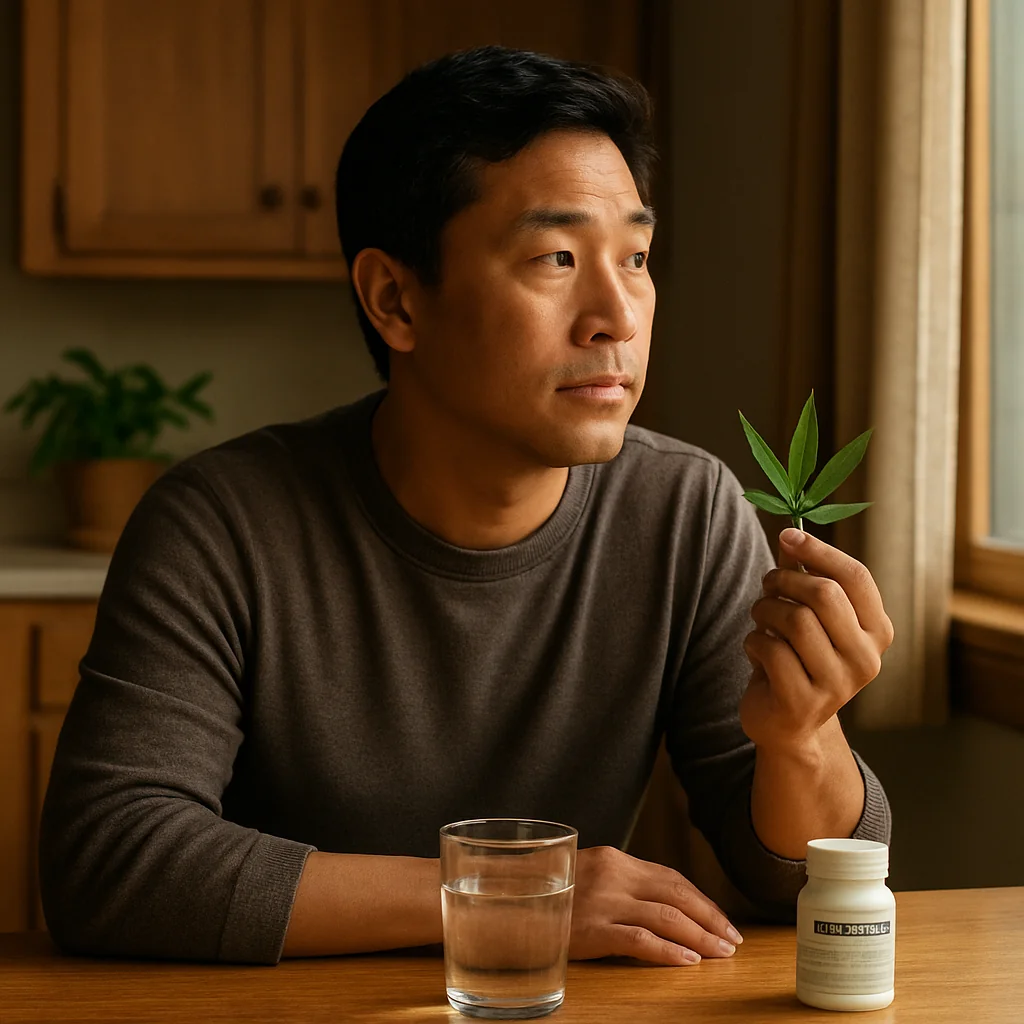
There is no documented toxic interaction between oral naltrexone and weed. How the two affect each other is less settled, and the honest answer sits in the middle.
What You'll Discover:
• Whether there is a dangerous interaction between naltrexone and cannabis.
• The interaction with naltrexone that actually matters.
• What studies show about how naltrexone and THC affect each other.
• Why the evidence base is genuinely limited.
• Why telling your prescriber is the most useful step.
• Whether cannabis changes how well naltrexone works on alcohol.
If you take naltrexone for alcohol and you also use cannabis, asking whether the two mix safely is a fair question.
The reassuring headline is that there is no documented dangerous or toxic interaction between oral naltrexone and weed, nothing like the serious interaction that exists between naltrexone and opioids.
That said, the research on how naltrexone and THC affect each other is limited and a bit mixed. Being honest about that is more useful to you than a flat "it's totally fine" or an overblown warning.
So this article walks through what naltrexone does, what studies have actually found about combining it with cannabis, and where the evidence runs thin.
It is educational and not medical advice, which means your prescriber is the right person for decisions about your own situation.
How Naltrexone Works and the Interaction That Actually Matters
Naltrexone is an opioid antagonist. It blocks the opioid receptors in the brain that alcohol's endorphins rely on, which is how it reduces the reward from drinking and helps curb cravings.
If you want the full mechanism in plain language, our explainer on naltrexone and how it works breaks it down, and the StatPearls reference on naltrexone covers the clinical detail.
The interaction that genuinely matters with naltrexone is with opioids, not cannabis. Because the medication blocks opioid receptors, taking it alongside opioid drugs, or trying to override it with opioids, can be dangerous.
That is exactly why patients stop opioids before starting naltrexone.
Cannabis is a different story. THC, the main psychoactive compound in cannabis, works mostly through the body's cannabinoid receptors, not the opioid receptors that naltrexone targets.
In other words, the two act on largely separate systems. That is the core reason there is no documented toxic interaction between them. They are not competing for the same receptors the way naltrexone and opioids do.
This separation is the single most important fact for safety.
The danger with naltrexone and opioids comes precisely because they fight over the same receptors, which can leave someone unable to get relief from opioids or at risk if they try to push past the block. Cannabis never creates that conflict.
Is There a Dangerous Interaction Between Naltrexone and Weed?
Based on the available evidence, there is no documented dangerous or life-threatening interaction between oral naltrexone and cannabis. This is the reassuring part, and it holds up under scrutiny.
Standard drug-interaction references treat the combination as low risk, in clear contrast to the firm warnings around naltrexone and opioids.
We cover the medication's interaction profile more broadly in our guide to naltrexone drug interactions.
It is still sensible to be cautious in a general way. Both substances can affect mood, coordination, and judgment, and leaning on cannabis while you are working on your drinking can muddy the picture you are trying to clear up.
But in terms of a hard pharmacological danger, the kind that sends people to the emergency room, the combination of oral naltrexone and weed does not carry that documented risk.
It also helps to separate two different questions that often get blurred together. One is whether the combination is dangerous. The other is whether it changes how things feel.
The answer to the first is no, and the answer to the second is where the real nuance lives.
Here is the quick version of what the research does and does not support.
What the Research Says About Naltrexone and THC Effects
Here is where the nuance lives. While there is no toxic interaction, naltrexone and THC can influence each other's effects, and the findings are mixed and dose dependent.
Some research suggests naltrexone can change how cannabis feels.
In one line of studies, a clinically used 50mg dose of naltrexone actually enhanced the subjective and reinforcing effects of THC in heavy cannabis users.
The cannabis effect felt stronger rather than weaker.
Other research points the opposite direction depending on the dose and the person.
Studies have found that maintenance naltrexone decreased cannabis self-administration and its subjective effects in daily cannabis smokers.
That is part of why researchers have even explored naltrexone as a possible tool for cannabis use, which only underlines how complicated the relationship is.
So the picture is genuinely mixed. The effect seems to depend on the dose of naltrexone, how often someone uses cannabis, and individual differences between people. There is no single, clean answer that applies to everyone.
The practical upshot is simple. Naltrexone might make cannabis feel different for you, stronger or weaker, and that is worth knowing so a change does not catch you off guard.
It also means you should not read a single study as the final word. The fact that 50mg of naltrexone boosted THC effects in one group of heavy users does not mean it will do the same for you.
Studies capture averages within specific groups, and your experience may sit anywhere along that range.
The Honest Limits of the Evidence
It is worth being straight about how much we actually know here. The research on naltrexone and cannabis together is limited, and much of it comes from small studies in specific groups, often heavy or daily users.
That means the findings do not necessarily predict what will happen for someone who uses cannabis occasionally while taking naltrexone for alcohol. The data is suggestive, not definitive.
What we can say with confidence is the safety part. There is no documented toxic interaction. What we cannot say with confidence is exactly how the combination will feel for you, because the evidence is thin and inconsistent.
Honesty about that gap is the responsible position. Anyone promising a precise answer about how weed and naltrexone will interact for you specifically is going beyond what the science actually supports.
The good news is that the most important question, the safety one, does have a solid answer. The uncertainty is only about the experience, not about whether the combination is hazardous. That is a much easier kind of uncertainty to live with.
Why This Is Educational, Not Medical Advice
This is the right place to be clear about scope. This article explains what the research shows. It is not a substitute for advice from the clinician who knows your full history.
The single most useful step you can take is to tell your prescriber that you use cannabis. They can factor it into your care, watch for anything specific to your situation, and answer questions a general article like this one cannot.
There is no need to feel judged in that conversation. Good alcohol care is built on honesty, and your prescriber can only help well with the full picture in front of them.
If you take other medications or have any liver concerns, that conversation matters even more. Naltrexone is processed by the liver, and your overall mix of substances is something a clinician should weigh for you.
This is doubly true if you are early in your alcohol care. The first weeks are when your prescriber is dialing in your plan, so giving them the full picture, cannabis included, helps them get it right the first time rather than guessing.
Does Cannabis Stop Naltrexone From Working on Alcohol?
One reassuring point often gets lost in this discussion. Using cannabis does not stop naltrexone from doing its job on alcohol.
Naltrexone reduces the reward and cravings tied to drinking by blocking the opioid pathway that alcohol uses. Cannabis acting on a different system does not switch that off.
The medication keeps working on your drinking regardless. You can read more about that craving effect in our piece on whether naltrexone stops alcohol cravings.
This is a relief for a lot of people, because it means using cannabis does not undo the progress you are making with alcohol. The opioid block that quiets alcohol cravings stays in place whether or not THC is in your system.
So if your goal is to drink less or quit, naltrexone remains a useful tool even if cannabis is part of your life. The two are not at cross purposes when it comes to the alcohol effect.
That said, if cannabis use is heavy or is tangled up with your drinking patterns, it is worth raising with your care team so your plan accounts for the whole picture, not just the alcohol.
For some people, cannabis and alcohol are linked habits, used in the same settings or to manage the same stress. If that sounds familiar, your care team can help you look at both together rather than treating the alcohol piece in isolation.
Practical Takeaways
To pull all of this into something you can actually use, here is the short version.
• There is no documented dangerous interaction between oral naltrexone and weed.
• Naltrexone may make cannabis feel stronger or weaker, and the research is mixed and dose dependent.
• The evidence base is limited, so expect some individual variation.
• Naltrexone keeps working on alcohol cravings whether or not you use cannabis.
• Tell your prescriber you use cannabis so your care reflects your real life.
None of this is a green light or a red light. It is the honest middle ground that the evidence supports, and it leaves the personal call where it belongs, with you and your clinician.
Why the Effect Can Go Both Ways
It can seem strange that one medication makes cannabis feel stronger in some studies and weaker in others. The reason comes back to how the opioid and cannabinoid systems quietly talk to each other.
These two systems are separate, but they are not isolated. They overlap and cross-influence each other in the brain's reward circuitry, which is why blocking the opioid side with naltrexone can ripple over and shift the cannabis experience.
The direction of that shift seems to depend heavily on the person and their usual cannabis use. Heavy daily users and occasional users do not respond the same way, and the dose of naltrexone matters too.
This is also why naltrexone has been studied as a possible aid for cannabis use, not just for alcohol. A medication that can dampen the reward of a substance in regular users is naturally of interest to researchers.
None of that changes the bottom line for safety, but it does explain why the experience can vary so much.
The takeaway from all this back-and-forth in the research is humility. The honest answer is that the interaction is real but unpredictable in direction, and that your own experience is the most reliable guide once you are paying attention to it.
Occasional Use Versus Heavy Use
The way cannabis fits into your life makes a real difference to how relevant all of this is. The research that exists leans heavily on frequent or daily users, which is not the same as someone who uses occasionally.
If you use cannabis rarely, the most likely thing you might notice is that a session feels a little different on naltrexone than it used to. That is worth being aware of, but it is not a safety alarm.
If you use cannabis heavily or daily, the picture is more worth discussing with your care team. Heavy use can be intertwined with drinking patterns, sleep, and mood, all of which matter to your alcohol goals.
In either case, the medication's effect on your drinking does not depend on your cannabis use. The reason to talk it through is to make sure your overall plan is sound, not because the combination is dangerous on its face.
What to Do If You Notice a Change
If you start naltrexone and your cannabis experience shifts, here is a calm way to handle it.
First, do not panic or assume something is wrong. A change in how cannabis feels is consistent with what the research describes, and it does not signal a dangerous reaction.
Second, pay attention to whether the shift affects your judgment, coordination, or mood more than usual. If anything feels off in a way that concerns you, ease back and give yourself time to see how things settle.
Third, bring it up with your prescriber. They can tell you whether what you are noticing is expected and help you adjust if needed. This is exactly the kind of detail that honest, ongoing care is built to handle.
The goal is not to scare you off either substance. It is to make sure you are informed, paying attention, and keeping your care team in the loop.
Most people who use cannabis on naltrexone do so without any trouble. Treating it with awareness rather than anxiety is the right balance, and it keeps the focus where it belongs, on your alcohol goals.
The Bottom Line
There is no documented toxic interaction between oral naltrexone and cannabis, which answers the most important safety question. What is less settled is how the two shape each other's experience, where the research is mixed and the data is limited.
The smart move is straightforward. Keep taking naltrexone for your drinking, stay aware that cannabis may feel different, and have an honest conversation with your prescriber about your cannabis use so your care is built on the full picture.
Frequently Asked Questions
Can you smoke weed while taking naltrexone?
There is no documented toxic interaction between oral naltrexone and cannabis. It is still smart to tell your prescriber so your care reflects your real life.
Does naltrexone block the effects of weed?
Not reliably. The research is mixed, with some studies showing stronger THC effects and others showing weaker ones. It depends on the dose and the person.
Is naltrexone safe to combine with cannabis?
There is no known dangerous or life-threatening interaction, unlike the serious one with opioids. The main caution is general, since both can affect mood and coordination.
Does weed stop naltrexone from working on alcohol?
No. Naltrexone works on the opioid pathway tied to drinking. Cannabis acts on a different system, so it does not switch off the alcohol benefit.
Can naltrexone help with cannabis use?
Some studies found it reduced cannabis use in daily users, which is why researchers have explored it. The evidence is limited and not a settled answer.
If you want to find out whether naltrexone could be a fit for your goals, take the online Alcohol Use Assessment to see if Choose Your Horizon's naltrexone program makes sense for you.