A 2 minute assessment to get a personalized mental health or alcohol recovery plan.

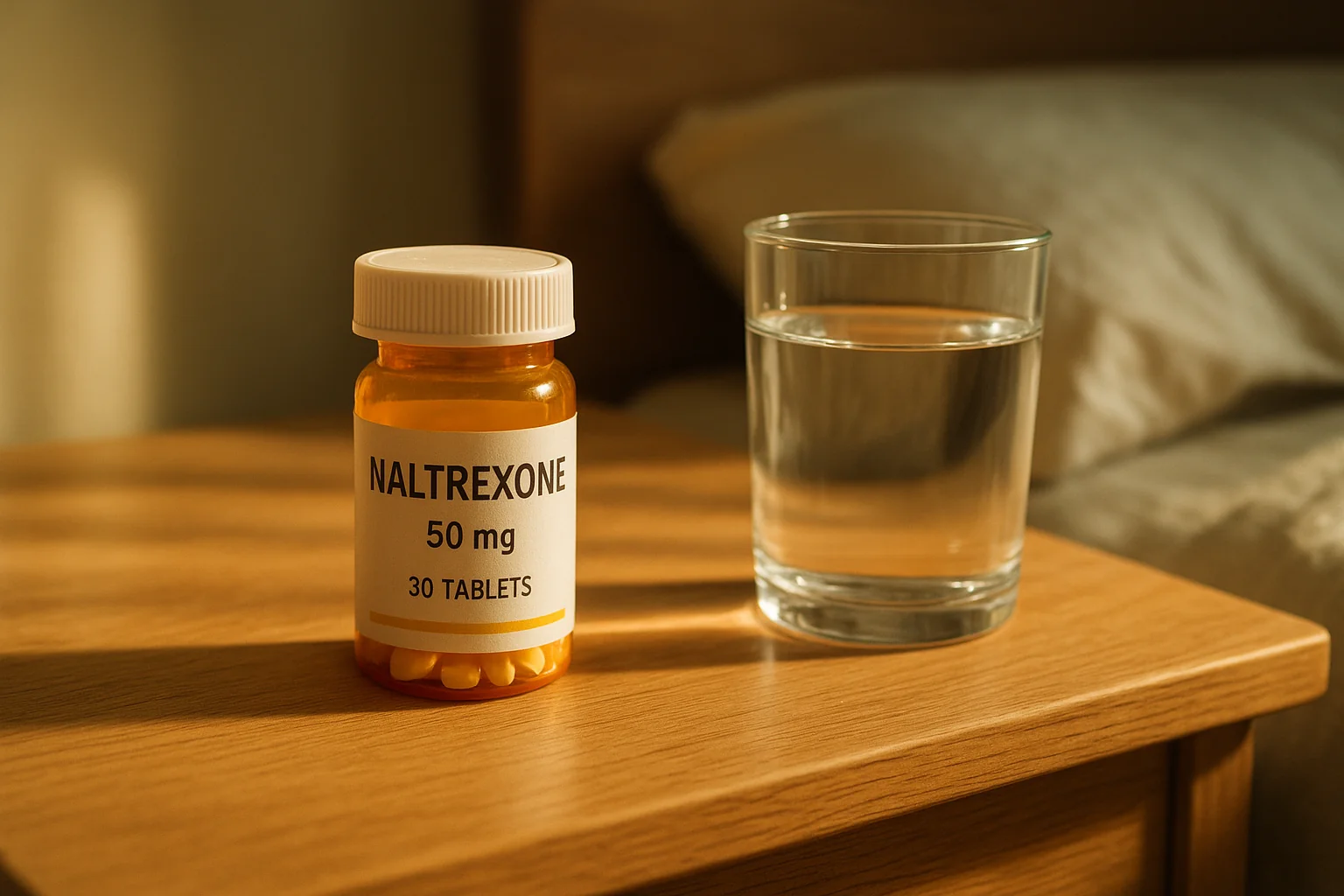
Naltrexone and Antabuse (disulfiram) are both FDA-approved for alcohol use disorder, but they work through completely different mechanisms and suit very different situations.
What You'll Discover:
• How naltrexone reduces alcohol cravings at the neurological level.
• How disulfiram creates a physical deterrent to drinking.
• What the clinical evidence actually shows for each medication.
• Which side effects matter and who should avoid each option.
• Who each medication is best suited for.
• Why telehealth programs prescribe naltrexone and not disulfiram.
Both medications have been used for decades. Both can genuinely help people change their relationship with alcohol. But they take opposite approaches, and those differences matter a lot depending on your situation.
This is not a case of one being good and the other being bad. It's two tools built for different jobs.
Two Real Options for Alcohol Use Disorder
Alcohol use disorder (AUD) is a medical condition, not a moral failing. The National Institute on Alcohol Abuse and Alcoholism describes it as an impaired ability to control alcohol use despite negative consequences in health, relationships, or daily life.
About 29 million people in the United States have AUD. Fewer than 10 percent receive any form of treatment in a given year.
Medication is one of the most underused tools available. The two most commonly compared options are naltrexone and disulfiram. One reduces the brain's reward signal when you drink. The other makes drinking physically unpleasant.
Understanding that distinction isn't just academic. It determines whether abstinence is required before starting, how much supervision is needed, and whether self-managed care is realistic.
How Naltrexone Works
The Science Behind Craving Reduction
Naltrexone is an opioid antagonist. It binds to the mu-opioid receptors in the brain that normally respond to alcohol by releasing dopamine. That dopamine release is a big part of why drinking feels rewarding.
When naltrexone is in your system, those receptors are blocked. Alcohol still enters the body, but the rewarding signal is blunted. Over time, the craving for that reward starts to fade.
As we explain in our guide to what naltrexone is and how it works, this is a fundamentally different tool from willpower alone. It changes the biology of the craving, not just the behavior.
The StatPearls clinical reference on naltrexone confirms it has been FDA-approved for alcohol use disorder since 1994, making it one of the most studied medications in addiction medicine.
One of naltrexone's most important practical features: it does not require abstinence before starting. You can begin while still drinking and work toward your goals from there.
Clinical Trial Evidence
The evidence base for naltrexone is substantial.
The landmark COMBINE trial, published in JAMA, tested naltrexone in 1,383 patients across 11 academic centers. That study found patients receiving naltrexone with basic medical management had significantly better outcomes than placebo. Notably, those results held up without intensive behavioral counseling, which means naltrexone works in standard medical settings.
A 2023 meta-analysis in JAMA reviewed 118 clinical trials involving over 20,000 participants. The analysis found that oral naltrexone at 50mg had a number needed to treat (NNT) of 11 to prevent a return to heavy drinking.
To put that in context: aspirin for heart attack prevention has an NNT of roughly 100. An NNT of 11 reflects meaningful real-world effectiveness.
A 2022 trial in the American Journal of Psychiatry found that naltrexone significantly reduced binge drinking days and that those effects were sustained six months after treatment ended. The benefits didn't disappear when people stopped taking the medication.
You can explore the full picture in our overview of medications for alcohol use disorder.
How Disulfiram (Antabuse) Works
The Aversion Mechanism
Disulfiram takes the opposite approach from naltrexone. Rather than reducing the reward of drinking, it makes drinking physically unpleasant.
Alcohol is normally metabolized in two steps: first to acetaldehyde, then to acetate. Disulfiram blocks the second step by inhibiting aldehyde dehydrogenase. Acetaldehyde builds up in the bloodstream.
When acetaldehyde accumulates, the reaction typically includes flushing, rapid heartbeat, nausea, and vomiting. In severe cases it can cause dangerously low blood pressure, difficulty breathing, and heart complications.
The idea is that fear of this reaction deters drinking. It's an aversion approach, not a craving-reduction approach.
What the Evidence Says
Disulfiram has been used in alcohol treatment since the 1940s. Its history is long, but its evidence base is more complicated than naltrexone's.
The core issue is compliance. Disulfiram only works if the person actually takes it every day.
In unmonitored settings, many people stop taking the medication before they plan to drink. That's not a character flaw. It's a predictable response when the deterrent only functions if you let it.
Studies consistently show that disulfiram's effectiveness is highly dependent on supervised administration. That means someone observes or verifies that the patient has actually taken the dose.
When disulfiram is supervised, whether by a partner, pharmacist, or clinician, outcomes can be meaningful. Without that oversight, results are much weaker.
Most clinical guidelines classify disulfiram as a third-line option, to be considered when other treatments haven't worked and when close supervision can realistically be arranged.
Side Effects and Safety: A Head-to-Head Look
Naltrexone Side Effects
Naltrexone's most common side effect is nausea, typically mild and most prominent in the first week of use. It usually improves on its own. Taking the medication with food helps.
Other reported side effects include headache, fatigue, and occasional gastrointestinal discomfort. Serious side effects are uncommon, and clinical trial data consistently show good tolerability.
One firm rule: naltrexone should not be taken by anyone currently using opioids, including prescription pain medications. Starting naltrexone while opioids are present can trigger severe withdrawal. Patients generally need to be opioid-free for at least seven to ten days before starting.
Naltrexone should be used with caution in people with severe liver disease, though at standard doses it does not cause liver damage in people with healthy or mildly affected livers. That's a manageable consideration for most people, not a barrier.
Disulfiram Side Effects
Disulfiram's side effects fall into two categories: the intended reaction and the unintended ones.
The intended reaction is the acetaldehyde buildup from drinking. It ranges from unpleasant to life-threatening depending on how much alcohol is consumed. Symptoms include flushing, sweating, rapid heartbeat, nausea, and vomiting.
Severe reactions can involve dangerously low blood pressure, seizures, and cardiovascular events. Even small amounts of alcohol in foods, mouthwash, topical products, or cold medicines can trigger this response.
Beyond the alcohol reaction, disulfiram can cause liver toxicity on its own, independent of any alcohol. That's a separate and serious concern. Most guidelines recommend baseline liver function tests before starting and periodic monitoring throughout treatment.
Disulfiram also carries significant drug interactions. It shouldn't be used by people with certain heart conditions, a history of psychosis, or severe liver disease, or those taking specific medications including warfarin and phenytoin.
Disulfiram must only be started after full abstinence from alcohol for at least 12 hours, and most clinicians recommend 24 to 48 hours. Starting too soon can cause an immediate and dangerous reaction.
Who Each Medication Is Best Suited For
Naltrexone and disulfiram suit different situations, goals, and life circumstances.
Naltrexone may be a better fit if:
• You want to reduce your drinking gradually rather than committing to complete abstinence immediately
• You prefer a self-managed approach with physician oversight rather than requiring daily supervision
• You're interested in the Sinclair Method, which involves taking naltrexone specifically before drinking to gradually extinguish the reward response (more on that in our guide to the Sinclair Method)
• You want a medication with a large, well-replicated evidence base
Disulfiram may be a better fit if:
• You are fully committed to complete abstinence and have already achieved several days of sobriety
• You have strong external accountability, such as a partner or clinician who can supervise daily dosing
• You've previously tried other approaches without success
• Your clinician has reviewed your liver function and other health factors and determined it's appropriate
Neither medication is right for every person. The best choice depends on your health history, goals, lifestyle, and the level of support available.
Many people are drawn to naltrexone precisely because they aren't ready to commit to full abstinence. That is a completely legitimate starting point. The flexibility to begin treatment while still drinking is one of naltrexone's most important real-world advantages.
Disulfiram requires full commitment to abstinence before the first dose. If someone drinks while on it without being prepared for the reaction, the consequences can be serious. That requirement for readiness and ongoing supervision makes disulfiram a better fit for structured, in-person treatment programs than for self-managed care.
Why Telehealth Programs Prescribe Naltrexone and Not Disulfiram
If you've been looking at online alcohol treatment programs, you've probably noticed they offer naltrexone but not disulfiram. That's a deliberate clinical decision, not an oversight.
Disulfiram has specific requirements that make it poorly suited to self-managed or remotely supervised care.
The need for supervised dosing is the central issue. Without someone verifying the medication is being taken, effectiveness drops sharply and the safety picture becomes harder to manage.
The alcohol reaction risk is serious in a self-managed setting. Accidental alcohol exposure, whether from food, personal care products, or a moment of poor judgment, can cause a reaction that requires emergency care.
Liver monitoring is also standard practice during disulfiram treatment. Managing that safely at a distance requires a level of coordination that goes beyond most telehealth models.
Naltrexone, by contrast, can be safely prescribed and managed through online care. The side effect profile is mild and it doesn't create the same risk of acute medical emergencies. This is why Choose Your Horizon prescribes naltrexone as its core medication.
Disulfiram belongs in settings where close in-person supervision is available. That distinction isn't about one medication being better in the abstract. It's about matching the right tool to the right care setting.
You can read more in our article on telehealth alcohol treatment.
The Honest Bottom Line
Both naltrexone and disulfiram are legitimate, FDA-approved medications for alcohol use disorder. Both have a real role in treatment.
Naltrexone has a larger and more consistently positive clinical evidence base. It works by reducing the brain's reward signal over time. It doesn't require abstinence before starting, and it can be taken daily or in a targeted way before drinking, as with the Sinclair Method.
For most people seeking help on their own terms, without intensive in-person monitoring, naltrexone is the more practical and better-studied option. That's why it has become the foundation of modern online alcohol treatment programs.
Disulfiram creates a chemical deterrent to drinking rather than reducing the desire to drink. When taken consistently under supervision, it can be effective for people who are fully committed to abstinence and have the right support structure in place.
The phrase "under supervision" carries a lot of weight there. Disulfiram's clinical evidence depends on that supervision being real and consistent. Without it, real-world effectiveness drops significantly and safety becomes harder to manage.
Disulfiram has helped many people. It works best when close in-person support is available and when abstinence is the person's firm, unwavering goal.
All that said, the most useful next step is talking with a clinician who can review your full health picture, your goals, and your situation. You deserve a plan built around you. And you don't need to have hit rock bottom to deserve help today.
Ready to Explore Naltrexone?
Deciding to get support for your drinking is a meaningful step, and you don't have to figure it out alone. You don't need to hit rock bottom. You don't need to be certain about your goals yet.
Choose Your Horizon offers a discreet, fully online Alcohol Use Assessment to see whether naltrexone could be a good fit for your situation. If it is, our physician team can prescribe and ship to you in days, with ongoing support built in.
Take the online Alcohol Use Assessment and see if Choose Your Horizon's naltrexone program makes sense for you.