A 2 minute assessment to get a personalized mental health or alcohol recovery plan.

Reframe App Review
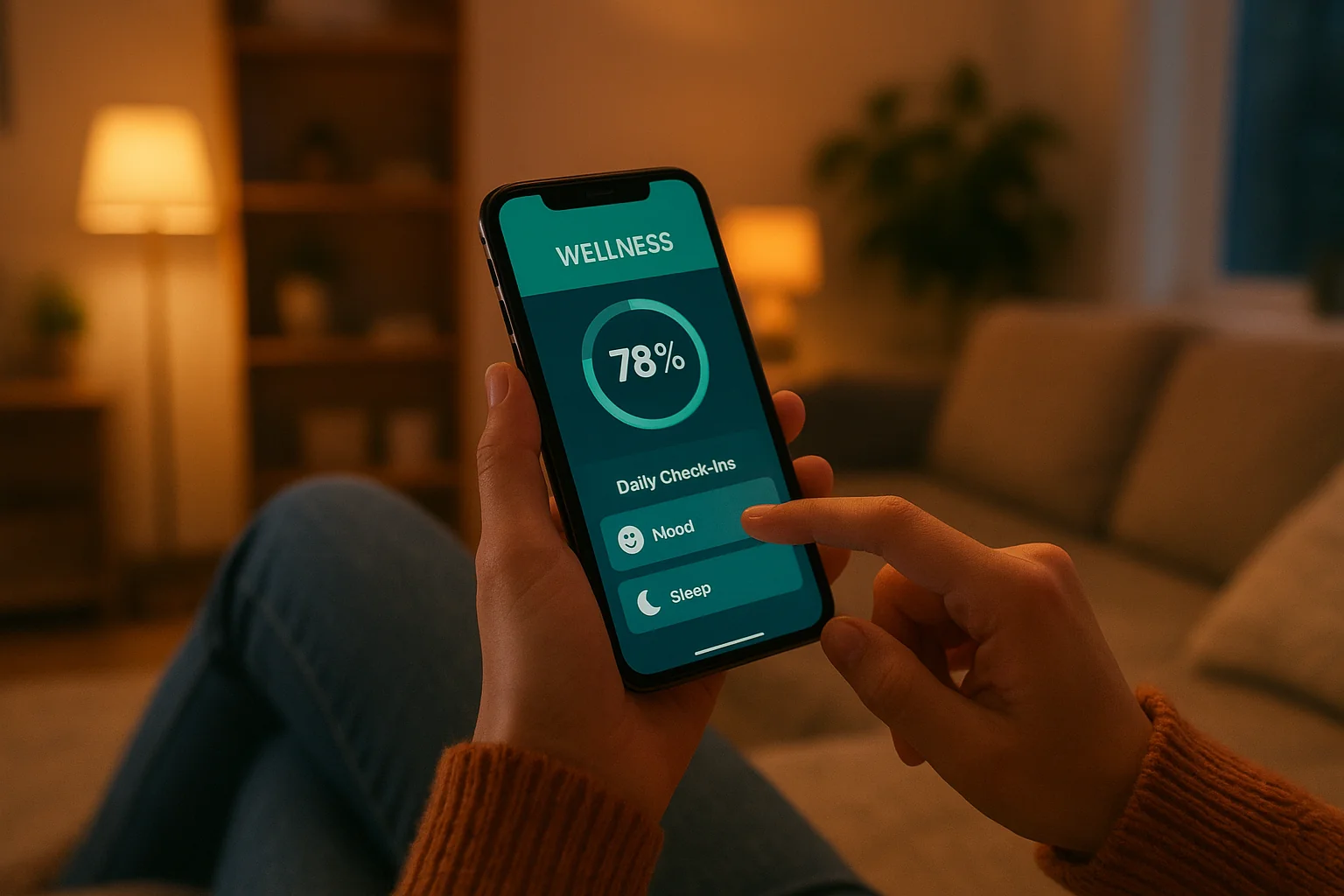
Reframe is a smartphone app designed to help people reduce or quit drinking using behavioral psychology techniques. It works for some people, but understanding its approach and limitations helps you decide if it's right for your situation.
What You'll Discover:
• What the Reframe app is and how it works.
• The features and tools Reframe provides.
• Who Reframe works well for and who it doesn't.
• How app-based approaches compare to medication-assisted treatment.
• How to choose the right approach for your drinking goals.
Reframe has gained significant attention as part of the growing market for digital health tools targeting alcohol reduction. The app takes a psychology-based approach, using cognitive behavioral techniques and habit tracking to help users change their relationship with drinking.
Understanding what Reframe actually offers, what the research shows about app-based interventions, and how this approach compares to other options helps you make an informed decision about what might work for your specific situation.
What Is the Reframe App?
Reframe is a smartphone application that uses behavioral science principles to help people reduce their alcohol consumption or stop drinking entirely.
The app provides daily lessons, habit tracking tools, and exercises designed to help users understand their drinking patterns and develop strategies for changing them. It's based on cognitive behavioral therapy (CBT) principles, which focus on identifying and changing thought patterns and behaviors.
Reframe presents itself as an alternative to traditional treatment programs. Users can work through the content at their own pace, on their own schedule, without attending meetings or appointments.
The app is available for iOS and Android devices and operates on a subscription model. Pricing typically ranges from $13 to $15 per month when purchased annually, with monthly options costing more. This works out to roughly $150 to $180 per year for full access.
Features and Tools Reframe Offers
The Reframe app includes several components designed to support drinking reduction.
Daily Lessons - The app delivers short educational content daily, covering topics like understanding alcohol's effects on the brain, identifying triggers, managing cravings, and building new habits. These lessons draw from cognitive behavioral therapy and motivational interviewing principles.
Drink Tracking - Users log their alcohol consumption, which helps identify patterns and measure progress. The app provides visualizations showing drinking trends over time.
Community Features - Reframe includes forums and community spaces where users can connect with others working on similar goals. This provides peer support and accountability.
Exercises and Activities - The app includes interactive exercises designed to help users apply the concepts from the daily lessons. These might include journaling prompts, reflection questions, or behavioral experiments.
Progress Tracking - Users can see metrics about their drinking reduction, money saved, and other measures of progress.
24/7 Chat Support - Reframe offers chat-based support for users who need help or encouragement outside of the regular content.
The app's content library is substantial. Users typically work through the program over several weeks to months, with new content unlocking as they progress.
Who Reframe Works Well For
Reframe and similar app-based approaches work best for certain types of users.
People with mild drinking concerns - Someone who drinks more than they'd like but doesn't have severe alcohol dependence may find that behavioral techniques alone are sufficient. If your drinking is primarily habitual rather than compulsive, changing habits and thought patterns can be effective.
Those who respond well to educational content - Some people find that understanding the psychology behind their drinking helps them change it. If you're the type who benefits from learning about why you do things, Reframe's educational approach may resonate.
Users who need flexibility - The self-paced, app-based format works well for people with unpredictable schedules or those who don't want to commit to appointments or meetings. You can engage with Reframe whenever and wherever it's convenient.
People uncomfortable with traditional treatment settings - For those who don't relate to AA or traditional recovery programs, Reframe offers a different approach without the labels and frameworks that some people find off-putting.
Those who want to try a lower-cost option first - At roughly $150 to $180 per year, Reframe is significantly less expensive than most medical treatment or therapy. For someone unsure about the severity of their drinking issue, starting with a lower-cost option makes sense.
Highly motivated self-starters - People who are good at following through on self-directed programs without external accountability often do well with app-based approaches. If you've successfully used fitness apps, language learning apps, or other self-improvement tools, Reframe's format may suit you.
Limitations of the Reframe App
Understanding Reframe's limitations helps set appropriate expectations.
No medical component - Reframe is purely behavioral. It doesn't involve medical evaluation, medication, or healthcare provider oversight. For people whose drinking has become physiologically entrenched, behavioral techniques alone may not be sufficient.
Relies entirely on willpower and insight - The app teaches strategies for changing behavior, but implementing those strategies still requires consistent effort and self-control. For people whose drinking is driven by strong neurological compulsion, understanding triggers doesn't automatically translate to being able to resist them.
Limited accountability - While Reframe includes community features and progress tracking, there's no one checking whether you're actually following through. The motivation must come from within.
Can't address withdrawal safely - For heavy drinkers, stopping or significantly reducing alcohol can cause dangerous withdrawal symptoms. Reframe can't provide the medical supervision necessary for safe detoxification.
Results depend heavily on engagement - Like any self-directed program, you get out what you put in. Users who don't consistently engage with the content and exercises are unlikely to see results.
High dropout rates - This limitation applies to all digital health interventions. Many people download apps with good intentions but stop using them within weeks. Without the structure of appointments or accountability to another person, maintaining engagement is difficult.
What Research Shows About App-Based Alcohol Interventions
The evidence on app-based alcohol interventions is mixed.
Some studies show that digital interventions can help people reduce drinking, particularly for those with mild to moderate consumption levels. Research published in peer-reviewed journals suggests that app-based interventions can produce modest reductions in alcohol consumption for some users.
However, effect sizes tend to be smaller than medication-assisted treatment. A meta-analysis from the National Institutes of Health found that digital interventions produced small but statistically significant reductions in alcohol consumption, with effects most pronounced for people with lower baseline drinking levels.
Apps work better for people who would have been likely to succeed with any structured approach. They work less well for people with more severe alcohol use patterns.
Engagement is a major factor. Studies consistently show that people who actively use alcohol reduction apps see better outcomes than those who download them but don't engage regularly. Many users stop using apps within the first few weeks.
The research also suggests that digital interventions work best as part of a broader approach rather than as standalone treatment for more serious alcohol issues.
How App-Based Approaches Compare to Medication-Assisted Treatment
The fundamental difference between Reframe and medication-assisted treatment is what they target.
Reframe targets behavior and thinking - The app tries to change your relationship with alcohol by changing how you think about drinking, helping you identify triggers, and providing strategies for making different choices. This works at the level of conscious decision-making.
Medication-assisted treatment targets brain chemistry - Naltrexone, an FDA-approved medication for alcohol use disorder, blocks opioid receptors involved in alcohol's rewarding effects. This changes the neurological response to drinking rather than relying on willpower to resist an unchanged reward.
When you drink while taking naltrexone, you don't experience the same pleasurable feeling. Over time, this weakens the reinforcement driving continued drinking. The medication makes alcohol feel neutral rather than rewarding.
This distinction matters because much of problematic drinking is driven by brain chemistry rather than conscious choice. Understanding that alcohol is harmful doesn't stop the dopamine release when you drink. Medication can.
Practical differences include:
Apps like Reframe cost roughly $150 to $180 per year. Medication-assisted treatment through services like Choose Your Horizon includes medical evaluation, prescription medication, and ongoing provider support.
Apps require consistent self-directed engagement. Medication works pharmacologically whether or not you're actively thinking about your drinking goals.
Apps work well for people whose drinking is primarily habitual. Medication works better for people whose drinking is driven by strong neurological reward patterns.
Success rate differences:
Research on naltrexone shows that it helps approximately 60% to 70% of people reduce their drinking significantly. The Sinclair Method, which involves taking naltrexone before drinking, has demonstrated success rates in clinical studies that exceed most behavioral-only approaches.
App-based interventions show more modest success rates, with many studies reporting that 20% to 40% of users achieve meaningful drinking reduction. The difference is most pronounced for people with moderate to severe alcohol use patterns.
What Medication-Assisted Treatment Includes
Understanding what medication-assisted treatment involves helps clarify the comparison with app-based approaches.
Medical treatment for alcohol use through Choose Your Horizon includes:
Medical evaluation - A healthcare provider assesses your drinking patterns, health history, and treatment goals. This ensures naltrexone is appropriate for your situation and identifies any contraindications.
Prescription medication - Naltrexone is a prescription medication that requires a provider's order. The medication is FDA-approved specifically for alcohol use disorder.
Ongoing provider support - You have access to medical professionals who can answer questions, adjust treatment if needed, and provide guidance throughout the process.
No requirement for abstinence - Unlike some traditional approaches, medication-assisted treatment doesn't require you to stop drinking before starting. The medication works by changing how drinking affects your brain over time.
This level of medical support isn't available through app-based approaches alone.
When to Consider Medication-Assisted Treatment Instead
Several indicators suggest that medication-assisted treatment might be more appropriate than an app-based approach.
You've tried willpower-based approaches without lasting success - If you've repeatedly tried to cut back on drinking using determination, apps, books, or other behavioral methods without sustained results, this suggests the neurological component of your drinking is strong. Medication addresses this directly.
Drinking feels compulsive rather than habitual - There's a difference between drinking out of habit and drinking because the urge feels overwhelming. If the desire to drink has a compulsive quality that's hard to resist even when you want to, medication may be necessary.
You drink despite significant negative consequences - Continuing to drink despite health problems, relationship damage, work issues, or other clear negative effects suggests the reward circuit is driving behavior despite conscious awareness of harm.
Previous app-based interventions didn't produce lasting change - If you've already tried Reframe or similar apps without the results you wanted, adding medication might provide the missing piece.
You want a more supported approach - Medical treatment includes healthcare provider evaluation, ongoing support, and professional oversight. For some people, this structure and accountability produces better outcomes than self-directed apps.
Combining Approaches
App-based tools and medication-assisted treatment aren't mutually exclusive.
Some people use Reframe or similar apps alongside naltrexone. The medication reduces the neurological pull toward drinking while the behavioral tools help with habit change, trigger management, and building new patterns.
This combined approach addresses both the brain chemistry component and the behavioral component of drinking. For people with more entrenched drinking patterns, this dual approach may be more effective than either alone.
The behavioral insights from apps remain valuable even when taking medication. Understanding your triggers, developing alternative coping strategies, and building new routines all support the process of changing your relationship with alcohol.
If you've tried Reframe and found it helpful but not sufficient, adding medication might enhance results. The work you've already done learning about your drinking patterns doesn't disappear when you add pharmacological support. It becomes more effective because you're not fighting against unchanged brain chemistry.
Making the Right Choice for Your Situation
Choosing between app-based approaches and medication-assisted treatment depends on your specific circumstances.
Consider Reframe or similar apps if:
• Your drinking is concerning but not severe
• You respond well to educational content and self-reflection
• You want to try a lower-cost option first
• You're uncomfortable with medical treatment or medication
• You have relatively mild symptoms when you don't drink
• You're highly motivated and good at self-directed programs
Consider medication-assisted treatment if:
• Willpower-based approaches haven't worked
• Drinking feels compulsive or hard to control
• You've experienced consequences but continue drinking
• You want medical supervision and support
• You're open to using medication as a tool
• Previous attempts at moderation have failed
The choice isn't necessarily permanent. Many people start with app-based approaches and add medication if needed. Others start with medication and eventually maintain changes with behavioral tools alone.
The goal is finding what actually works for you, not committing to a particular approach based on ideology or cost alone. If one approach isn't producing results after a reasonable trial period, that's information suggesting you might need something different.
Conclusion
Reframe is an app that uses behavioral psychology techniques to help people reduce drinking. It offers daily lessons, drink tracking, community support, and exercises designed to change drinking patterns.
The app works well for people with mild drinking concerns who respond to educational approaches and can maintain self-directed engagement. It's more affordable than medical treatment and fits flexibly into any schedule.
However, Reframe's limitations are significant for people with more severe alcohol issues. The app can't address the neurological component of drinking compulsion. For people whose drinking is driven by strong reward chemistry rather than simple habit, behavioral techniques alone often aren't sufficient.
Medication-assisted treatment with naltrexone offers an alternative that targets brain chemistry directly. By blocking the reward response to alcohol, naltrexone makes drinking feel less compelling without requiring constant willpower.
For many people, the most effective approach combines behavioral insights with pharmacological support. The tools learned from apps don't conflict with medication. They complement it.
Take the online Alcohol Use Assessment to see if medication-assisted treatment might be right for your drinking goals.