A 2 minute assessment to get a personalized mental health or alcohol recovery plan.


A medication originally developed for diabetes is showing up in research as something that quietly reduces the urge to drink.
What You'll Discover:
• What semaglutide is and why it affects the brain's reward system
• What clinical trial data shows about cravings and drinking behavior
• How GLP-1 drugs compare to naltrexone for alcohol use
• Whether combining both medications is being studied
• What your options look like if you want to drink less right now
Patients taking semaglutide for weight loss or diabetes started noticing something they weren't expecting: the urge to drink was going away on its own.
That pattern showed up consistently across patient reports, observational studies, and eventually a randomized controlled trial.
This article walks through what the evidence actually shows, where the gaps still are, and how semaglutide fits into the bigger picture of alcohol treatment today.
Spoiler alert: the science is real, but the story is more nuanced than the headlines suggest.
What Semaglutide Actually Is
Semaglutide is a GLP-1 receptor agonist. It was originally developed for type 2 diabetes and later approved for weight loss under brand names like Ozempic and Wegovy.
GLP-1 stands for glucagon-like peptide-1. It is a hormone your gut releases after you eat, signaling the pancreas to produce insulin and slowing the rate at which your stomach empties.
That slowing of gastric emptying is why people on semaglutide feel full faster and for longer. But GLP-1 receptors are not confined to the gut.
They are distributed throughout the body, including in the brain. That distribution is where the connection to alcohol cravings comes in.
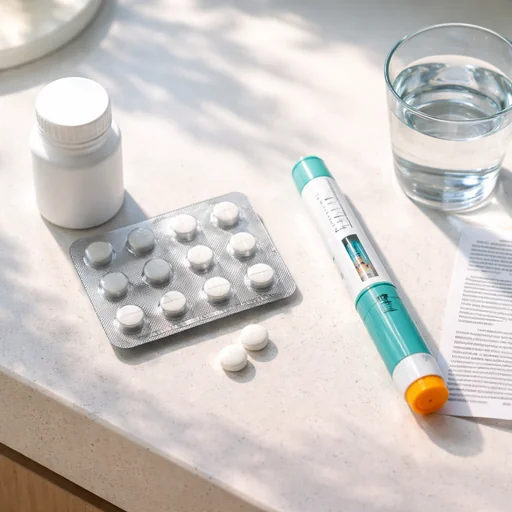
Semaglutide is given as a weekly injection. It reaches peak concentration in the blood within one to three days and has a half-life of about a week, which is why once-weekly dosing works.
The drug has been extensively studied for metabolic conditions. Its safety profile over years of use is well characterized.
What was less expected was the consistent pattern of behavioral changes patients reported, including reduced cravings for alcohol, nicotine, and other addictive substances.
Why a Diabetes Drug Affects Alcohol Cravings
GLP-1 receptors are found in two brain regions central to addiction: the ventral tegmental area (VTA) and the nucleus accumbens.
These structures form the core of the mesolimbic dopamine system, where the brain processes reward, motivation, and craving.
Alcohol triggers a dopamine surge in this circuit. The craving for alcohol is, in large part, the brain anticipating that surge before the first drink is even poured.
GLP-1 receptor agonists appear to dampen this anticipatory signal. Animal studies going back years have consistently shown reduced alcohol consumption in rodents given GLP-1 drugs, and the brain mechanism behind it is increasingly well understood.
When semaglutide activates GLP-1 receptors in the VTA and nucleus accumbens, the dopamine signal becomes less intense. The reward the brain expects from drinking becomes smaller, and the craving that drives the behavior follows suit.
This is mechanistically distinct from how naltrexone works. Naltrexone blocks opioid receptors, which sit on a different part of the same reward pathway.
Both medications ultimately reduce the reinforcing effect of alcohol. They just do it through entirely different receptor systems.
It is worth understanding this distinction because it explains why some researchers are excited about combining the two approaches.
Blocking opioid receptors eliminates the euphoric kick from drinking. Dampening the GLP-1 circuit reduces the craving before drinking even starts. The effects are complementary, not redundant.
What the Research Actually Shows
Animal Studies: The Foundation
The mechanistic story starts with animals. Across multiple rodent studies, GLP-1 receptor agonists have consistently reduced both binge-like alcohol drinking and relapse-like behaviors.
A 2023 study in JCI Insight found that semaglutide dose-dependently reduced alcohol intake in both mice and rats.
Researchers observed changes in GABA neurotransmission in reward-related brain regions, pointing to a real neurological mechanism rather than a nonspecific effect.
The effect was not simply a result of the animals eating less or being sedated. They reduced alcohol intake specifically, which points to a reward-circuit mechanism.
That consistency gave researchers a solid scientific rationale to move into human studies. When an effect replicates reliably across different animal models and different labs, it is a strong signal that the underlying biology is real.
Observational Data: A Large Early Signal
The first meaningful human evidence came from a 2023 study in Scientific Reports (PubMed 38017205). Researchers analyzed reports from 153 patients taking semaglutide or tirzepatide for metabolic reasons.
About 71% of those patients reported reduced alcohol cravings. A meaningful subset reported drinking significantly less, or stopping entirely, without that being a treatment goal at all.
For a self-reported survey, that is a large signal. The patients were not selected for having alcohol problems. They were taking these medications for weight or blood sugar control, and alcohol changes were a side effect they noticed on their own.
The limitation is real. This is not a controlled trial. People who start a weight-loss medication may change many behaviors at once, and you cannot isolate semaglutide as the cause from observational data alone.
But the 71% figure is hard to dismiss. The patients were not primed to expect alcohol changes, and the pattern held across multiple independent sources.
The First Randomized Controlled Trial
The field moved to the next level with a 2024 trial by Hendershot and colleagues. It was a small, randomized, placebo-controlled study specifically designed to test weekly semaglutide in adults with alcohol use disorder.
Participants on semaglutide showed statistically significant reductions in heavy drinking days compared to participants on placebo. Roughly 40% of the semaglutide group had zero heavy drinking days during the study period.
The National Institute on Alcohol Abuse and Alcoholism defines heavy drinking as four or more drinks on a single occasion for women and five or more for men.
Reducing those episodes has real health consequences, from liver function to cardiovascular risk to sleep quality. This trial provides the first controlled human evidence that semaglutide can reduce alcohol use.
It is also small. What it does not yet tell us is the optimal dose, the ideal patient profile, or what happens beyond the study window.
A positive result in a small trial is a meaningful step. It is not the same as a large phase 3 study with thousands of participants.
What the Pattern Across Study Types Tells Us
The consistent direction across animal studies, observational surveys, and a controlled trial is meaningful. Usually, when an effect is a statistical artifact or a coincidence, it fails to replicate across different study designs.
Semaglutide's alcohol effect has held up across all three types of evidence available so far. That is not proof that it will hold up in large controlled trials, but it is a stronger foundation than any single data source could provide on its own.
How This Compares to Naltrexone
Naltrexone has 30 years of controlled clinical trial data behind it. It has been FDA-approved for alcohol use disorder since 1994. That is not a small distinction.
A 2023 JAMA meta-analysis covering 118 trials and more than 20,000 patients confirmed naltrexone as the most effective medication for reducing heavy drinking days and cravings.
The number needed to treat for preventing return to heavy drinking is 11. That is a strong outcome by the standards of any pharmacological intervention.
Naltrexone works by blocking the mu-opioid receptors that release dopamine when alcohol is consumed. With those receptors blocked, drinking feels less rewarding, cravings fade over time, and most people find they naturally want to drink less.
Semaglutide is not FDA-approved for alcohol use disorder. One small RCT showing a positive signal is meaningful. It is not the same as 118 replicated trials.
The practical gap matters, too. Naltrexone is an inexpensive generic oral tablet, widely prescribed for AUD and accessible through telehealth.
Getting semaglutide for alcohol use involves off-label prescribing, and insurance coverage for that indication is essentially nonexistent. The cost of semaglutide out of pocket is substantial compared to generic naltrexone.
For someone looking for the most evidence-backed option today, naltrexone is the clearer first choice.
Our guide on the difference between naltrexone and GLP-1 approaches walks through the mechanism, evidence base, and practical differences for each.
All that said, the semaglutide data is among the most interesting emerging research in this space. The mechanism is biologically coherent, the effect is consistent across multiple study types, and the research is moving fast.
The two medications are not competitors. Naltrexone is the proven, accessible, FDA-approved option. Semaglutide is a compelling candidate that the research community is actively developing. Both facts can be true at the same time.
Can Semaglutide and Naltrexone Work Together
Researchers are now exploring whether combining GLP-1 medications and naltrexone produces additive effects. The hypothesis is biologically sound: they work on different receptor systems, so they could complement rather than duplicate each other.
Naltrexone blocks opioid receptors, reducing the euphoric reinforcement that keeps people drinking.
Semaglutide acts on GLP-1 receptors, reducing the anticipatory craving signal that starts the cycle. The two effects target different points in the same behavior.
Think of it this way: naltrexone removes the reward from drinking, while semaglutide reduces the pull toward drinking in the first place. Addressing both ends of the cycle could produce results neither medication achieves alone.
There is no pharmacological reason why both could not be active at the same time.
As of early 2026, there are no published trials specifically studying this combination for alcohol use disorder. This is an area of active interest among researchers, and studies are likely in development.
Some patients are already on GLP-1 medications for metabolic reasons when they come to Choose Your Horizon asking about naltrexone.
Clinicians evaluate that combination individually, looking at each patient's full picture of medications and health status.
If you are currently taking semaglutide and noticing that your desire to drink has changed, that is a real effect worth discussing with a physician. You can also read more about how GLP-1 medications affect alcohol use in our dedicated guide.
Who Might Benefit from Semaglutide for Alcohol Use
The patients most likely to see alcohol-related benefits from semaglutide are people who already have a medical reason to take it.
If you have obesity or type 2 diabetes and your physician prescribes semaglutide for those reasons, reduced cravings may be an added benefit worth knowing about and tracking.
People without those underlying conditions may still respond based on the neurological mechanism.
But clinicians have less reason to prescribe it off-label for alcohol use alone when naltrexone already has decades of evidence for that specific indication.
The profile that makes the most sense for semaglutide is someone where metabolic and reward dysregulation overlap. Alcohol use disorder and obesity frequently co-occur.
For those patients, a medication that may address both concerns through the same receptor system is genuinely interesting from a clinical standpoint.
That said, none of this changes the practical reality today. Semaglutide for AUD requires an off-label prescription, no insurance coverage for that use, and weekly self-injections rather than a simple once-daily pill.
Naltrexone does not have any of those barriers. It is approved, accessible, and inexpensive.
For people who are already on semaglutide for a metabolic reason and happen to notice less urge to drink, that is a clinically meaningful bonus worth documenting.
For people who are primarily seeking treatment for their drinking, naltrexone is the better-supported first step.
What "Early Evidence" Actually Means
The phrase "early evidence" gets stretched thin in health coverage. It is worth being precise about what it means for semaglutide and alcohol specifically.
The mechanism is biologically coherent. GLP-1 receptors exist in the brain's reward centers, and activating them reduces dopamine signaling in those circuits. That is established neuroscience, not speculation.
The animal data is consistent. Multiple rodent models across multiple labs have shown reduced alcohol consumption with GLP-1 receptor agonists. That kind of replication across independent research groups gives the mechanism genuine credibility.
The human observational data points in the same direction. Patients who were not trying to drink less reported doing exactly that, repeatedly, across different surveys and data sources.
And the first small RCT showed statistically significant results. That is a real controlled study with a real effect. It is not the same as large-scale phase 3 evidence, but it is a meaningful milestone.
What is missing is scale. Large, long-term phase 3 trials in diverse patient populations have not been completed yet.
Not everyone who takes semaglutide will experience reduced alcohol cravings. Some people report no change at all. A controlled trial at scale would tell us who responds, how strongly, and for how long.
This distinction matters if you are making a treatment decision. A drug with early evidence is worth knowing about and worth discussing with a physician. It is not the same as a drug with three decades of replicated, controlled, FDA-reviewed trials.
The responsible read on all of this is that semaglutide is a promising candidate with a real biological basis. Whether it becomes a standard treatment for alcohol use disorder depends on what larger trials show over the next several years.
A Practical Path Forward
If you are on semaglutide already and noticing reduced cravings for alcohol, that is a genuine effect worth tracking. Log your drinking days, note any changes, and bring that data to your next appointment.
Your physician may want to factor it into your overall care, especially if you have been looking for support with your drinking alongside the metabolic goals you are already working on.
If you are not yet on any medication and want to reduce your drinking, naltrexone is the best-studied starting point. It works for the majority of people who try it.
It is available online through telehealth and can be started while you are still drinking.
GLP-1 medications may become a mainstream option for alcohol use disorder as the research matures. The trajectory is pointed in that direction. But today, the accessible, evidence-backed option is naltrexone.
For a full picture of what GLP-1 medications have shown across different studies, our guide to the benefits of GLP-1 for reducing alcohol use covers the research in plain language.
Choose Your Horizon prescribes naltrexone online to eligible patients across the country. The process is discreet, fully online, and designed for people who want to drink less without waiting rooms or stigma.
You do not need to have hit a low point. You do not need to be certain about quitting. You just need to want things to be different, and that is a reasonable place to start.
Conclusion
Semaglutide does reduce alcohol cravings in a meaningful subset of patients. The mechanism is real. The evidence has moved from animal models through observational studies to a first controlled trial, and the signal has stayed consistent the whole way.
For most people who want to reduce their drinking today, naltrexone is still the most evidence-based and accessible first step. It has a 30-year track record and FDA approval specifically for alcohol use disorder.
These two medications are not in competition with each other. They work through different mechanisms, and research into combining them is underway.
Alcohol use disorder is a medical condition, not a character flaw. It responds to medical treatment. You do not need to wait for the next wave of research to start making progress.
If you want to explore your options, take a free online Alcohol Use Assessment at Choose Your Horizon to see whether naltrexone makes sense for you.