A 2 minute assessment to get a personalized mental health or alcohol recovery plan.

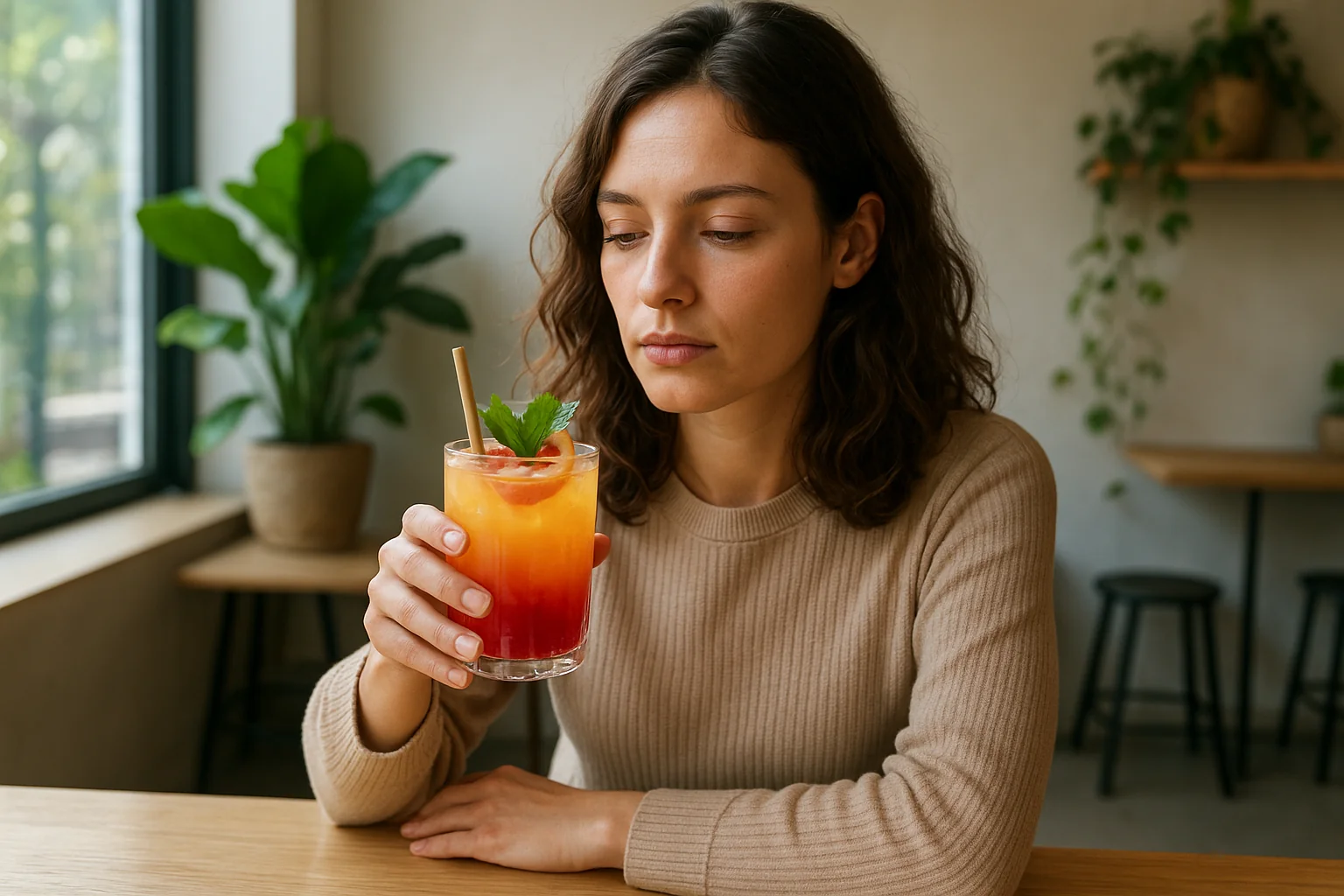
Sober curious means questioning your relationship with alcohol and exploring what life looks like with less drinking or none at all. It's not about labeling yourself an alcoholic. It's about getting curious about how alcohol actually affects your life.
What You'll Discover:
• What sober curious actually means and where the term came from.
• Who identifies as sober curious and why.
• What people typically experience when they try drinking less.
• How to explore being sober curious practically.
• When being sober curious reveals something deeper about your drinking.
The sober curious movement has grown significantly over the past several years. More people are questioning whether alcohol adds value to their lives or subtracts from it.
This isn't about hitting rock bottom or identifying as an alcoholic. It's about examining your relationship with drinking without judgment and seeing what happens when you change that relationship.
What Does Sober Curious Mean?
Sober curious describes someone who is questioning their drinking habits and exploring what happens when they drink less or not at all.
The term was popularized by Ruby Warrington's 2018 book "Sober Curious." It describes a middle ground between drinking without thought and complete abstinence.
Sober curious people aren't necessarily committing to never drinking again. They're investigating how alcohol actually affects them.
Being sober curious might mean:
• Taking a month off from drinking to see how you feel
• Choosing not to drink at social events where you usually would
• Simply paying more attention to why you reach for a drink
The defining characteristic is curiosity rather than rules. Instead of imposing strict abstinence, sober curious people ask questions. What would happen if I didn't drink tonight? How would I feel tomorrow if I skipped the wine?
This approach appeals to people who don't relate to traditional recovery frameworks but still want to examine their drinking patterns.
Who Identifies as Sober Curious?
Sober curious people come from diverse backgrounds, but they share certain characteristics.
People noticing negative effects - Many become sober curious after recognizing that alcohol affects their sleep, energy, mood, or productivity. They don't necessarily have a severe drinking problem, but they notice drinking makes them feel worse than they'd like.
Someone might realize they're less sharp at work after even one drink the night before. Or they notice their anxiety is worse on days after drinking.
Health and wellness focused individuals - People who prioritize fitness, nutrition, and mental health often become sober curious as they recognize alcohol conflicts with their other health goals. The calories, disrupted sleep, and next-day fatigue don't align with their focus on optimization.
People examining autopilot drinking - Some become sober curious after realizing they drink out of habit rather than genuine enjoyment. The after-work drink, the wine with dinner, the cocktails at social events happen automatically.
Sober curiosity means questioning whether these habits actually serve them.
Those seeking clarity and presence - Some people become sober curious because they want to experience life more fully. They notice alcohol dulls their experience of events they want to remember clearly.
Younger generations questioning alcohol culture - Millennials and Gen Z are driving much of the sober curious movement. These generations question inherited assumptions about alcohol being necessary for socializing, relaxing, or celebrating.
Studies show Gen Z drinks significantly less than previous generations at the same age. The sober curious identity gives language to this shift.
People questioning the "one glass of wine" habit - Many sober curious people don't drink heavily by any clinical definition. They have one or two drinks most evenings. But they wonder if even this moderate consumption is affecting them.
This group often discovers that eliminating even light daily drinking produces noticeable improvements. The cumulative effect of seven to fourteen drinks per week is larger than it might seem.
Those approaching significant life changes - Pregnancy planning, career transitions, fitness goals, or other life changes prompt many people to examine drinking habits. Sober curiosity provides a framework for this examination without requiring dramatic identity shifts.
What People Experience When They Become Sober Curious
People who explore drinking less or not at all typically report consistent patterns of change.
Better sleep - This is often the first and most noticeable change. Alcohol disrupts sleep architecture even when it helps you fall asleep initially.
Research from the National Institutes of Health confirms that alcohol impairs sleep quality even at moderate doses. Without alcohol, many people report sleeping more deeply and waking feeling more rested within just a few days.
More stable mood - Alcohol is a depressant that affects neurotransmitter balance. Regular drinking creates mood fluctuations that stabilize when drinking stops.
Many sober curious people report feeling more emotionally even, with less anxiety and fewer low moods. This improvement typically becomes noticeable within one to two weeks.
Increased energy - Without the metabolic burden of processing alcohol and without disrupted sleep, energy levels typically increase. Many people report having more motivation and following through on plans they would have abandoned after drinking.
Clearer thinking - Cognitive function improves when alcohol isn't regularly impairing it. People often notice better memory, faster thinking, and improved ability to concentrate.
Weight changes - Alcohol contains approximately 150 calories per drink on average. A two-drink-per-day habit adds over 2,000 calories per week. Removing these calories often results in weight loss without other dietary changes.
More time and money - The average American who drinks regularly spends over $500 per year on alcohol. Time spent drinking, recovering from drinking, and thinking about drinking becomes available for other things.
Initial discomfort - The experience isn't all positive, especially at first. Many sober curious people report initial awkwardness in social situations, boredom, and not knowing what to do with themselves in moments when they would normally drink.
This discomfort typically fades within two to four weeks as new patterns develop.
How to Explore Being Sober Curious
If you're curious about drinking less, several approaches make the exploration manageable.
Start with a defined experiment - Rather than committing to permanent change, try a time-limited experiment. Dry January, Sober October, or simply a two-week personal trial gives you a defined period to observe how you feel without alcohol.
A time limit makes the experiment feel achievable and provides clear before/after comparison.
Track what you notice - Keep notes about sleep quality, mood, energy, and any other changes you observe. Also note situations where you miss drinking or feel awkward without it.
This creates data about how alcohol actually affects your specific life.
Find alternatives for the ritual - Much of drinking is ritual rather than substance. The after-work unwinding, the social lubricant, the dinner accompaniment.
Non-alcoholic beers and wines have improved dramatically. Mocktails can provide the feeling of a special drink. Sparkling water with lime occupies your hands at parties. Tea or other beverages can replace evening wine.
Prepare for social situations - Social pressure to drink is real. Decide in advance how you'll handle questions and offers.
"I'm not drinking tonight" requires no explanation. "I'm doing a health experiment" satisfies curious friends. Having a plan reduces in-the-moment decision fatigue.
Notice your triggers - Pay attention to when you most want to drink. Is it stress? Boredom? Social anxiety? Celebration?
Understanding your triggers provides insight into what function alcohol serves in your life and what might need addressing regardless of drinking.
Be honest with yourself - Sober curiosity works when you're genuinely curious about the results, not when you're using it to prove you don't have a problem. Notice what the experiment actually reveals rather than what you want it to reveal.
The Sober Curious Social Scene
Part of what makes the sober curious movement different from traditional abstinence is the community and social aspect.
Sober bars and events - Alcohol-free bars and sober social events have proliferated in major cities. These provide social environments where not drinking is the norm rather than the exception.
Online communities - Reddit communities, Instagram accounts, and other online spaces connect sober curious people worldwide. These provide support, ideas, and the sense that you're not alone in questioning drinking culture.
Sober curious meetup groups - Many cities have in-person groups for people exploring sobriety or reduced drinking. These range from hiking groups to book clubs to happy hours with mocktails.
Shifted social norms - Increasingly, not drinking at social events requires less explanation. The sober curious movement has helped normalize choosing not to drink without having to identify as an alcoholic or provide medical excuses.
Non-alcoholic beverage explosion - The market for non-alcoholic beer, wine, and spirits has grown over 30% in recent years. Brands like Athletic Brewing, Seedlip, and Ritual Zero Proof provide sophisticated alternatives that didn't exist a decade ago.
This makes social drinking situations easier to navigate. You can order something that looks and tastes interesting without alcohol. The stigma of ordering club soda has been replaced by genuine choices.
Wellness culture integration - Sober curiosity has merged with broader wellness movements. Meditation apps, fitness communities, and health influencers increasingly discuss alcohol reduction as part of overall optimization.
When Sober Curiosity Reveals Something Deeper
For some people, exploring sober curiosity leads to an unexpected discovery: drinking less is harder than anticipated.
This is valuable information. If a two-week experiment feels impossibly difficult, if you find yourself constantly thinking about when you can drink again, if you can't imagine social situations without alcohol, this reveals something about your relationship with drinking.
The difficulty doesn't mean you're an alcoholic. It means alcohol has a stronger hold on your brain chemistry and habits than you realized.
Signs that sober curiosity is revealing a deeper issue:
• You can't complete a planned alcohol-free period despite wanting to
• The desire to drink feels overwhelming in certain situations
• You're constantly counting days until you can drink again
• Not drinking creates significant anxiety beyond normal adjustment
• You realize you've been drinking more than you consciously knew
If sober curiosity reveals that drinking less is harder than expected, this doesn't mean failure. It means you've learned something important about yourself.
When Sober Curious Isn't Enough
For people who discover that willpower-based drinking reduction is harder than expected, there are evidence-based options beyond just trying harder.
Naltrexone is an FDA-approved medication that helps people drink less by changing how alcohol affects the brain. It blocks opioid receptors involved in alcohol's rewarding effects, making drinking feel less pleasurable over time.
Many people who identify as sober curious but struggle to reduce drinking find naltrexone helpful because it doesn't require complete abstinence. You can take naltrexone and still drink, but the reinforcement that drives continued drinking weakens.
Over time, drinking naturally decreases for most people.
This approach aligns well with sober curious values. It's not about labeling yourself an alcoholic or committing to lifelong abstinence. It's about changing your brain's response to alcohol so drinking becomes less compelling.
Understanding how naltrexone works helps explain why it succeeds where willpower often fails. The medication addresses the neurological root of the problem rather than relying on constant resistance to cravings.
Sober Curious Versus Traditional Sobriety
Understanding how sober curious differs from traditional sobriety helps clarify whether it fits your situation.
Traditional sobriety typically involves acknowledging a serious problem with alcohol, committing to complete abstinence, and often participating in support groups or treatment programs. It's associated with terms like "alcoholic," "recovery," and "sobriety date."
Sober curious is more fluid. It doesn't require admitting to a problem or committing to permanent abstinence. It's about exploration and questioning rather than diagnosis and treatment.
Many sober curious people drink occasionally. They're not "sober" in the traditional sense.
Neither approach is superior. They serve different needs. Someone with severe alcohol dependence may need the structure of traditional sobriety. Someone questioning whether their drinking patterns serve them might find sober curiosity a better fit.
The important thing is honest self-assessment. If sober curiosity isn't working, that doesn't mean failure. It might mean you need a different approach.
Conclusion
Sober curious means questioning your relationship with alcohol and exploring what life looks like with less drinking or none at all. It's a movement that's grown significantly as more people recognize that drinking culture assumptions don't serve everyone.
Being sober curious isn't about labeling yourself an alcoholic or committing to permanent abstinence. It's about getting curious about how alcohol actually affects your life and making conscious choices based on what you discover.
Most people who explore sober curiosity report improvements in sleep, mood, energy, and mental clarity within the first few weeks. The experience reveals how much drinking was affecting their daily life.
For some, sober curiosity leads to discovering that drinking less is harder than expected. When willpower isn't enough, medication-assisted treatment with naltrexone offers an evidence-based option that aligns with sober curious values.
Take the online Alcohol Use Assessment to see if naltrexone could help you achieve the relationship with alcohol you're exploring.