A 2 minute assessment to get a personalized mental health or alcohol recovery plan.


The morning-after shame loop feels like accountability. More often it is the engine that drives the next drink. Here is how to break the spiral for good.
What You'll Discover:
• The predictable shape of the hangover shame spiral.
• Why shame and guilt are not the same, and why the difference matters.
• How shame quietly fuels more drinking, not less.
• What self-compassion actually is, and why it works.
• Practical ways to break the loop, including where naltrexone fits.
You wake up a little before your alarm. For a second or two, everything is fine.
Then it lands. The flashes of last night, the sent texts you have not opened yet, and the sinking questions. What did I say. Why did I do that again.
Before you are even out of bed, the verdict is in. You are the problem, and you always do this. The day starts in a hole.
That spiral has a shape, and it is worth understanding. Because the shame you feel this morning is quietly setting up the drink you will reach for tonight.
The Anatomy of the Shame Spiral
The morning-after guilt is not random. It runs in a predictable loop, and each turn pulls a little tighter than the last.
It starts with the drinking. Then comes the hangover and the patchy memory. Then your mind rushes to fill the gaps, almost always with the worst-case version of events.
That story hardens into a global judgment. Not "I drank too much last night," but "I am a mess." The behavior quietly becomes an identity.
Here is the cruel part. That feeling is so painful that the fastest way to escape it is the very thing that caused it. A drink softens the shame, at least for a few hours.
So the loop closes. Drink, then shame, then drink to escape the shame, then more shame in the morning. Round and round, tighter each time.
You may know the loop by heart. The lying-in-bed replay, the piecing together of the night, the promise that this time you really mean it. The promise that rarely survives the next hard evening.
Seeing the loop is the first crack in it. Once you can name the pattern, you stop mistaking it for the simple truth about who you are.
Shame and Guilt Are Not the Same Thing
These two words get used interchangeably, but they do very different things inside you. The difference is the key to the whole spiral.
Guilt says "I did a bad thing." It is focused on a specific behavior, and it tends to push you toward repair, an apology, a change.
Shame says "I am a bad thing." It is focused on your whole self, and it pushes you toward hiding, numbing, and escape.
Researchers who study the shame spiral of addiction draw exactly this line. Shame is a global, negative feeling about the self, while guilt is a feeling about the specific event.
That distinction matters because one of these can actually help you. Guilt, handled well, motivates a course correction. Shame mostly motivates another drink.
We dig into the guilt side of this in our piece on feeling guilty after drinking, because learning to feel guilt without tipping into shame is a real skill worth building.
Why Shame Makes You Drink More, Not Less
It would be logical to assume that feeling terrible about your drinking would help you drink less. In practice, the opposite tends to happen.
Shame is an isolating emotion. It makes you want to disappear, to keep secrets, and to avoid the very people who could help. That isolation is fertile ground for more drinking.
It also offers no path forward. When you believe you are fundamentally broken, there is nothing to fix, only something to escape. And you already know what escapes it fastest.
The research bears this out. Shame-proneness is linked to worse drinking outcomes, while the ability to feel guilt without shame tends to predict better ones.
There is a self-fulfilling edge to it as well. Believe you are the kind of person who always messes up, and it gets easier to act like that person tonight, because the label already fits.
So the morning shame is not accountability, even though it wears the costume of accountability. It is the part of the cycle that keeps the cycle running.
The Physical Side Feeds the Mental Side
The shame spiral is not only psychological. Your hungover brain is actively making the story feel more true than it is.
The morning after drinking, your brain chemistry is tilted toward anxiety and low mood as alcohol leaves your system. That state has a name, and we cover it in our article on hangxiety.
In that anxious, depleted state, the worst-case story feels like fact. The same texts that would seem harmless on a good day read like disasters through a hungover filter.
So part of what feels like a moral crisis is really a chemical dip. Knowing that does not erase it, but it does let you hold the feeling more loosely.
The shame will always sound most convincing when you feel worst. That is worth remembering before you accept its version of events.
The Shame Spiral Versus a Self-Compassion Reset
The way out is not to stop caring. It is to swap the mechanism. Here is the spiral next to the reset that interrupts it.
The left column feels like taking responsibility. The right column is what actually leads to change. That is the swap the rest of this comes down to.
Self-Compassion Is Not Letting Yourself Off the Hook
The word self-compassion makes some people bristle. It can sound like an excuse, like giving yourself a pass to keep doing the thing.
It is the opposite. Self-compassion means facing what happened honestly, without the crushing self-attack that sends you back to the bottle.
It has three simple parts. Treating yourself with the kindness you would offer a friend, remembering that you are not uniquely broken, and seeing the feeling clearly instead of drowning in it.
This is not soft comfort with no teeth. Research on self-compassion and alcohol use found it was linked to drinking less over time, with the mindfulness piece doing a lot of the work.
The reason is simple. Self-compassion breaks the escape loop. When the morning does not become a self-attack, there is nothing you urgently need to numb tonight.
A simple test helps. Picture a good friend telling you they did exactly what you did last night. You would not call them worthless, you would help them figure out the next step.
That same voice is available to you. Learning to turn it inward is not weakness, it is the practical skill that finally makes change possible.
You can hold yourself accountable and hold yourself kindly at the same time. In fact, that combination is the only one that reliably works.
Practical Ways to Break the Spiral
Understanding the loop is half of it. The other half is a few concrete moves you can make on the actual morning after.
Start by naming it. Say to yourself, this is shame talking, not truth. That one sentence creates a gap between you and the feeling.
Then check the facts. Read the texts instead of imagining them. Nine times out of ten, reality is far less dramatic than the story your hungover brain wrote.
If something does need repair, let guilt do its job. Send the apology, fix the thing, and then let it be done. Repair is the antidote to guilt, and it starves shame of fuel.
A couple of habits make all of this easier over time:
• Track your drinking honestly, so you work from data instead of drama.
• Tell one safe person the truth, because secrecy is what shame feeds on.
If drunk texting is a recurring source of the morning dread, our guide on how to stop drunk texting has practical guardrails that remove one big trigger from the loop.
One more move helps in the moment. Do something small and kind for your body before you do anything else, like drinking water, eating something, or taking a short walk.
Physical care lowers the anxiety that makes the shame feel so loud. It also interrupts the automatic reflex to reach for a drink, which buys you the space to make a different choice.
The Stories That Keep the Spiral Turning
Shame is one story you tell yourself. There is often a second one waiting on the other side of it, and it is just as tricky.
Once the shame fades and a few good days pass, the mind can flip to the opposite extreme. It starts to romanticize the drinking, remembering only the warmth and the fun.
We explore this in our piece on why people romanticize drinking, because that rosy rewrite is often what sets up the next hard night.
Both stories distort. Shame says the drinking makes you worthless, and nostalgia says it was all wonderful. The truth usually sits calmly in the middle.
Learning to catch both stories is how you step off the pendulum. You get to see the drinking clearly, without the shame and without the glow.
Where Naltrexone Fits Into Breaking the Loop
The shame spiral has a physical engine, the craving that makes a drink the obvious way to end the bad feeling. Quiet that engine and the whole loop gets easier to break.
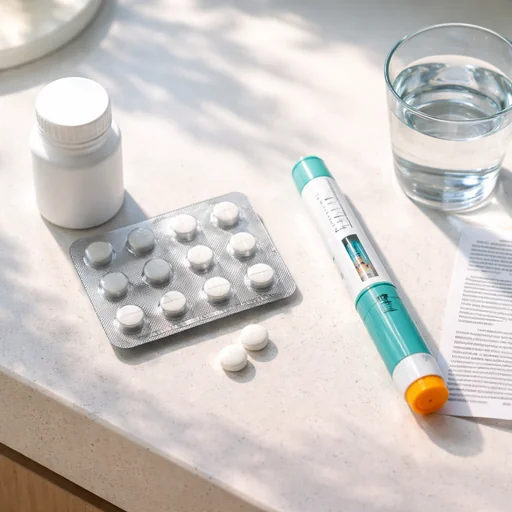
That is what naltrexone does. It is an FDA-approved medication that blocks the reward the brain gets from alcohol, which softens cravings over time.
When the craving is turned down, the morning shame no longer has a fast exit ramp. You get to feel the feeling and let it pass, instead of reaching for the thing that restarts the cycle.
It also takes pressure off the perfection trap. As the National Institute on Alcohol Abuse and Alcoholism puts it, recovery is a marathon, not a sprint, and setbacks are part of the process, not proof of failure.
You do not need to have hit rock bottom to want off this particular ride. Being tired of the morning-after spiral is reason enough.
Stepping Off the Spiral
The hangover shame spiral is not a sign of how weak you are. It is a predictable loop, driven by a painful emotion and a very effective escape.
Once you can see it, you can interrupt it. Name the shame, check the facts, let guilt guide repair, and treat yourself with the same patience you would give a friend.
None of that means lowering your standards. It means trading the mechanism that keeps you stuck for the one that actually moves you forward.
You are not the worst version of last night that your hungover brain invented this morning. You are someone who wants to do better, and that is the part worth listening to.
Give that part of you a little support and a little grace. The spiral loses its power the moment you stop feeding it, and that moment can start with the very next morning.
Frequently Asked Questions
What is the hangover shame spiral?
It is the loop where drinking leads to morning shame, and that shame becomes so painful that another drink feels like the fastest relief. Each turn reinforces the last and keeps the cycle going.
Is shame or guilt worse for drinking?
Shame tends to be worse. Guilt focuses on a behavior and can motivate repair, while shame attacks your whole self and pushes you toward hiding and numbing, which usually means more drinking.
Does feeling guilty help me drink less?
Guilt handled well can prompt a real course correction. The problem is when guilt tips into shame, because shame drives escape rather than change. The goal is accountability without self-attack.
How do I stop feeling so ashamed after drinking?
Name the feeling as shame rather than fact, check the actual events instead of assuming the worst, repair anything that needs it, and talk to one safe person. Secrecy is what shame feeds on.
Can naltrexone help break the shame cycle?
Yes. Naltrexone reduces cravings by blocking alcohol's reward, so the morning shame no longer has a quick exit through another drink. That gives the emotion room to pass instead of restarting the loop.
Breaking the spiral is not about being harder on yourself. It is about finally being fair to yourself, which is what actually leads to change.
If the morning-after loop feels familiar, a quick and discreet online Alcohol Use Assessment can show whether Choose Your Horizon's naltrexone option is a good fit for you.
Take the online Alcohol Use Assessment and take the first step off the spiral.