A 2 minute assessment to get a personalized mental health or alcohol recovery plan.

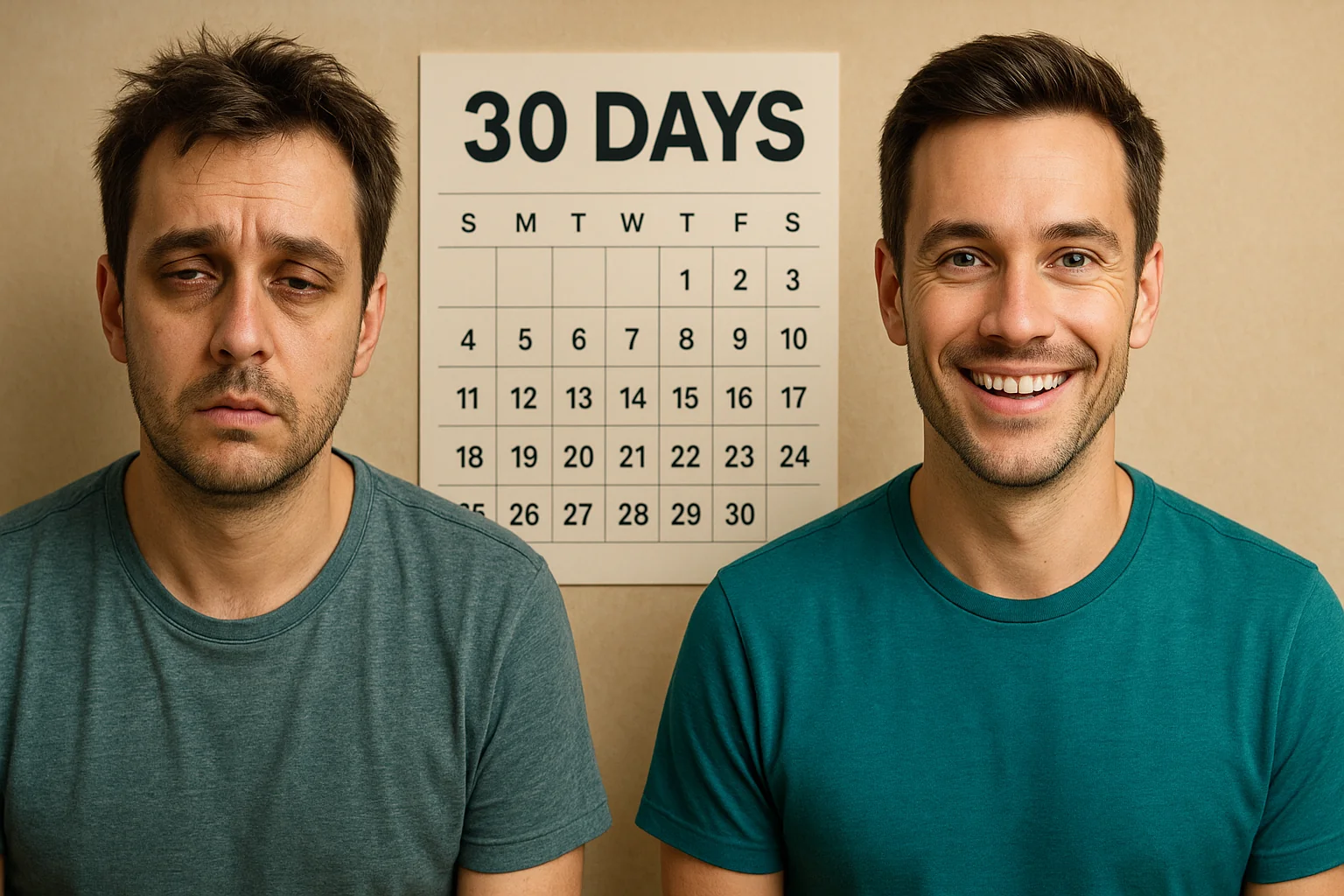
When you stop drinking alcohol for a month it can have a profound impact on your brain and body, setting the stage for even bigger improvements down the line.
What you’ll learn:
- Why there are such profound changes in the first month of not drinking alcohol.
- Why the first week or two of not drinking may be difficult.
- How the process differs for heavy, chronic or habitual drinkers.
- What happens when you stop drinking alcohol for a month.
- How things can continue to change after a month of abstinence.
What happens when you stop drinking alcohol for a month is dependent on how much alcohol you regularly consume, but it has a positive effect on overall health if you stick with it. The benefits include better sleep, concentration and energy, however, the first week or two of quitting alcohol could be difficult, especially if you experience alcohol withdrawal symptoms.
Because alcohol is legal for adults over the age of 21 and socially acceptable, many people don’t realize how much it affects a wide variety of bodily systems, both directly and indirectly. From your brain to your skin to your motor skills, just one night of drinking can be felt. Fortunately, many of the negative effects of alcohol can be undone if you take control and stop drinking.
Here’s what you can expect in the first month of not drinking alcohol based on how much you currently consume.
The First Weeks When You Stop Drinking Alcohol If You Have a Dependence
The first week without alcohol is going to be very different for someone with alcohol dependence compared to others. Someone without alcohol dependence will likely begin to feel better right away. But anyone who’s dependent on alcohol will likely feel worse at first.
Having alcohol dependence means you’re more likely to go into detox and experience alcohol withdrawal symptoms within 12-24 hours of quitting. The withdrawal symptoms reach their peak around 72 hours before beginning to wane after 4-5 days of stopping alcohol.
The withdrawal symptoms could actually pose a health risk for heavy drinkers during this timeframe if they attempt to quit abruptly. The safer option is to use naltrexone to slowly taper off your drinking for a few weeks before stopping completely and enlist the help of a medical expert. You may even want to consider getting help at a detox treatment center that has medications to help ease the withdrawal symptoms.
After withdrawal symptoms subside, you may find that you have strong alcohol cravings. Taking a daily dose of naltrexone can help curb the cravings so that you can get past it and maintain your sobriety the rest of the month.
The First Weeks When You Stop Drinking Alcohol If You Do It Habitually
Habits are hard to break, which is why some people find it difficult to stop drinking. Even if you only drink a few times a week, stopping can be hard if chronic drinking is a regular thing that you enjoy or have been doing for a while. The first half of the month will be an adjustment period that impacts your regular routine.
You may need to account for this to make things easier. For example, if you go to a weekly happy hour and have a few drinks, you may want to plan to do something else for the first week or two so that you can stick with the sobriety. Try to find a new hobby or activity that interests you to fill the void so that it’s easier to take your mind off of activities involving alcohol.
Benefits That Happen When You Stop Drinking Alcohol For a Month
For light to moderate drinkers the benefits of not drinking alcohol at all will be apparent right away. You’ll wake up feeling more rested throughout the week and will probably have more energy and focus throughout the day as soon as you stop drinking.
Even if you have an ingrained drinking habit or alcohol dependence, once you get past the first few weeks you’ll likely notice the benefits of abstaining as well.
Improved Gut Health
One of the first things you’ll notice is improved gut health. Alcohol has a very irritating impact on the GI tract and gut microbiome. With alcohol out of your system you’ll experience less bloating, heartburn and irritation with better bowel movements.
More Hydrated
Because alcohol is a diuretic you’ll also be better hydrated even if your water intake doesn’t increase. Replacing alcoholic beverages with water will make an even bigger impact that you’ll notice in your skin first. Your skin will look better all around with fewer wrinkles, redness and puffiness under the eyes.
Better Sleep
Another benefit that will help your skin look better is improved sleep. Alcohol significantly disrupts sleep both in the quality and quantity. Getting better sleep will help you have more energy, improve focus, enhance mood and boost your immune system.
Improved Liver Health
And you might not be able to see the effects, but your liver health should also improve in the first 30 days of not drinking alcohol. You can gauge the improvements by taking an at-home liver function test at the start of the 30 days and then again after a month of not drinking to compare the markers.
Weight Loss
Depending on how much alcohol you consume on a regular basis, you may also see a difference on the scale. It’s not uncommon for people to lose weight after a month of abstaining from alcohol. The weight loss is a result of consuming fewer empty calories and your body burning fat more efficiently when alcohol isn’t in your system.
This is just the beginning of what’s to come when a person significantly reduces their alcohol consumption or stops drinking alcohol completely. The benefits will have a cumulative effect in the weeks ahead, particularly in the way of gut and liver health. You’ll also notice a difference as your immune system improves and you continue getting better sleep.
If you want to stop drinking alcohol for a month but feel like you need some assistance, naltrexone can help. It’s a prescription medication that has been clinically proven to reduce alcohol cravings and help people drink less, even chronic drinkers and people who have alcohol use disorder (AUD).
See if you qualify for a naltrexone prescription by taking our Alcohol Use Assessment online. It only takes a few minutes and helps our clinicians determine if naltrexone is right for you.