A 2 minute assessment to get a personalized mental health or alcohol recovery plan.


The 2025 semaglutide alcohol use disorder trial produced the clearest human data yet on what GLP-1 medications do to drinking. Here is the mechanism, what the trial showed, and where the research is headed.
What You'll Learn:
• The GLP-1 receptor locations in the brain that matter for alcohol craving.
• How semaglutide dampens the dopamine reward signal alcohol normally produces.
• What the February 2025 JAMA Psychiatry randomized trial actually found.
• How semaglutide's mechanism compares to naltrexone's.
• Where the research is going and what it does not yet answer.
For years, physicians have heard the same anecdote from patients on GLP-1 medications like semaglutide. They were prescribed it for weight loss or diabetes, and along the way, their desire for alcohol quietly faded. Wine with dinner stopped being appealing. The automatic end-of-day drink lost its pull. Patients reported the effect as almost incidental, a side benefit they had not been expecting.
The research community has been catching up to these anecdotes for several years, and in February 2025 the first well-designed randomized trial in adults with alcohol use disorder was published. This article explains what GLP-1 medications actually do to alcohol cravings, what the new trial found, and how to think about this emerging treatment option alongside more established medications like naltrexone. It is educational, not medical advice.
What Semaglutide Is and What It Was Built For
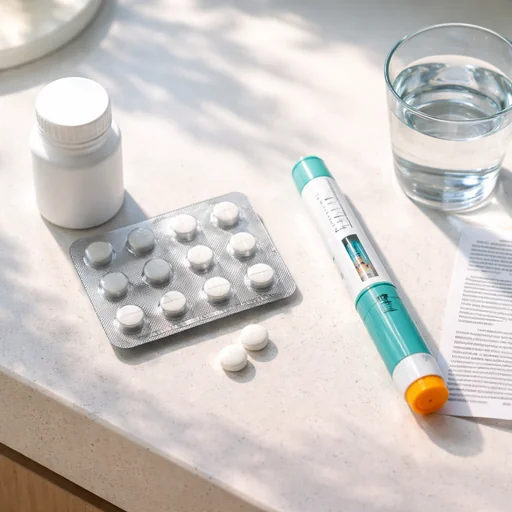
Semaglutide is a glucagon-like peptide-1 receptor agonist, or GLP-1 receptor agonist. It was originally developed for type 2 diabetes and later approved for weight management. It mimics the action of the natural gut hormone GLP-1, which is released after meals and signals satiety, slows gastric emptying, and improves insulin sensitivity.
GLP-1 receptors exist in many places in the body, not just the gut and pancreas. They are also present in several brain regions that govern reward, motivation, and appetite. This broader distribution is the biological basis for semaglutide's effects beyond metabolism, including its emerging role in alcohol craving reduction.
GLP-1 Receptors in the Reward System
The key locations for alcohol craving are in the mesolimbic dopamine system, the brain circuit that governs reward and reinforcement learning. This includes the ventral tegmental area, the nucleus accumbens, and parts of the prefrontal cortex. When alcohol activates this circuit, it releases dopamine in the nucleus accumbens, producing the subjective pleasure that reinforces future drinking.
GLP-1 receptor agonists appear to dampen this dopamine release. The mechanism involves direct action on GLP-1 receptors present in and around these reward circuits. The result is that alcohol produces less of the dopamine response it otherwise would, and over time the reinforcement that drives continued drinking weakens.
This is similar in outcome, though different in mechanism, to what naltrexone does. As we explain in our article on how alcohol increases dopamine, reducing the dopamine reward of alcohol is one of the most direct ways to reduce the drive to drink.
The February 2025 Randomized Trial
The clearest human data on semaglutide for alcohol use disorder was published in February 2025 in JAMA Psychiatry. The trial enrolled 48 non-treatment-seeking adults with alcohol use disorder at an academic medical center in the United States and randomized them to nine weeks of weekly semaglutide or placebo. The dosing escalated from 0.25 mg weekly to 1.0 mg weekly, which is lower than the doses typically used for weight loss.
The published results showed several key findings.
Semaglutide significantly reduced weekly alcohol craving compared to placebo. This effect was statistically robust and clinically meaningful.
Semaglutide produced reductions in several measures of weekly alcohol consumption, though not in every measure. The trial was relatively small, so detecting consistent reductions across all measures was statistically difficult.
A subgroup of participants who also smoked experienced reductions in cigarettes per day during treatment, suggesting the effect may extend to other substances of reward-driven use.
Semaglutide was generally well-tolerated at the low doses used, with side effects consistent with what has been reported in diabetes and obesity trials.
The authors concluded that low-dose semaglutide can reduce craving and some drinking outcomes, and that larger trials are justified to evaluate GLP-1 receptor agonists more definitively for alcohol use disorder.
What This Means in Practical Terms
The trial provides the first high-quality human evidence that semaglutide reduces alcohol craving in a controlled setting. This converts the long-standing patient anecdotes into something closer to clinical evidence. It does not yet mean semaglutide is an approved treatment for alcohol use disorder in the regulatory sense. It is approved for diabetes and weight management, and its use for alcohol craving is currently off-label.
For patients already on semaglutide for weight or metabolic reasons, a reduction in alcohol craving is a plausible and welcome additional benefit. For patients whose primary concern is alcohol and who do not have a weight or diabetes indication, the picture is more complicated. The medication has real side effects, is expensive, and has supply considerations. Most clinicians would not yet start semaglutide for alcohol craving alone outside of a clinical trial setting.
How Semaglutide Compares to Naltrexone
Naltrexone remains the most studied and widely used medication for alcohol craving. It has several decades of evidence behind it, is FDA-approved for alcohol use disorder, is non-addictive, and has well-characterized side effects that are typically mild.
The two medications work through different mechanisms. Naltrexone blocks opioid receptors, which reduces the endogenous opioid release that contributes to alcohol's pleasurable effects. Semaglutide acts through GLP-1 receptors and dampens the dopamine reward signal more directly.
For most patients whose primary issue is alcohol craving, naltrexone is the first-line medical option and has the most robust evidence base. Our guide to how to use naltrexone to stop alcohol cravings walks through how it works and what to expect.
For patients who have a co-existing indication for GLP-1 medication, such as obesity or type 2 diabetes, semaglutide may offer a useful combined benefit. For patients who have tried naltrexone and not responded fully, semaglutide represents a reasonable additional option to discuss with a clinician.
What the Research Does Not Yet Answer
Several important questions remain open.
The optimal dose and duration of semaglutide for alcohol craving specifically are not established. The trial used lower doses than typical weight loss dosing, but whether higher doses would produce larger effects or whether lower doses produce most of the benefit is not clear.
Long-term effects on drinking over months to years are not yet characterized. Most trials to date have been short, nine weeks or less.
The specific subgroups of patients who respond best to semaglutide versus naltrexone are not known. Future research will likely identify biological or behavioral predictors.
Combination therapy, using semaglutide alongside naltrexone or behavioral treatment, has not been rigorously studied, though preliminary data and mechanistic considerations suggest the combinations could be complementary.
Side Effects and Considerations
Semaglutide is generally well-tolerated but does have meaningful side effects. Gastrointestinal symptoms including nausea, reduced appetite, and constipation are common, especially during dose escalation. Most patients find these manageable, but a minority discontinue the medication because of them.
The medication is generally contraindicated in people with a personal or family history of medullary thyroid cancer or multiple endocrine neoplasia syndrome type 2. It is not recommended during pregnancy. And the cost and supply situation has been complicated, though improving over time.
As we discuss in our article on can you drink alcohol on GLP-1, drinking on a GLP-1 medication is not acutely dangerous in the pharmacokinetic sense, but most patients report reduced enjoyment of alcohol naturally, which is often the mechanism by which the medication produces its effect on drinking.
The Bigger Shift in Alcohol Care
The emergence of GLP-1 medications as potential tools for alcohol use disorder is part of a broader shift in how medicine is thinking about addiction. The older model treated drinking as primarily a moral or behavioral challenge. The newer model recognizes that drinking engages specific biological systems and that medications targeting those systems can meaningfully support behavior change.
Naltrexone, semaglutide, and a growing list of other pharmacological options all fit into this broader picture. None of them replace the behavioral work, the therapy, the social support, or the structural changes that sustain reduced drinking. What they do is make those changes more feasible by reducing the pharmacological force that drives the drinking in the first place.
When to Seek Medical Attention
If you are considering semaglutide or any GLP-1 medication for alcohol craving, this is a conversation for a clinician who knows your full medical history. The decision involves weighing the current evidence, your individual risk factors, the availability of better-established alternatives like naltrexone, and your specific goals.
If you experience tremors, sweating, rapid heartbeat, or confusion when you try to stop drinking, do not stop on your own. Alcohol withdrawal can be dangerous and should be managed in a clinical setting.
Bottom Line
Semaglutide reduces alcohol craving through direct action on brain reward pathways, and the February 2025 randomized trial provided the first high-quality human evidence that this effect is real and clinically relevant. The medication is not yet an approved treatment for alcohol use disorder, but it represents an important addition to the emerging toolkit for alcohol care.
For most patients, naltrexone remains the first-line medical option for alcohol craving, with the deepest evidence base and the longest track record. If you are currently on or considering GLP-1 medication and also want support with alcohol, our online Alcohol Use Assessment can help you think through what combination of supports fits your situation. CYH clinicians are equipped to discuss both naltrexone and GLP-1 options.
This article is educational and is not medical advice. Decisions about starting, adjusting, or combining prescription medications should be made with a qualified clinician who knows your full medical history.